20 Vintage Kitchen Ideas 2026: Modern Farmhouse Style
My grandmother’s kitchen had a yellow enamel stove and open shelves lined with mismatched jars. I copied that exact shelf idea in my own kitchen last year and it remains the thing every guest photographs first. Vintage kitchen ideas are not about recreating the past. They are about borrowing one or two honest details and letting modern function do the rest.
These 20 vintage kitchen ideas mix real farmhouse history with 2026 practicality, so you know exactly what to spend, who each idea suits, and what trade-off comes with it.
What defines vintage kitchen ideas in 2026?
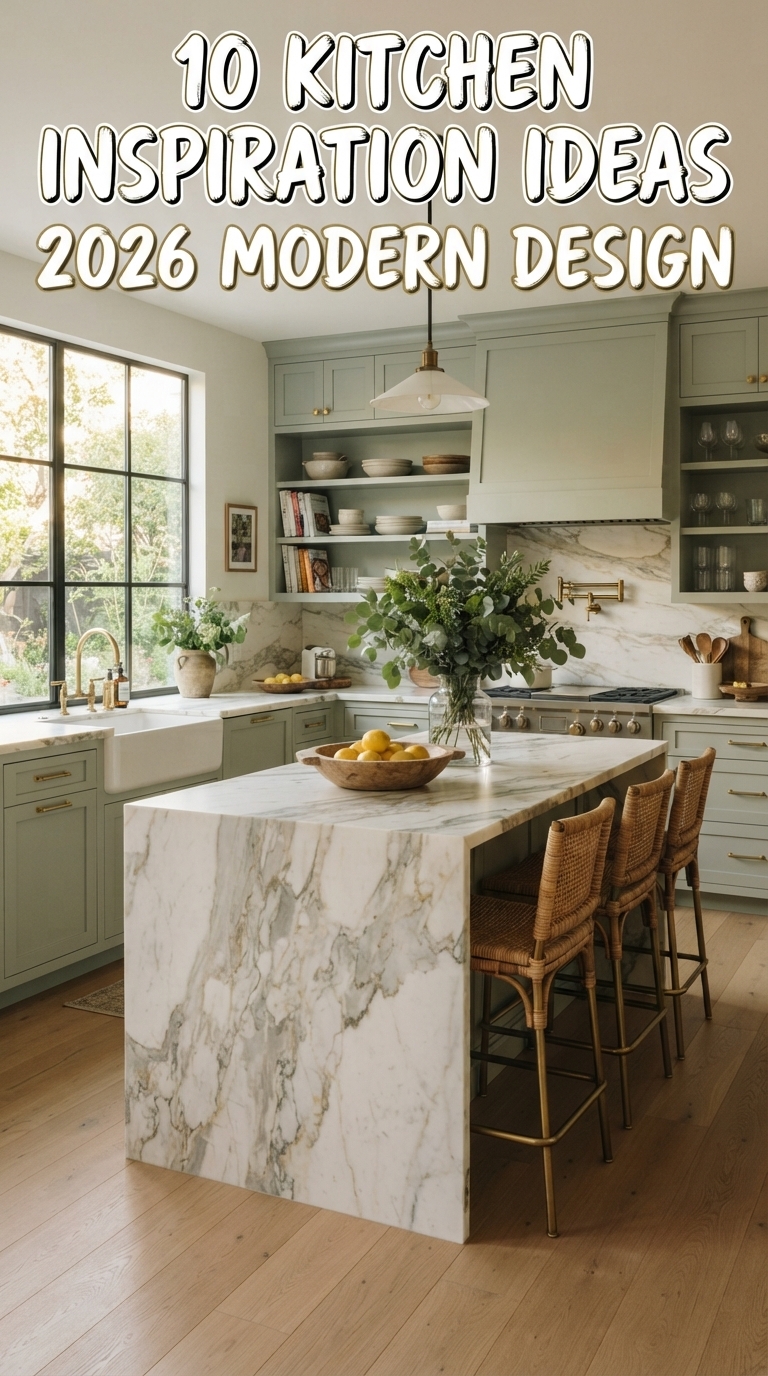
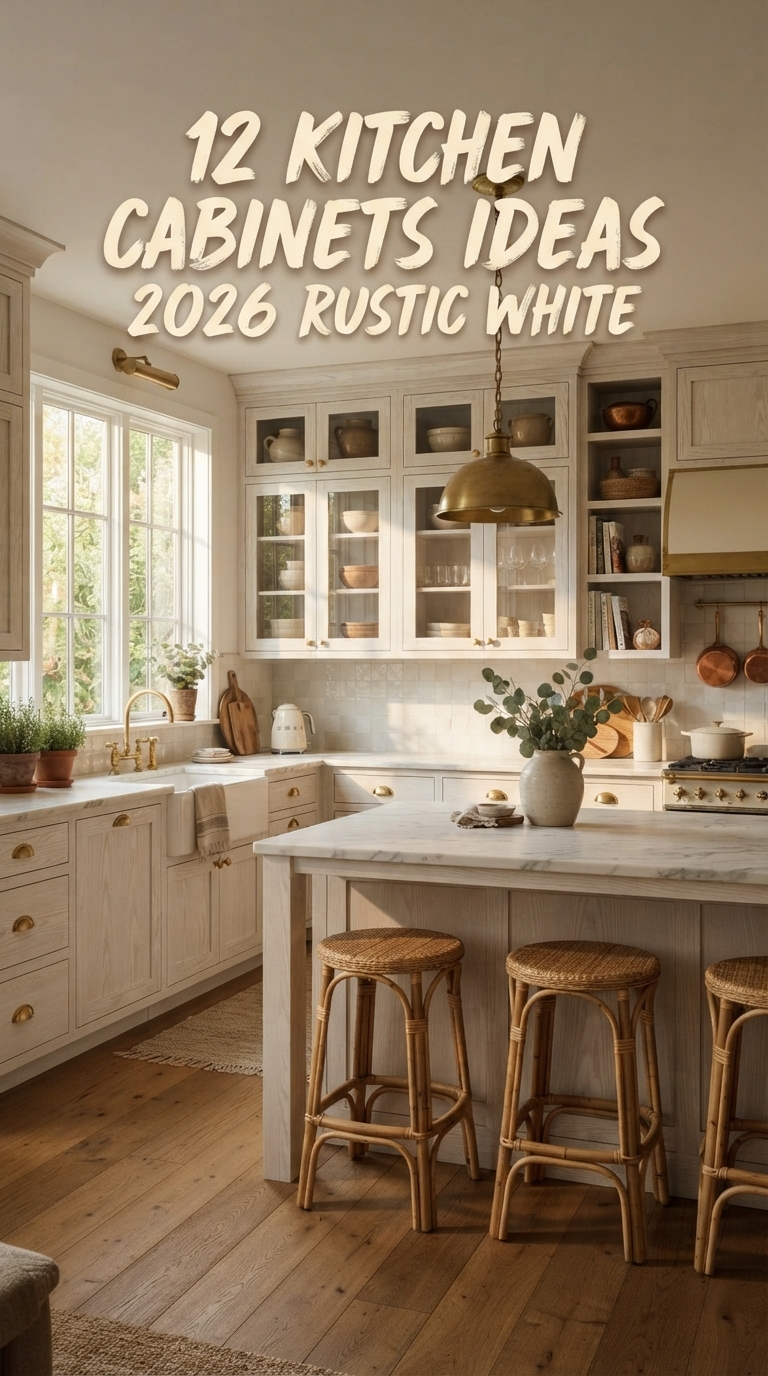
Vintage kitchen ideas in 2026 combine retro details like farmhouse sinks, open shelving, and antique-style fixtures with modern function and hidden storage. Shaker cabinets in Benjamin Moore White Dove OC-17, brass hardware, and a butcher block counter are the core formula. The look reads nostalgic without sacrificing a working kitchen.
Add a Farmhouse Apron Sink for Instant Vintage Character
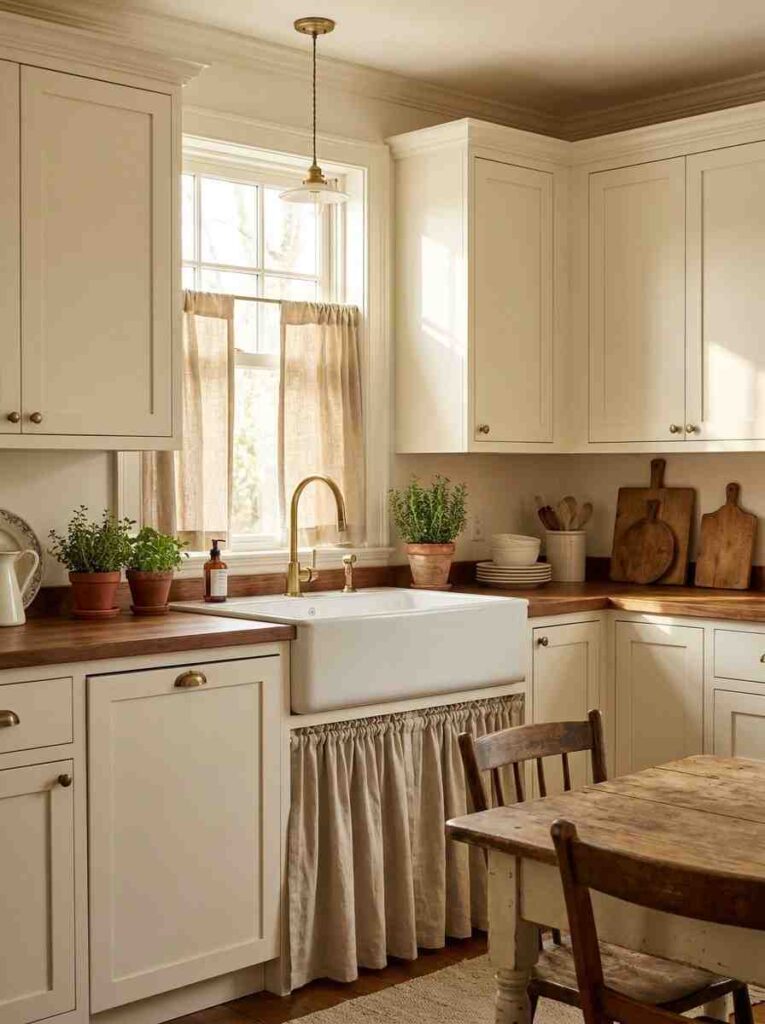
A farmhouse apron sink is the single fastest way to signal vintage kitchen ideas without touching the cabinets. The exposed front panel, usually white fireclay, sits proud of the counter edge and instantly reads as old-world. Kohler’s Whitehaven runs $700 to $1,100 depending on size, while Rohl’s fireclay versions start closer to $1,400. This idea suits anyone doing a full renovation, since swapping to an apron sink usually means adjusting the base cabinet.
The upside is real: fireclay resists staining better than stainless steel and the deep basin fits stockpots easily. The downside is installation cost, since most apron sinks need a custom cabinet cutout running $300 to $600 in labor. For a kitchen already mid-renovation, this is the easiest single upgrade to add real vintage weight.
Choose Shaker Cabinets in a Warm Vintage White
Shaker cabinets remain the backbone of nearly every vintage kitchen idea in 2026 because the simple recessed panel reads as classic without looking dated. Benjammin Moore White Dove OC-17 is the most popular choice, with a light reflectance value of 85 that keeps the room bright without going stark. Sherwin-Williams Alabaster SW 7008 is the warmer alternative at an LRV of 82. A full set of painted shaker cabinets for an average kitchen runs $8,000 to $15,000.
This idea works for nearly every budget level since you can paint existing cabinets in White Dove for around $400 to $600 in materials rather than replacing them outright. The trade-off is maintenance — white cabinets show grease and fingerprints faster than darker tones, so plan on wiping them down more often than you would charcoal or navy fronts.
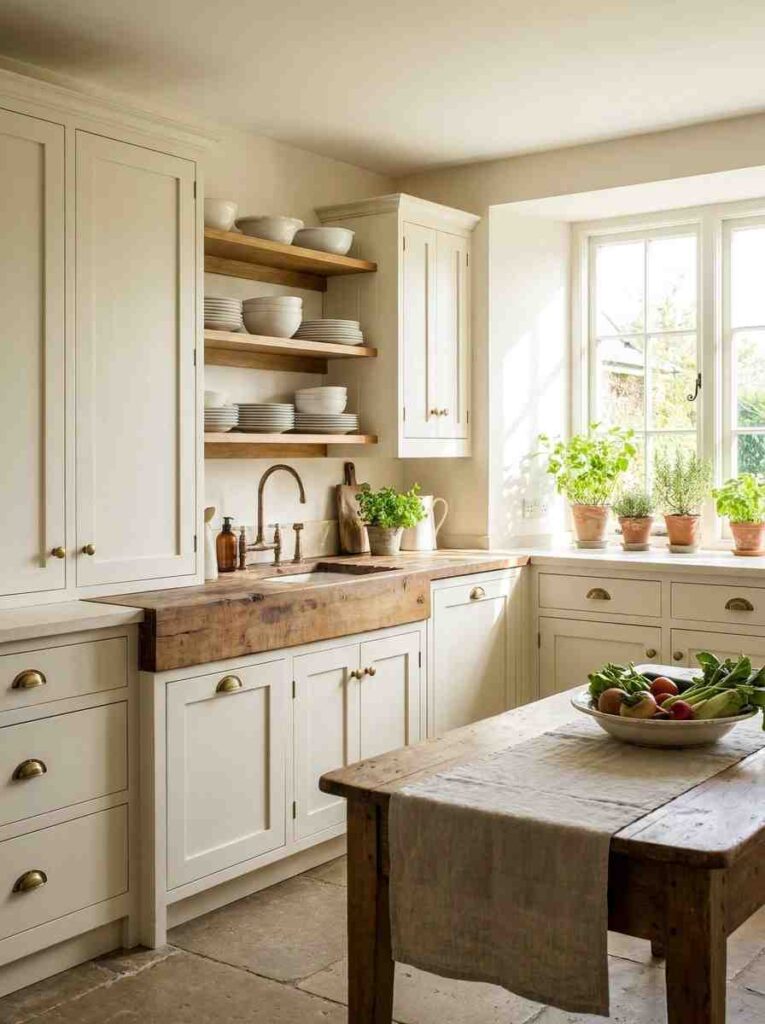
Install Open Shelving for a Lived-In Vintage Look
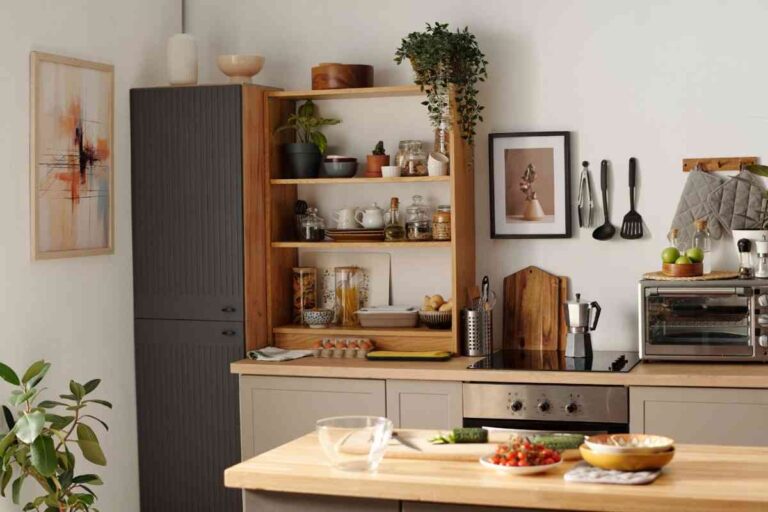
Open shelving is one of the most repeated vintage kitchen ideas in 2026 design coverage, and for good reason. Swapping upper cabinets for two or three floating wood shelves costs $150 to $400 in materials for a standard kitchen wall, far less than cabinetry. Reclaimed oak or pine boards, sold at most lumber yards for $8 to $15 per linear foot, give the shelves genuine age and grain character.
The style suits kitchens with limited storage needs, since everything on open shelves is visible and needs to stay reasonably tidy. It is not the right fit for anyone who dislikes daily dish maintenance, since dust and grease settle on exposed plates faster than inside a closed cabinet. Done well, with a curated mix of ceramics and glass jars, it turns everyday kitchenware into the decor itself.
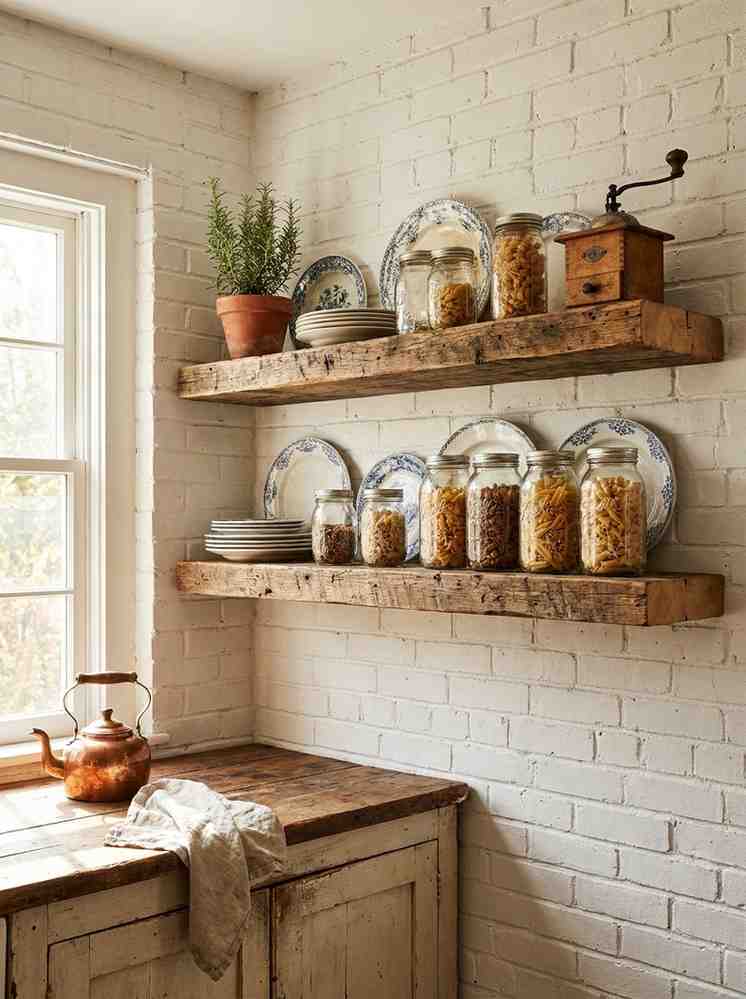
Bring In a Retro-Style Range for a Focal Point
A retro-style range is the boldest of all vintage kitchen ideas because it becomes the room’s obvious centerpiece. Smeg’s 1950s-inspired ranges run $2,800 to $4,500 depending on width and fuel type, while Big Chill’s retro range line starts around $5,000. Both come in classic colors like buttery yellow, mint green, and cream that echo genuine mid-century appliances.
This idea is best for anyone renovating from scratch, since a retro range often needs different clearances than a standard slide-in unit. The performance is fully modern underneath the vintage shell, with convection ovens and sealed burners standard on both brands. The only real drawback is price — you are paying a premium for the styling, often $1,000 more than a comparable stainless range with no retro details.
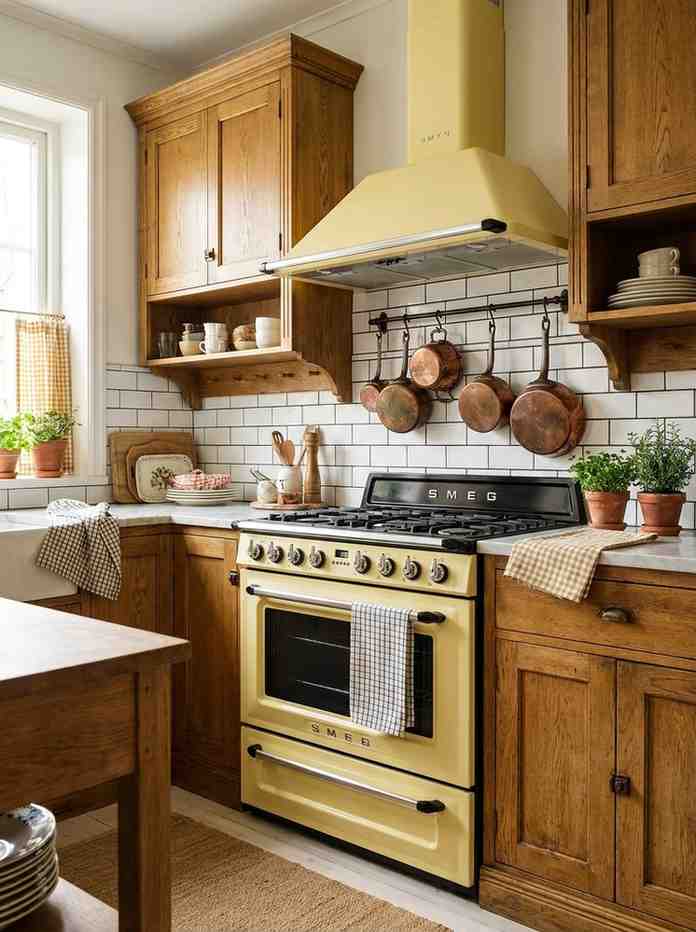
Add Exposed Brick for Old-World Texture
Exposed brick is a texture-driven vintage kitchen idea that works especially well in older homes with original masonry underneath drywall. Uncovering existing brick costs $500 to $1,500 for demolition and sealing, far cheaper than installing brick veneer, which runs $8 to $15 per square foot. The warm red and copper tones pair naturally with hanging pot racks and open shelving.
This idea suits homeowners in older properties more than new builds, since faux brick veneer never quite matches the texture of genuine aged brick. The benefit is a backsplash that needs almost no maintenance beyond an occasional wipe. The drawback is that brick is porous, so a food-safe sealant is worth the extra $100 to $200 to prevent grease absorption near the stove.
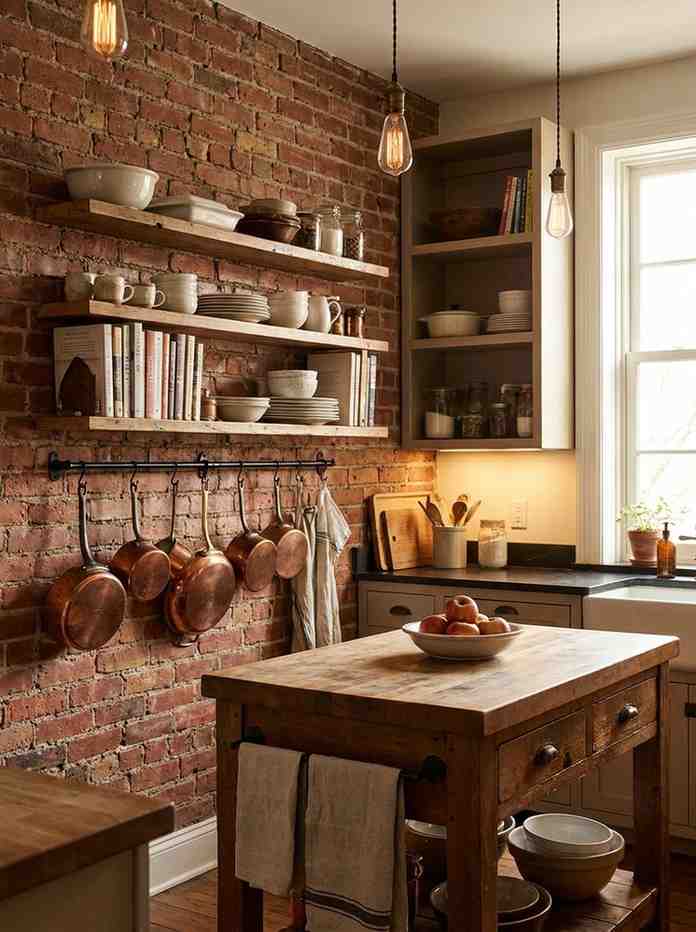
Use Brass Hardware Throughout the Kitchen
Brass hardware is the small-scale vintage kitchen idea with the biggest visual return per dollar spent. Unlacquered brass cup pulls and knobs from Rejuvenation or House of Antique Hardware run $8 to $25 per piece, and a full kitchen typically needs 20 to 40 pieces. Unlacquered brass develops a natural patina over time, which is exactly the aged look most vintage kitchens are chasing.
This idea suits anyone on a tight budget since swapping hardware is a weekend project that needs no contractor. The trade-off is patience — unlacquered brass takes months of handling and humidity exposure to develop real character, and some homeowners find the uneven aging process frustrating before it settles into a warm patina.
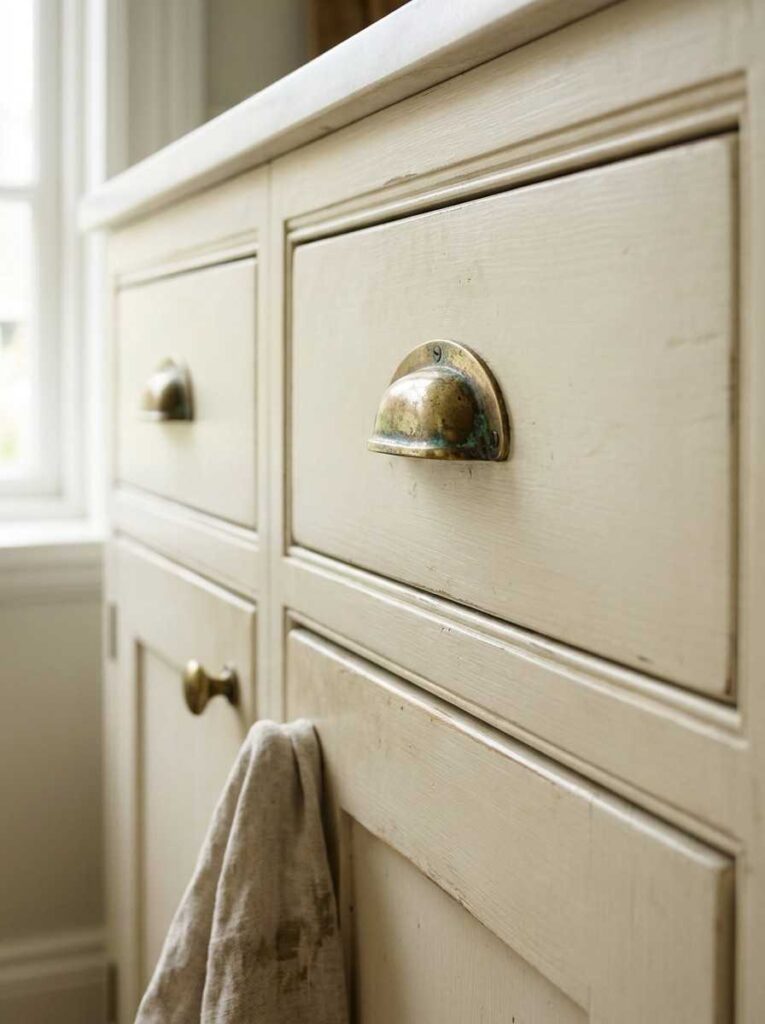
Choose a Butcher Block Countertop for Warmth
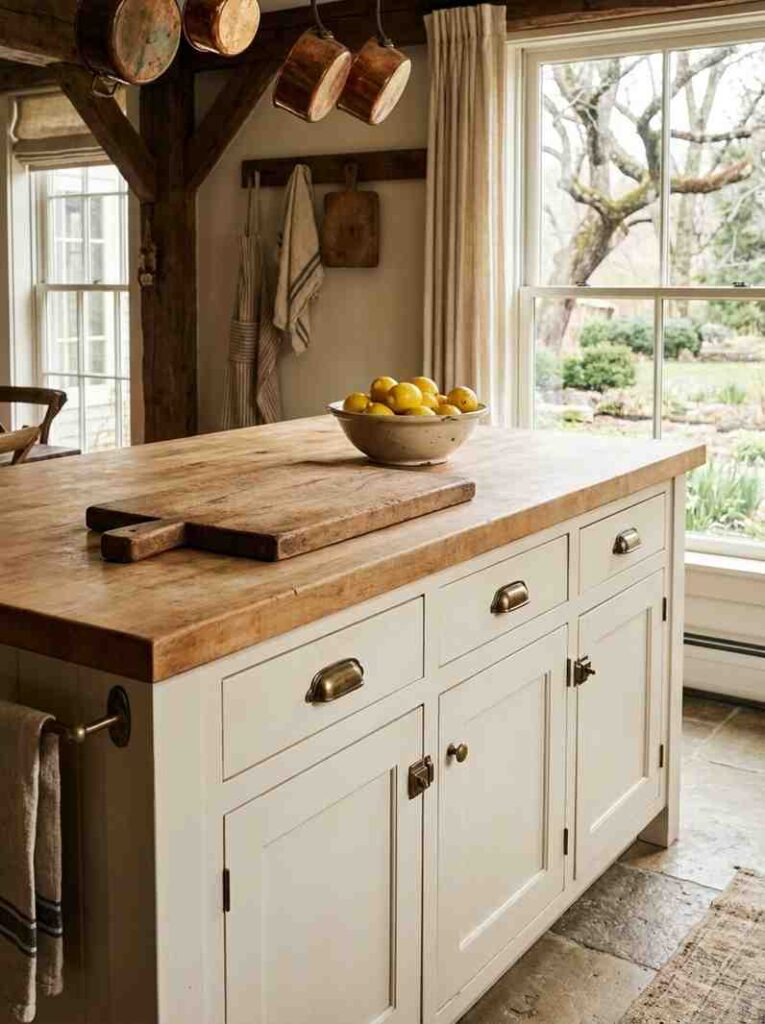
Butcher block countertops are a functional vintage kitchen idea that brings genuine warmth against white or pale cabinetry. Maple butcher block runs $35 to $70 per square foot installed, while walnut versions run $70 to $100. It pairs especially well with a farmhouse apron sink and open shelving for a cohesive collected-over-time look.
This idea suits home cooks who want a natural cutting surface built into the counter, since butcher block can be used directly for prep work if properly oiled. The downside is maintenance: it needs mineral oil treatment every one to two months and is more vulnerable to water rings and knife marks than quartz or granite. For an island top specifically rather than a full counter run, it is a manageable $400 to $700 investment.
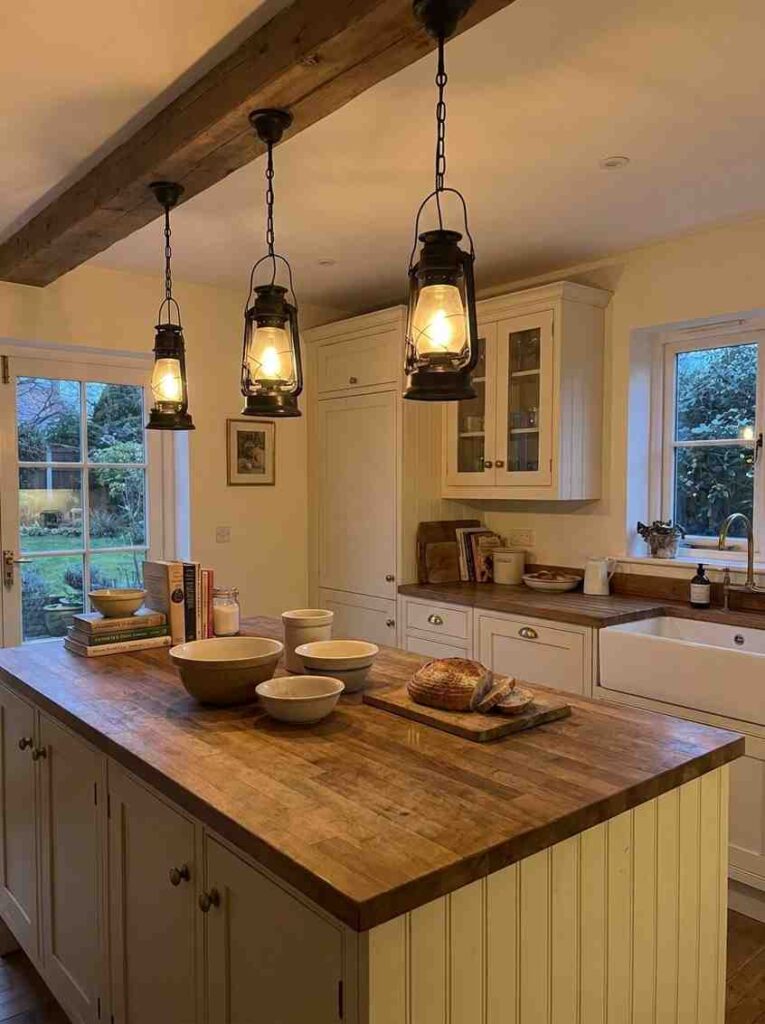
Hang a Vintage-Style Lantern Pendant Over the Island
Lantern-style pendant lighting is one of the most repeated vintage kitchen ideas because it does double duty as function and focal point. Metal lantern pendants from Rejuvenation or Pottery Barn run $150 to $400 each, and most kitchen islands need two to three fixtures spaced evenly. Black iron and aged brass finishes both read as authentically old-world under warm bulbs.
This idea works in nearly any kitchen size since pendant height can be adjusted to the ceiling. Use a 2,700K warm bulb, since anything cooler makes the aged metal finish look flat and modern instead of vintage. The only real limitation is ceiling height — rooms under 8 feet may feel cramped with oversized lantern fixtures hung too low.
Add a Vintage Rug for Softness Underfoot
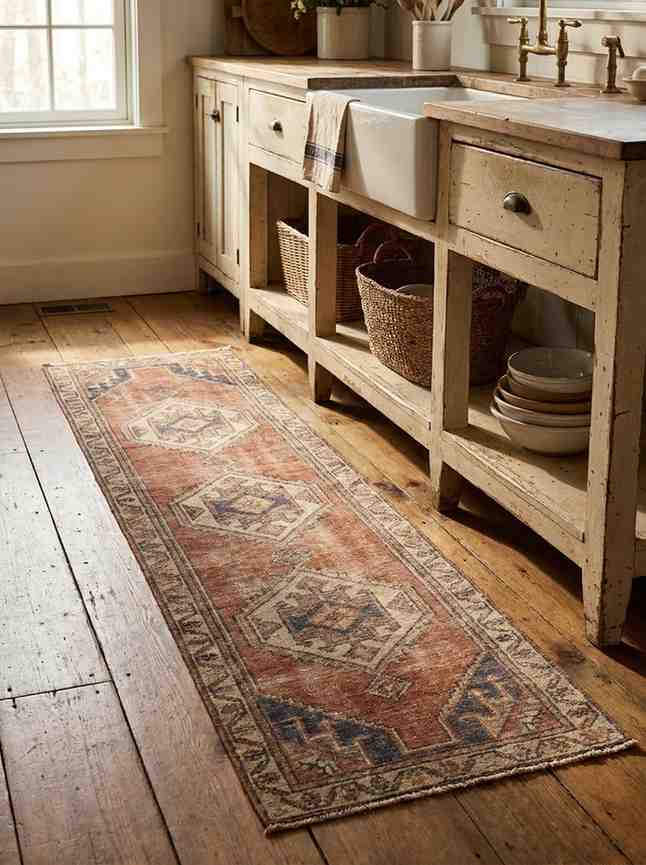
A vintage or vintage-style runner rug softens a kitchen floor and adds pattern without touching a single fixed surface. Genuine vintage Turkish or Persian runners run $200 to $600 depending on size and age, while machine-made vintage-style options from Ruggable or Loloi start around $80. This is the lowest-commitment vintage kitchen idea on this list and the easiest to change later.
It suits renters and anyone hesitant to commit to permanent changes, since a rug rolls up and moves with you. The trade-off is practicality in a working kitchen — spills happen, and a genuine wool vintage rug is harder to clean than a washable modern reproduction. For actively used kitchens, a washable vintage-pattern rug is the more realistic choice long-term.
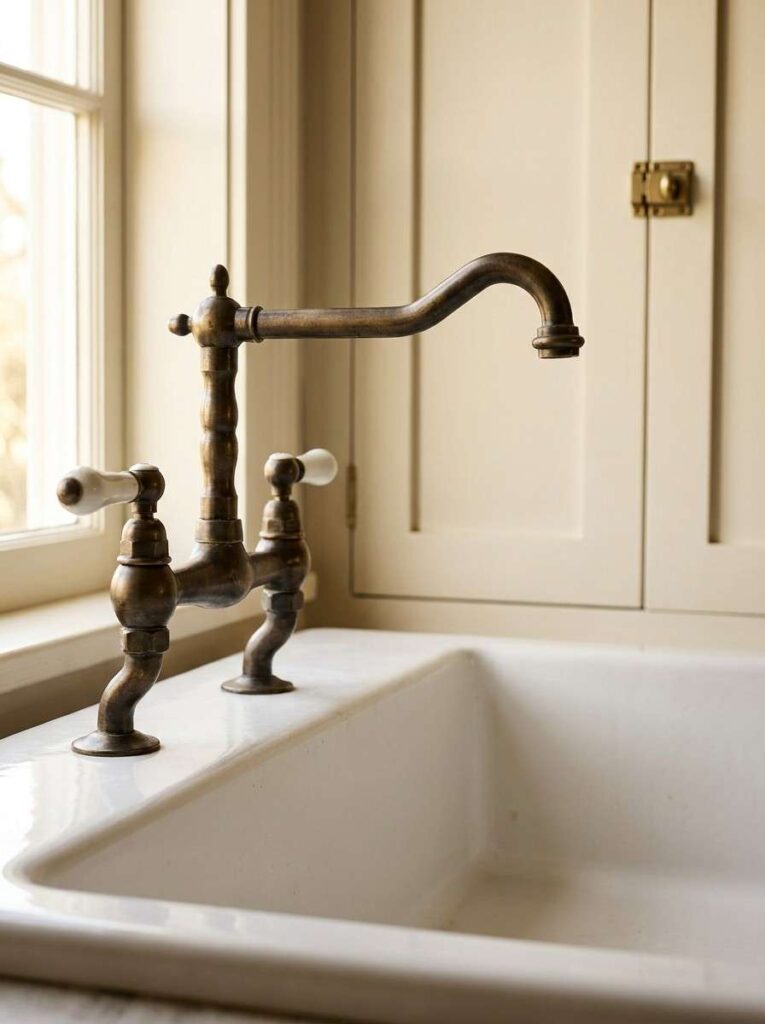
Install a Vintage-Inspired Faucet in Aged Brass
An aged brass or bridge-style faucet completes the vintage kitchen look at the one fixture guests interact with most directly. Kohler’s Artifacts bridge faucet runs $450 to $600, while Rohl’s Country Kitchen line starts around $700. Both come in unlacquered brass and aged bronze finishes designed to patina naturally.
This idea suits anyone already replacing a sink, since installing a bridge faucet needs two separate water lines rather than the single hole most modern faucets use. The visual payoff is significant — a tall gooseneck spout in aged brass reads as a genuine antique fixture even though the internal mechanism is fully modern. Budget an extra $100 to $200 for a plumber if your existing sink has only a single faucet hole.
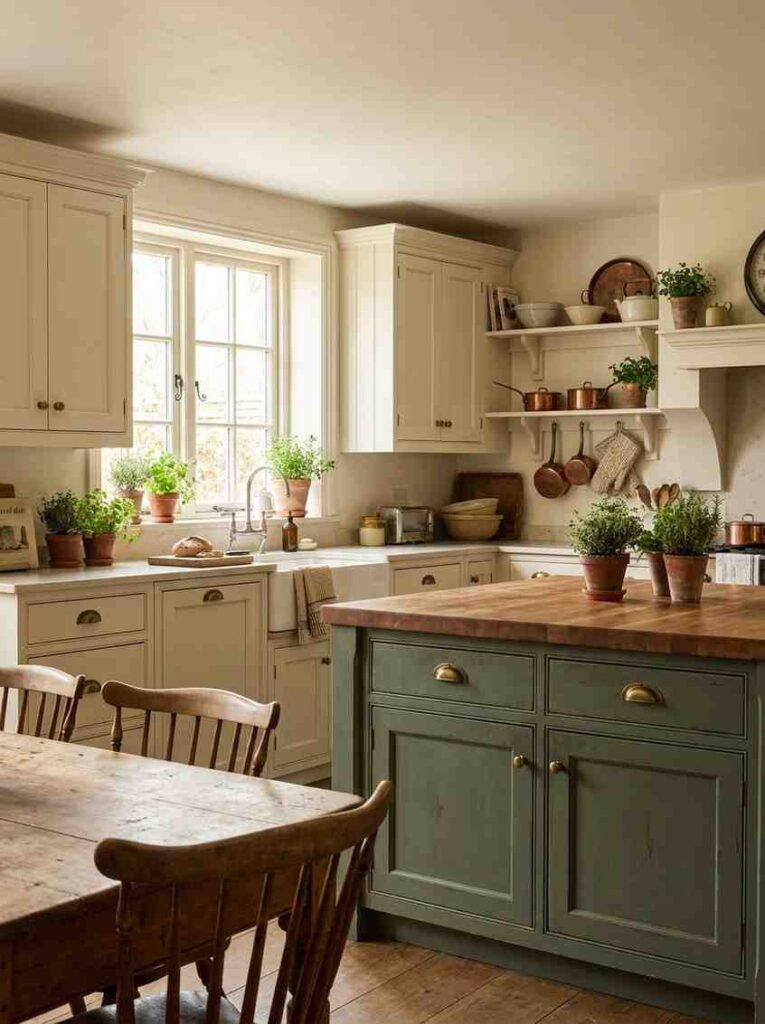
Paint the Kitchen Island a Different Color Than the Perimeter
A two-tone kitchen, where the island wears a bolder color than the surrounding cabinets, is one of the strongest vintage kitchen ideas trending into 2026. Benjamin Moore’s Stone Hearth, a soft warm greige, is a popular island choice against white perimeter cabinets. For a bolder vintage feel, a muted sage or navy island paired with cream perimeter cabinets creates instant depth. Repainting just an island runs $300 to $600 in materials and labor for a DIY approach.
This idea suits kitchens where the island already stands as a separate piece, structurally distinct from the surrounding counters. The benefit is a dramatic look at a fraction of the cost of a full repaint. The only real risk is color mismatch — always test both shades together in your actual kitchen lighting before committing to paint.
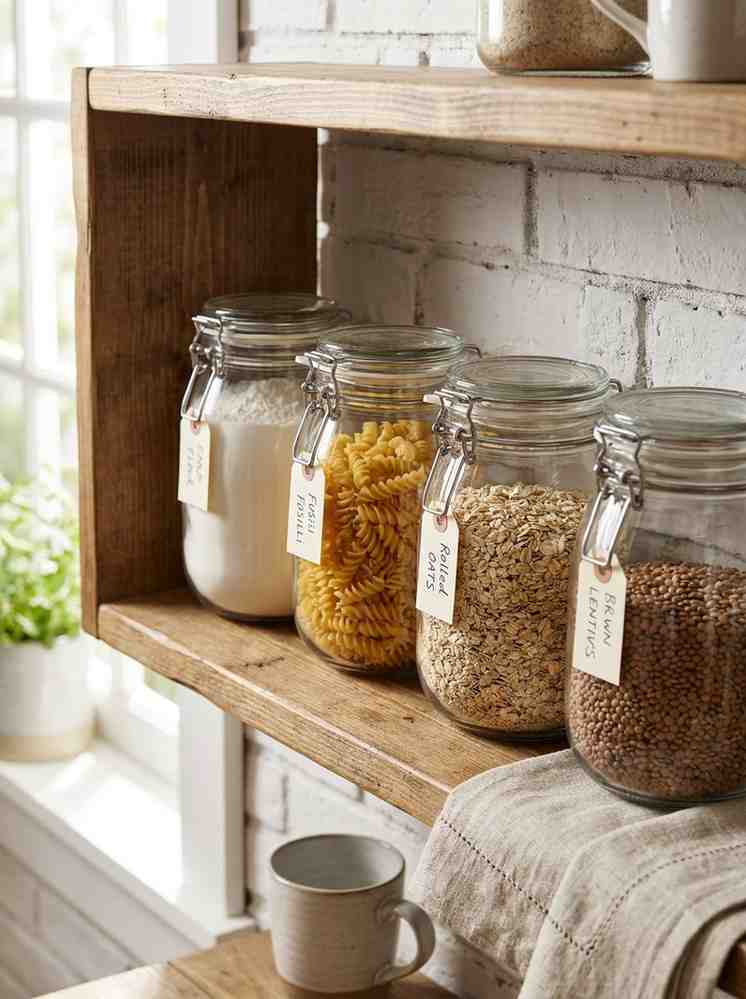
Use Vintage Glass Jars for Open Storage
Glass storage jars are a low-cost vintage kitchen idea that turns pantry staples into visible decor. A set of six vintage-style glass canisters with metal lids runs $30 to $80 at most home stores, while genuine antique versions from flea markets run $10 to $25 each. Filling them with flour, pasta, and grains creates the collected, lived-in look associated with older farmhouse kitchens.
This idea works especially well alongside open shelving, since the jars need visible storage to make sense. It suits anyone who already buys dry goods in bulk, since decanting from bags into jars takes extra time each grocery trip. The upside is real freshness benefit — glass jars with tight seals keep flour and grains fresher longer than the original paper packaging.
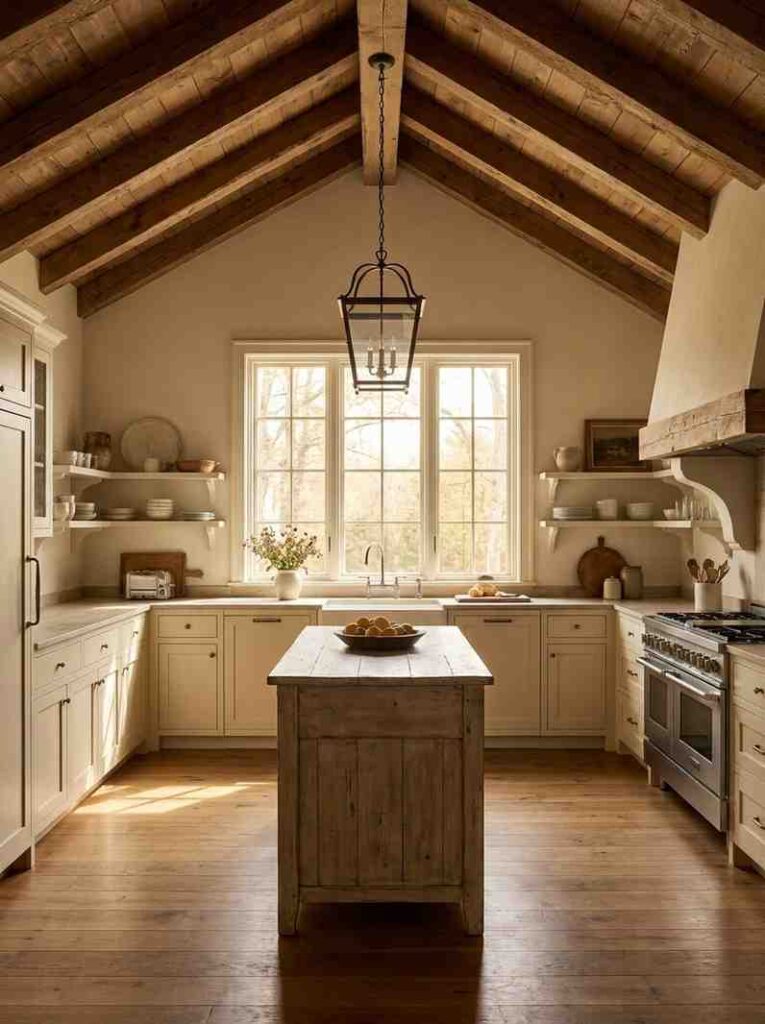
Add Wood Ceiling Beams for Architectural Character
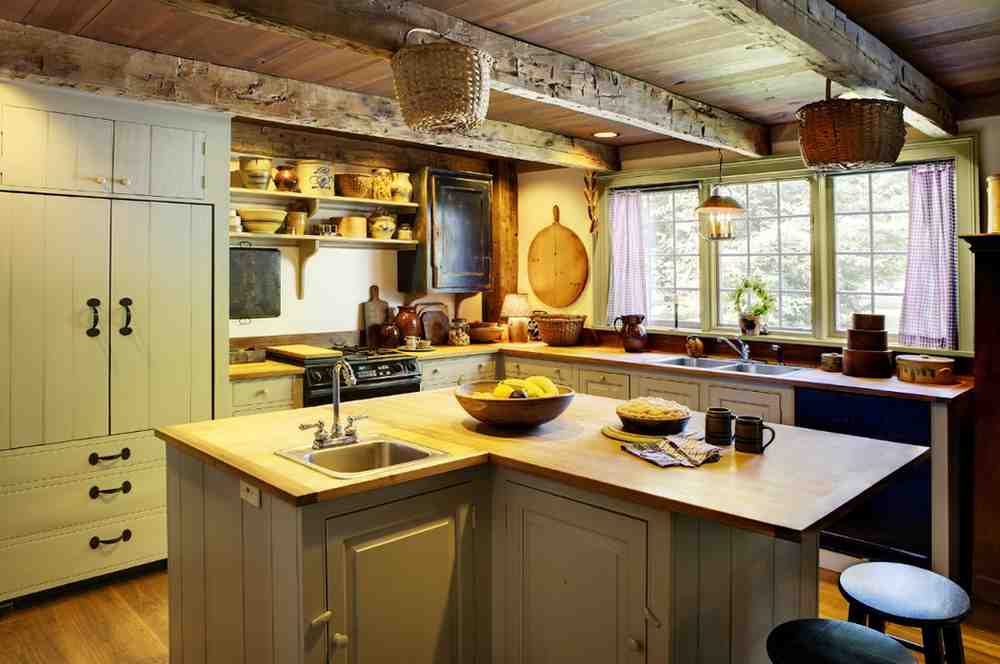
Exposed wood ceiling beams add genuine architectural weight to vintage kitchen ideas, especially in kitchens with vaulted or high ceilings. Faux beam kits made from polyurethane run $200 to $500 per beam installed, while genuine reclaimed wood beams run $400 to $900 each depending on length and species. Both create the same visual impact from floor level.
This idea suits kitchens with at least 9-foot ceilings, since beams in a standard 8-foot room can feel heavy and lower the perceived height. The faux polyurethane option is worth considering for most homeowners — it weighs a fraction of real wood, installs without structural reinforcement, and is difficult to distinguish from genuine timber once painted or stained.
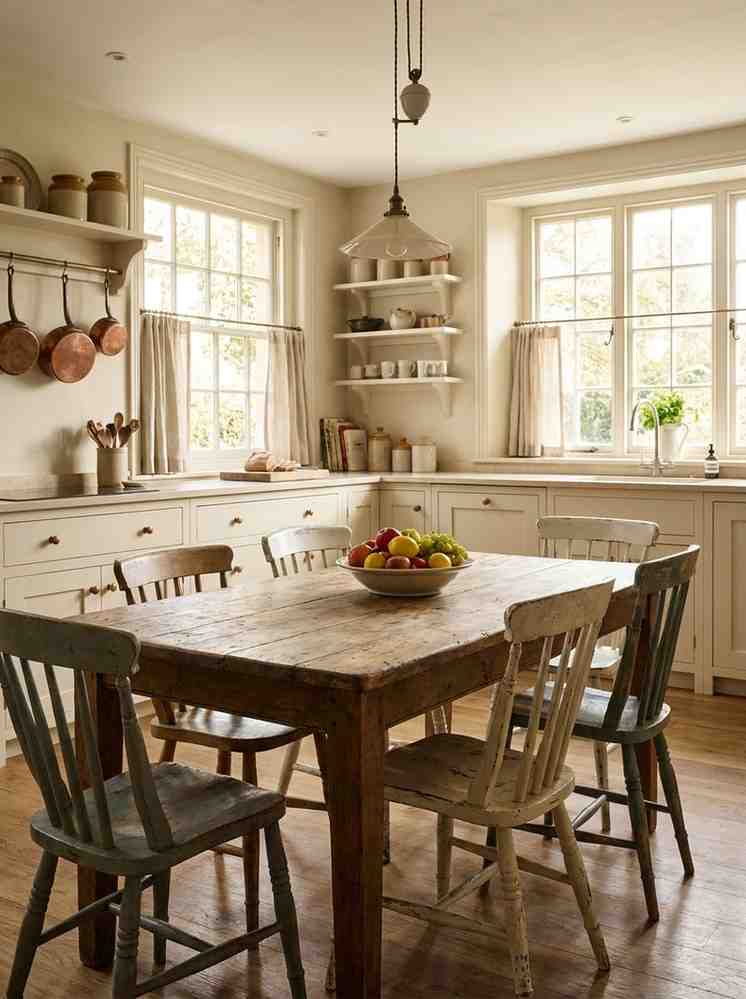
Choose a Farmhouse Table Instead of a Built-In Island
A freestanding farmhouse table in place of a fixed island is one of the most authentic vintage kitchen ideas for anyone wanting genuine old-world flexibility. Reclaimed wood farmhouse tables run $600 to $1,500 depending on size, and unlike a built-in island, the table can be moved, extended with leaves, or replaced entirely without construction.
This idea suits smaller kitchens or open-concept spaces where a permanent island would block flow. The trade-off is storage — a table offers none of the built-in cabinets and drawers a proper island provides, so this works best paired with generous open shelving or a butler’s pantry nearby. The benefit is real design flexibility that a fixed island can never match.
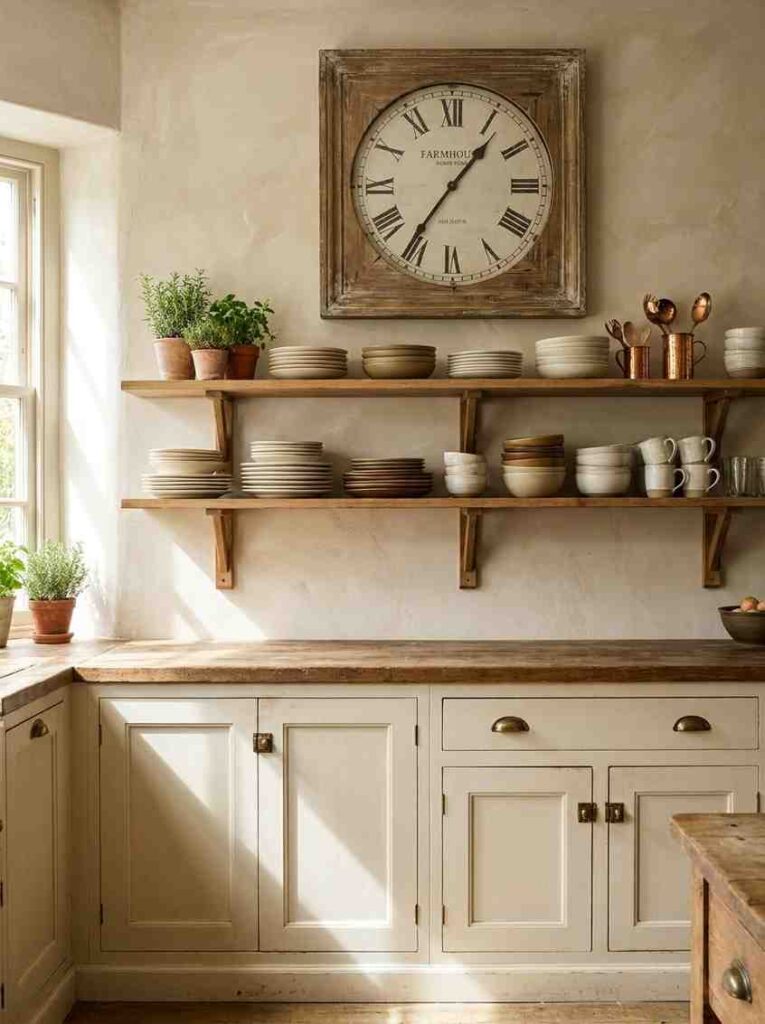
Add a Vintage-Style Wall Clock as a Focal Point
A large vintage-style wall clock is a small-budget vintage kitchen idea that adds instant character to an empty wall. Farmhouse clocks with distressed wood frames run $40 to $120 at most home decor retailers, and oversized 24-inch versions make a genuine style statement above open shelving or a doorway.
This idea suits nearly any kitchen layout since it requires only one nail and no permanent alteration. The one consideration is scale — a clock under 16 inches tends to look lost on a large kitchen wall, so sizing up is usually the better choice. It is one of the easiest vintage kitchen ideas to swap out seasonally without any real cost.
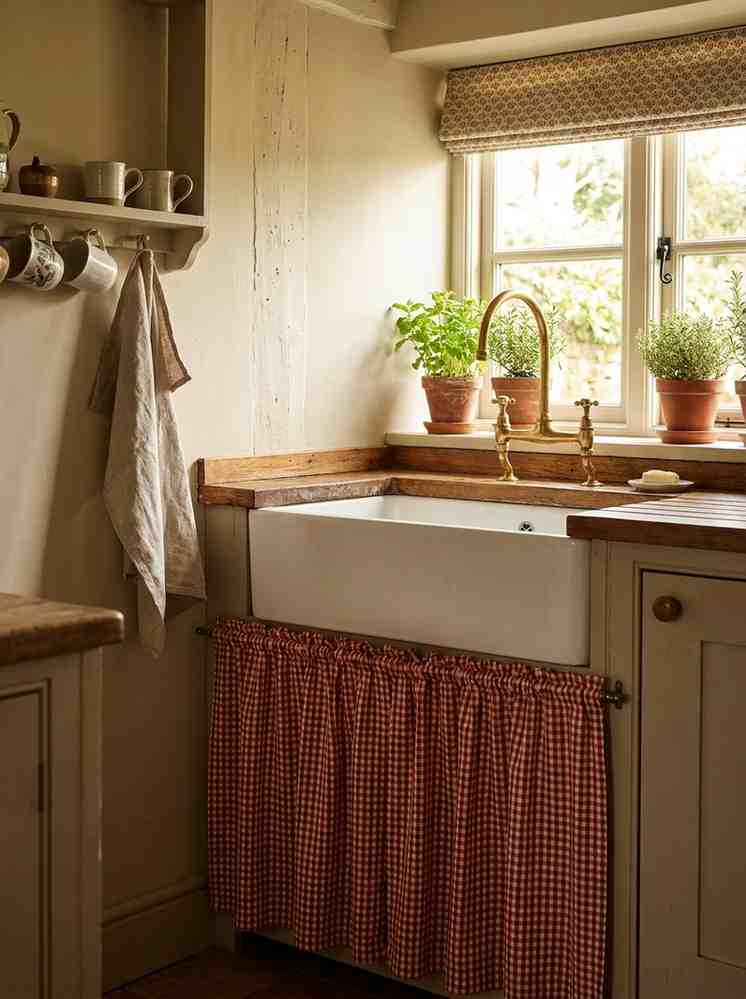
Use a Vintage Runner Curtain Under the Sink Instead of Cabinet Doors
A gathered fabric curtain in place of solid cabinet doors under the sink is a classic vintage kitchen idea borrowed directly from older farmhouse designs. A simple curtain rod and 2 yards of cotton or linen fabric costs $30 to $60 total, making it one of the cheapest updates on this entire list.
This idea suits kitchens where the under-sink cabinet doors are damaged or missing, since a curtain solves the problem without carpentry. The trade-off is that curtains do not seal out moisture and dust the way solid doors do, so it works best in kitchens with good ventilation near the sink. The charm factor, especially in a floral or gingham print, is hard to replicate with any modern cabinet door.
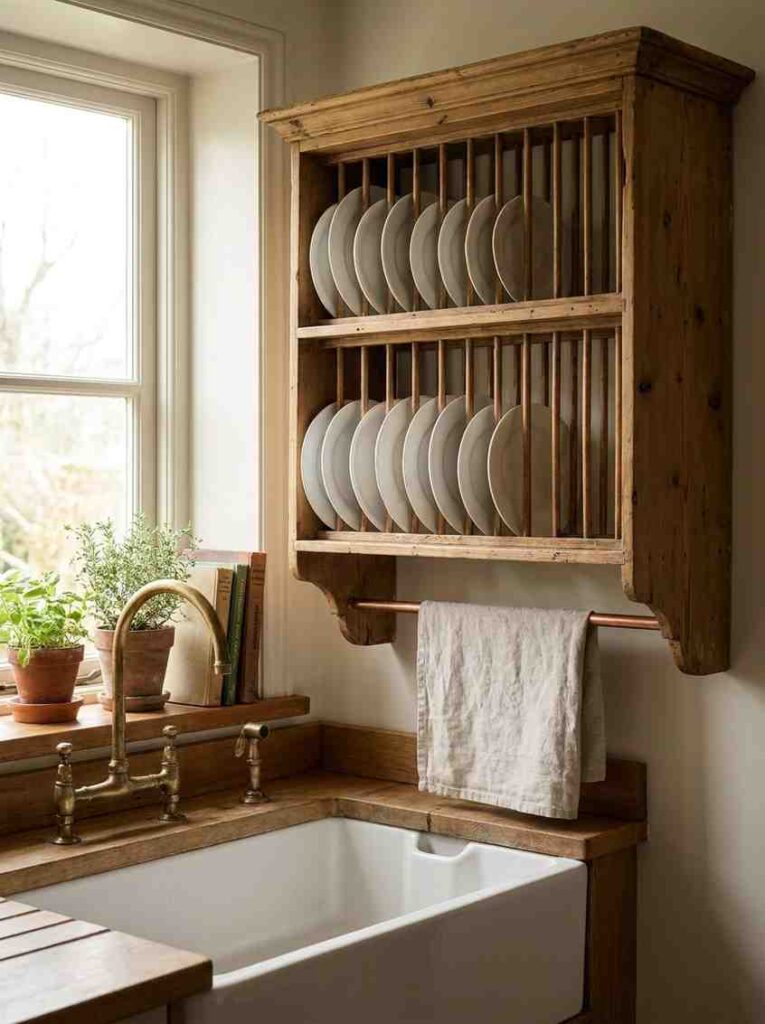
Add a Plate Rack for Vertical Vintage Storage
A wall-mounted or over-sink plate rack is a functional vintage kitchen idea that turns everyday dish storage into visible charm. Wood plate racks run $60 to $150, while a built-in version integrated into cabinetry during a renovation adds roughly $200 to $400 to the carpentry cost.
This idea suits kitchens with limited cabinet space, since a plate rack above the sink lets dishes air dry while doubling as storage. It works especially well paired with open shelving elsewhere in the room for a cohesive look. The main consideration is dust — plates left out longer than a few days will need a quick rinse before use.
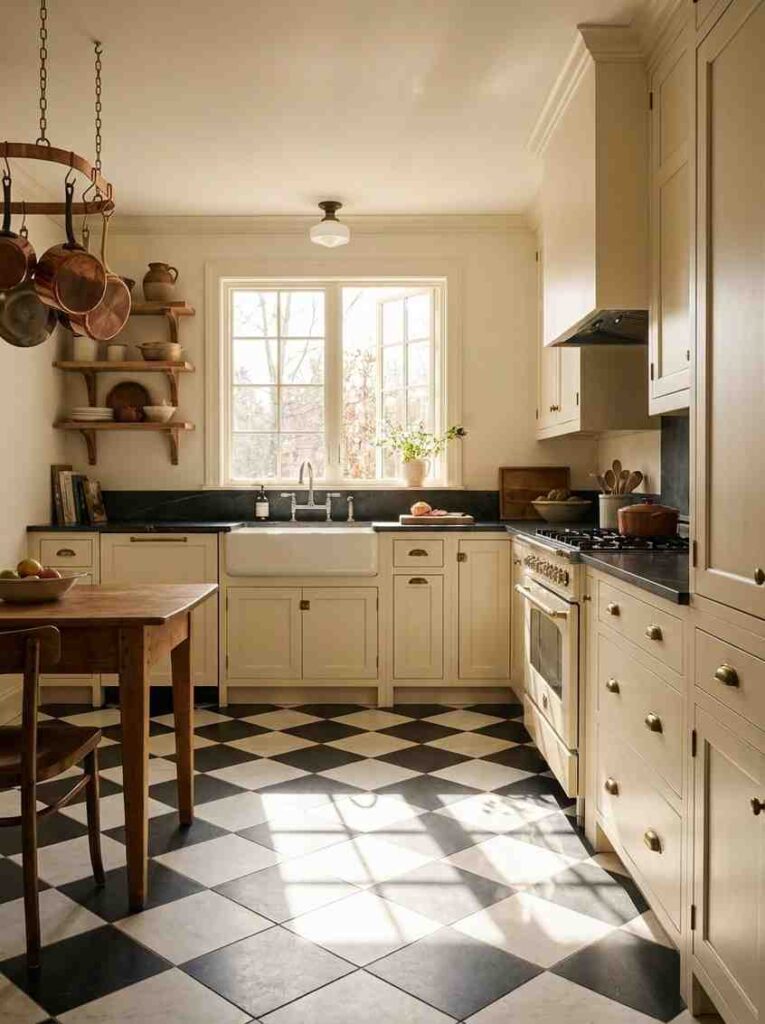
Choose a Checkered or Terracotta Tile Floor
Checkered black-and-white tile or warm terracotta flooring are two of the strongest flooring choices among vintage kitchen ideas for 2026. Porcelain checkered tile runs $6 to $12 per square foot installed, while genuine terracotta runs $8 to $18 per square foot depending on origin and finish. Both read as authentically old-world underfoot.
Checkered tile suits kitchens leaning toward a crisp 1940s diner aesthetic, while terracotta suits a warmer Mediterranean farmhouse feel. The trade-off with genuine terracotta is porousness — it needs sealing every one to two years to prevent staining. Porcelain checkered tile needs none of that maintenance, making it the lower-effort choice for busy households.
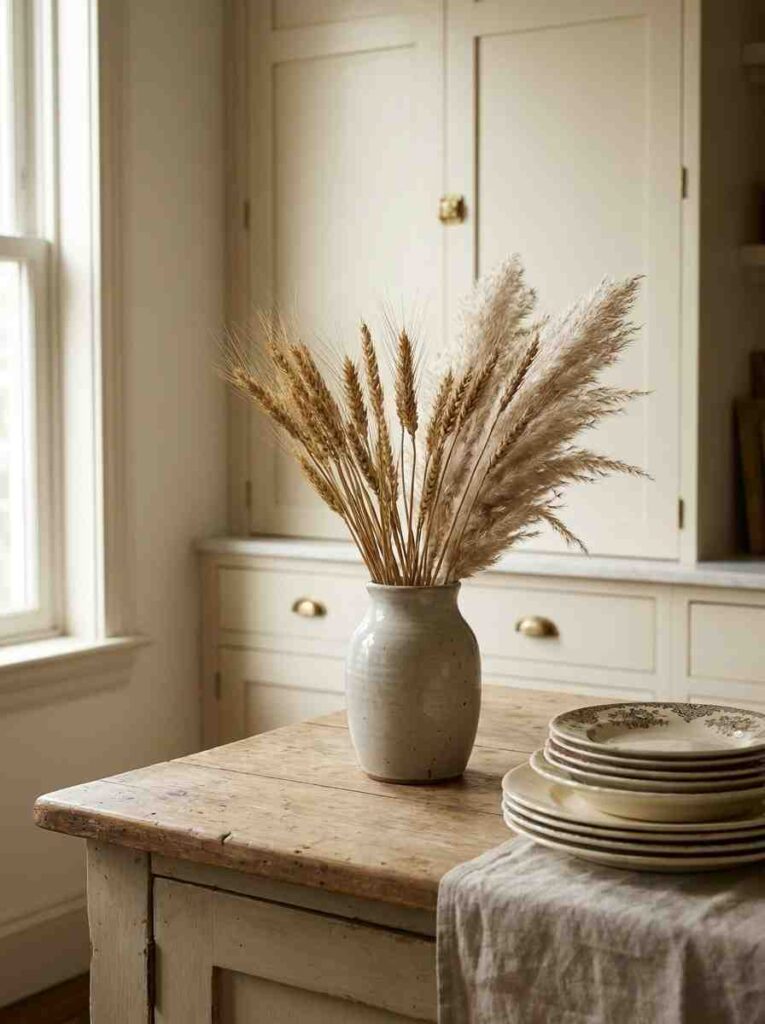
Add Dried Florals or Wheat for Simple Vintage Styling
Dried florals, wheat stalks, or eucalyptus in a simple ceramic vase bring the softest and cheapest vintage kitchen idea on this list to life. A bundle of dried wheat or pampas grass runs $10 to $25 at most florists or craft stores, and unlike fresh flowers, it lasts for months without water.
This idea suits any kitchen counter, windowsill, or open shelf with a few inches of empty space. It works especially well set against white or cream cabinetry, where the warm neutral tones of dried botanicals stand out clearly. The only real drawback is dust accumulation over time, so a gentle shake or light dusting every few weeks keeps the arrangement looking fresh.
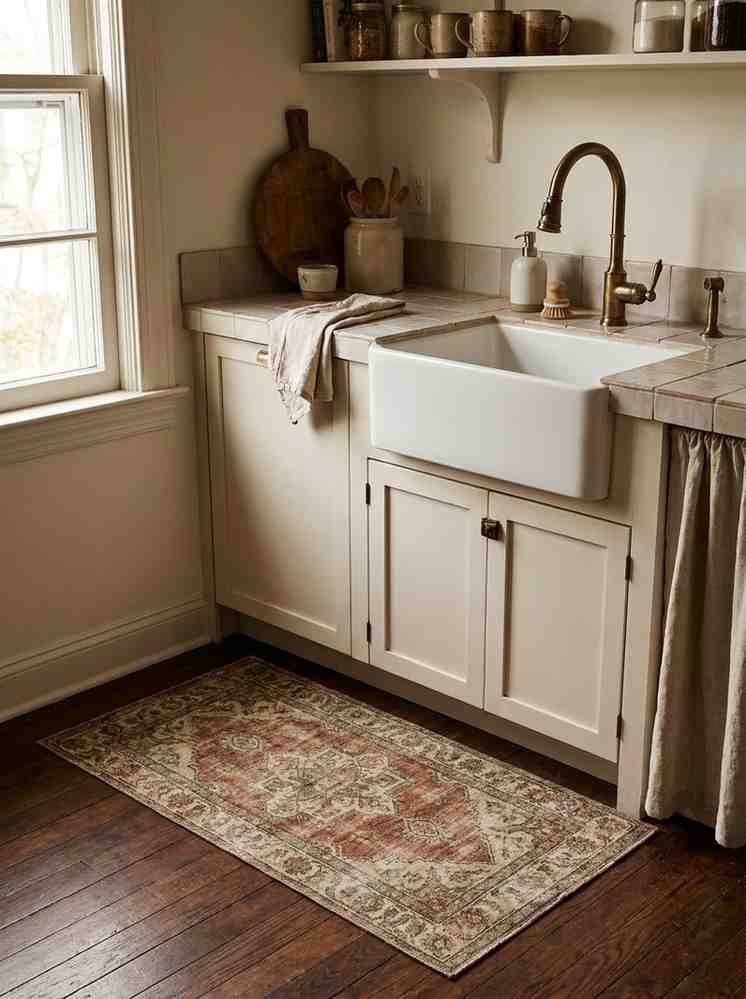
Layer in a Vintage Runner Rug at the Sink Area
A smaller accent rug placed specifically at the sink, separate from a longer runner elsewhere in the kitchen, is a practical vintage kitchen idea that protects feet and floors during dishwashing. Anti-fatigue vintage-pattern mats from Ruggable or Boutique Rugs run $60 to $120 and combine cushioned comfort with a faded vintage print.
This idea suits anyone who spends significant time standing at the sink, since the cushioned base reduces foot and back strain during long cooking sessions. It pairs naturally with the checkered or terracotta flooring covered earlier in this list, adding warmth directly where it matters most. Machine-washable versions solve the practicality concern that comes with placing any textile near a working sink.
Frequently Asked Questions
What makes a kitchen look vintage in 2026?
Vintage kitchen ideas in 2026 combine farmhouse sinks, shaker cabinets in Benjamin Moore White Dove OC-17, open shelving, and brass hardware with modern function. The look borrows retro details like lantern pendants and checkered tile without sacrificing storage or working appliances.
Is a vintage kitchen more expensive than a modern one?
Not necessarily. Small vintage kitchen ideas like brass hardware, glass jars, and dried florals cost under $100 combined. Larger changes like an apron sink or retro range cost more upfront, but many vintage kitchens actually save money by keeping existing cabinets and repainting rather than replacing them.
What paint color is best for a vintage farmhouse kitchen?
Benjamin Moore White Dove OC-17 is the most popular choice, with an LRV of 85 for a bright, warm base. Sherwin-Williams Alabaster SW 7008 is a slightly warmer alternative. For a two-tone island, Benjamin Moore Stone Hearth adds a soft greige contrast without feeling cold.
Do vintage kitchens work in small spaces?
Yes. Open shelving, a vintage runner rug, brass hardware, and a plate rack all suit small kitchens since none require structural changes. A freestanding farmhouse table instead of a built-in island also works well in tighter, open-concept layouts.
Final Thoughts
The best vintage kitchen ideas mix one or two bold moves, like a farmhouse sink or retro range, with several low-cost details like brass hardware, glass jars, and open shelving. You do not need every idea on this list. Pick two or three that fit your budget and your kitchen’s bones, and start there this month.