23 Master Bedroom Wardrobe Designs for 2026 With Real Sizes and Costs
Most bedroom wardrobe articles show pretty pictures. None of them mentions the wardrobe was 55 cm deep — too shallow to hang clothes without creasing. I made that mistake on my first build-in. This gives you the real specs, real costs, and 23 wardrobe design in bedroom ideas worth copying in 2026.
What is the best wardrobe design for a master bedroom in 2026?
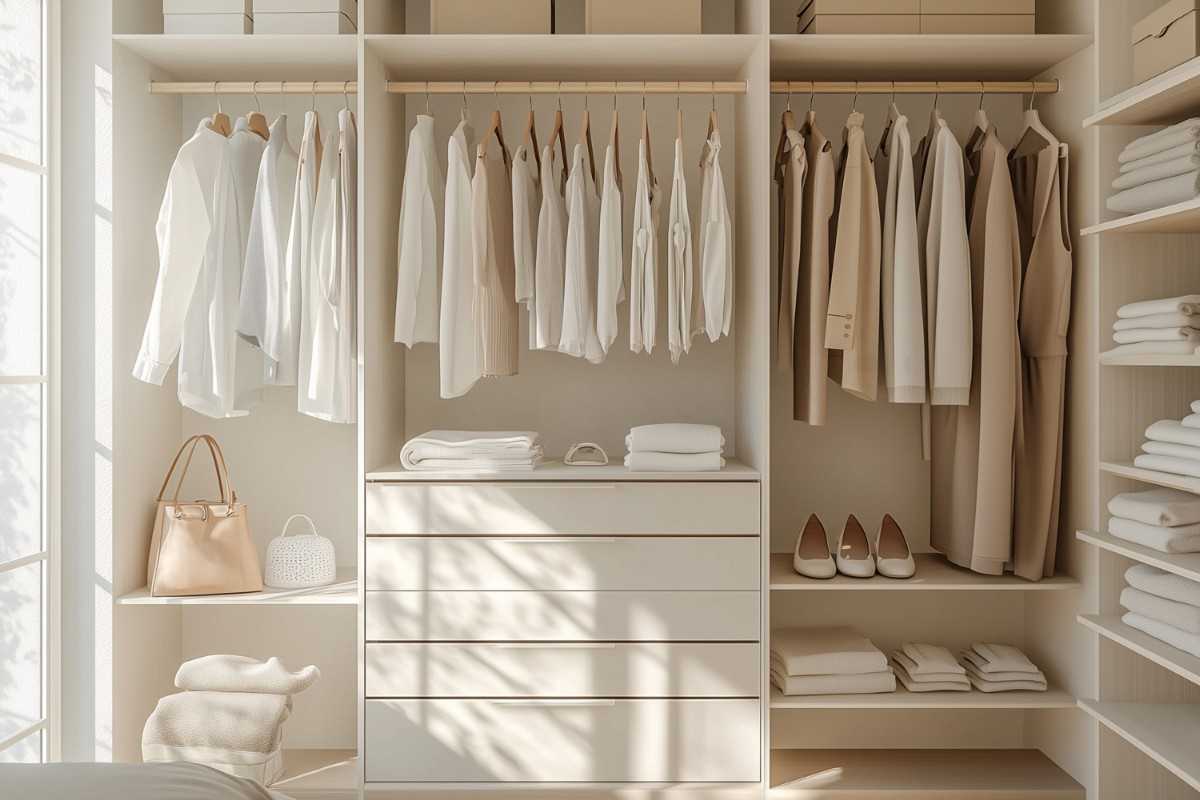
Floor-to-ceiling built-in, minimum 60 cm deep, with matte laminate or oak veneer doors, soft-close hinges, and LED sensor lighting. The bedroom wardrobe design trend for 2026 is Dark Japandi — smoked oak, walnut, or muted gray-green. UK cost averages £2,600 installed; a full four-door bespoke suite reaches £10,000.
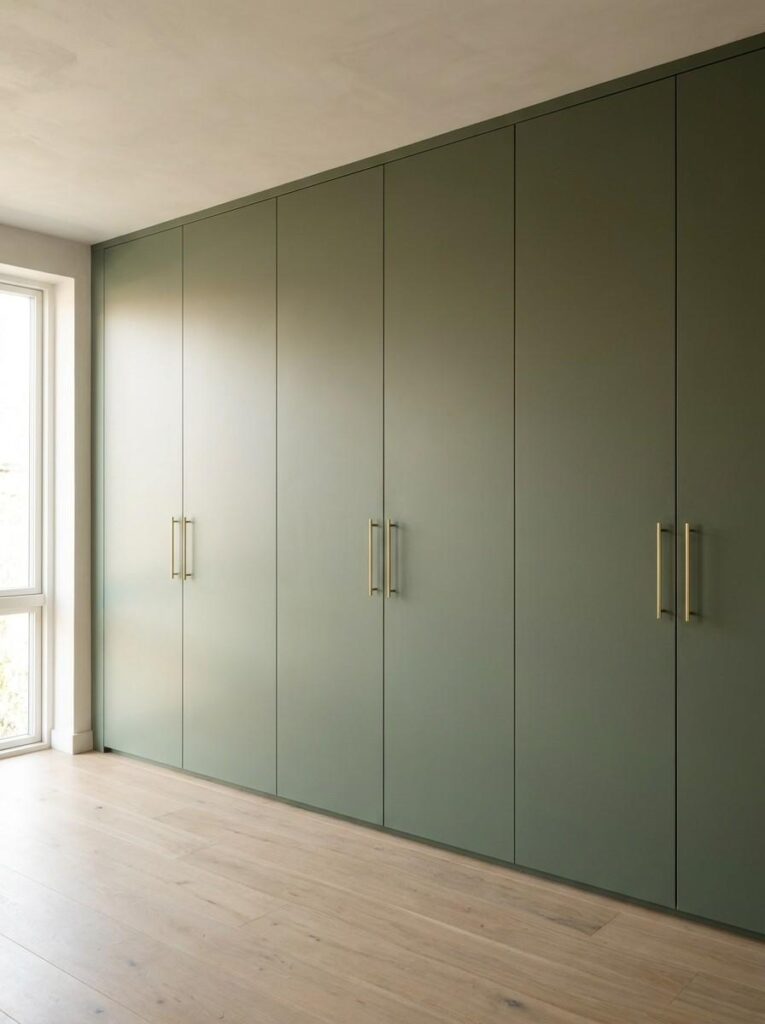
Floor-to-Ceiling Bedroom Wardrobe Design That Frames the Whole Wall
A floor-to-ceiling wardrobe maximizes storage and makes the ceiling feel taller. The key measurement people miss: depth. Go 67 cm for a comfortable hang. Under 60 cm and clothes hit the door. I regret every inch I shaved off on my first build. Use MDF with matte laminate in Valspar Warm Eucalyptus (8004-28F). Soft-close hinges are non-negotiable at this scale.
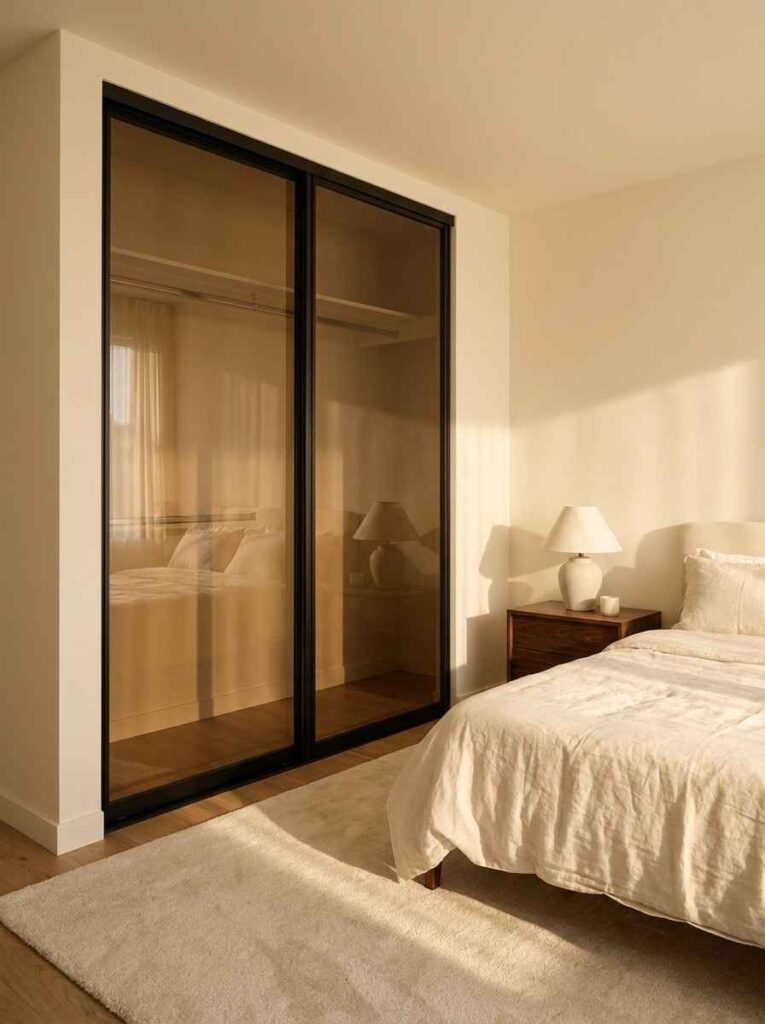
Sliding Door Wardrobe for Tight Master Bedrooms
Sliding doors work where hinged doors can’t swing freely. You need 90 cm of clear floor in front of a hinged wardrobe. Without it, sliding wins. Keep each panel under 120 cm wide — wider, and it drags on the track. The 2026 design for a bedroom wardrobe with sliding doors leans into matte finishes and bronze-tinted glass in black aluminum frames. Spaceslide interior add-ons start at £131.99.
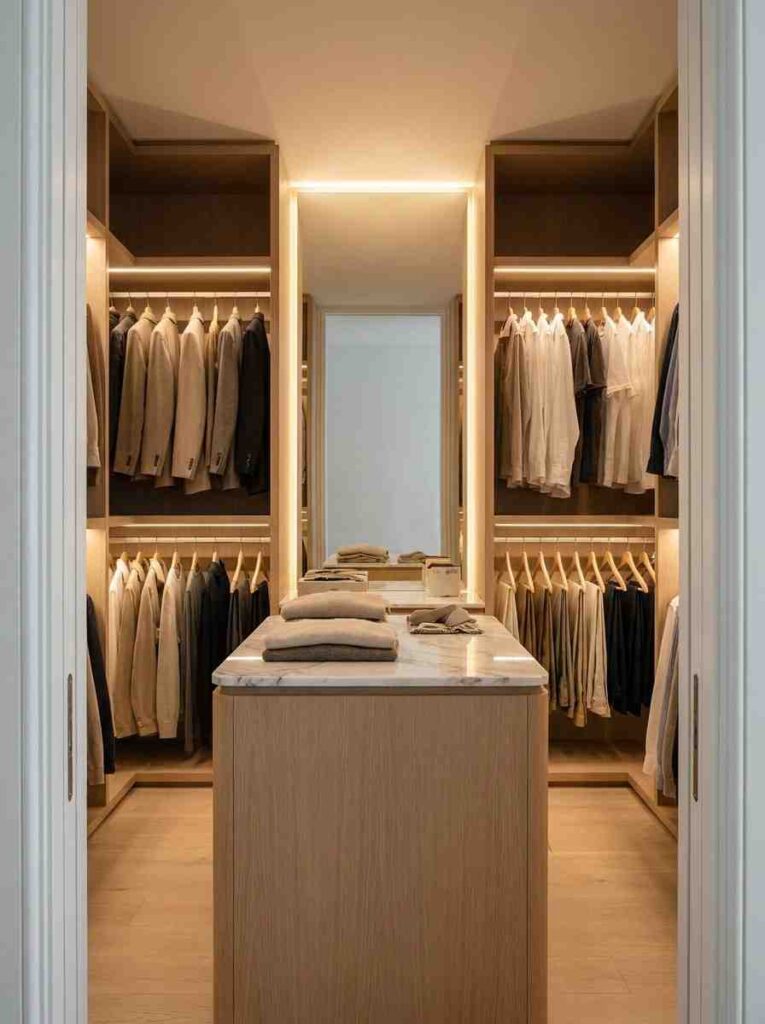
Walk-In Wardrobe With a Central Island
A walk-in wardrobe separates the sleeping zone from the dressing zone. You need at least 1400 mm depth and 900 mm of clear walkway between hanging rails. Plan double-hanging on one side — rails at 100 cm and 50 cm. Warm LED strips along shelf edges show fabric colors accurately. Overhead lighting alone can not do that.
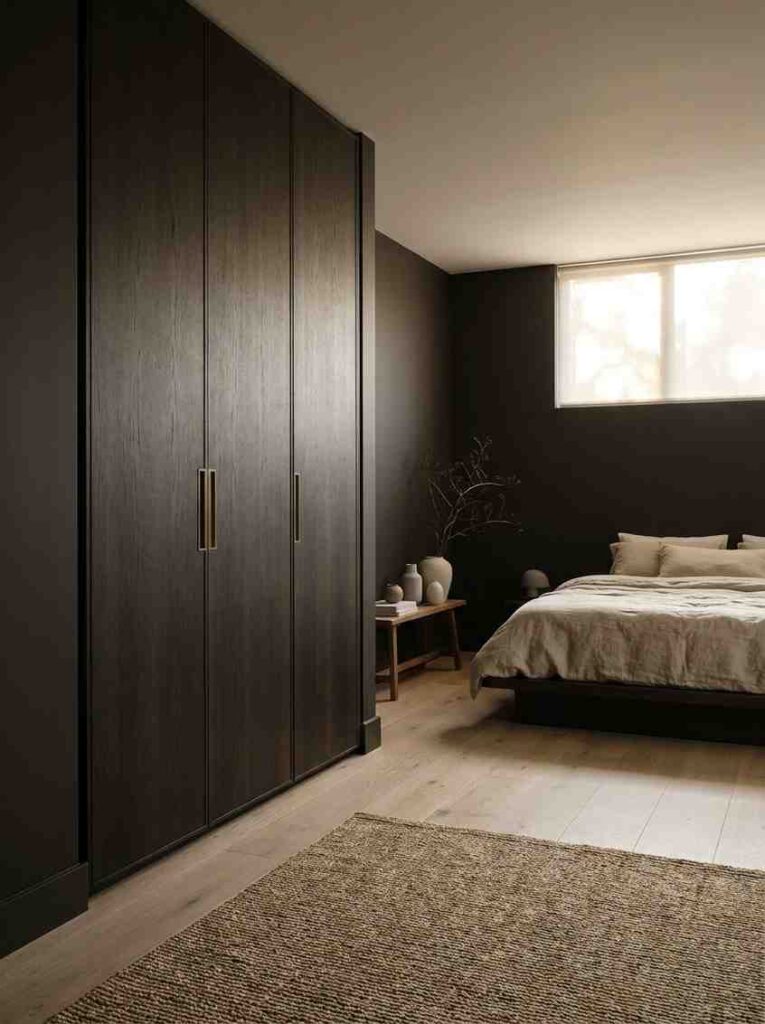
Dark Japandi Bedroom Wardrobe Design in Smoked Oak
This is the 2026 shift most articles have not caught. Pale Japandi — birch veneer and white panels — is fading. Dark Japandi is replacing it: smoked oak doors, walnut carcasses, charcoal interiors, brass hardware. Pair this wardrobe design for the bedroom with Benjamin Moore Silhouette AF-655 on the walls. That espresso shade makes smoked oak look intentional, not gloomy.
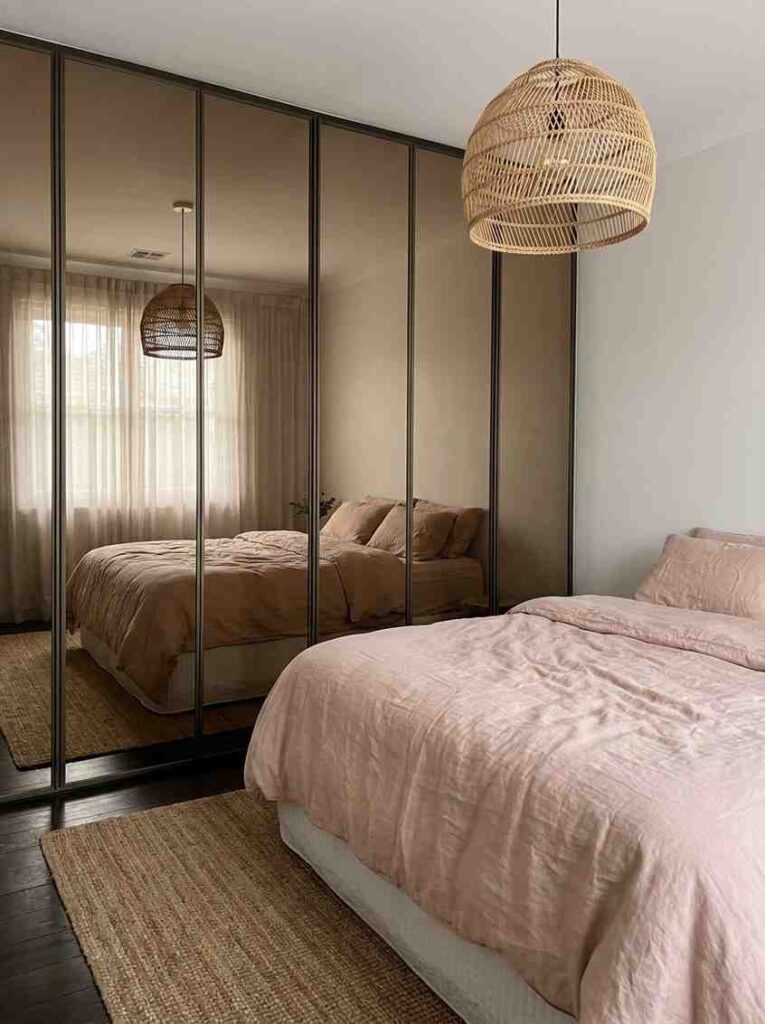
Mirror-Front Wardrobe That Makes Small Rooms Feel Larger
A wardrobe design with a mirror front reflects light and removes the need for a separate dresser. Use tempered glass only. Always pair mirror wardrobes with warm lighting — cool white makes skin tones look wrong at 7 am. For a small bedroom wardrobe design that feels luxurious, choose bronze or smoke tint over flat silver. Flat silver reads “budget hotel.”
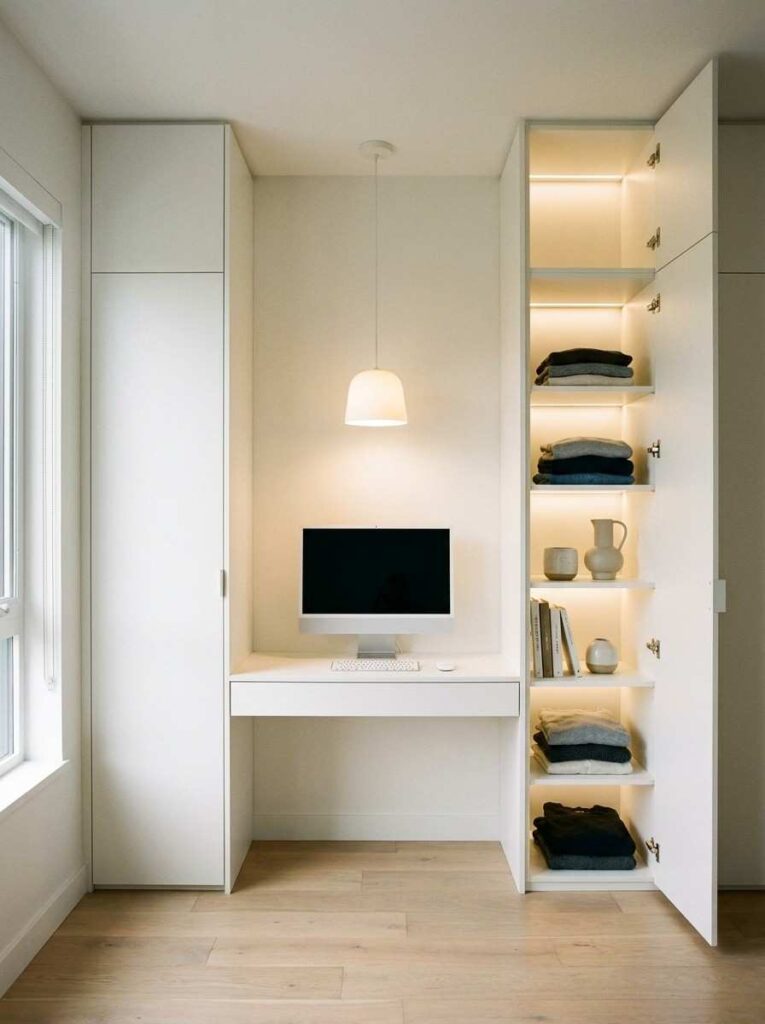
Wall-to-Wall Wardrobe With a Built-In Desk
A bedroom wall wardrobe design with a built-in desk tucks a work nook between two wardrobe towers. The desk needs 60 cm depth and 75 cm clear height above the surface. Keep door alignment consistent across the whole wall — otherwise it reads as separate furniture pushed together, not one unit.
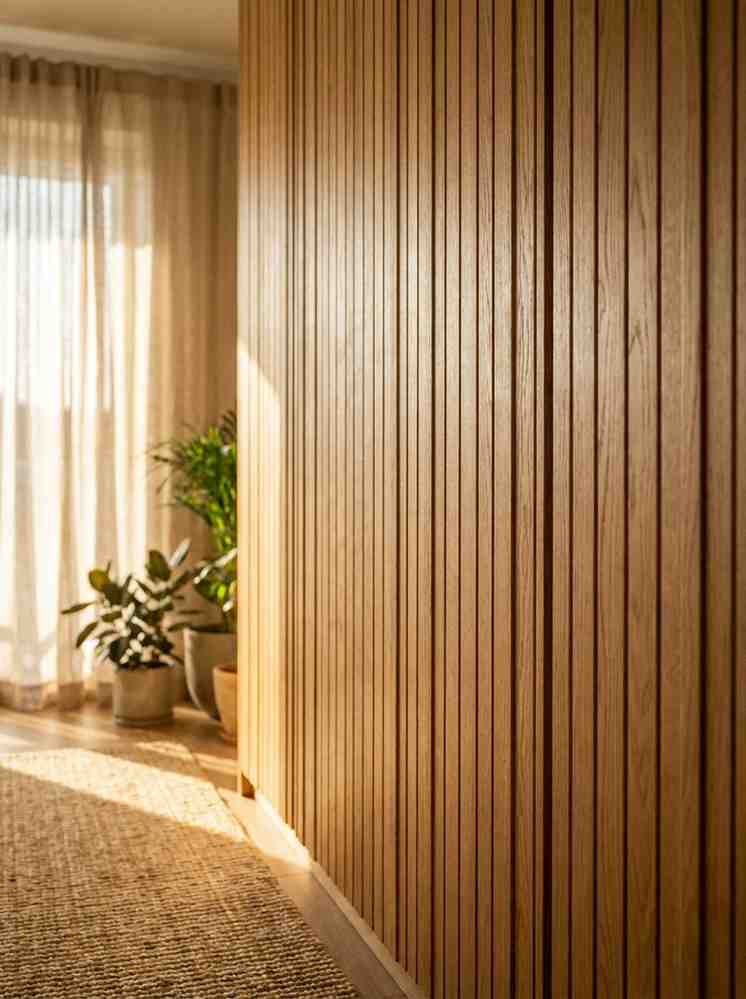
Wooden Wardrobe With Fluted Panel Detail
The bedroom wooden wardrobe design getting the most attention in 2026 has fluted vertical panels on door fronts. Fluting adds texture without color. It works in every style. Use high-grade plywood beneath any veneer — low-grade particle board loses screw grip within years. I’ve seen doors sag on budget builds faster than anyone warns you.
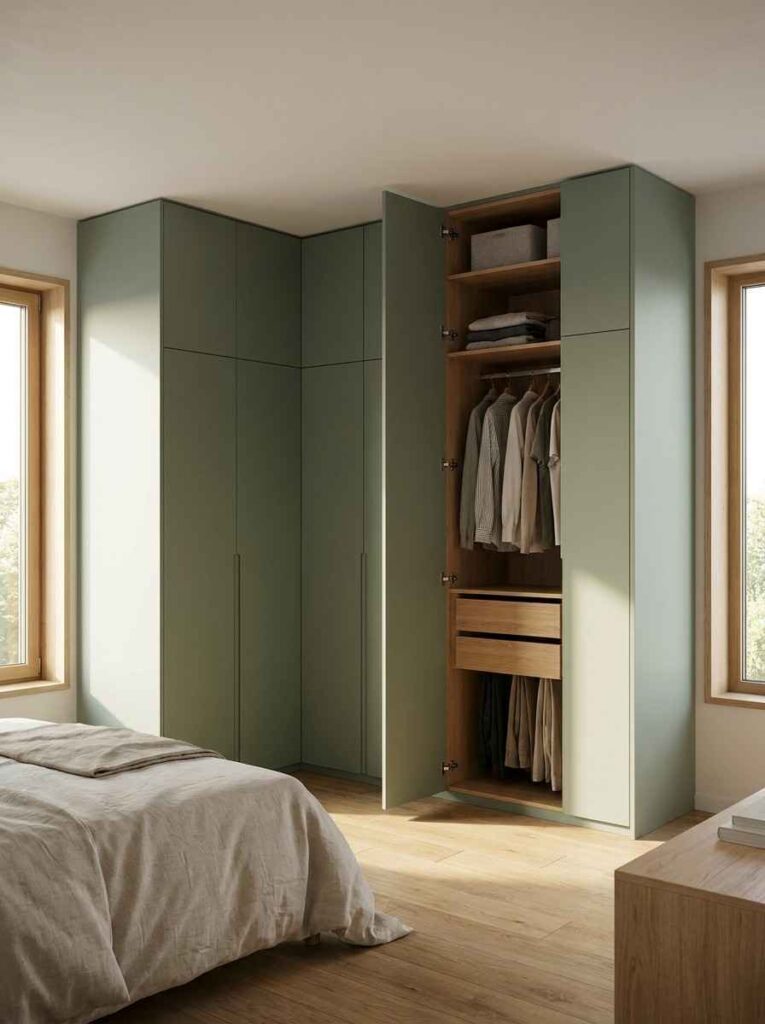
L-Shaped Wardrobe for Corner Bedrooms
An L-shaped wardrobe design for the bedroom turns an awkward corner into storage. One side handles hanging. The other handles shelves and drawers. A right-angle carousel unit at the internal corner makes the space reachable. Without one, the corner becomes dead space: clothes you buy, forget, and find a year later.
Built-In Wardrobe With a Painted Interior
This is the gap every competitor misses. Keep the exterior neutral. Paint the interior Behr Hidden Gem (N430-6A) — a smoky jade-blue-green. Open the door, and it looks like a jewellery box. An IKEA PAX at 150x60x236 cm starts at $390. A contrasting interior makes it look like a £2,000 fitted wardrobe. This is the best-value upgrade in 2026.
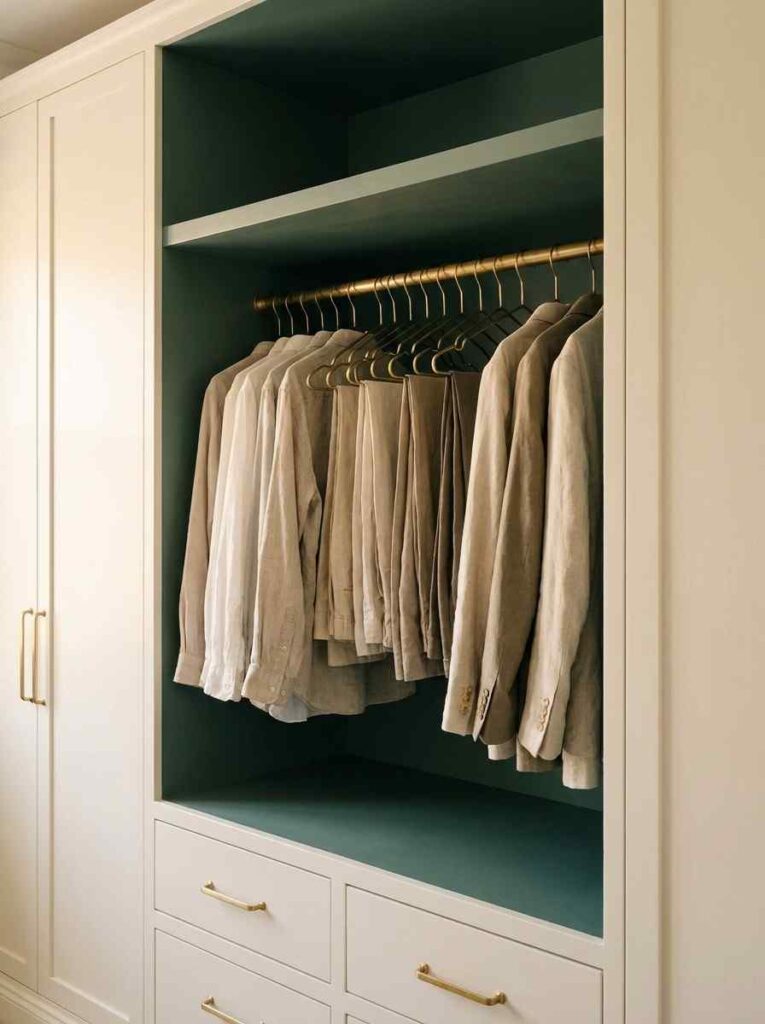
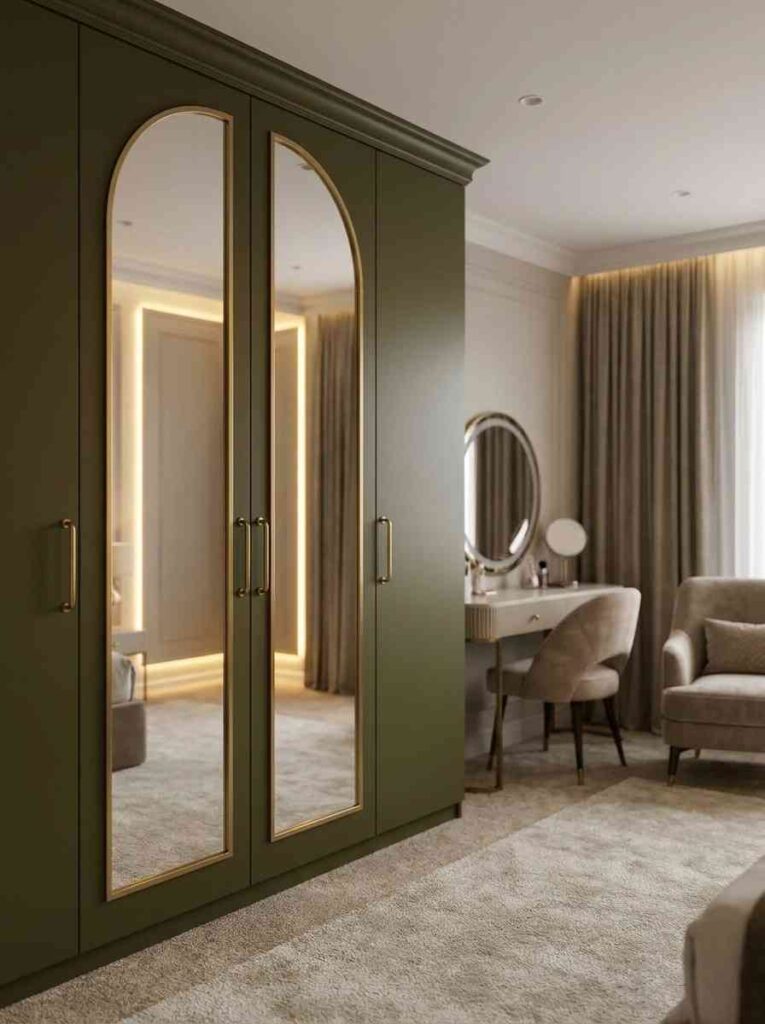
Hinged Door Wardrobe With Arched Mirror Panels
The arched mirror is the 2026 wardrobe detail everyone is pinning. An arched top on a mirrored panel breaks the rigidity of straight lines. Go ceiling height if you can. Keep the frame satin brass or matte black. I keep seeing olive cabinetry paired with an arched gold mirror in Homes & Gardens features this year — it is the combination that stops a scroll.
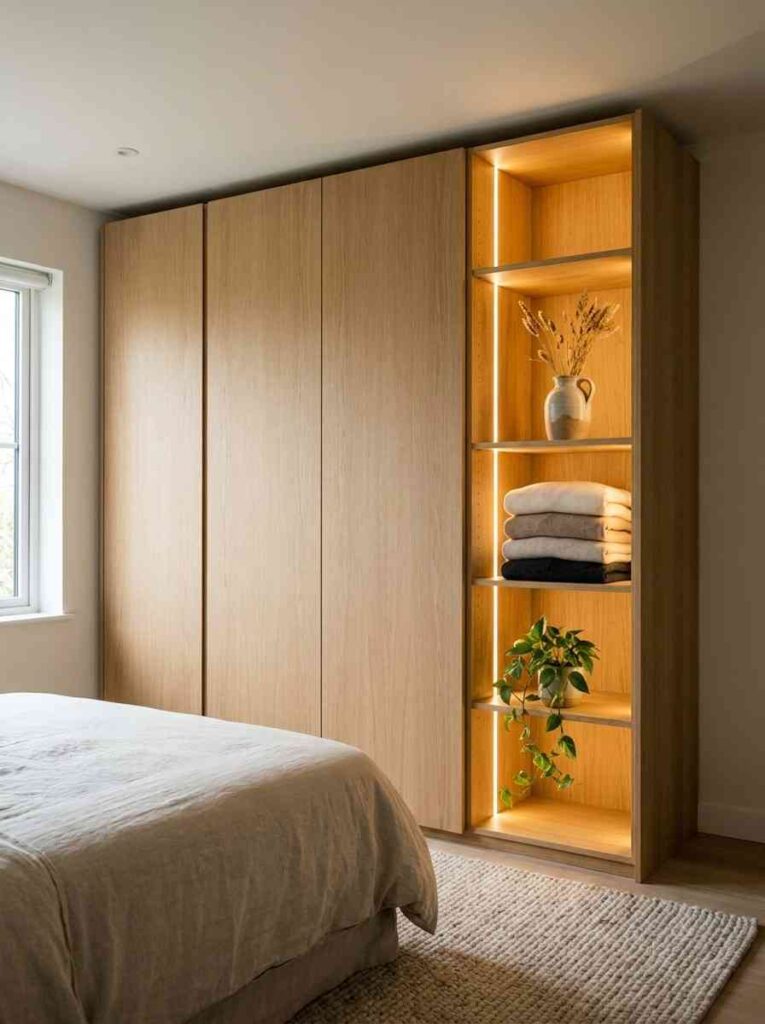
Modular Wardrobe With Open Shelf Display Zone
Modern wardrobe design for bedroom in 2026 mixes closed doors with open shelving — for books, folded knitwear, ceramics, trailing plants. Keep the open section under one-third of the total width. More than that, and it looks like a bookcase. Stack folded sweaters in groups of three maximum. Beyond that, the piles tip.
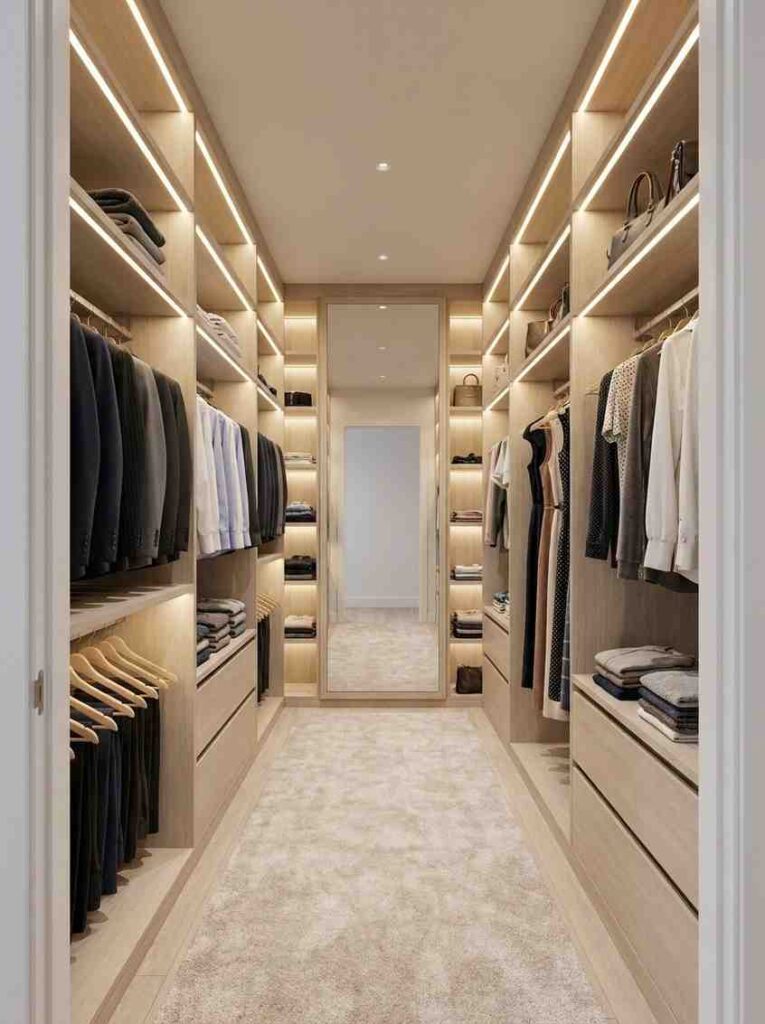
His-and-Hers Wardrobe Design for Couples
Nobody writes about this, but couples search for it constantly. The person with longer garments needs 160 cm of clear hanging height. The person with more folded items needs drawer units, not rails. Use an internal divider panel — not just a shelf — to create two genuinely separate zones. For a shared walk-in, plan 1400 mm depth and 900 mm clearance between facing rails.
Sliding Wardrobe With Fabric Panel Inserts
Fabric-insert sliding doors look genuinely different. The center panel is upholstered in linen, boucle, or reeded fabric instead of wood or glass. This works in a quiet luxury or tactile bedroom. Avoid it in busy households: fabric marks more easily than laminate and is harder to clean.
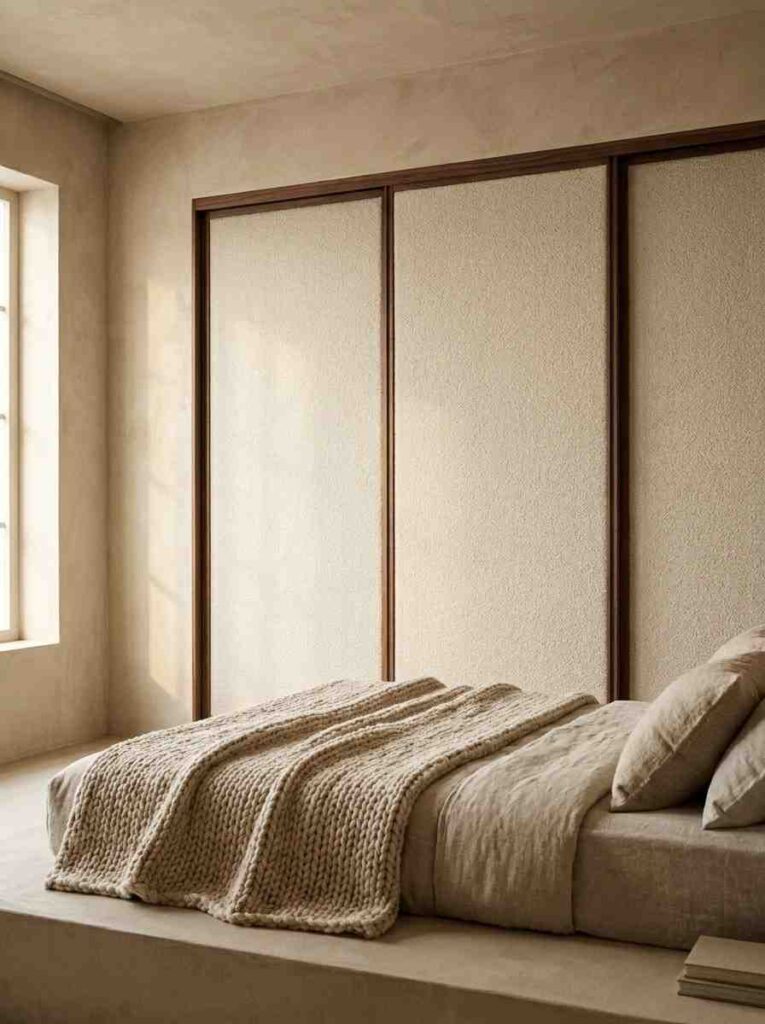
Fitted Wardrobe That Frames a Fireplace
Built-in wardrobe units on either side of a chimney breast frame the fireplace and make the bedroom feel architecturally resolved. In 2026, the panels flanking the fire use fluted or reeded doors. The wall above the fire gets a round mirror or artwork. The total width of both wings usually runs 1500–2000 mm.
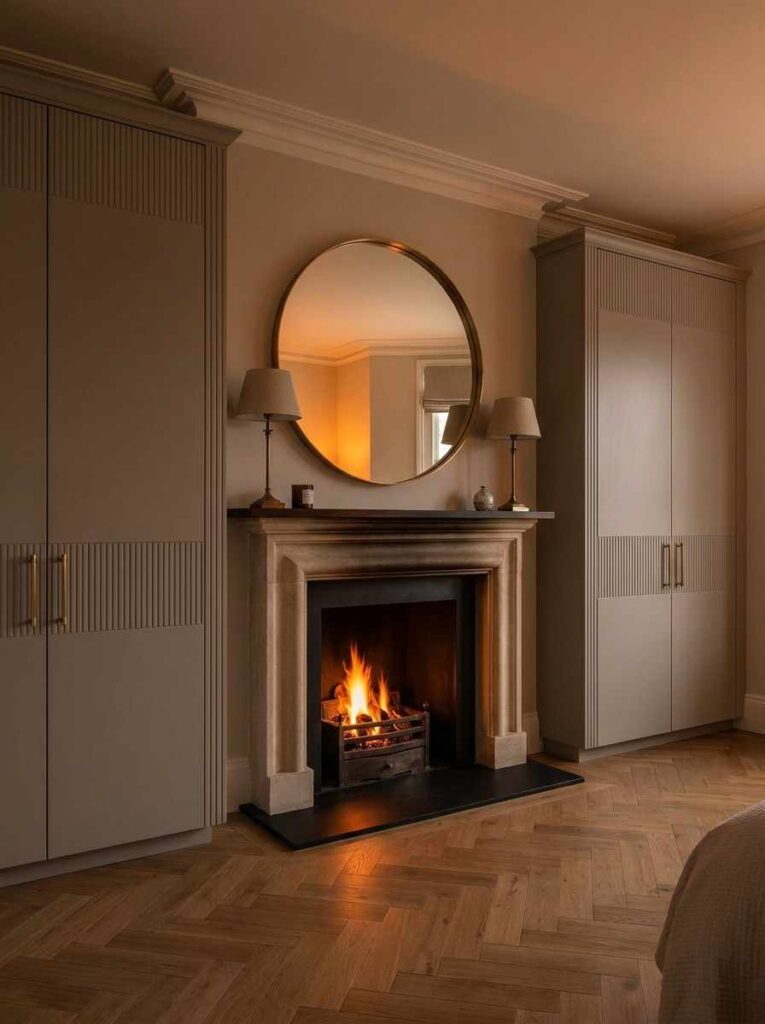
Wardrobe Interior With Sensor LED Lighting
Sensor lighting for the bedroom wardrobe inside is a genuine 2026 upgrade nobody is writing about yet. A motion-activated LED strip under each shelf turns on when the door opens and off when it closes. Use warm white (2700K–3000K). Cool white makes dark fabrics look different inside than they do in daylight. Install the strip at the front lip of each shelf for even coverage.
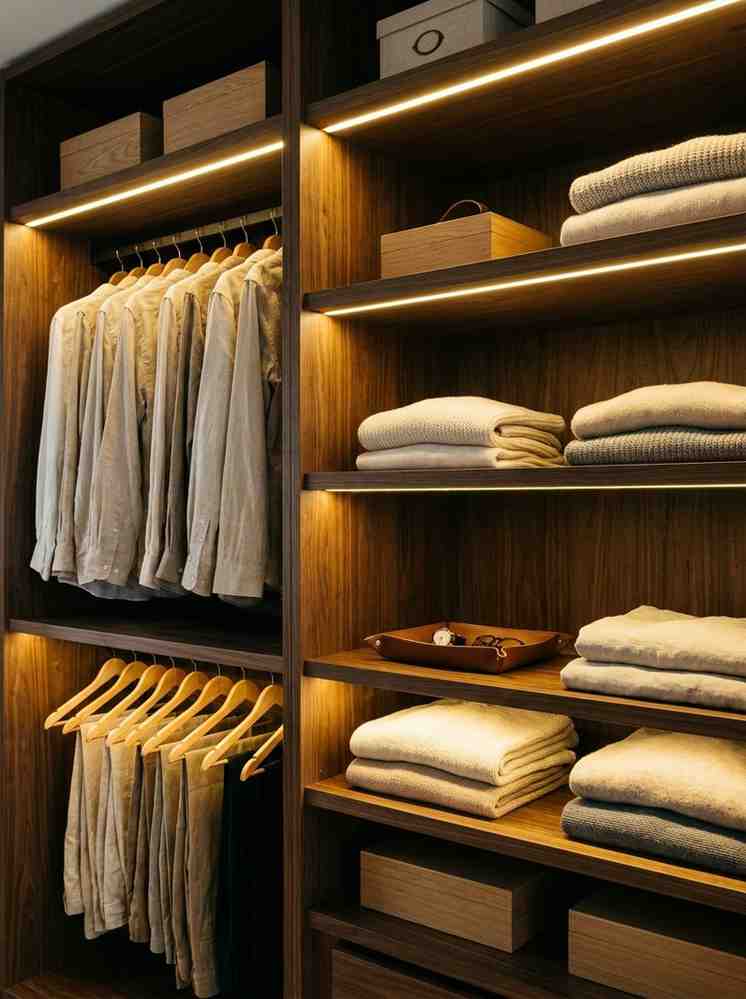
Wardrobe With Dressing Table Built In
A wardrobe design for a master bedroom with a dressing table is the most-searched combined layout in this niche. The table sits in a recess between two wardrobe towers. Install mirror lighting at eye level, not above. Overhead lighting casts shadows down the face — I learned that from a vanity that looked perfect in photos and was useless every morning. Aim for 2800K bulbs. Use tempered glass for the mirror at this height.
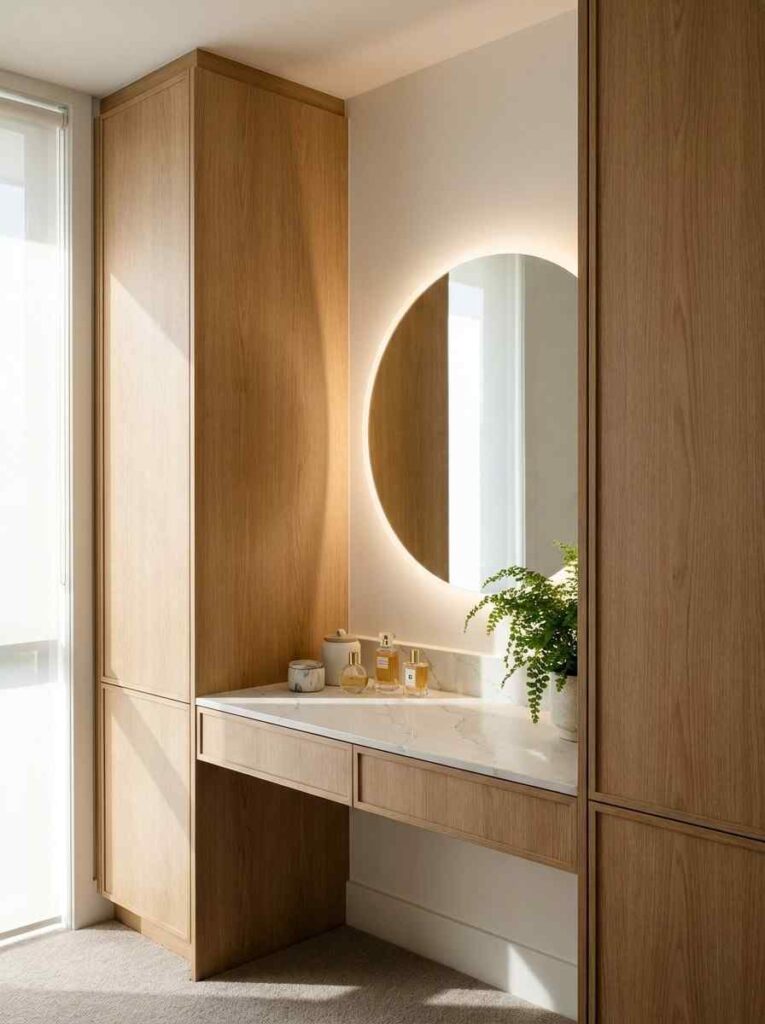
Luxury Wardrobe Design for Bedroom With Velvet-Lined Drawers
Luxury wardrobe design for bedroom in 2026 is about details inside, not the door front. Navy velvet lining in jewelry and watch drawers. A glass-fronted section for handbags. Deep pull-out trays for scarves and belts. These exist in California Closets bespoke systems. The principles apply at any budget — even an IKEA KOMPLEMENT drawer upgrade with a cut of velvet from a fabric store.
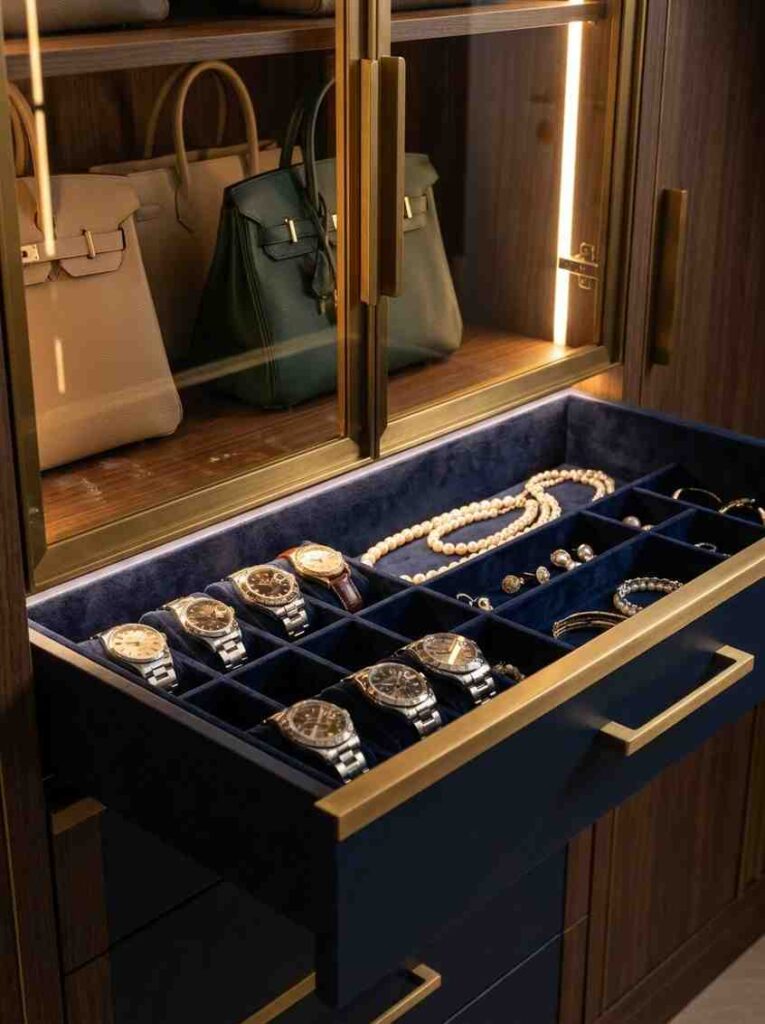
Small Bedroom Wardrobe Design With No Wasted Space
The wardrobe design for small bedroom spaces has to work twice as hard. The biggest mistake: a full 67 cm depth when you cannot afford the floor space. A 55 cm slim wardrobe is enough — lateral rails hang clothes sideways at just 40 cm of actual depth. Paint it Farrow & Ball Skimming Stone No.241 so it reads like the wall. Go wall-to-wall width to avoid dust-collecting gaps at either side.
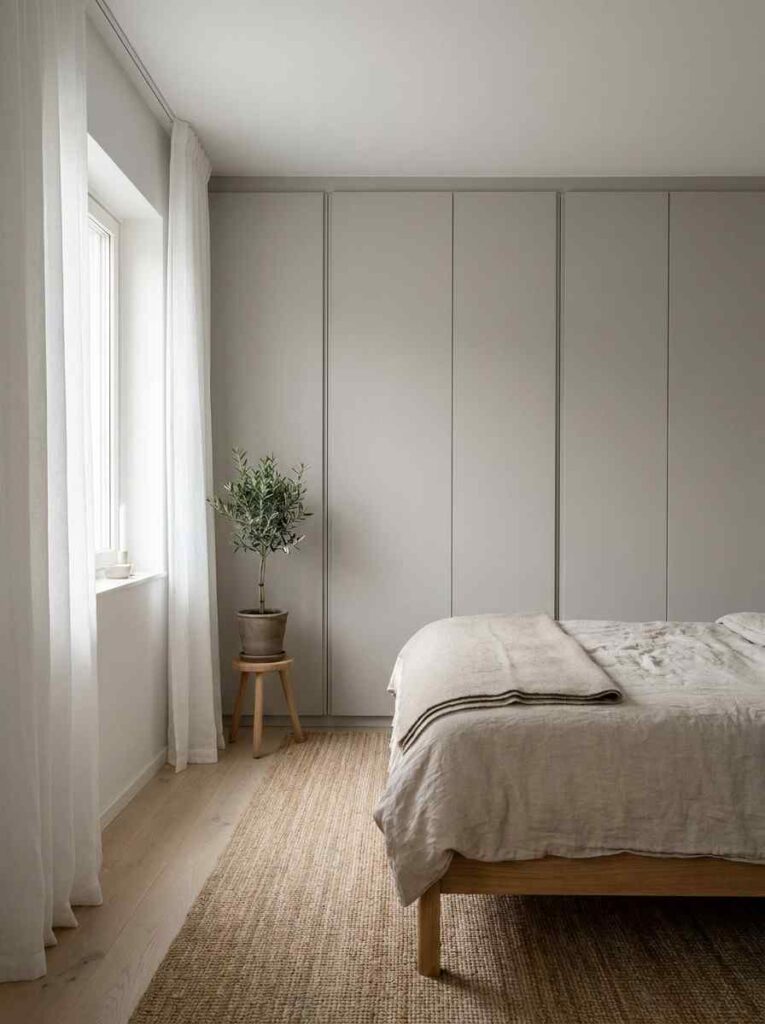
Wardrobe With Glass-Front Display Panels
Glass-front wardrobe doors gain ground in 2026. Transparent panels make you more organized — you know others can see inside. Tinted glass (smoke or bronze) suggests rather than reveals. Mix glass panels on two doors with solid panels on the rest. All-glass looks like a shop if overdone.
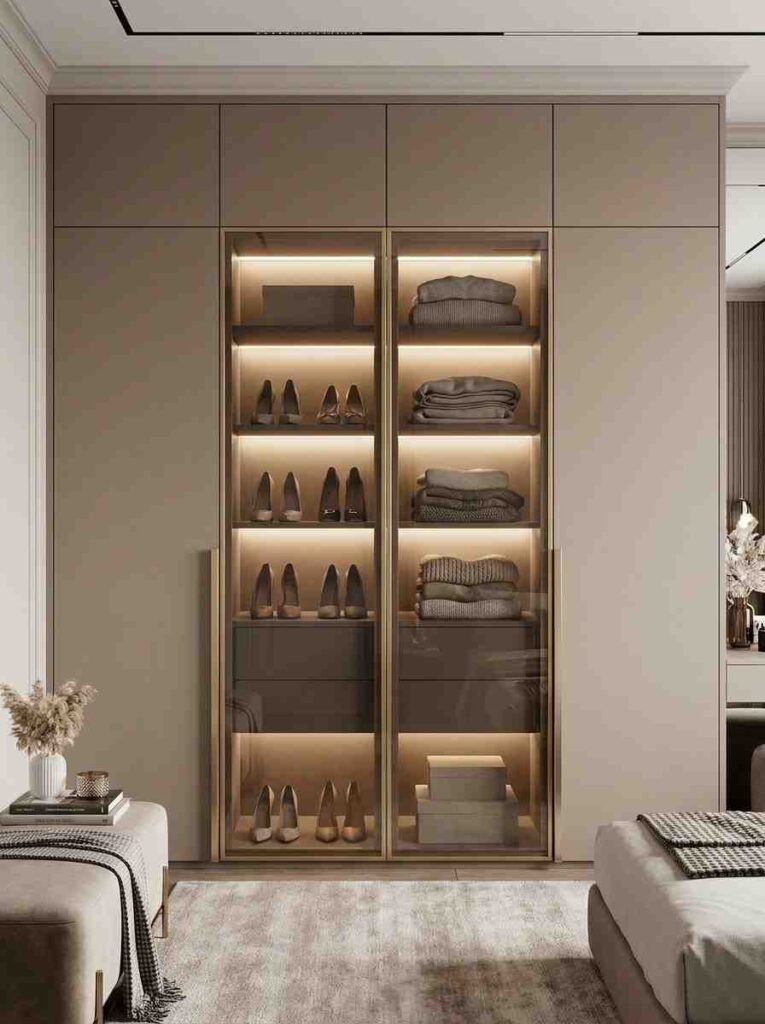
Modular Bedroom Wardrobe Design Catalogue Mix-and-Match
The bedroom wardrobe design catalogue approach is growing 40% in search this year. Pick pre-made sections — door units, shelf units, drawer units — and combine into a custom layout. IKEA PAX standard widths: 50 cm, 75 cm, 100 cm. Heights: 236 cm or 201 cm. Two 100 cm door units with one 50 cm open shelf unit look bespoke and cost under £800.
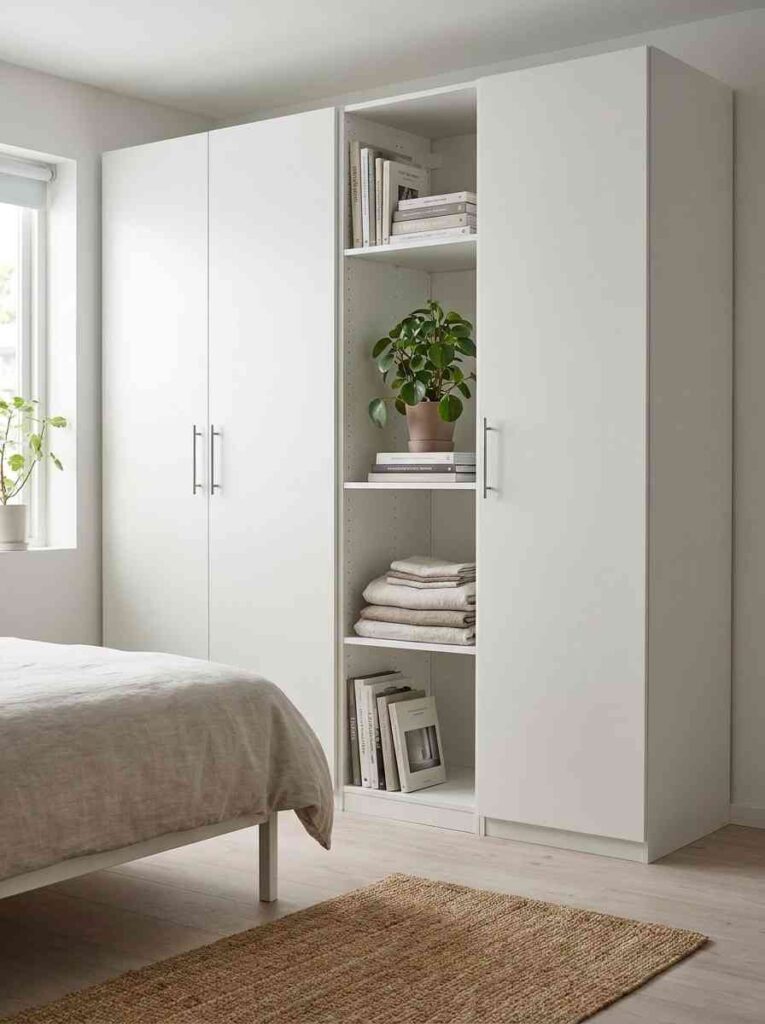
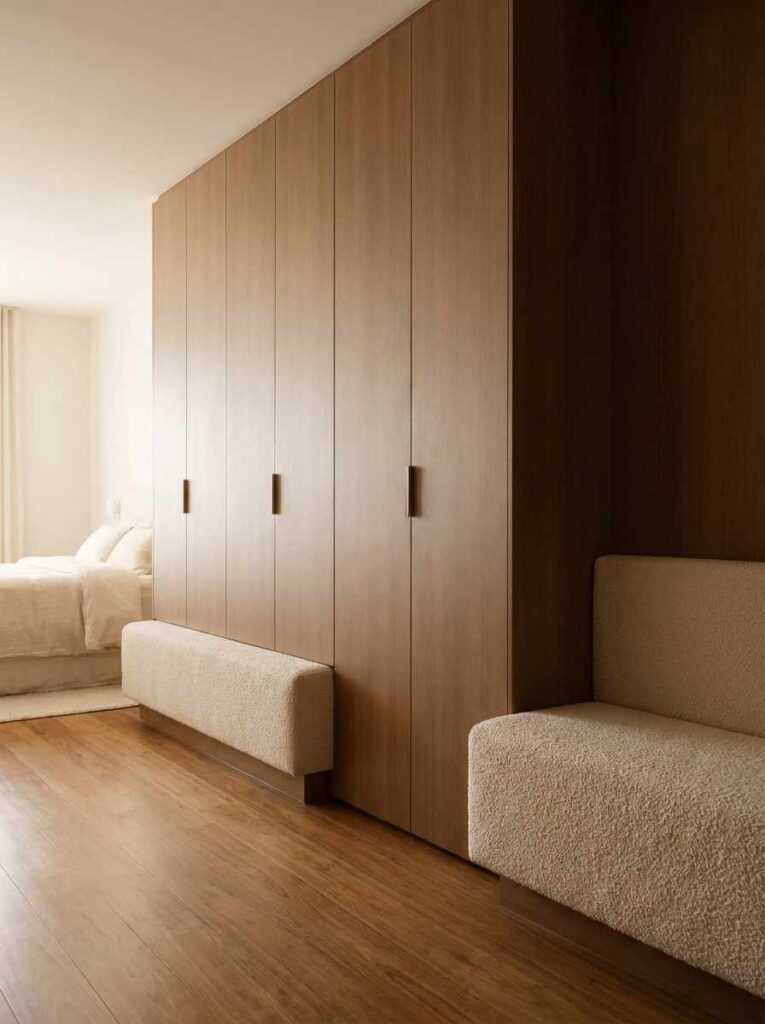
Wardrobe With a Seating Bench Built Into the Base
Almost no blog covers this. A bench at the base of a wardrobe makes getting dressed easier and adds a dressing room feel to a standard bedroom. The bench needs to be 45–48 cm high and at least 40 cm deep. Build it as a box with a hinged lid for under-seat storage. Upholster in boucle or leather.
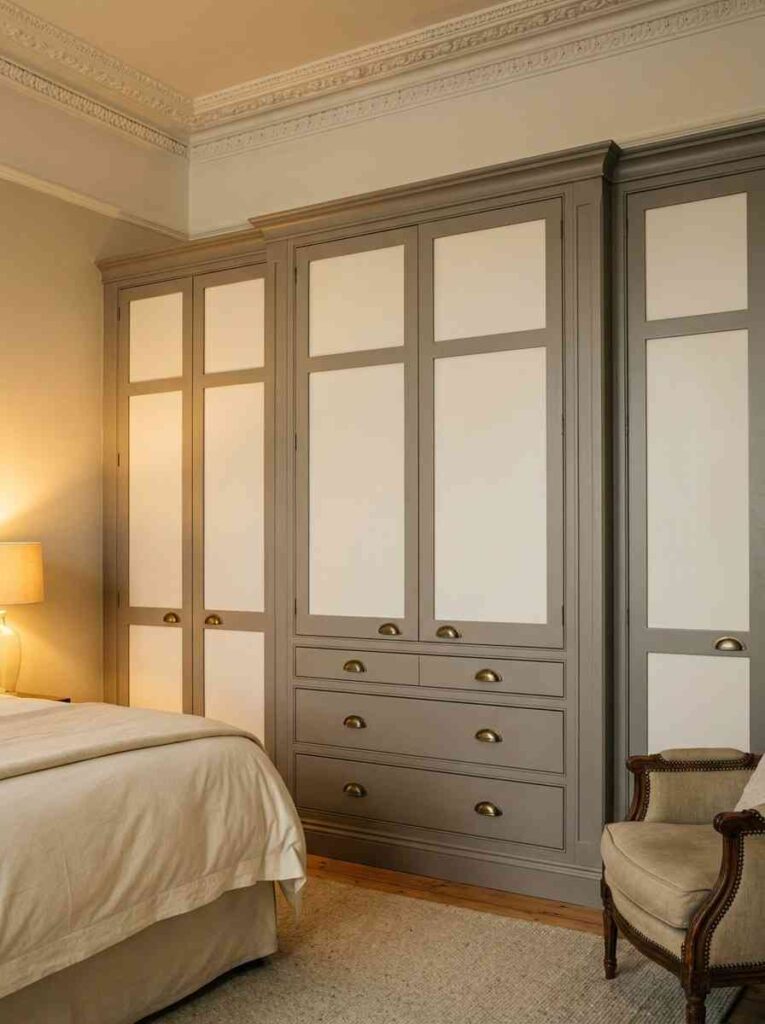
Classic Wardrobe in a Two-Tone Finish
Not every bedroom wardrobe design in 2026 has to be minimal. The classic wardrobe — shaker fronts, two colors, period hardware — is returning. Use Farrow & Ball Purbeck Stone No.275 on frames and Cornforth White on panels. Avoid Chrome hardware. It dates the look instantly. Go brushed brass or antique brass only.
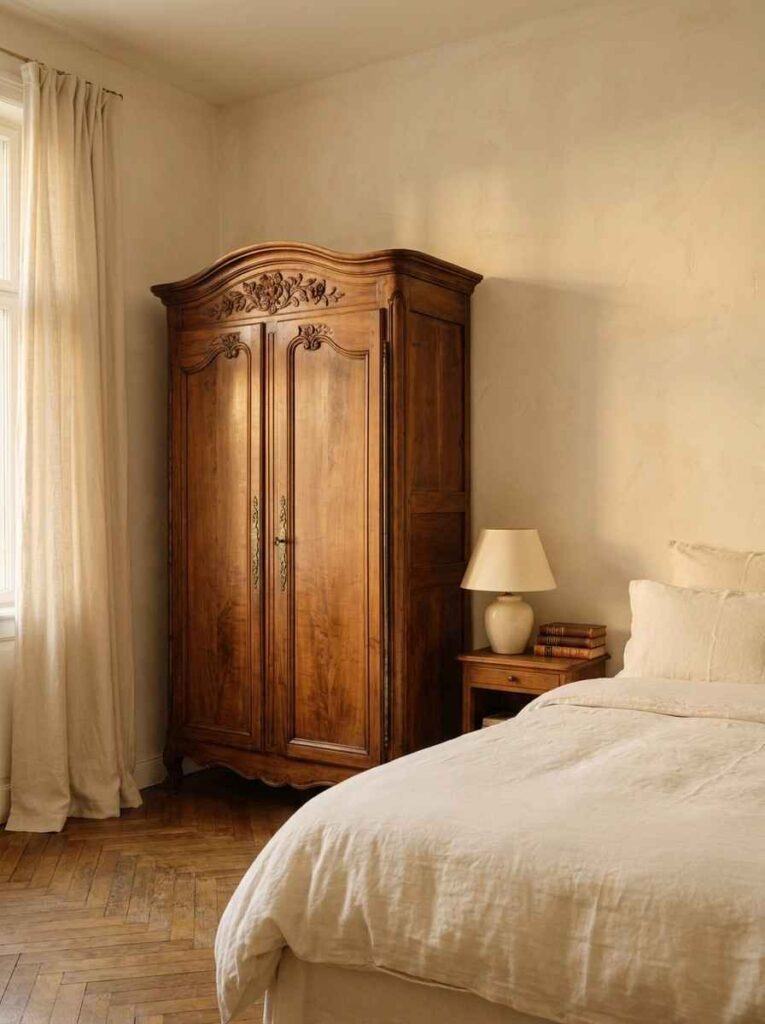
Freestanding Vintage Wardrobe as a Design Statement
Freestanding wardrobes are making a comeback in 2026. Decorilla’s interior designers flagged this across US and UK trends. A Victorian or mid-century armoire from Chairish brings character that no built-in can match. One rule: check depth first. Many antique wardrobes run under 50 cm — fine for folded items, not for hanging clothes.
FREQUENTLY ASKED QUESTIONS
How deep should a master bedroom wardrobe be?
The ideal depth is 67 cm. The minimum for horizontal hanging rails is 60 cm. Below that, clothes press against the door and crease. Sliding wardrobes need 66 cm plus a 5 cm track.
Is a sliding or hinged wardrobe better for a master bedroom?
Hinged doors give full access and are better in larger rooms. They need 90 cm of clear floor to swing open. Sliding is better in tight rooms. Keep each sliding panel under 120 cm wide.
How much does a fitted wardrobe cost in the UK?
The average is £2,600 installed. The range is £1,500–£7,000 for most projects. A four-door bespoke suite reaches £10,000. Labour runs £375–£650 per day.
Walk-in wardrobe vs built-in: which is better?
A walk-in gives a dedicated dressing zone but needs 1400 mm depth and 900 mm walkway clearance. Built-in is better when space is tight. Both work — it depends on your floor plan.
What is the best small bedroom design with a wardrobe?
Go 55 cm slim-depth, wall-to-wall width, and a light finish like Farrow & Ball Skimming Stone No.241. Lateral hanging rails work at a depth of 40 cm for folded items and short garments.
What colors are trending for bedroom wardrobes in 2026?
Warm muted tones are replacing stark white. Top codes: Behr Hidden Gem N430-6A for interiors, Valspar Warm Eucalyptus 8004-28F for full faces, Farrow & Ball Skimming Stone No.241 for small rooms.
What wood is best for wardrobe doors in 2026?
Oak veneer for mid-range. Smoked oak and walnut for premium Dark Japandi builds. Always check that the carcass is high-grade plywood — particle board loses screw grip, and doors sag within a few years.
Should I paint the inside of my wardrobe a different color?
Yes. Try Behr Hidden Gem N430-6A — smoky jade-green — inside a white exterior. Use a semi-gloss finish inside for easy cleaning. It makes any modular wardrobe look custom.
FINAL THOUGHTS
Good wardrobe design and bedroom planning start with depth and width. Get those right and everything else follows. Pick the best wardrobe design for the bedroom that fits your room and style. Then add the detail: sensor lighting, a contrasting interior color, and a built-in bench. Measure your wall before you order anything. A wardrobe that fits the room always looks better than one that fights it.