21 Cozy Kitchen Design Ideas You’ll Love in 2026
Last spring, I repainted my kitchen cabinets in Sherwin-Williams Alabaster (SW 7008). I also swapped in a walnut butcher block countertop on one side. The total was under $800. The kitchen felt like a completely different room.
That is what smart cozy kitchen ideas actually do. They shift the mood without gutting your budget. This list pulls from real 2026 design trends, actual paint codes, and real cost data from NKBA and Houzz. You do not need a $55,000 remodel to get there.
What makes a kitchen feel cozy in 2026?
Cozy kitchens in 2026 use warm neutrals like Alabaster (SW 7008) or White Dove (OC-17). Natural materials such as white oak and walnut, layered lighting at 2700K, and one handmade surface like zellige tile set the mood. A seating nook and personal objects complete the hygge effect.
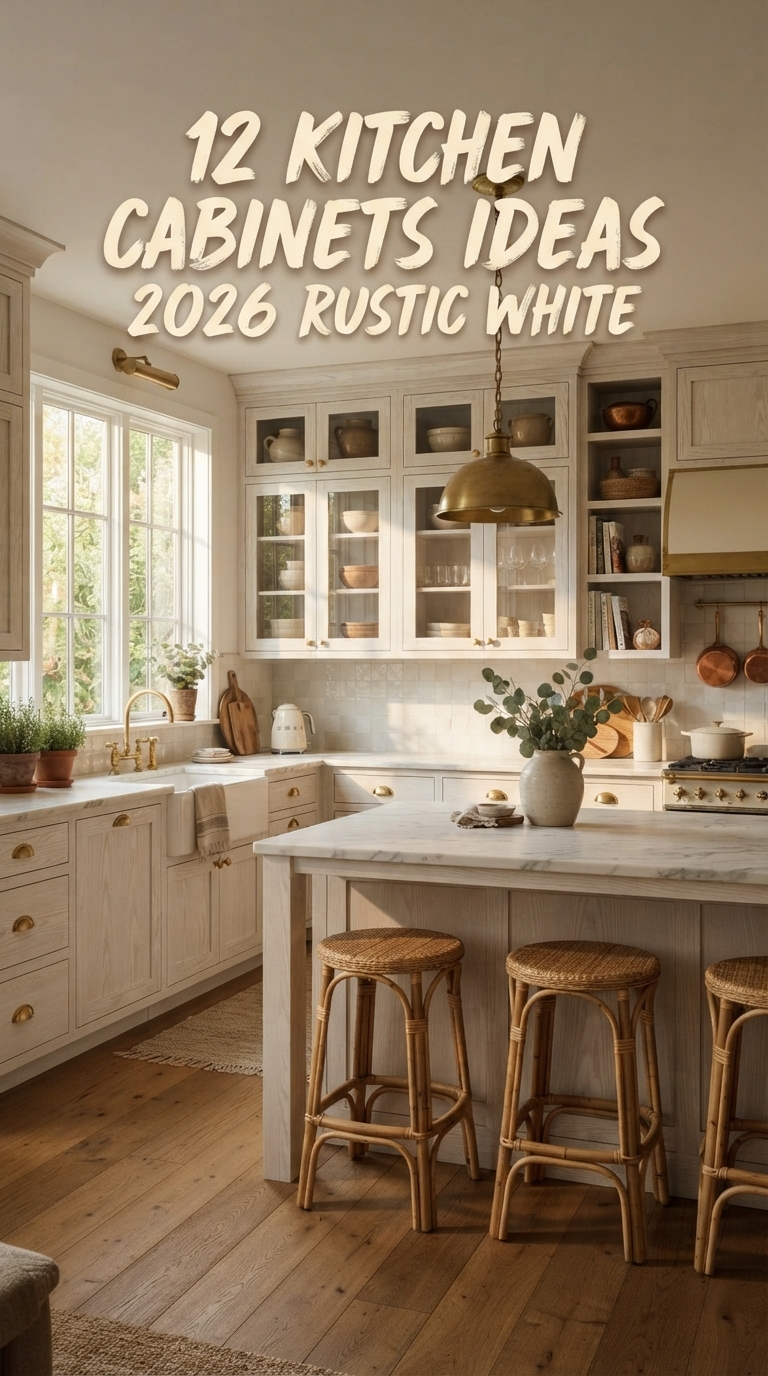
White Oak Slab Cabinets for a Warm, Modern Look
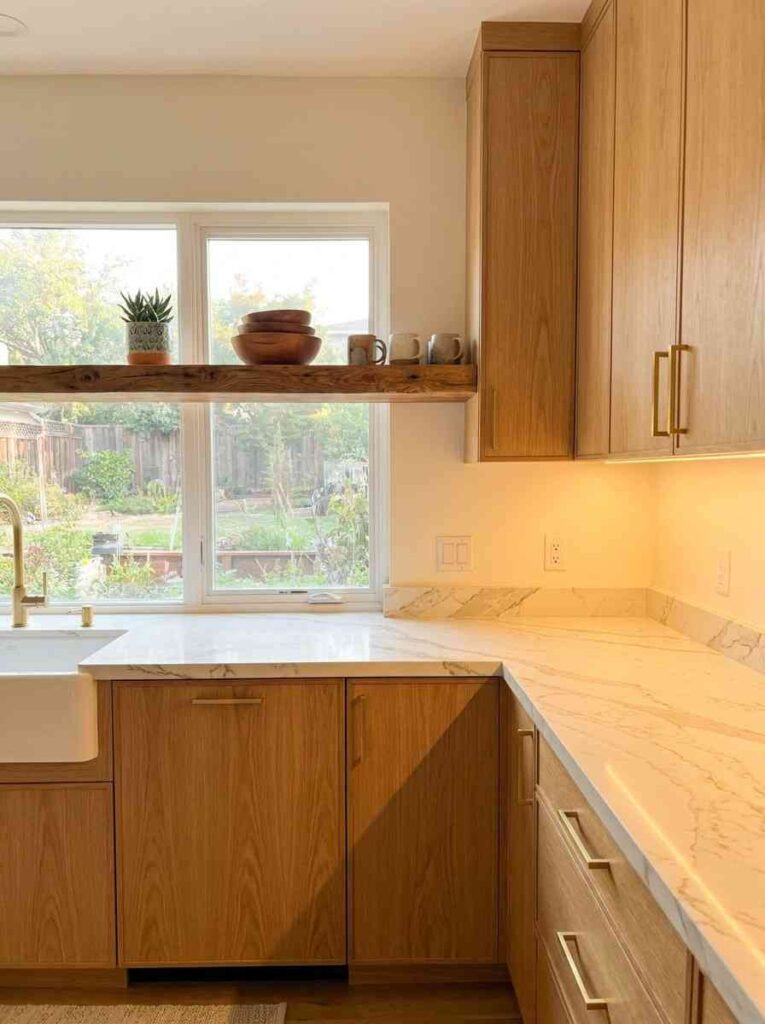
White oak is the dominant cabinet wood of 2026. Light-stained or mid-toned grain on flat slab doors looks modern without being cold. Visible grain does the decorative work. You need almost nothing else on the walls.
Decorilla designers pair white oak fronts with Calacatta quartz countertops and matte brass hardware. The combination reads warm without being rustic. I used white oak open shelves above my sink, and they warmed a previously cold corner immediately.
Thick, solid panels carry more visual weight than veneers. Aim for at least three-quarter-inch solid-face panels. That is what gives the cabinet its presence.
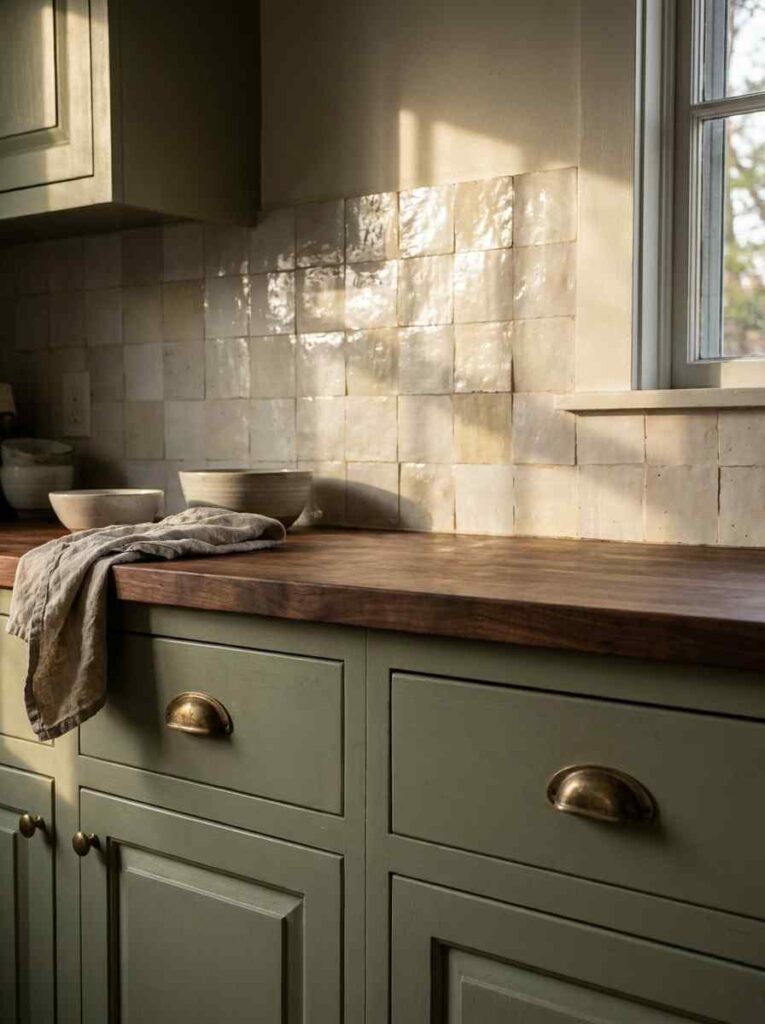
Zellige Tile Backsplash for Handmade Texture
Zellige tile comes from Morocco. Each piece is hand-molded, glazed, and fired individually in Fes. The irregular surface catches light differently throughout the day. By afternoon, your kitchen looks richer than it did at 9 am.
Authentic zellige costs $17 to $25 per square foot. Porcelain zellige-look alternatives run $8 to $10 per square foot and are easier to clean. For a warm kitchen, pair white zellige with Pewter Green (SW 6208) lower cabinets and unlacquered brass hardware. The contrast is what makes it work.
Layered Warm Lighting to Change the Whole Mood
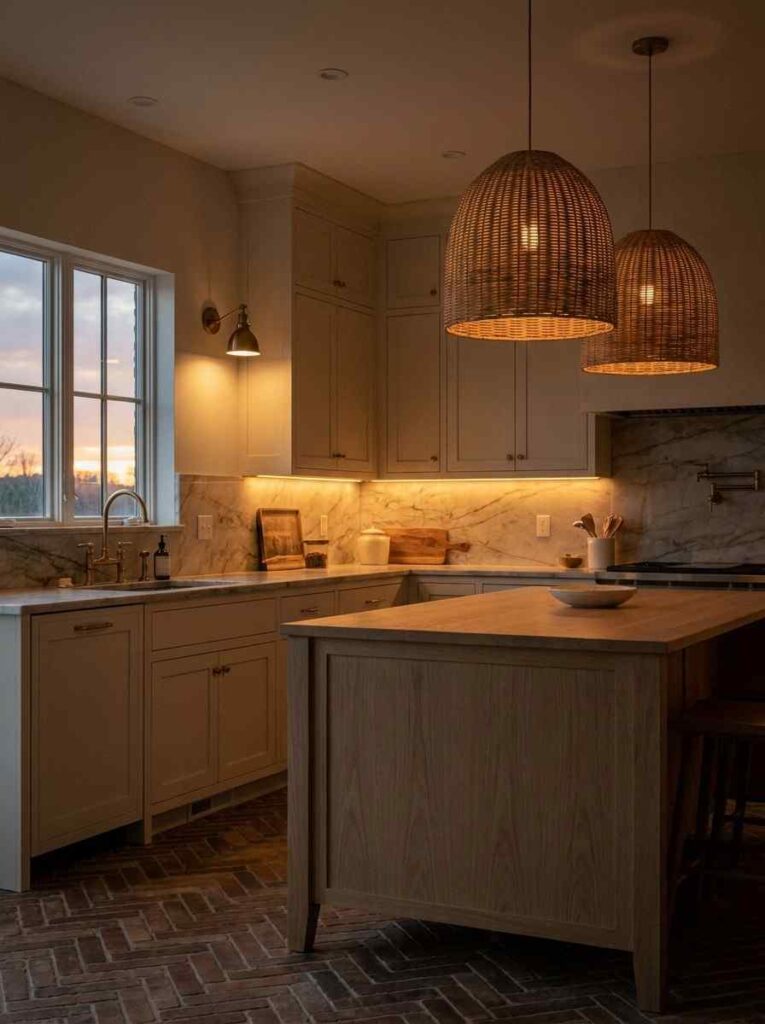
Most kitchens rely on one overhead fixture. That is exactly where the cold, flat feeling comes from. Hannah Goldberg of Hannah Charlotte Interiors says layered lighting is the single highest-impact cozy upgrade.
Her formula: LED strips under cabinets at 2700K warmth, pendants above the island, a sconce by the sink. Overhead recessed lights stay on while cooking. The pendants take over for dinner. I had only recessed lights in my last kitchen. Adding two pendants and under-cabinet strips cut the harsh clinical feel completely.
Under-cabinet LED strips cost $30 to $80. A pendant runs $100 to $400. This is the best ROI warm cozy kitchen ideas upgrade on this list.
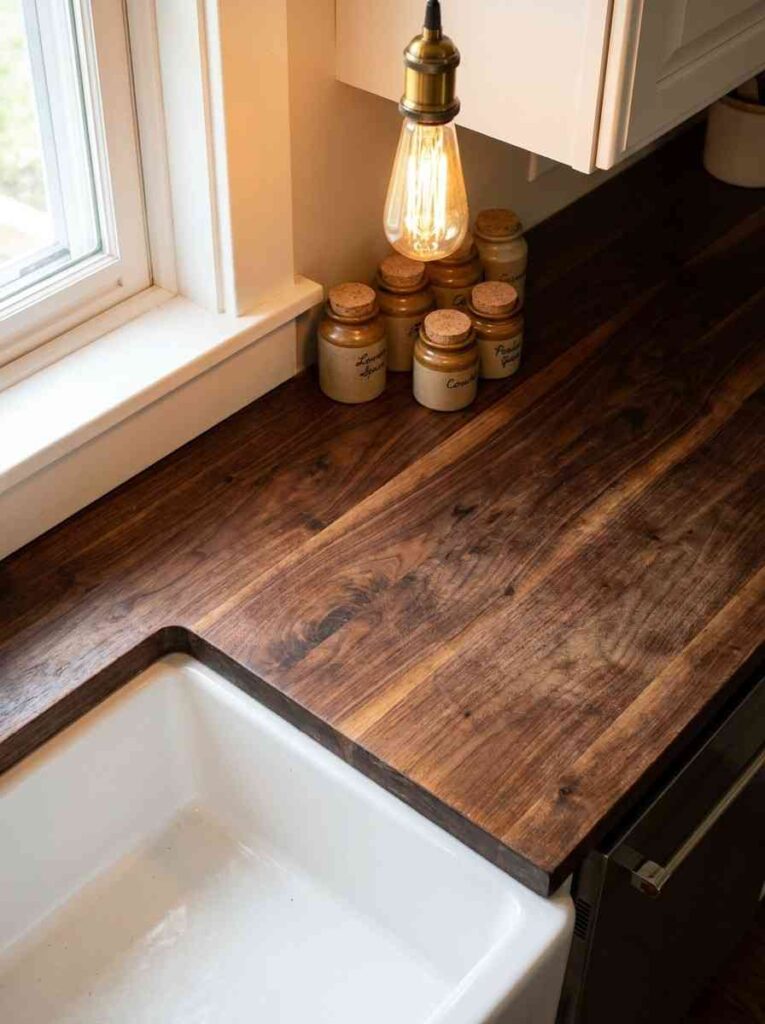
Walnut Butcher Block Countertop for Tactile Warmth
Helen Parker, creative director at deVOL Kitchens, says wood countertops are underrated. She notes wood gains a beautiful, ever-changing patina with regular oiling. That patina is exactly what makes a kitchen feel genuinely lived-in.
Walnut butcher block costs $40 to $80 per square foot installed. Use it on one section only; the prep area beside the stove works well while keeping quartz or stone elsewhere. I did this combination, and the walnut side is where everyone naturally gravitates.
Oil it with food-safe mineral oil every three to six months. A light sand removes most watermarks. Low-maintenance if you stay consistent.
Plaster-Look Range Hood as the Kitchen Focal Point
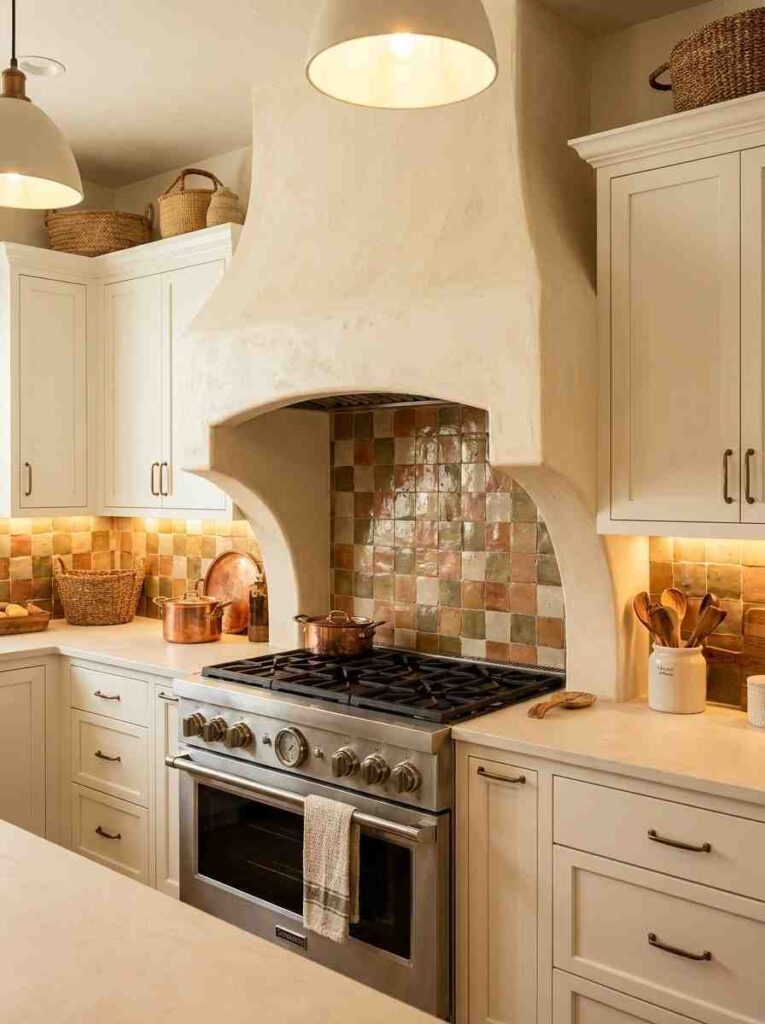
A plaster or limewash finish on a custom range hood is the most underreported cozy kitchen design idea in 2026. Decorilla’s April 2026 trend report calls it one of the most tactile statements of the year. It anchors the kitchen the way a fireplace anchors a living room.
Try Benjamin Moore White Dove (OC-17) on the surrounding cabinets with a plaster-textured hood. The contrast between smooth painted cabinets and matte textured hood does significant visual work. Custom-fabricated hoods with specialty finishes run $800 to $3,000. A drywall hood with Portola Paints Classico Lime plaster finish costs a fraction of that.
Two-Tone Cabinetry in Soft Contrast Shades
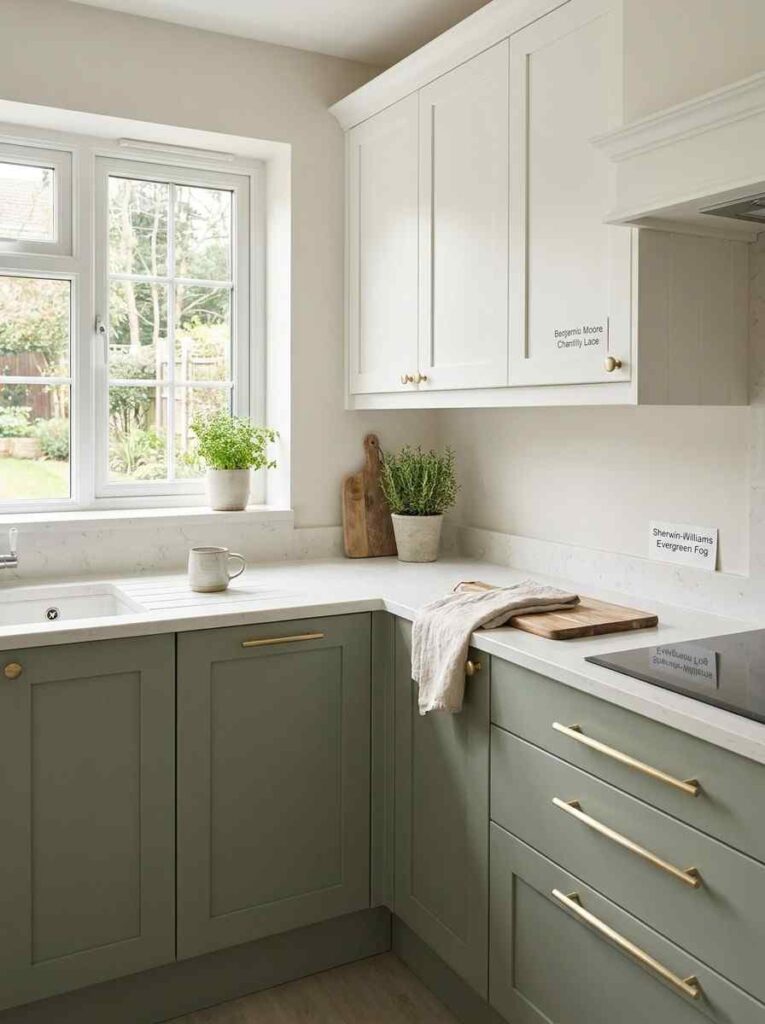
Two-tone cabinetry adds personality without going bold. In 2026, the most popular pairing is warm-white uppers with muted-color lowers. Per NKBA’s 2026 Trends Report, 86% of designers named green the top statement cabinet color.
Try Sherwin-Williams Evergreen Fog (SW 9130) on the lowers with Chantilly Lace (BM 2121-70) above. Or use SW Naval (SW 6244) on the base cabinets with White Dove above for more drama. Champagne or brushed brass hardware connects both tones cleanly.
Test both colors on actual doors in your specific kitchen light at 7 am, noon, and 8 pm before committing. Same paint, different light, very different result.
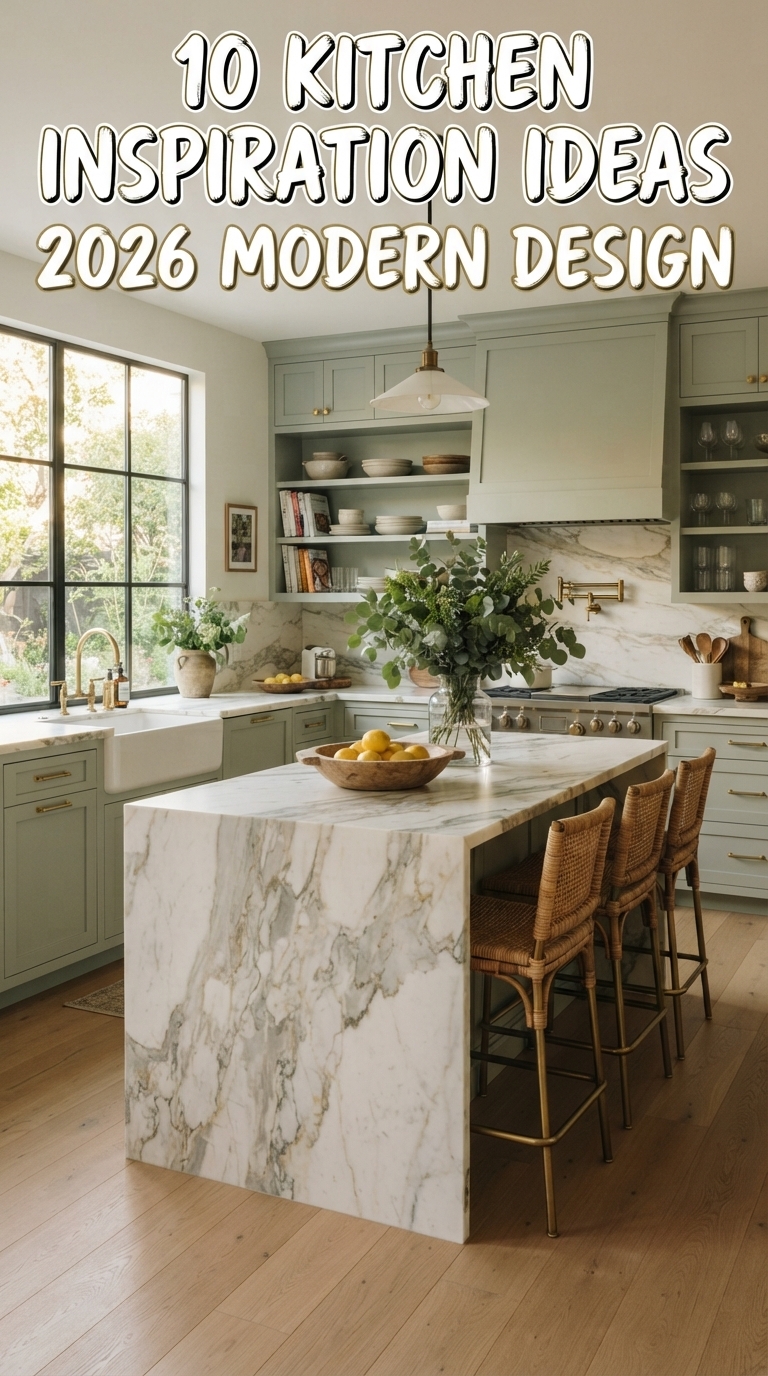
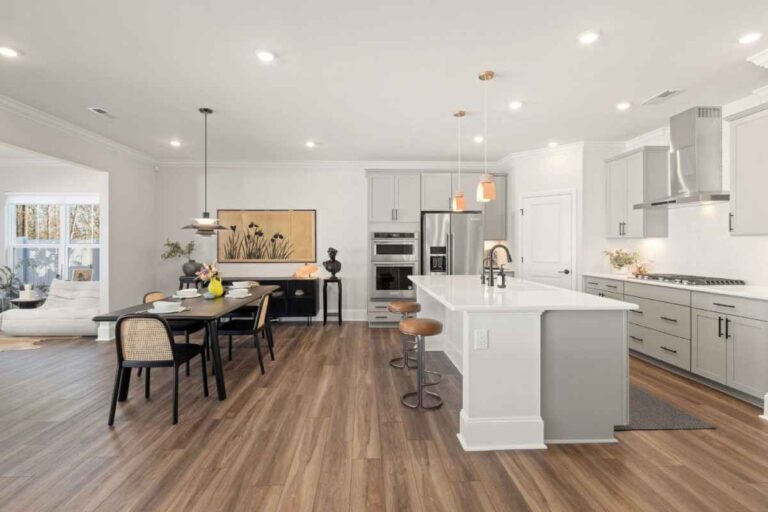
Waterfall Quartz Island as the Gathering Hub
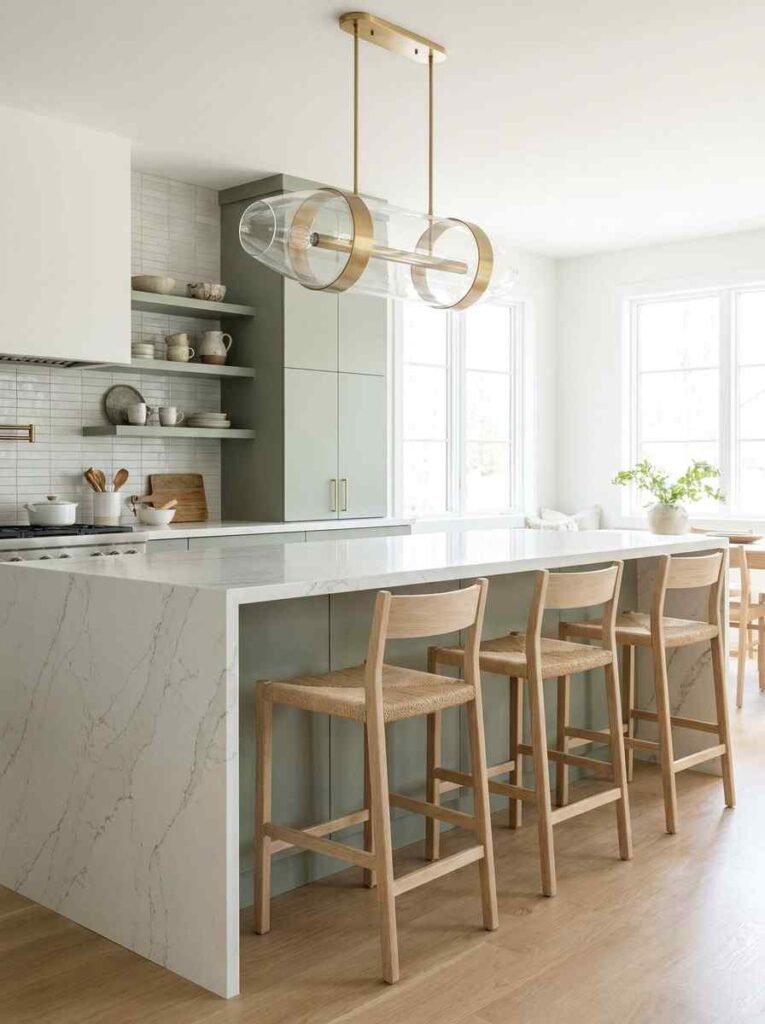
A waterfall island runs the countertop stone vertically down both sides to the floor. It becomes one sculptural piece of furniture. It is the natural gathering point of the kitchen.
Quartz countertops cost $50 to $200 per square foot installed, per HomeGuide data. Caesarstone, Cambria, and Silestone are the top three brands with warranties of 10 to 25 years. Calacatta quartz with soft grey veining works best for waterfall edges because the veining flows naturally around the corner.
Pair with warm oak bar stools at counter height (36 inches). One oversized pendant above. That is all you need.
A Built-In Breakfast Nook to Anchor the Room
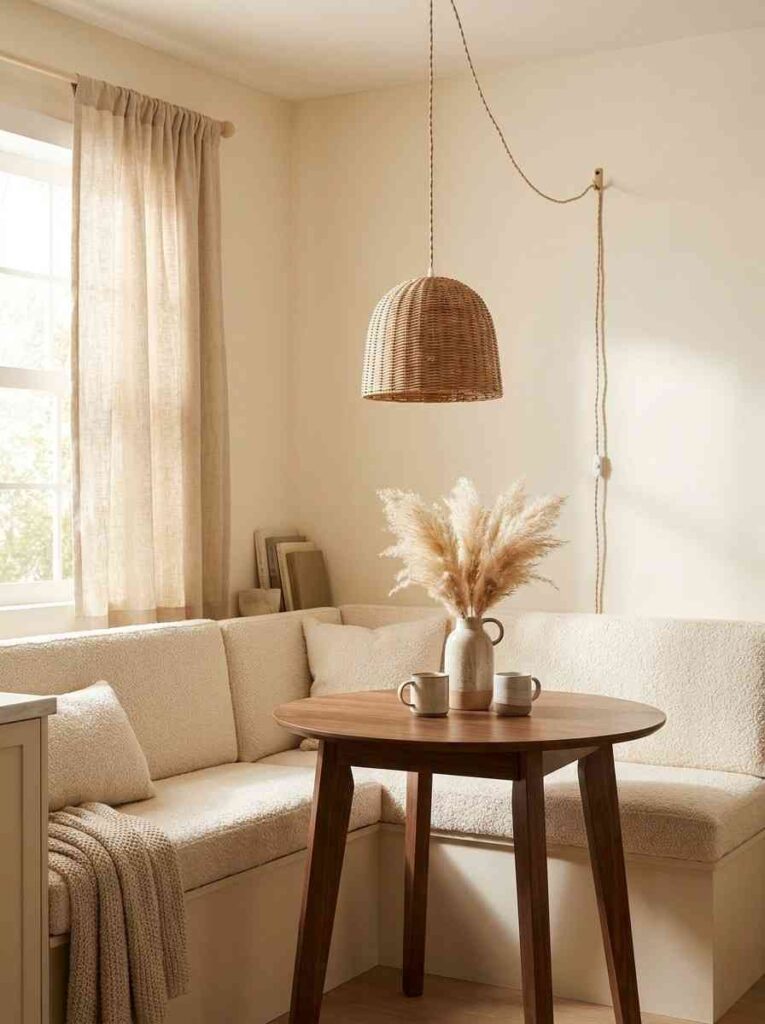
The built-in breakfast nook is the most underused cozy kitchen idea on this list. A bench with a small table takes less floor space than a dining set. It creates the tucked-in feeling that makes people want to stay.
Designer Sophie Rowell builds these micro-dining moments into kitchens deliberately. A corner bench with a linen or boucle cushion and a walnut table costs $600 to $2,000 for a custom build. A DIY version using IKEA KALLAX shelves as the base runs $200 to $400. Add a plug-in pendant above for layered light without calling an electrician.
Open Wood Shelving With a Simple Styling Rule
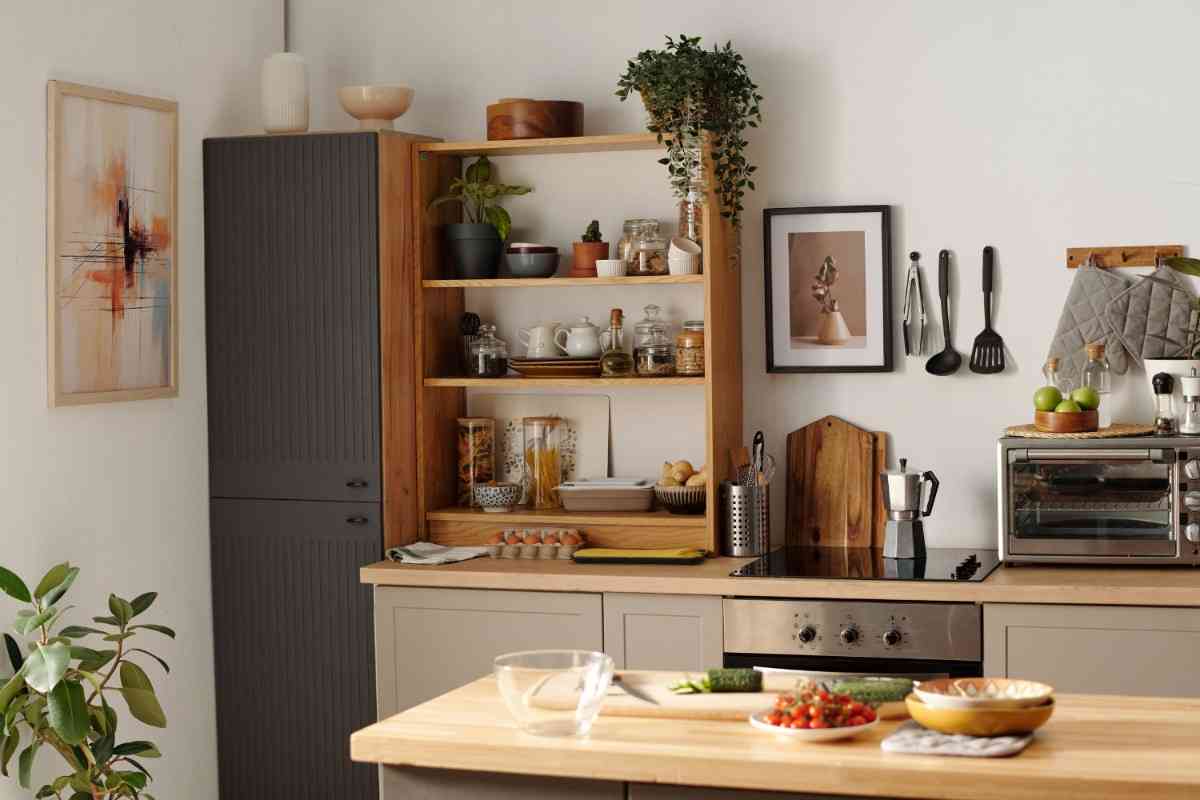
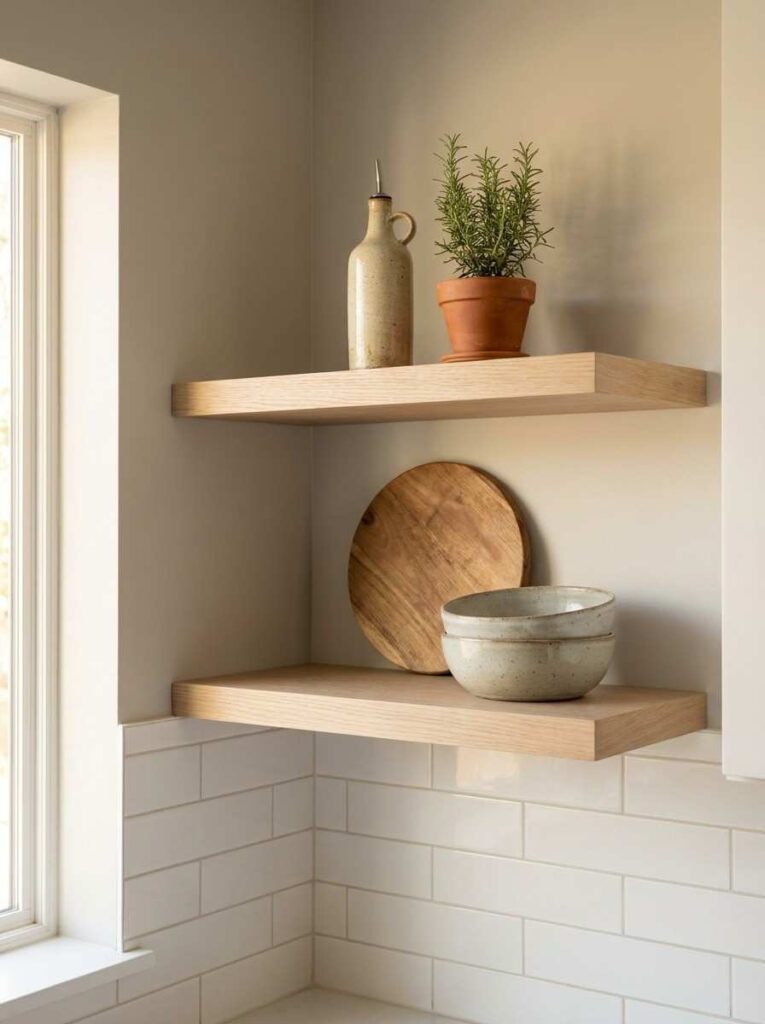
Open shelving gets criticized for looking cluttered. The designers who do it well follow one rule: every object on the shelf is either beautiful or useful. Nothing else.
Use floating shelves in white oak or walnut at 10 to 12 inches deep. Space them 12 to 14 inches apart vertically. A standard setup: bottom shelf holds olive oil, a wooden cutting board, a ceramic crock. The middle shelf holds books and one plant. The top shelf holds rarely used but beautiful serving pieces.
Keep the wall behind the shelves warm. Sea Salt (SW 6204) or Agreeable Gray (SW 7029) works well. My mistake was open shelves against a stark white wall. The shelves looked cold and institutional, not warm.
Japandi Style for Silent, Cozy Luxury
Japandi blends Japanese minimalism with Scandinavian warmth. In the kitchen: white oak or lightly stained slab cabinets, a Shoji White (SW 7042) palette, and zero decorative clutter. Materials carry the mood entirely.
Everything follows the concept of quiet luxury. A matte black tap against white oak. A single ceramic bowl on the counter. One pendant light over the island. The plaster hood idea from earlier fits naturally here.
Japandi kitchens photograph beautifully for Pinterest. They read as serene and intentional. Every object is chosen, not collected.
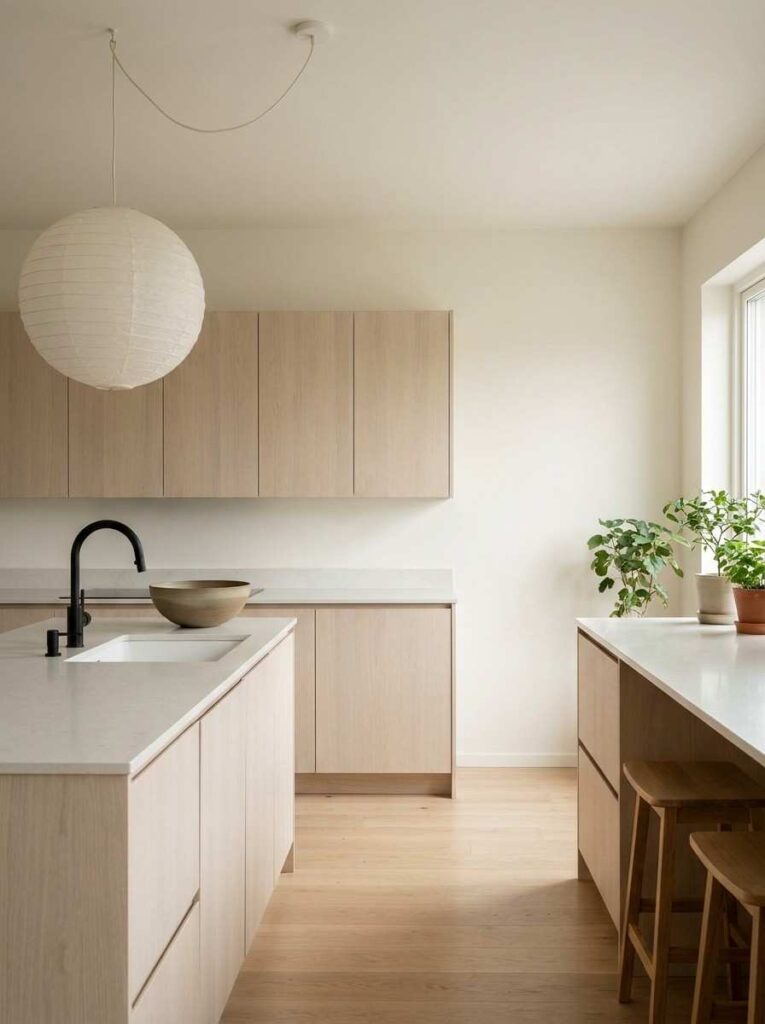
Sherwin-Williams Alabaster Cabinets for Timeless Warmth
Alabaster (SW 7008) is the most-specified warm white for kitchen cabinets in North America right now. Its LRV of 82 means it is warm enough to hide fingerprints near the dishwasher. It is bright enough to keep the kitchen light and open.
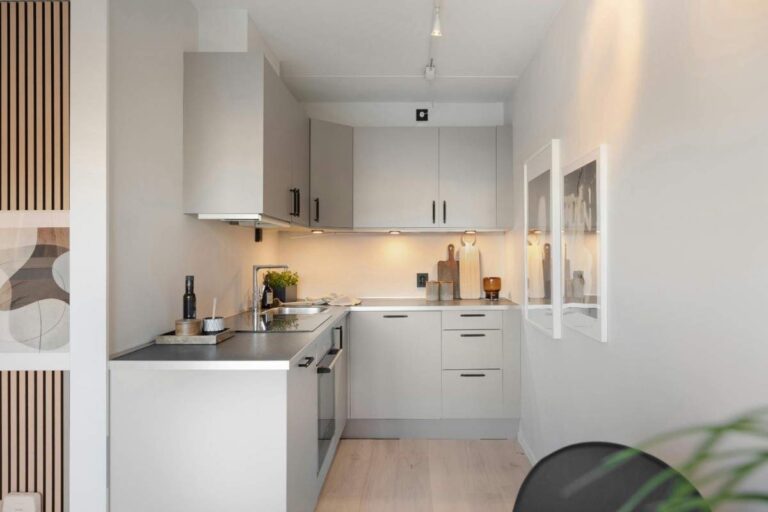
Emily Kantz, Sherwin-Williams Color Marketing Manager, specifically recommends pairing it with natural wood tones and earthy green combinations for small kitchens. It works with white oak floors, quartz countertops, brass hardware, and grey grout subway tile.
One warning: in north-facing kitchens, Alabaster can shift slightly cool. Sample it on a 12×12-inch door panel for three days minimum before committing.
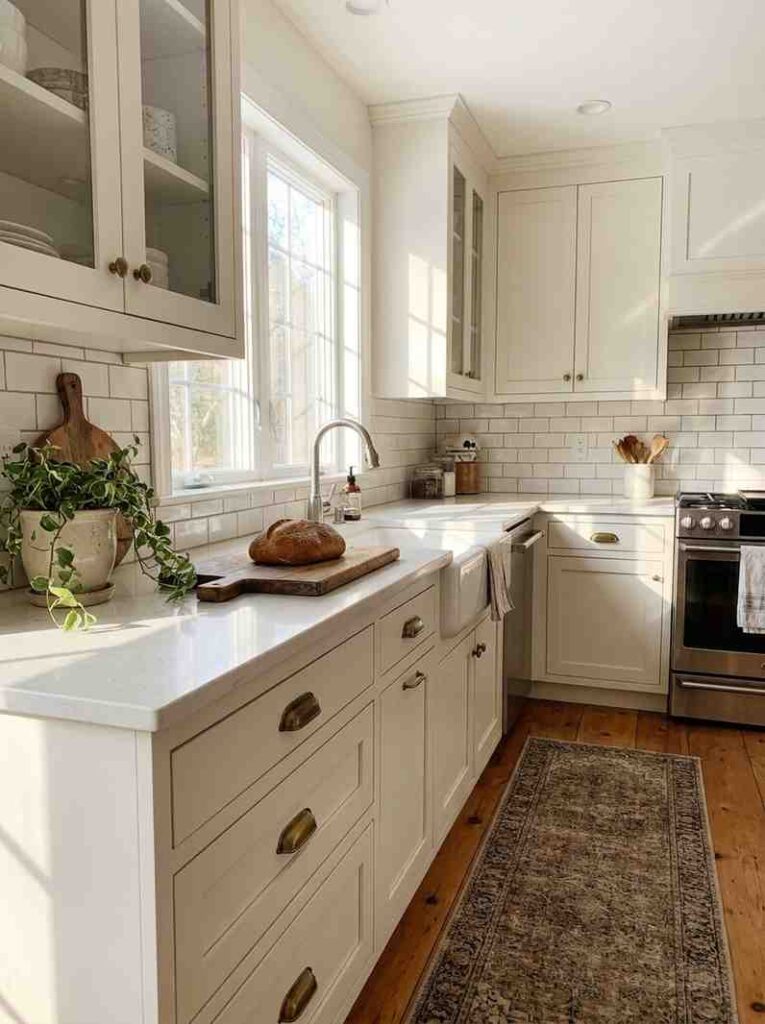
Deep Navy Cabinets for a Moody, Cozy Look
Dark kitchens are cozy when you commit fully to the contrast. Sherwin-Williams Naval (SW 6244) at LRV 4 is the benchmark navy for kitchen cabinetry. Designer Allison Garcy used Naval in a New York apartment. She said it made cabinets “read as millwork rather than a wall of cabinets.”
Pair Naval lowers with Benjamin Moore Sebring White uppers. Use unlacquered brass hardware that ages over time. Add a white fireclay sink to cut the drama slightly. This same palette translates well into cozy cabin kitchen vibes inside a modern apartment.
A professional cabinet repaint runs $1,500 to $3,500 for a full kitchen. DIY materials cost $200 to $500.
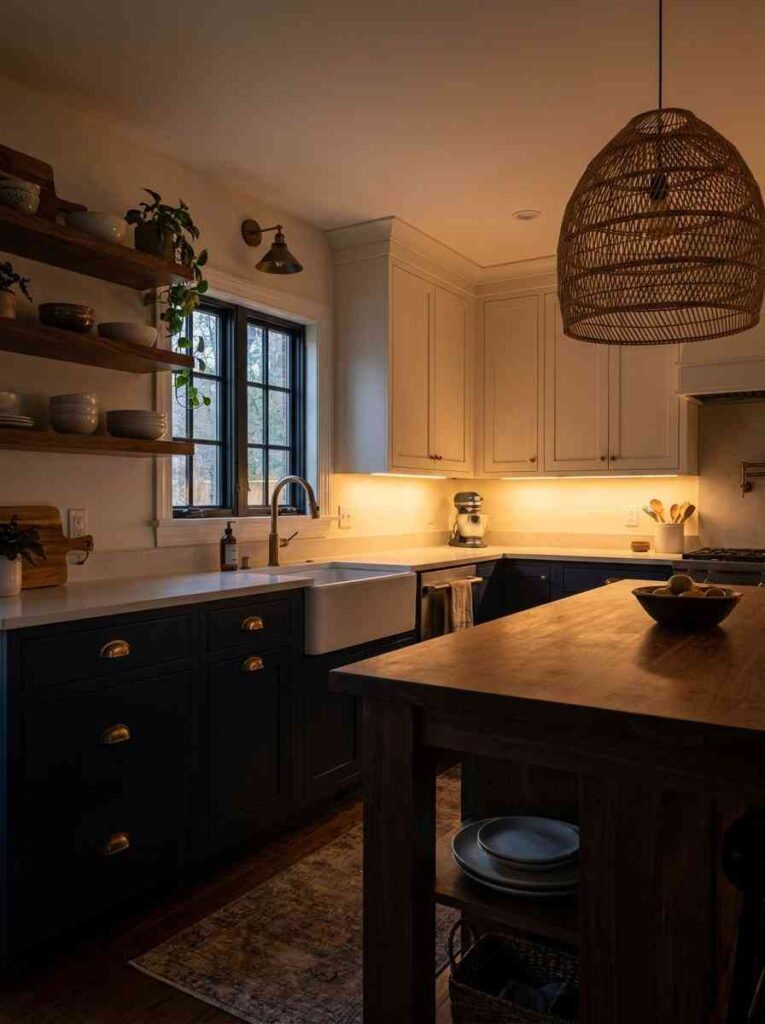
The Cabinet Wall to Hide the Kitchen in Plain Sight
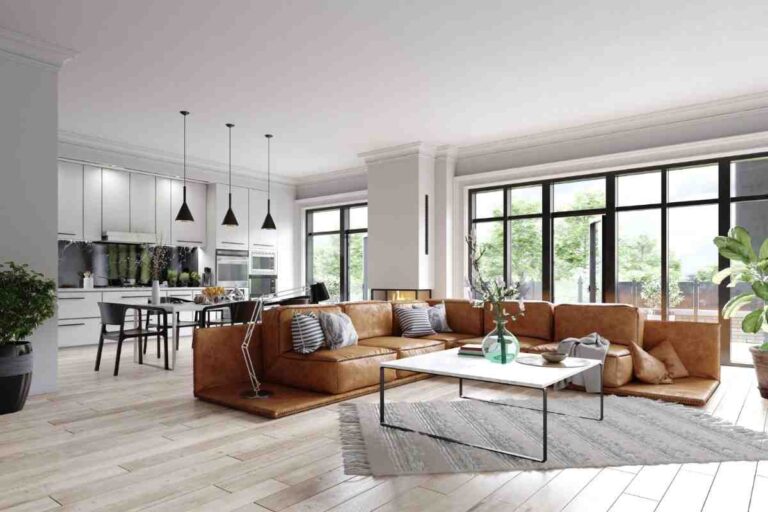
The cabinet wall concept hides the refrigerator, ovens, and pantry behind a continuous run of floor-to-ceiling doors. In open-plan homes, the kitchen visually disappears when not in use.
A full 16-foot cabinet wall with integrated refrigerator, double wall ovens, and an appliance garage runs $45,000 to $85,000 custom, per Ironwood Custom Builders data. The scaled-down version works just as well. Four matching floor-to-ceiling pantry cabinets in the same door style as your base cabinets create the same illusion. IKEA PAX systems do this for $1,500 to $3,000. The kitchen and living room feel cohesive. That connection is the whole point.
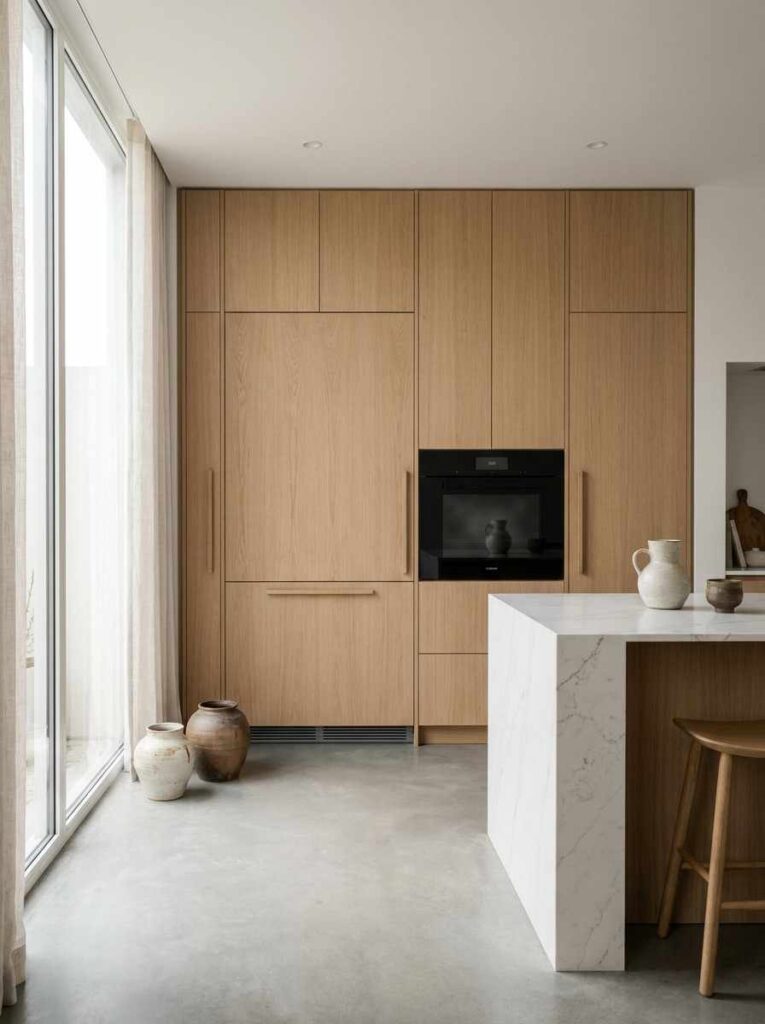
Workstation Sink for a Function That Feels Cozy
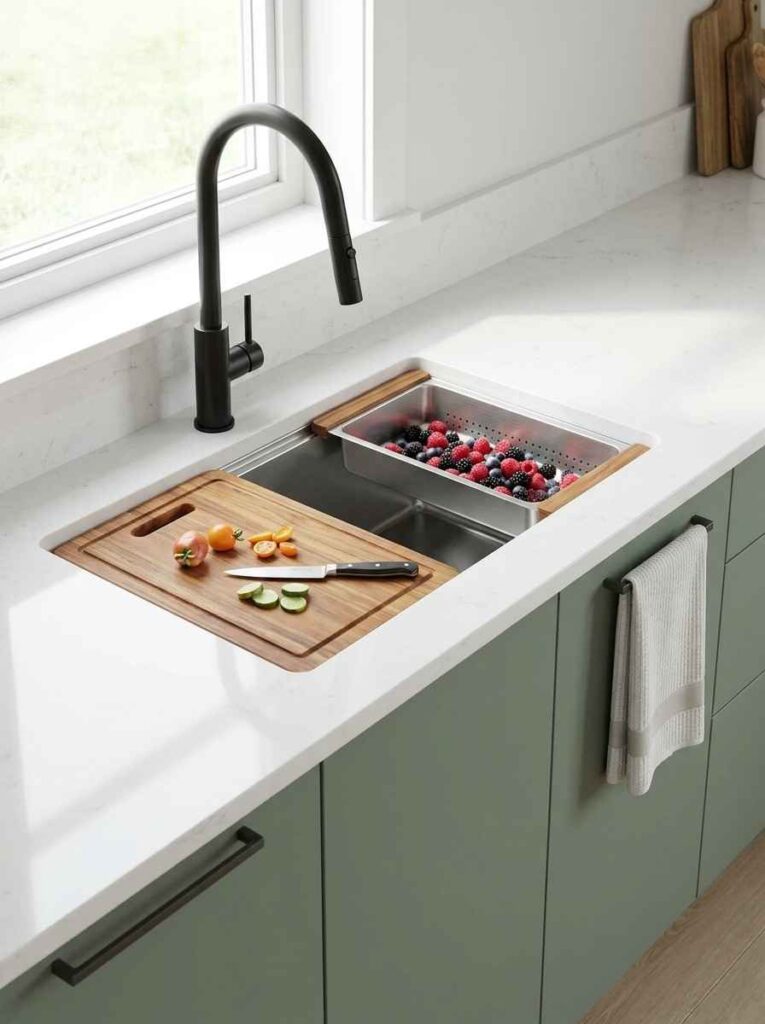
Most sink upgrades stop at the farmhouse fireclay option. The 2026 version is the workstation sink: a deep basin with integrated sliding teak cutting boards, built-in colander, and dedicated rinse zones.
Workstation sinks from Kraus and Ruvati run $400 to $1,200 and fit standard 30 to 36-inch cabinet openings. The cutting board extends prep space by roughly 30 percent. In a small kitchen, cooking and chopping happen in the same zone without switching surfaces. Pair with a pull-down brass or matte black faucet at $150 to $400. A warm, cozy kitchen should work as hard as it looks beautiful.
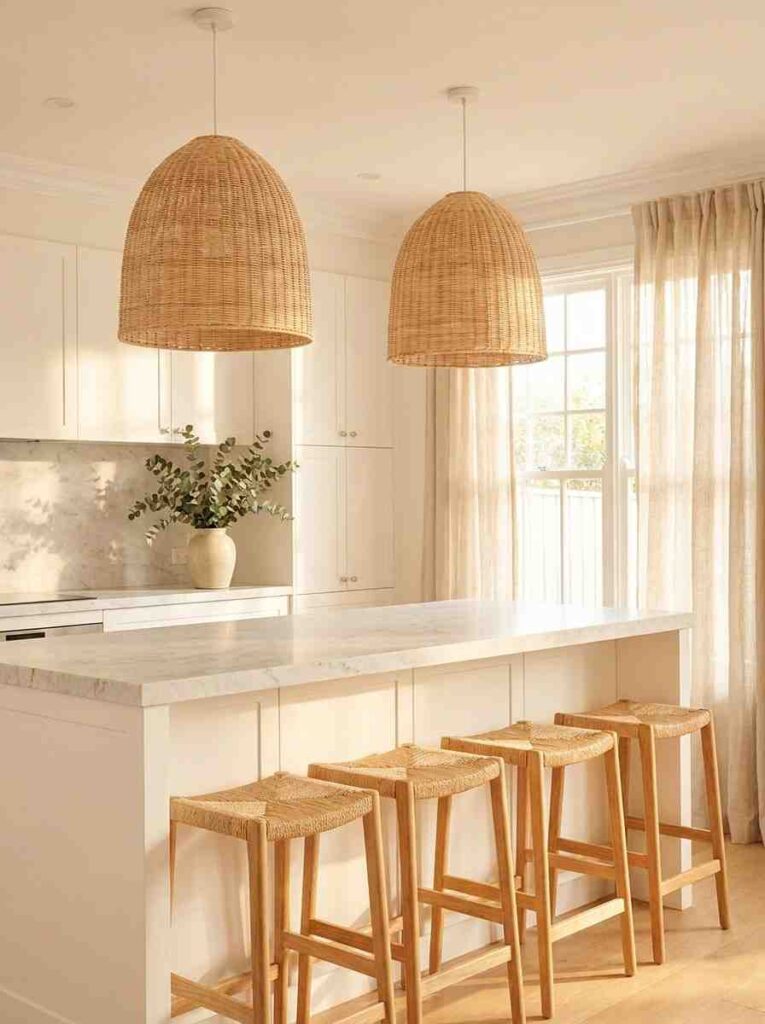
Rattan Pendant Lights for Instant Texture Above the Island
Rattan pendants are the fastest single-texture upgrade available for a kitchen. They work in all-white schemes, warm neutral kitchens, and even dark navy spaces. The woven fiber adds warmth that glass or metal fixtures simply cannot replicate.
Hang them 30 to 36 inches above the countertop. Use 2700K bulbs inside. Two medium pendants at 12 to 14 inches in diameter work better over a long island than one oversized single fixture.
Good rattan pendants cost $60 to $250 each. Brands like Serena and Lily, and CB2 carry natural-fiber versions that hold shape and age gracefully. Cozy kitchen ideas that perform consistently on Pinterest almost always feature rattan lighting in the frame.
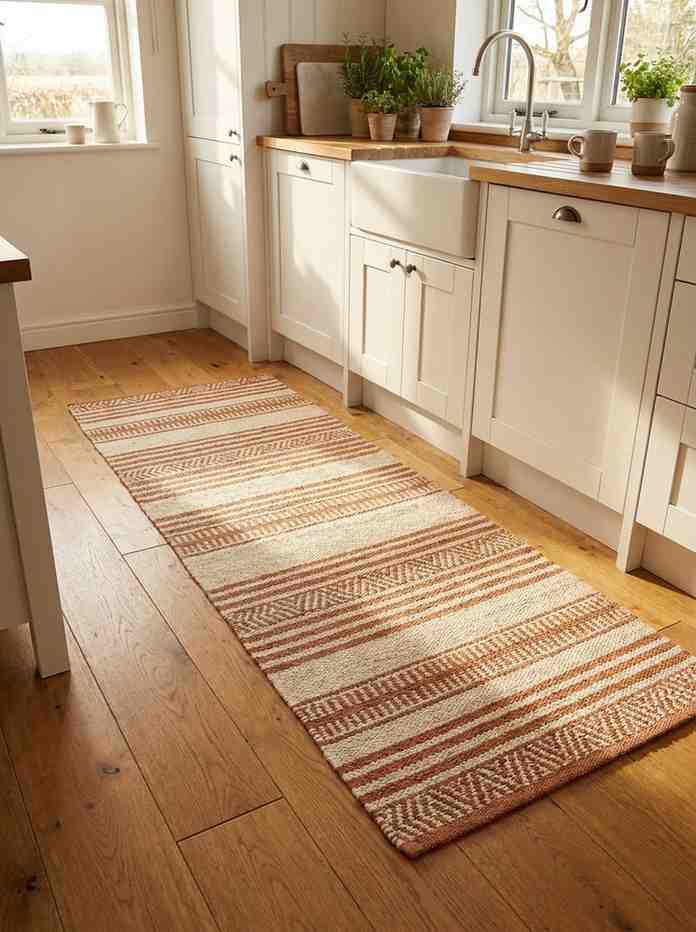
A Warm Runner Rug to Ground the Kitchen Floor
A runner rug is the most underestimated item on any cozy kitchen decorating list. Hard floors make kitchens feel cold acoustically and physically. A flatweave cotton or jute runner in front of the sink changes that feeling immediately.
Keep the pile low, under half an inch, for easy cleaning and safety. Washable cotton flatweave runners from Ruggable or Dash and Albert hold up to daily kitchen spills well. A 2.5 by 7-foot runner costs $80 to $250.
Ruth Mottershead of Little Greene notes that natural textures like jute “complement beautifully with stone finishes and wood.” A warm, patterned kitchen rug gives the space the same lived-in appeal as a living room. That crossover is the whole point of good cozy kitchen ideas.
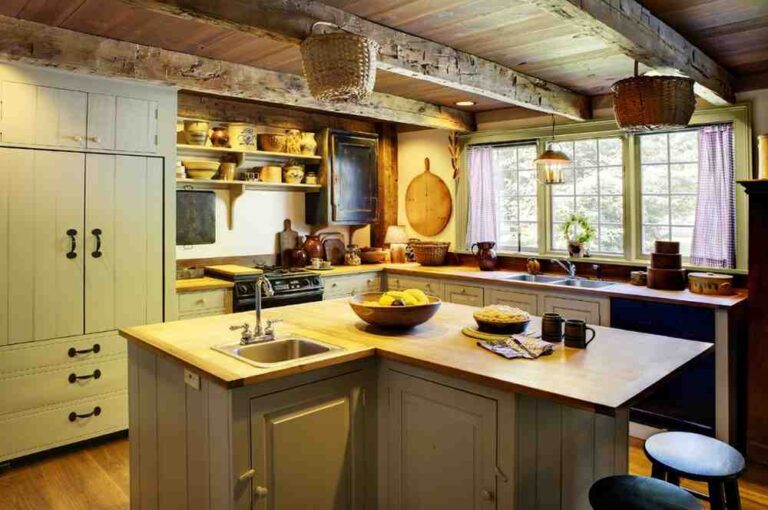
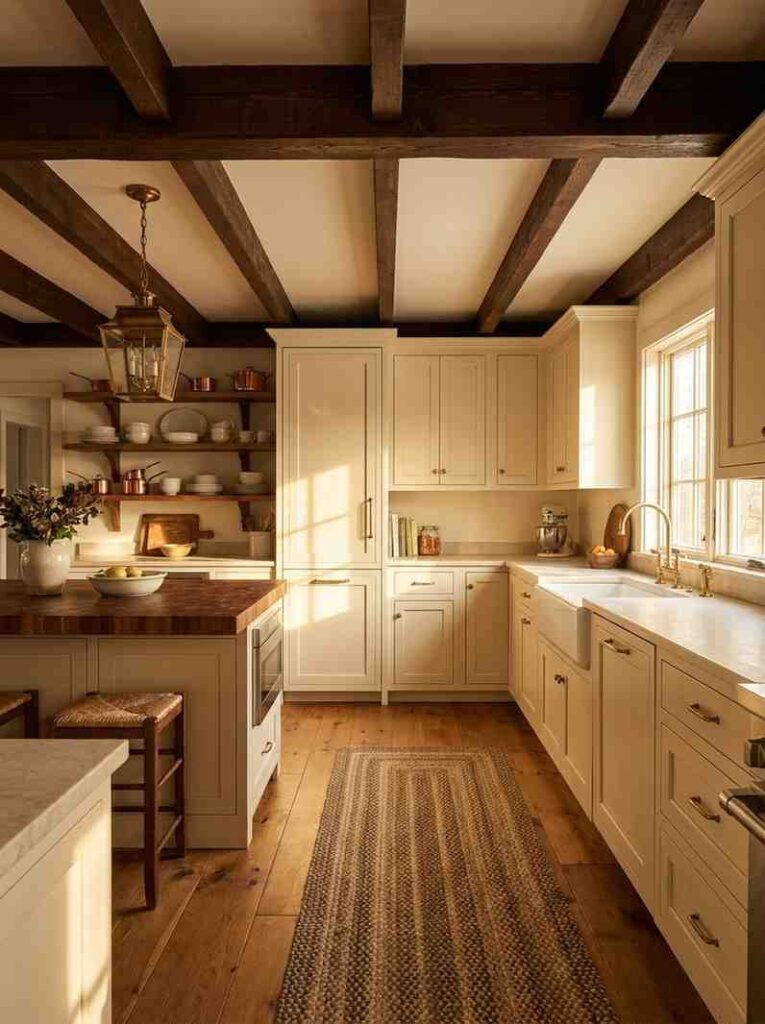
Exposed Ceiling Beams for a Cozy Cabin Kitchen Feel
Exposed wooden ceiling beams are the signature element of a cozy cabin kitchen. One or two stained beams add height, warmth, and drama simultaneously. Even in a modern space, they shift the atmosphere completely.
Faux wood beams from manufacturers like Timber Tech or Modern Mill cost $15 to $35 per linear foot installed. A 12-foot beam runs $180 to $420. Real reclaimed wood beams cost $40 to $80 per linear foot.
Stain them in a warm walnut or medium oak tone rather than dark ebony. Dark beams in small kitchens make the ceiling feel low. Keep the ceiling in White Dove (OC-17) to balance the contrast cleanly.
Hygge Sensory Details That Make a Kitchen Feel Like Home
Hygge is the Danish concept of cozy well-being. It is not a visual style. It is a sensory one. This is what separates a kitchen that truly feels cozy from one that only looks cozy in photos.
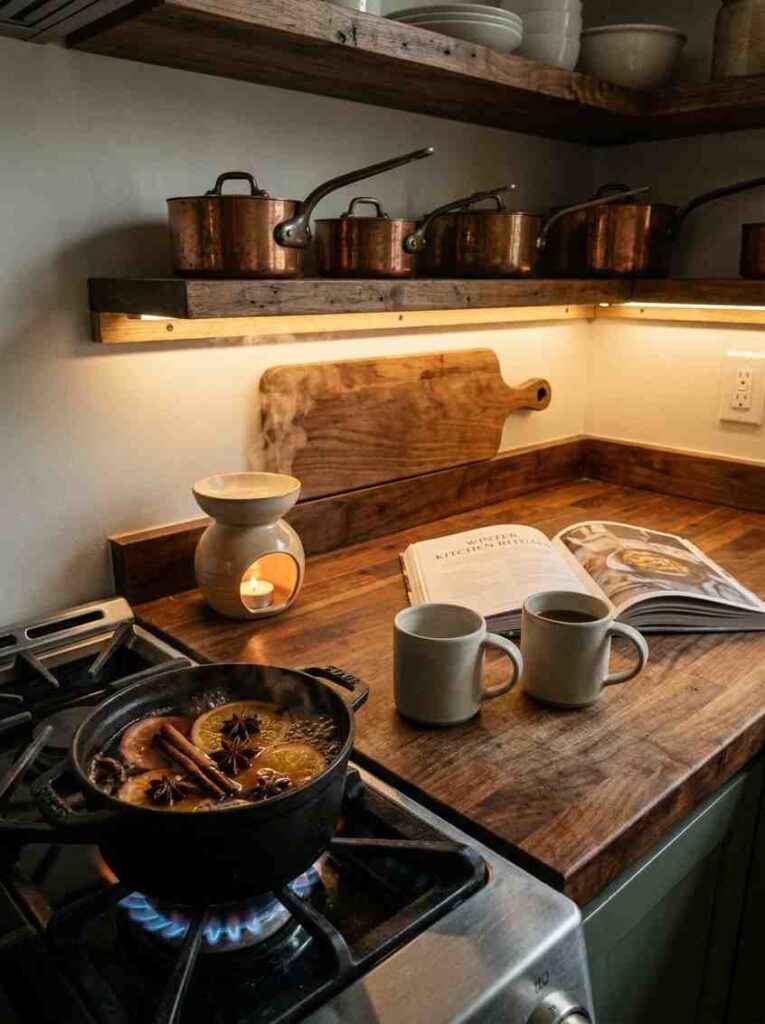
Simmer a pot of cinnamon, orange peels, and cloves while cooking. Add a small Bluetooth speaker tucked under a cabinet shelf. Switch your bulbs to 2700K warm white from 4000K cool white. That single bulb change transforms the room at night.
Display only the cookbooks you actually use on an open shelf. A small enamel or brass kitchen timer is functional and beautiful. These are the details most cozy kitchen design articles skip entirely.
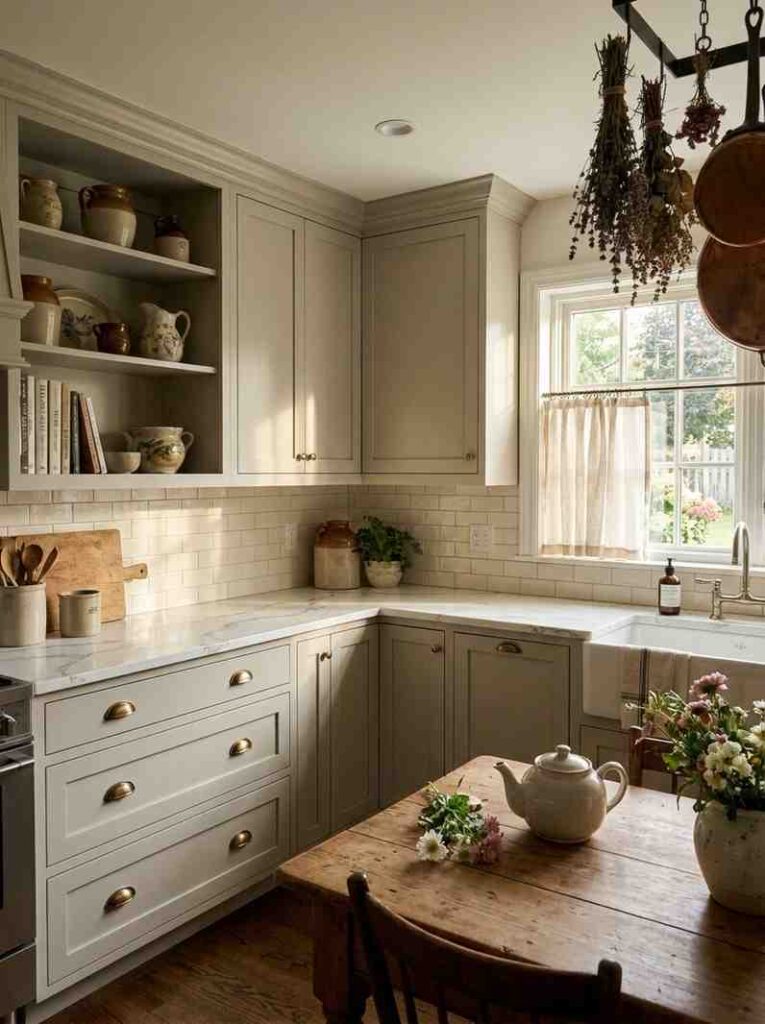
Shaker Cabinets in Warm Earthy Cottage Colors
Shaker cabinets never go out of style. Their recessed panel detail adds texture without competing with other materials. In 2026, the cozy cottage version uses them in earthy tones rather than bright white.
Try Benjamin Moore Revere Pewter (HC-172) for a greige tone that reads differently in morning versus evening light. Or go warm green with Rosemary (SW 6187) on the lower cabinets. Pair with a white Calacatta quartz countertop to keep the look elegant rather than heavy.
Ceramic cup pulls and bin pulls in aged brass cost $3 to $8 each from Rejuvenation or House of Antique Hardware. They make a box-store Shaker cabinet look like a custom piece.
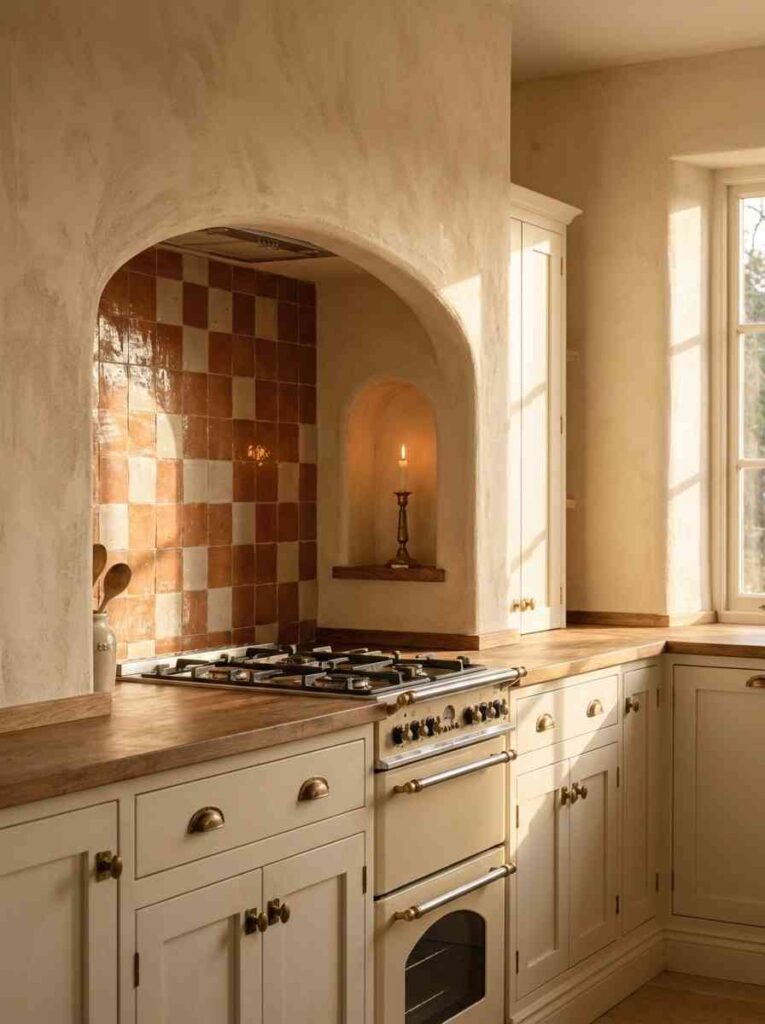
Curved Arches and Limewash Walls for Organic Warmth
Curved architecture makes a kitchen feel hand-built. An arched doorway or a rounded plaster hood removes the sharp assembly-line quality of a standard kitchen.
Limewash walls in Portola Paints Classico Lime in a warm cream create a surface that catches light differently at every hour of the day. The imperfection is entirely the point here. This ties directly into the Wabi-Sabi design philosophy: beauty in worn, imperfect surfaces. It is why a limewashed wall feels warmer than a flat-painted wall at the same color value.
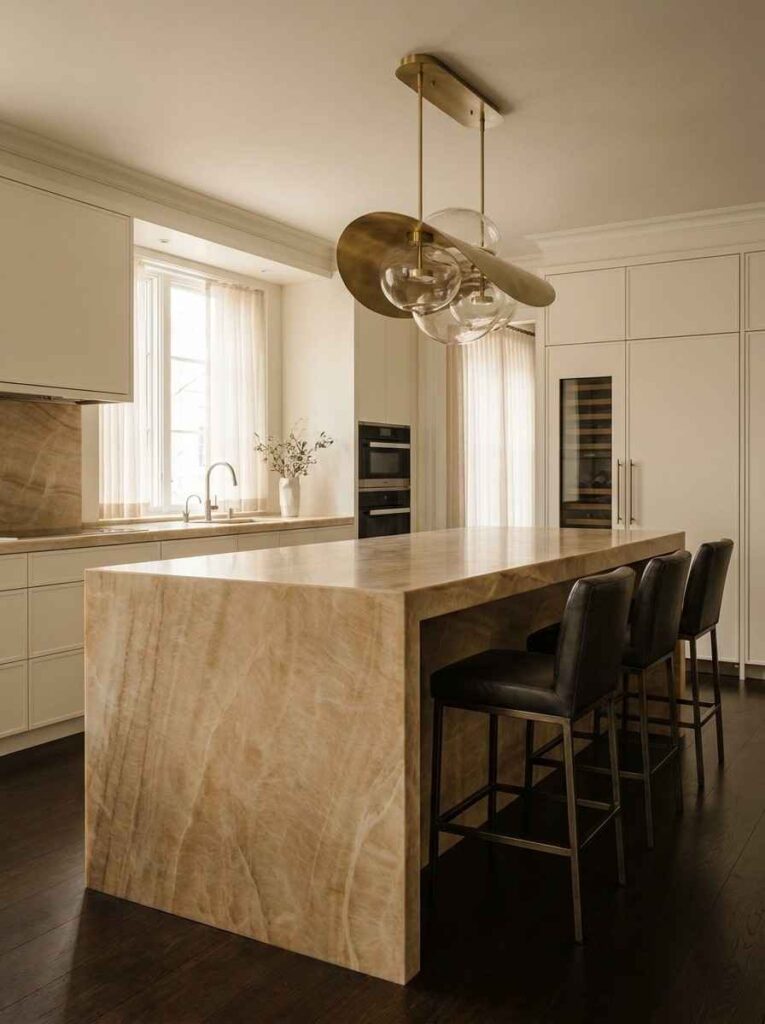
A Monolithic Stone Island as the Heart of the Kitchen
The monolithic island is one unbroken slab of stone with no material changes or visible seams. It does not read warm on paper. But in person, a large quartzite island makes the whole kitchen orbit around it like a hearth.
Quartzite runs $80 to $220 per square foot installed, per Angi. Super White quartzite starts around $50 per square foot. Taj Mahal quartzite, a warm, honey-toned natural stone with light veining, costs $90 to $150 per square foot.
Warm wood or leather stools at the island. Quieter cabinetry behind it. Let the stone do the talking.
Frequently Asked Questions
What makes a kitchen feel cozy?
Warm layered lighting at 2700K makes the biggest difference. Natural materials like white oak and walnut add texture. A warm neutral paint color, such as Agreeable Gray (SW 7029) or Alabaster (SW 7008) ties the palette together. At least one handmade texture like zellige tile, a plaster hood, or a wood countertop completes the look. A seating area, such as a breakfast nook or island stools, makes the space feel social rather than purely functional.
What is the best paint color for a cozy kitchen in 2026?
Sherwin-Williams Alabaster (SW 7008) is the top warm white for cabinets with an LRV of 82. For green, Evergreen Fog (SW 9130) is the fastest-growing choice. For deep contrast, Naval (SW 6244) at LRV 4 delivers the most dramatic result. Per NKBA’s 2026 Trends Report, 86% of designers named green the top statement cabinet color this year. Benjamin Moore White Dove (OC-17) remains the top-selling cabinet white nationally.
How do I make a small kitchen feel cozy without a full remodel?
Add under-cabinet LED strips at 2700K ($30 to $80), a washable flatweave runner rug ($80 to $250), and rattan pendant lights ($60 to $250 each). Repaint cabinets yourself in Alabaster (SW 7008) for $200 to $500 in materials. These four changes cost under $1,000 total and are what most designers recommend before any structural work. A minor kitchen refresh also delivers roughly 113% ROI nationally, per Zonda’s 2025 Cost vs. Value report.
Are dark kitchens actually cozy?
Yes, if you commit to the contrast. Naval (SW 6244) on lower cabinets with soft white uppers and warm rattan lighting creates a layered, moody look. It feels inviting rather than cold. Designer Allison Garcy used Naval in a New York apartment kitchen to make the cabinetry feel architectural and refined rather than utilitarian. Pair with a white fireclay sink to keep the upper zone bright.
Final Thoughts
Pick two or three ideas from this list. Start with lighting. It costs the least and changes the most. Then add one natural material: a floating shelf, a zellige tile section, or a runner rug. Let the kitchen settle into the new mood before adding more.
For more room-by-room inspiration, check our cozy bathroom ideas and living room ideas guides. If you are planning a bigger update, our kitchen ideas section covers layouts, cabinet colors, and storage from start to finish.