Living in a studio apartment offers a unique chance to curate a space that feels entirely yours without the clutter of extra rooms. By 2026, the focus shifts toward multi-functional design that balances aesthetic beauty with extreme utility. Whether you are battling a awkward floor plan or simply want to refresh your current layout, these nine ideas provide the perfect roadmap. We are looking at smart zoning, vertical storage, and intentional color choices that make even the smallest footprint feel expansive and serene. Let’s explore how to turn your studio into a sanctuary that feels intentionally designed rather than just a place to sleep.
1. Defining Zones with Open Shelving
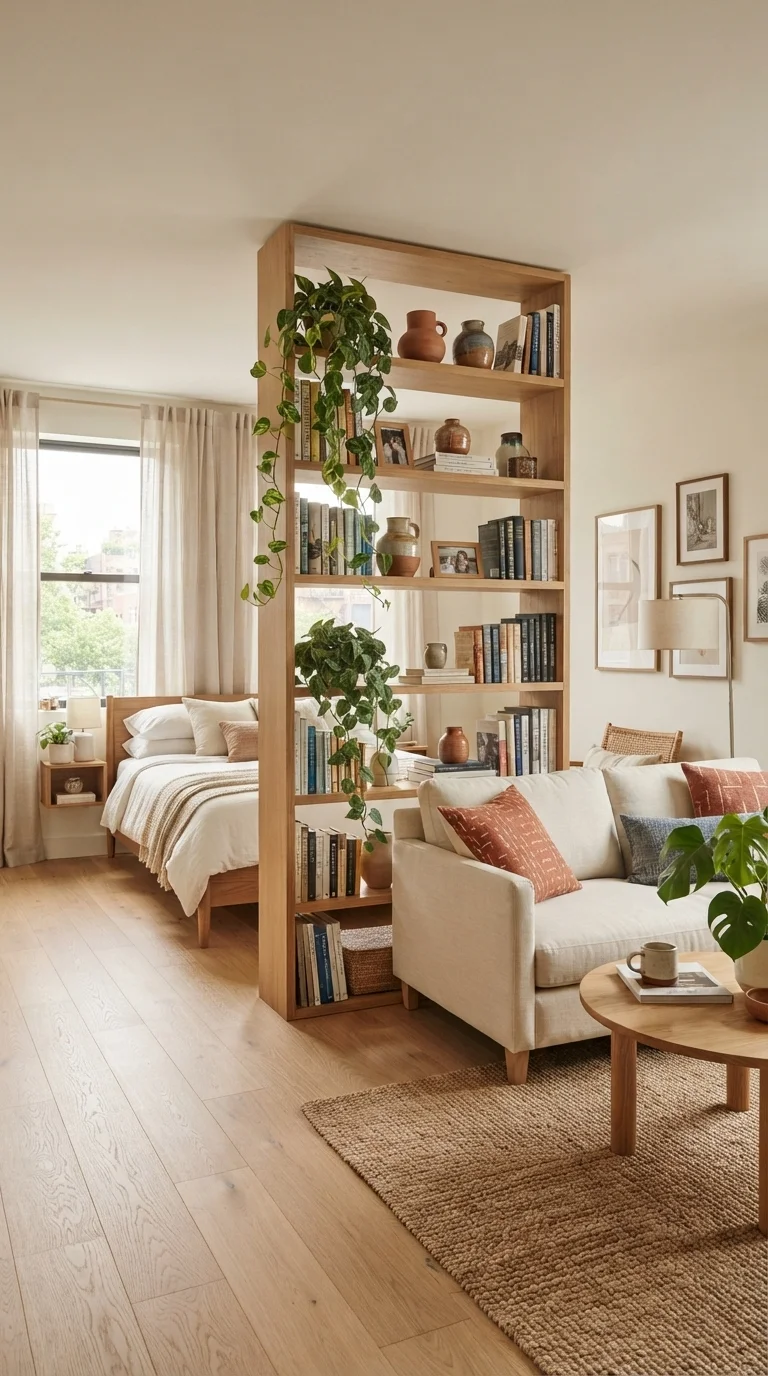
Using an open-back bookshelf is the gold standard for separating your sleeping area from your living space without sacrificing natural light. This setup keeps the room feeling open while providing much-needed storage for your personal treasures. Place your favorite rustic dining chair ideas nearby to create a cohesive look that blends textures throughout the studio. The key is to keep the shelves curated rather than crowded. Leave some negative space to allow light to pass through, which prevents the divider from feeling like a heavy wall.
2. Maximizing Vertical Wall Storage
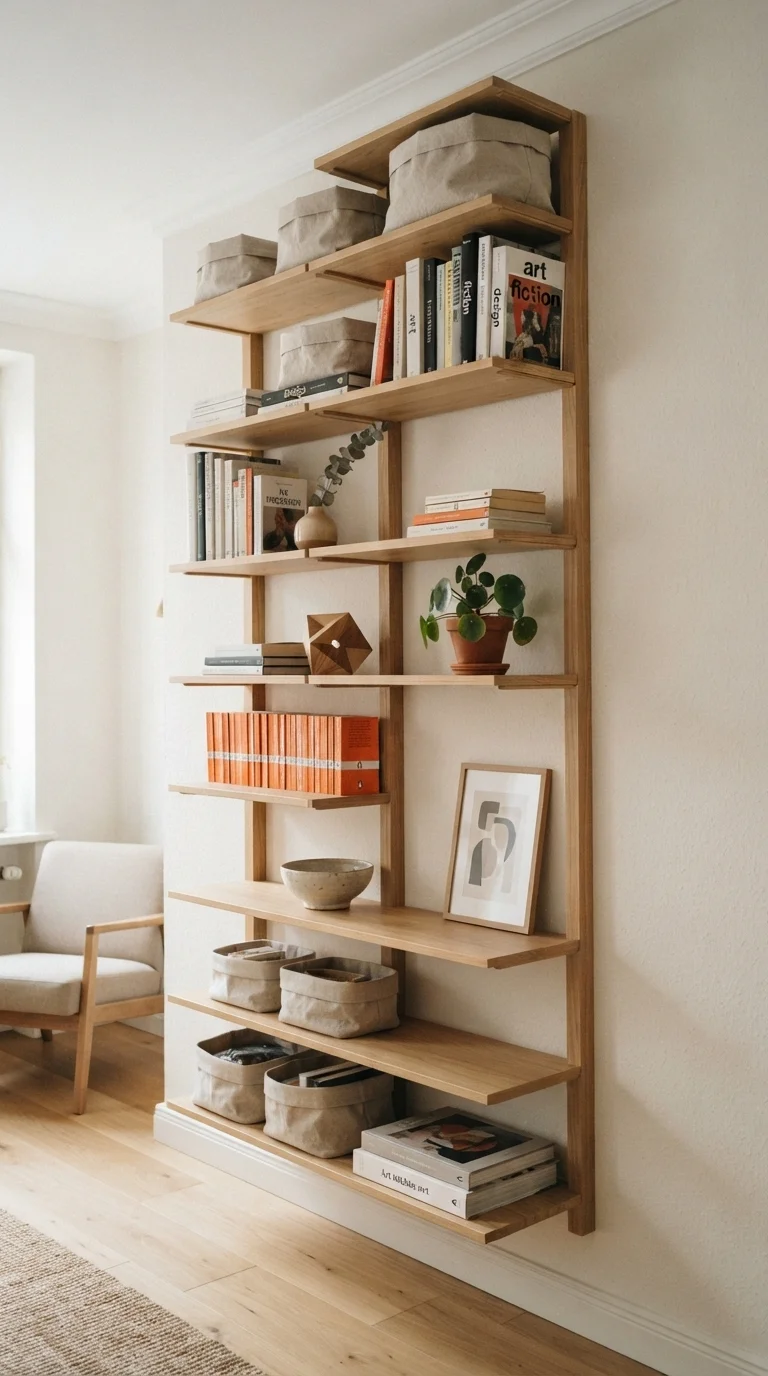
When floor space is limited, your walls become your most valuable real estate. Install shelving that reaches nearly to the ceiling to draw the eye upward, making the room feel taller. This approach keeps the floor clear for furniture and movement, which is vital for studio living. Use closed bins for items you want to hide and open shelves for items that bring you joy. This balance keeps the space looking intentional rather than cluttered, providing a clean visual line that makes the entire apartment feel more organized and airy.
3. Choosing Multi-Functional Furniture
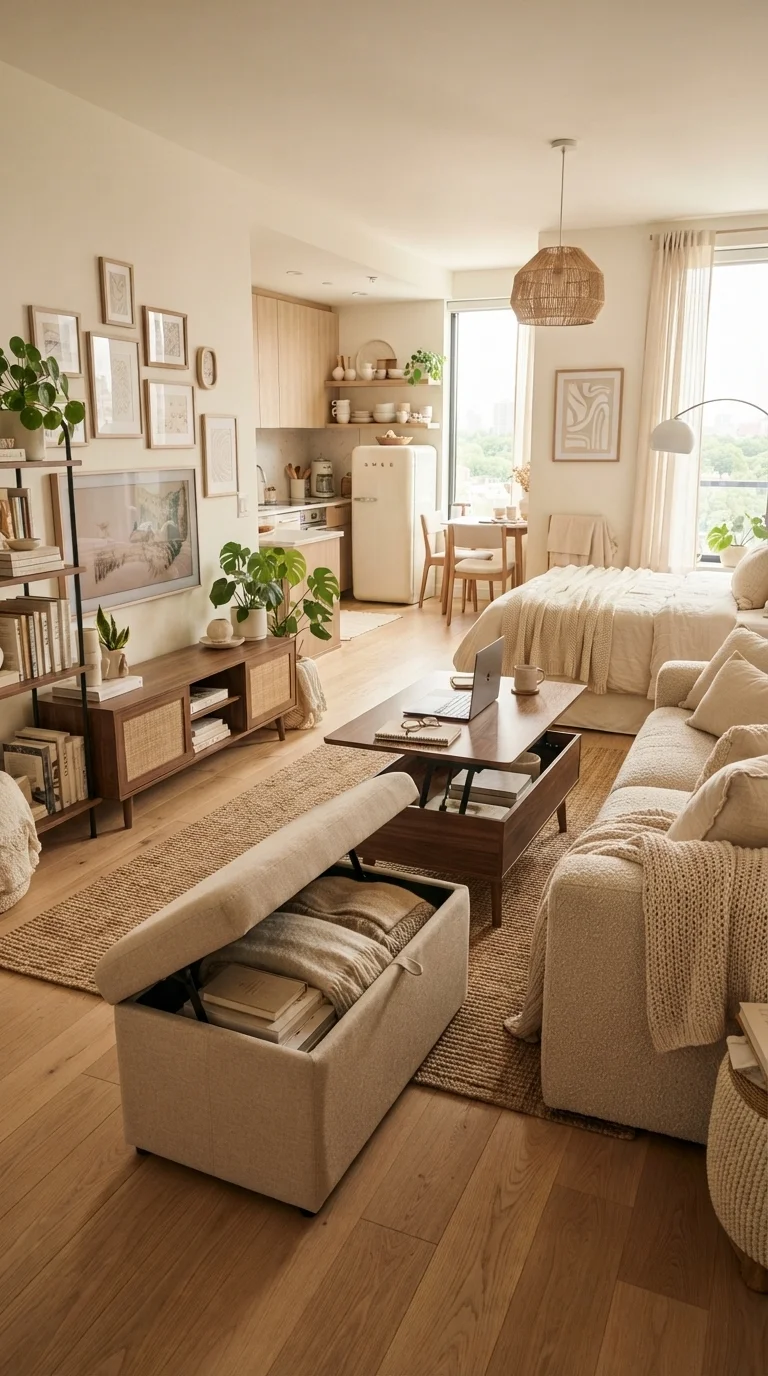
Every piece of furniture in a studio must earn its keep. A lift-top coffee table acts as both a dining surface and a workspace, while an ottoman with storage hides blankets and magazines. This dual-purpose strategy prevents your home from feeling like a storage unit. Focus on pieces with hidden compartments or slim profiles that can be tucked away when not in use. By selecting furniture that serves at least two functions, you maintain a spacious footprint while ensuring you have everything you need for a comfortable, daily routine.
4. Layering Lighting for Atmosphere
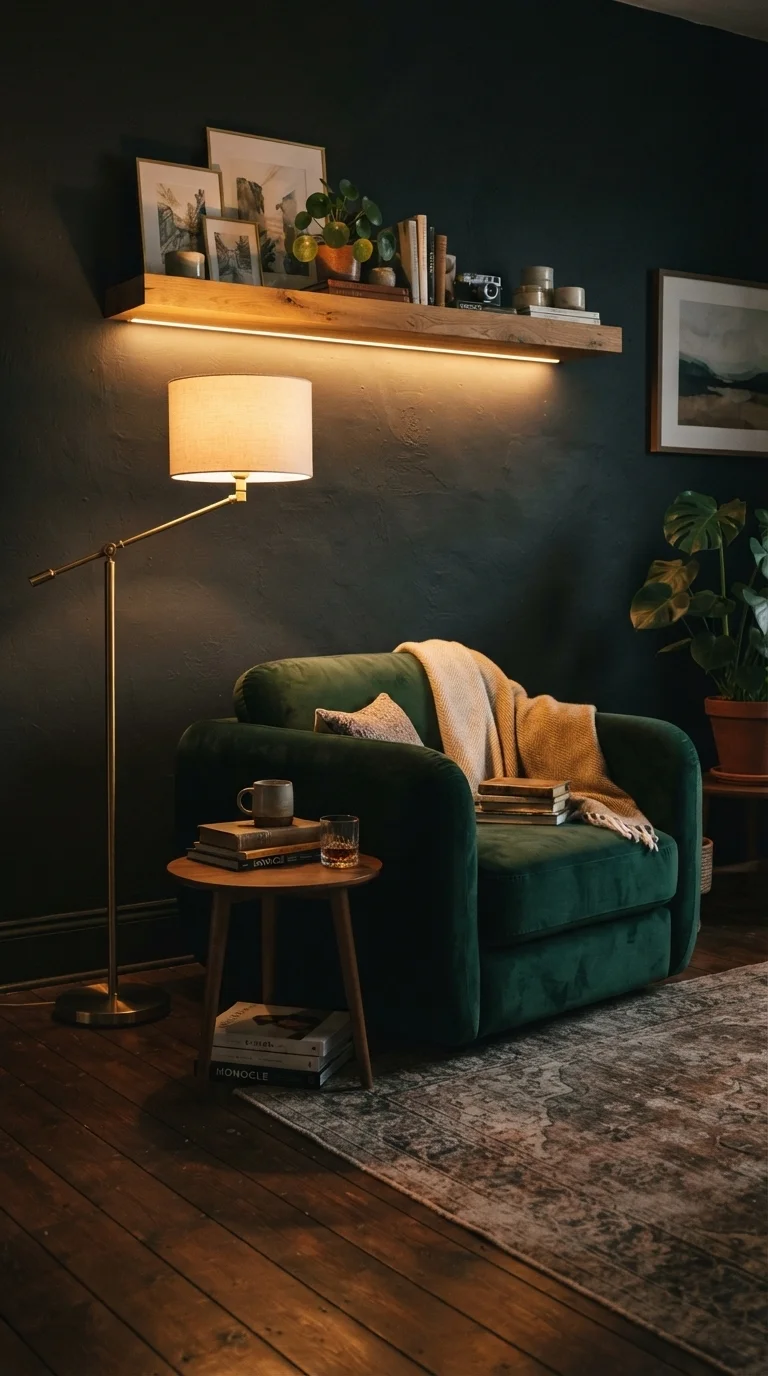
Lighting is the secret to making a small space feel luxurious. Avoid relying solely on a single overhead light, which can feel clinical and harsh. Instead, layer your lighting with floor lamps, table lamps, and hidden LED strips to create depth and warmth. Place a lamp at eye level to draw attention to specific decor pieces and use warmer bulbs to create a relaxing evening mood. By lighting different corners of the room, you expand the visual boundaries of your studio, making it feel more like a multi-room home.
5. Incorporating Reflective Surfaces
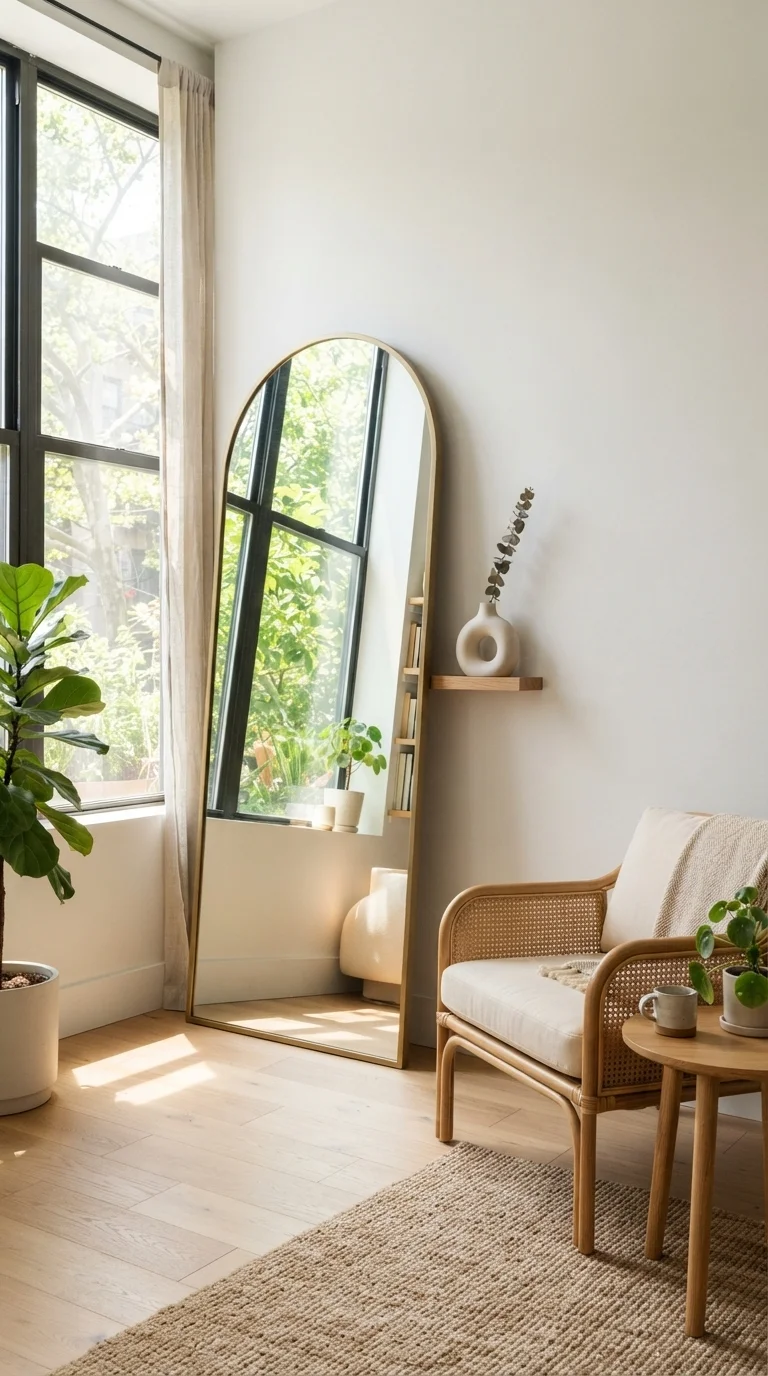
6. Using Rugs to Anchor Spaces
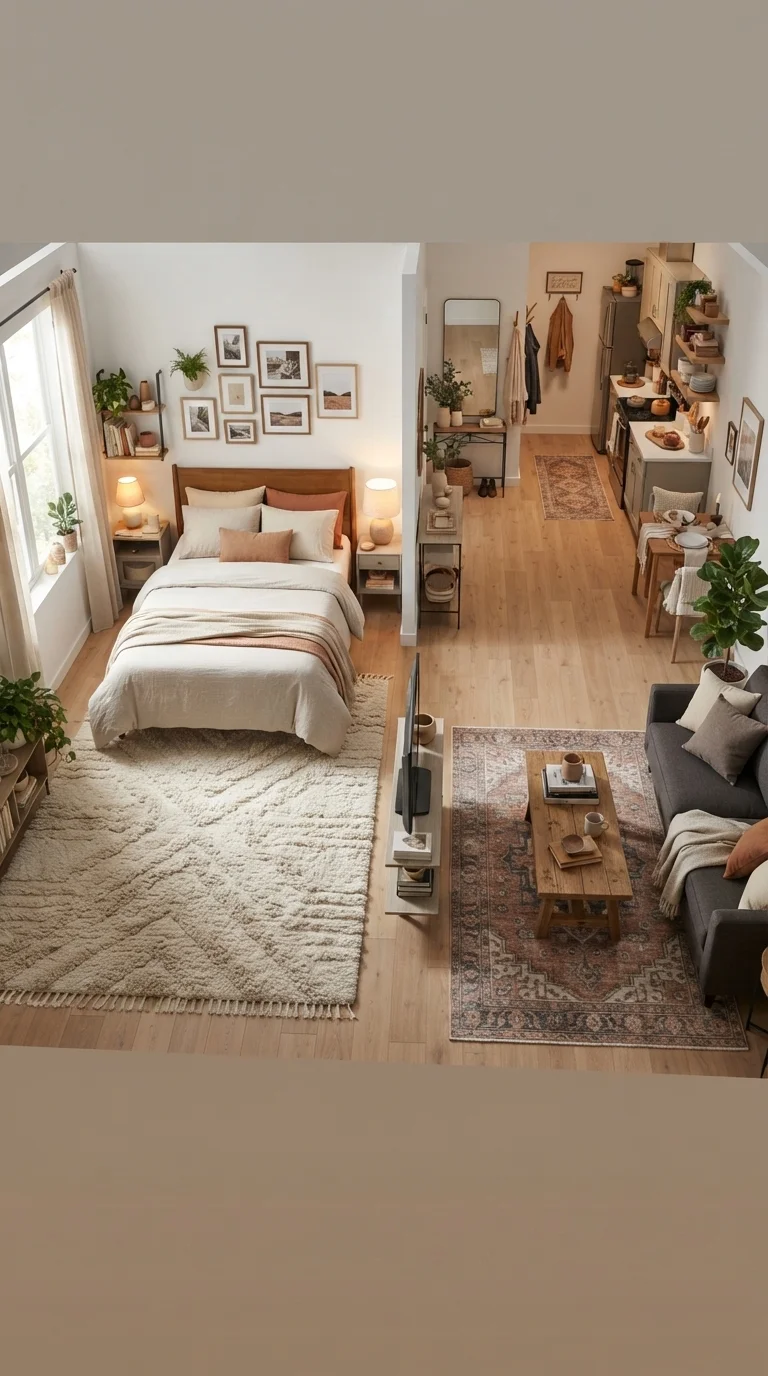
Rugs act as the anchor for your furniture, helping to define ‘rooms’ within your studio. A large rug under your bed creates a soft landing for your feet, while a separate rug under your sofa defines the living area. Even in a small space, using two distinct rugs helps the eye understand the different functions of each zone. Keep the color palette consistent across both rugs to ensure the space feels unified rather than chopped up. This simple design choice creates a professional, finished look that ties your layout together effortlessly.
7. Embracing Monochromatic Color Schemes
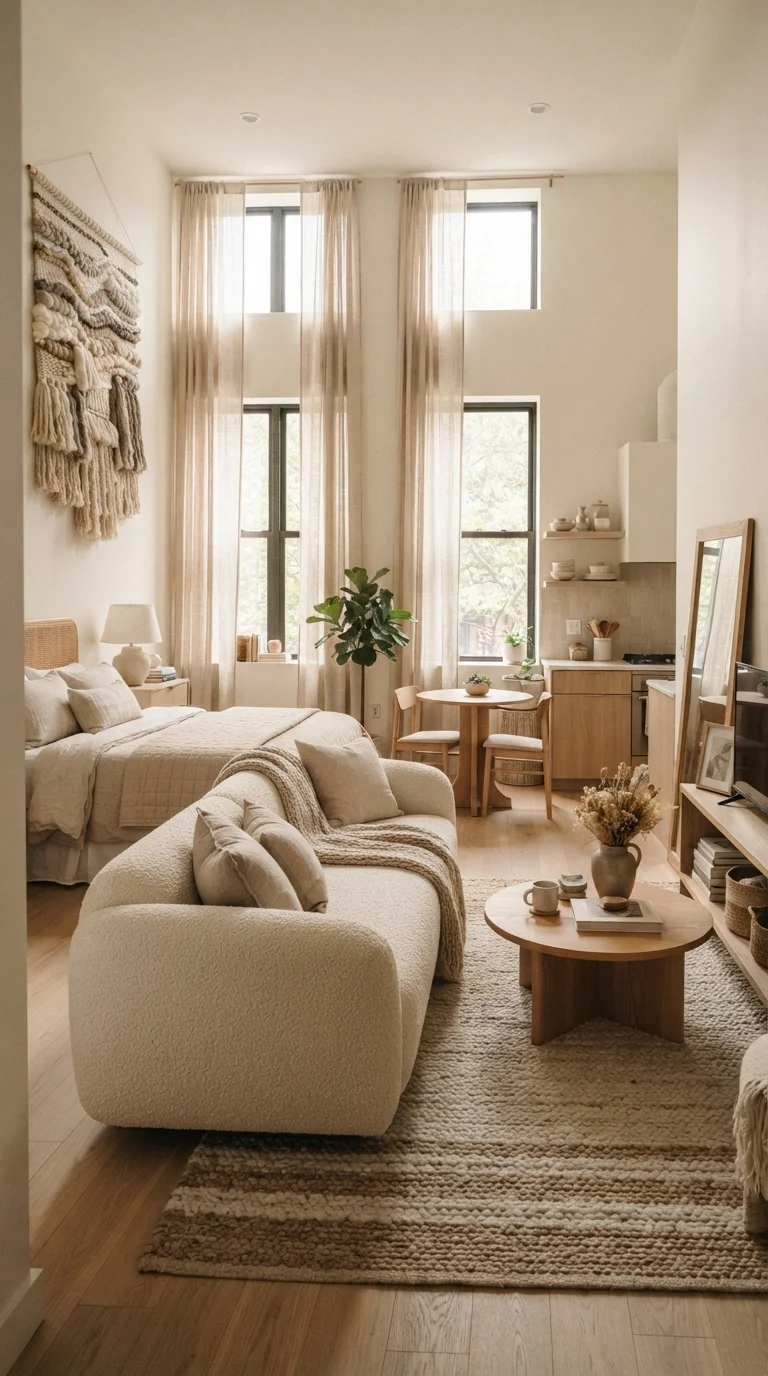
Monochromatic color schemes are incredibly effective in studios because they eliminate visual noise. By sticking to a palette of whites, creams, or soft greys, you allow the architecture and the textures to take center stage. When you remove color contrast, the walls seem to recede, creating an illusion of more space. To keep this from feeling boring, layer different textures like linen, wool, and ceramic. The variation in material provides visual interest without needing bold colors that might make a small room feel cramped or overwhelmed.
8. Utilizing Hidden Doorway Storage
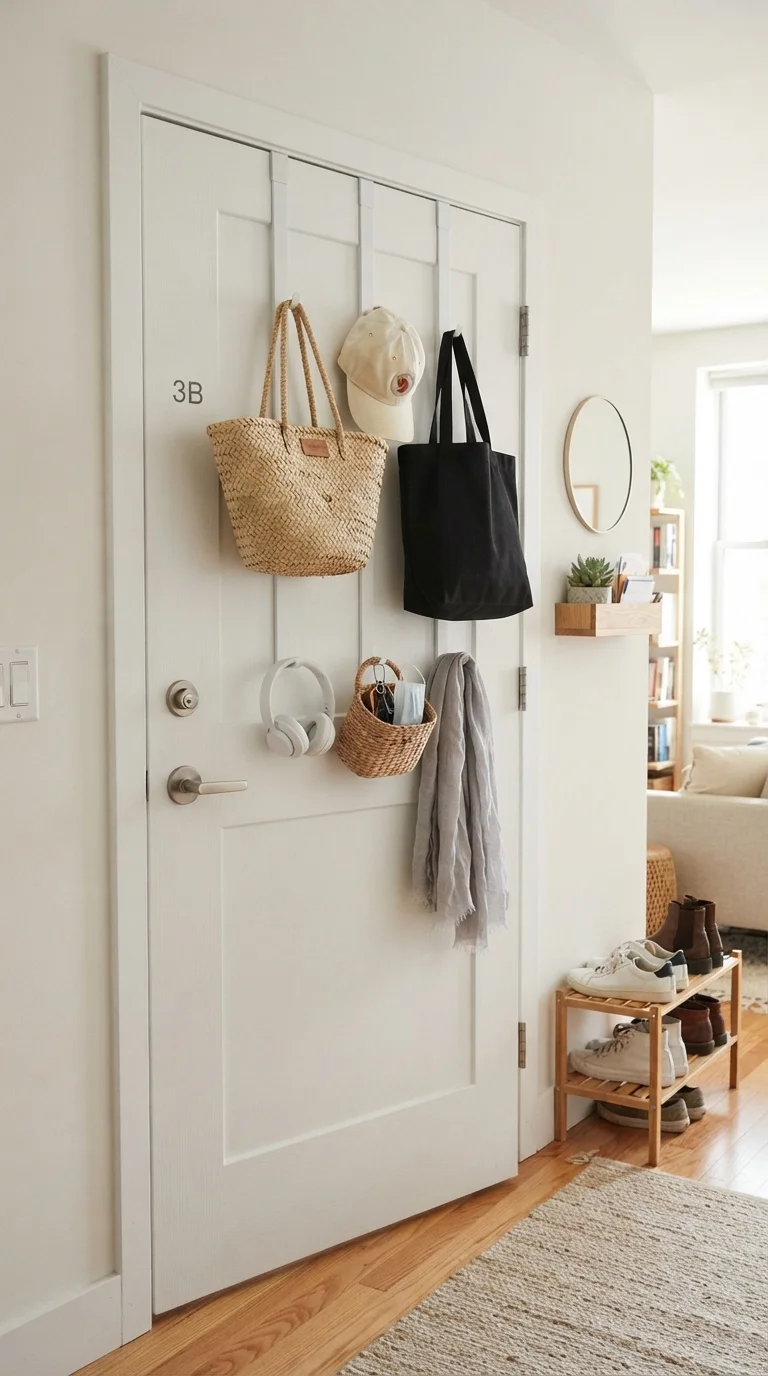
The back of your entrance or closet door is prime real estate that is often overlooked. Installing a sleek, high-quality over-the-door rack or organizer allows you to store essentials like bags, hats, or even cleaning supplies out of sight. Paint the organizer the same color as the door to help it blend in seamlessly with your walls. This keeps your main living area free of clutter, which is the most important factor in maintaining a peaceful, orderly studio environment. It is a simple, low-cost upgrade that pays off in daily convenience.
9. Curating Minimalist Wall Art
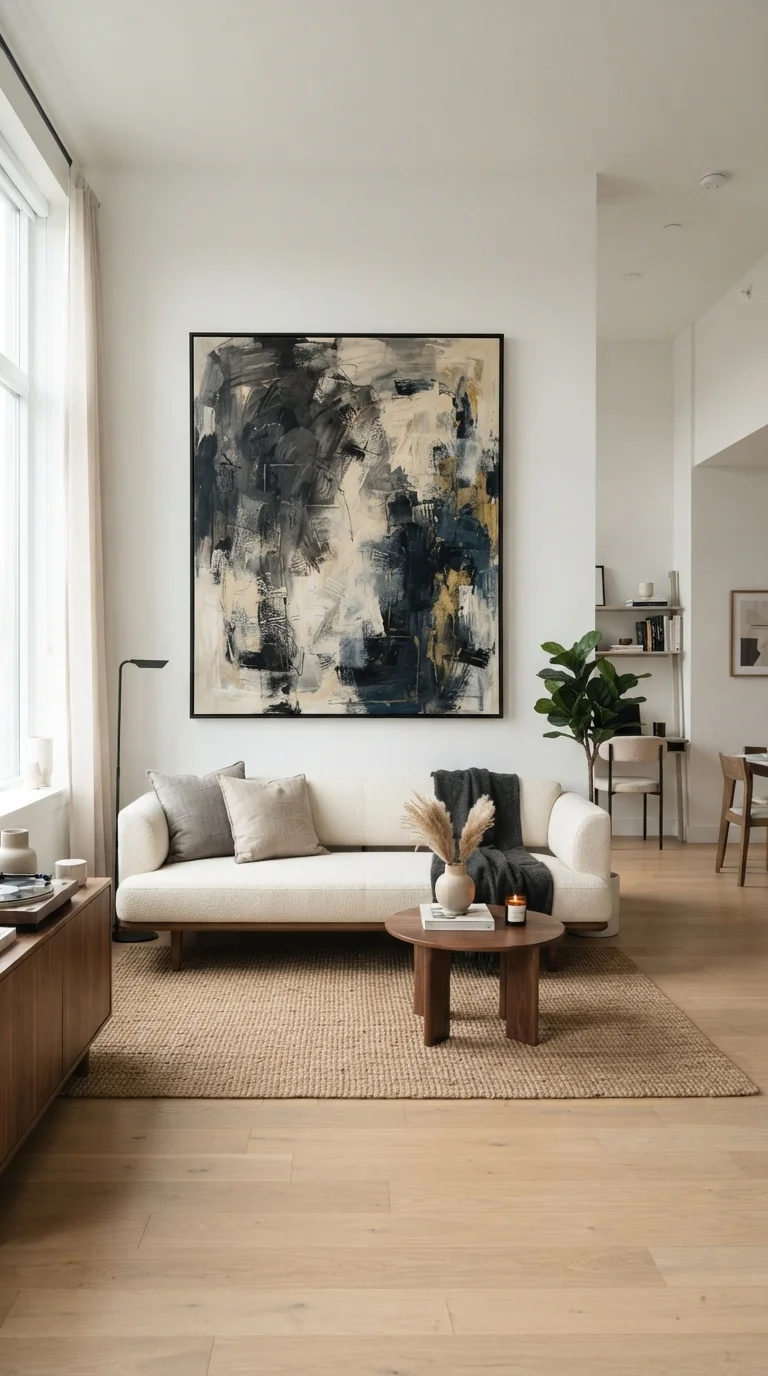
In a studio, less is often more when it comes to wall decor. Instead of a cluttered gallery wall, consider one large-scale piece of art that makes a statement. A big canvas draws the eye and creates a clear focal point, which helps to ground the room. Choose art that speaks to your personal style and complements your existing color palette. This approach keeps the room feeling sophisticated and spacious, rather than busy. By choosing one impactful piece, you elevate the entire room’s aesthetic while keeping the vertical lines clean and uncluttered.