
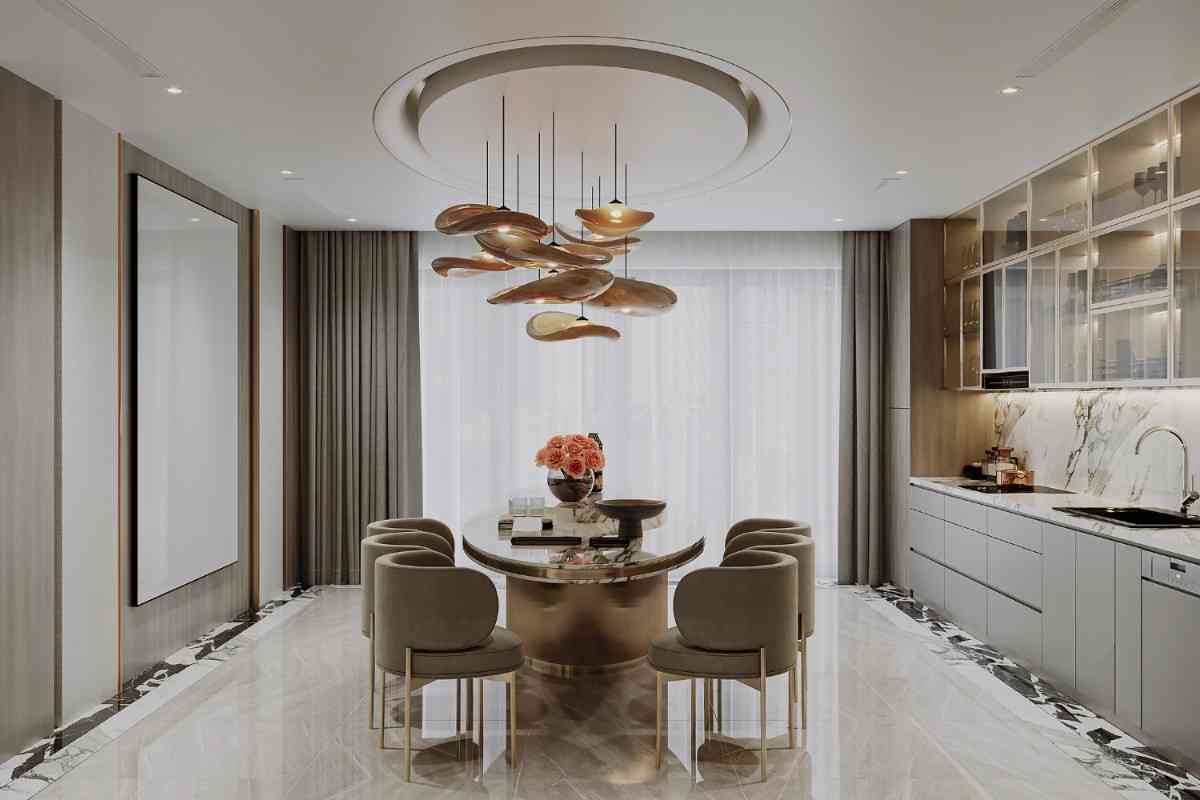
Dining Room Ideas 2026: 20 Fresh Designs That Work
The best dining room ideas for 2026 mix warm paint colors like Benjamin Moore Silhouette, mixed-era furniture, statement lighting, and flexible layouts that work for small rooms and open-plan homes alike.
My dining room sat empty for two years. It was the room nobody used, just a table collecting mail and my kid’s homework. Then I repainted it, swapped the light fixture, and added a rug that actually fit. Now we eat dinner there four nights a week. That single room made me realize dining rooms are having a real moment again in 2026, after a decade of being folded into open-concept kitchens. These 20 dining room ideas come from real trend data, real designers, and my own trial and error, so you can skip the mistakes I made.
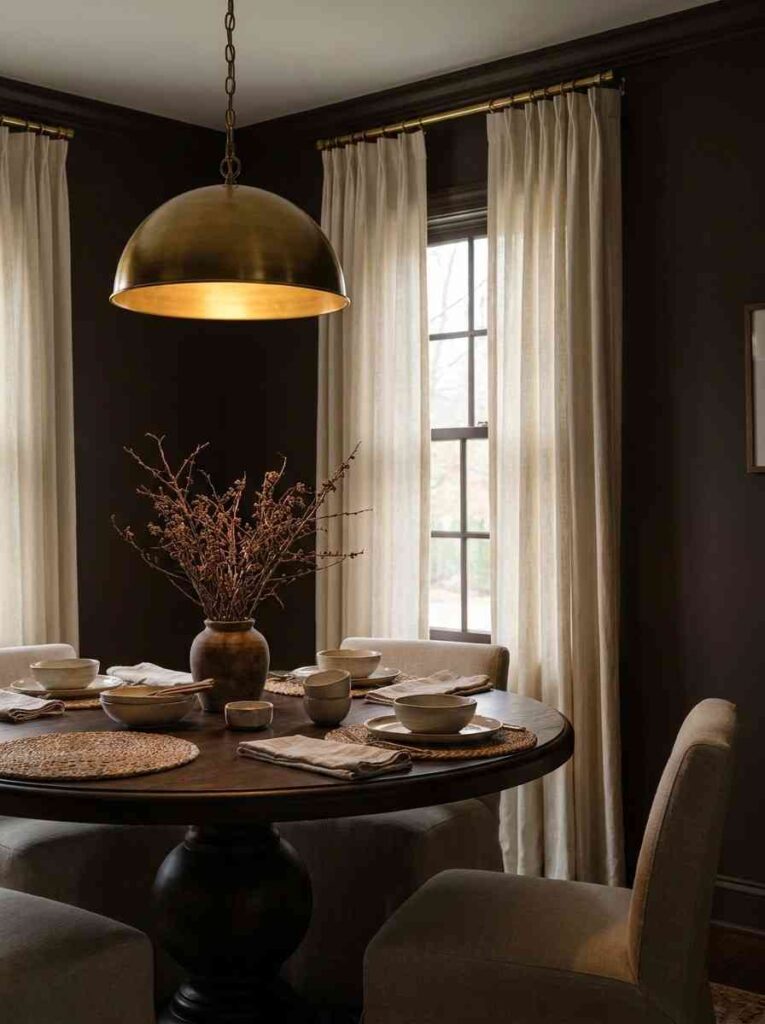
Paint It Benjamin Moore Silhouette AF-655
This is Benjamin Moore’s 2026 Color of the Year, a deep espresso-charcoal brown with almost plum undertones. I tested it on my own dining room wall, and it looked completely different depending on the hour. In morning light, it read charcoal gray; by evening candlelight, it turned warm chocolate brown. Benjamin Moore’s Andrea Magno describes it as reflecting a renewed interest in tailored suiting and the brown color family. It costs about 55 to 75 dollars a gallon, depending on your finish.
This color works best in dining rooms used mostly at night, since dark walls need warm lighting to feel cozy instead of cave-like. Pair it with Swiss Coffee OC-45 trim for contrast, or go full color-drench with matching ceiling and trim for a cocoon effect. My mistake was skipping a sample pot and buying two gallons straight away. Test a swatch on your actual wall for 48 hours before committing.
Try Sherwin-Williams Universal Khaki SW 6150
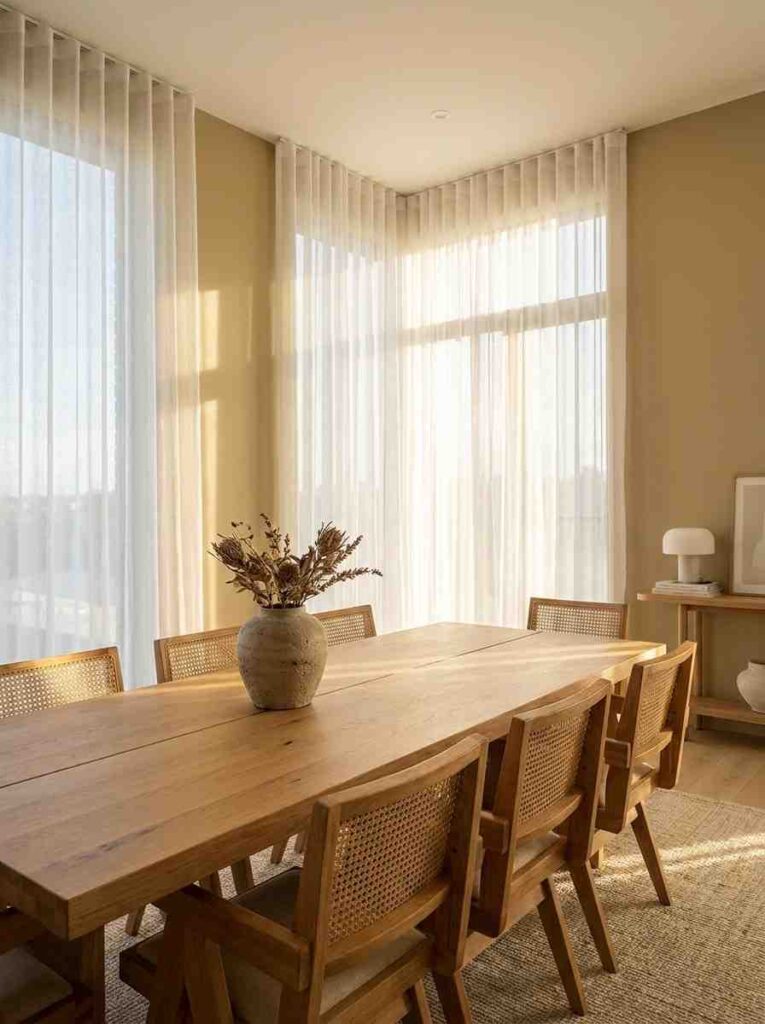
Universal Khaki is Sherwin-Williams’ pick for 2026, an earthy neutral that sits between beige and taupe with a subtle green undertone. It works in north-facing rooms where it leans slightly green and cooler, and in south-facing rooms where it turns warm and golden. A gallon runs about 65 dollars at most retailers. This is the safer choice if you’re nervous about committing to a dark, moody color like Silhouette.
Use it as a full wall color paired with warm wood furniture like walnut or teak for a grounded, timeless look. It also pairs nicely with a chair rail, painting Universal Khaki above and a crisp white below for texture without darkness. Designers at HGTV Home by Sherwin-Williams pair it with Cordovan and Griffin for a layered, nature-inspired palette. If your dining room gets little natural light, test this one at night under your actual bulbs first.
Go Bold With a Jewel Tone Wall
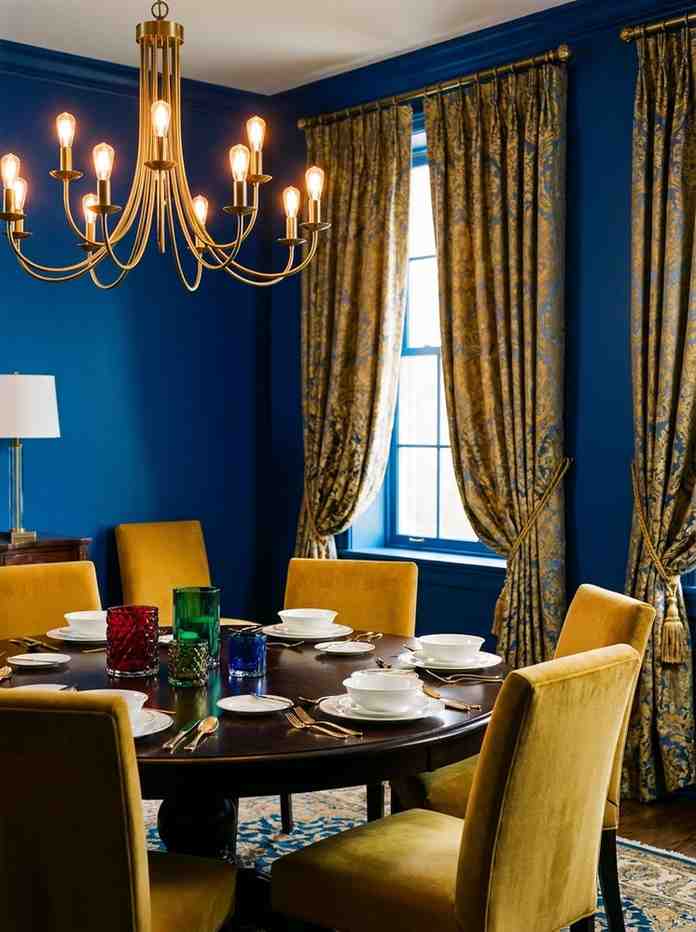
Deep jewel tones are a serious 2026 trend, according to Decorilla designer Sierra G, who treats color as one of the central design tools in a dining room. Think cobalt blue paired with ochre yellow, or forest green paired with coral accents. This works because dining rooms are used briefly and intensely, so bold color doesn’t overwhelm daily life the way it might in a living room. Expect to pay standard paint pricing, around 50 to 70 dollars a gallon for quality paint plus primer if going from a light wall.
This idea suits confident decorators who already have a neutral kitchen or living room and want their dining space to feel distinct. Apply the jewel tone across walls and cabinetry, not just one accent wall, to make the color feel intentional rather than accidental. The downside is resale value, since bold colors can turn off buyers if you sell soon. If you rent, test with a large removable wallpaper panel instead of paint.
Add a Statement Chandelier
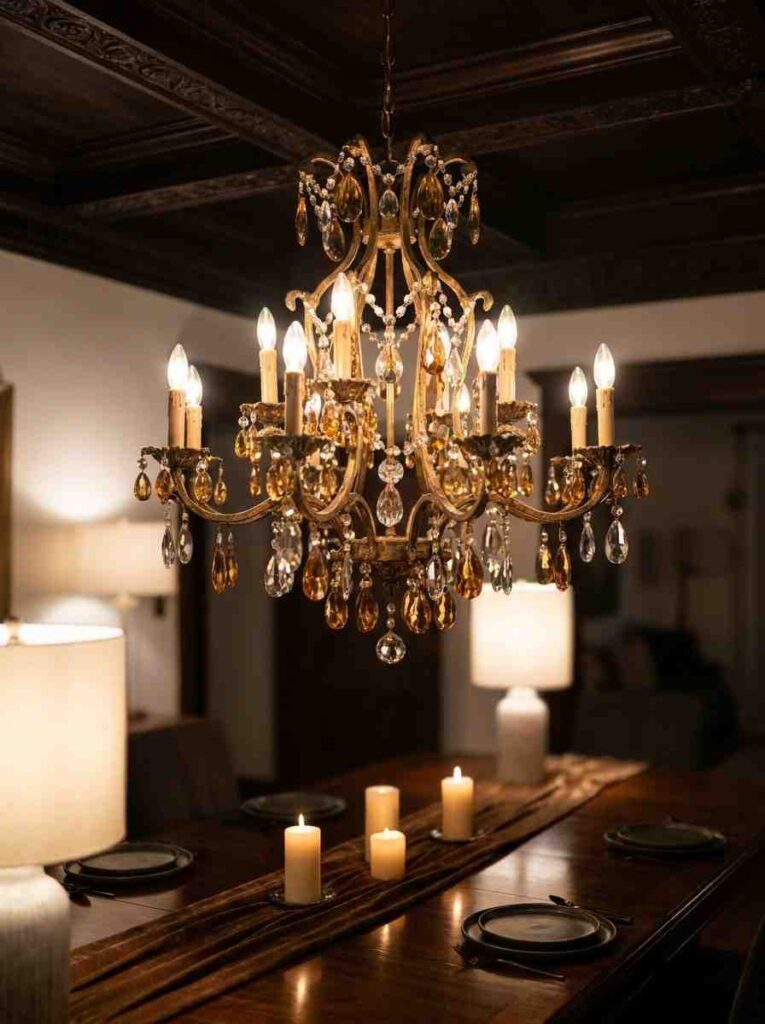
Statement lighting anchors a 2026 dining room more than any single piece of furniture. A quality K9 crystal chandelier runs 400 to 1,500 dollars for a standard dining room size, according to lighting pricing data from Esperilux. Installation adds another 150 to 600 dollars, depending on your ceiling height and existing wiring. Use the sizing formula of adding your room’s length and width in feet, then converting to inches, so a 12-by-14-foot room needs roughly a 26-inch fixture.
Hang it 30 to 36 inches above your table on a standard 8-foot ceiling for proper scale. I made the mistake of hanging mine too high at first, and it made my whole room feel disconnected and empty. Aim for 3,000 to 6,000 lumens total and stick with warm 2700K to 3000K bulbs so dinner doesn’t feel like an office meeting. Matte black, brushed nickel, and antique gold are the leading finishes for 2026.
Bring Back the Round Table
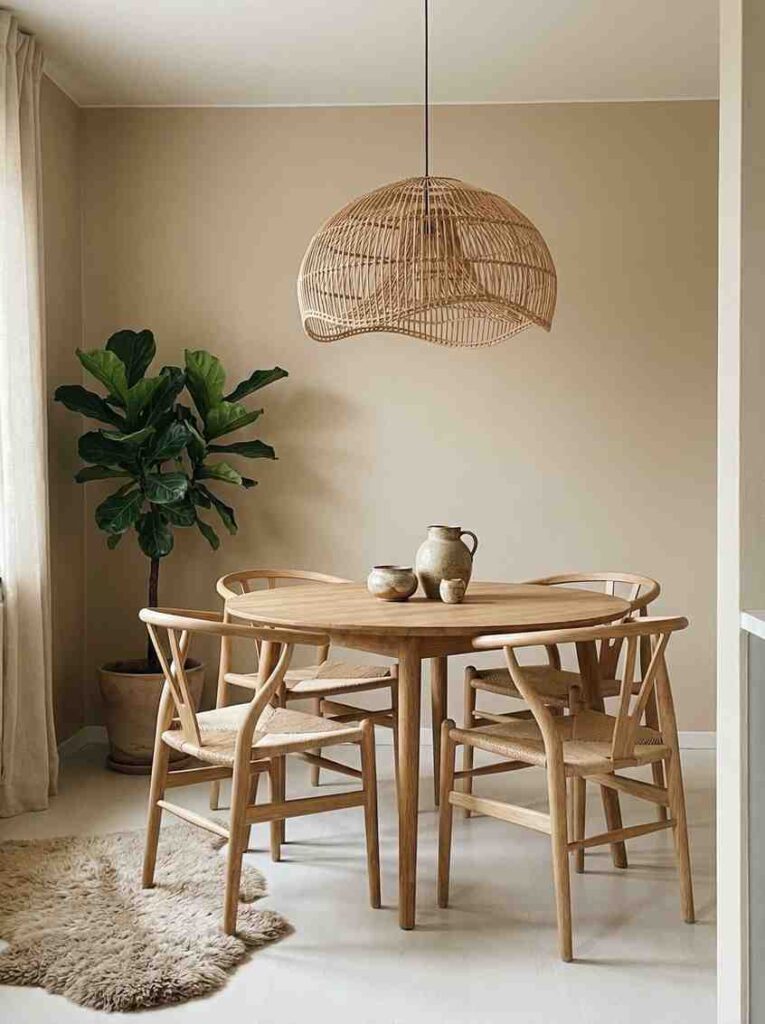
Round tables are having a comeback in 2026, according to designer Miranda Cullen of Inside Stories. They soften small rooms and remove sharp corners that make tight spaces feel cramped. A 48-inch round table seats four comfortably, while a 60-inch round works for six with a bit of a squeeze. Expect to pay anywhere from 300 dollars for basic versions to 2,000 dollars or more for solid walnut or oak.
Round tables work best in square rooms, apartments, or open kitchen-dining combos where you need to walk around the table often. They pair naturally with a round rug too, which keeps the whole layout visually calm. The downside is that round tables seat fewer people than rectangles of the same footprint. If you host large groups often, an extendable round-to-oval table solves this without permanently taking up floor space.
Layer a Properly Sized Rug
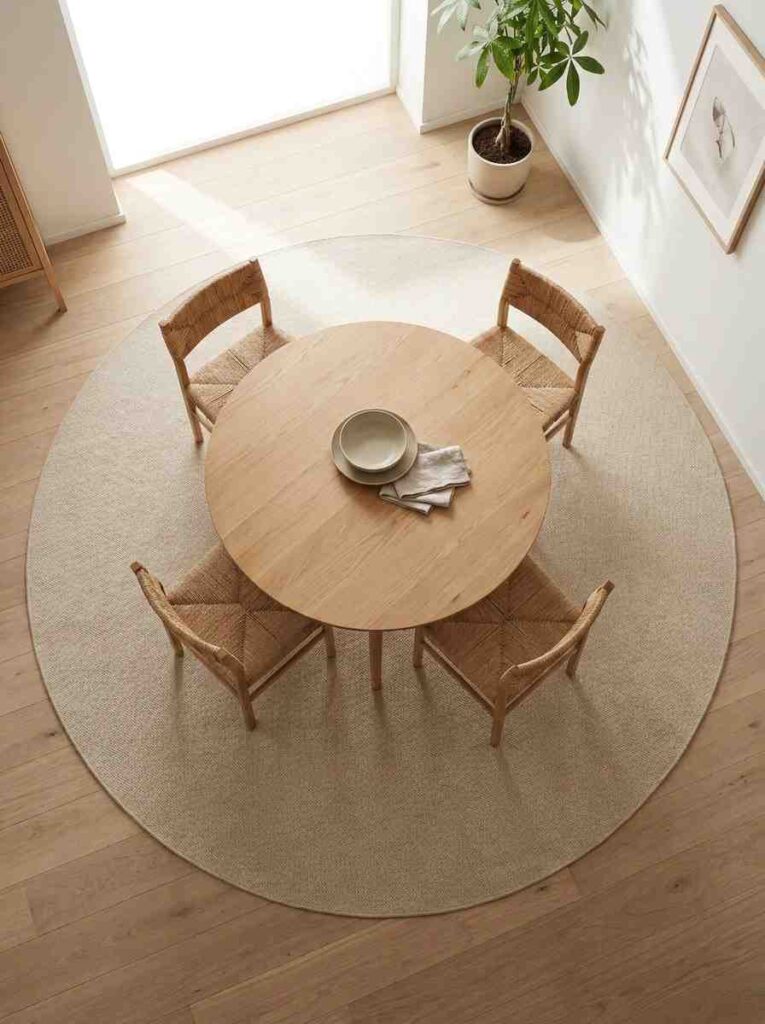
Rug sizing is the most common dining room mistake, and I learned this the hard way. My first rug was 8 by 10 feet under a 72-inch table, and every chair caught the edge when pulled back. The correct rule, confirmed across multiple rug retailers including Rugs Direct, is to extend your rug at least 24 to 30 inches beyond the table edge on all sides. A 6-seat table around 36 by 72 inches needs an 8 by 10 rug minimum, while an 84 inch table needs 9 by 12 or larger.
Choose low-pile, flatweave, or washable materials since dining rooms see spills constantly. Ruggable and similar washable brands are popular for exactly this reason in 2026. If your table is round, add about 48 inches to the diameter to find your rug size. Centering the rug under the table, not the room, keeps the whole layout looking intentional instead of accidental.
Mix Furniture From Different Eras
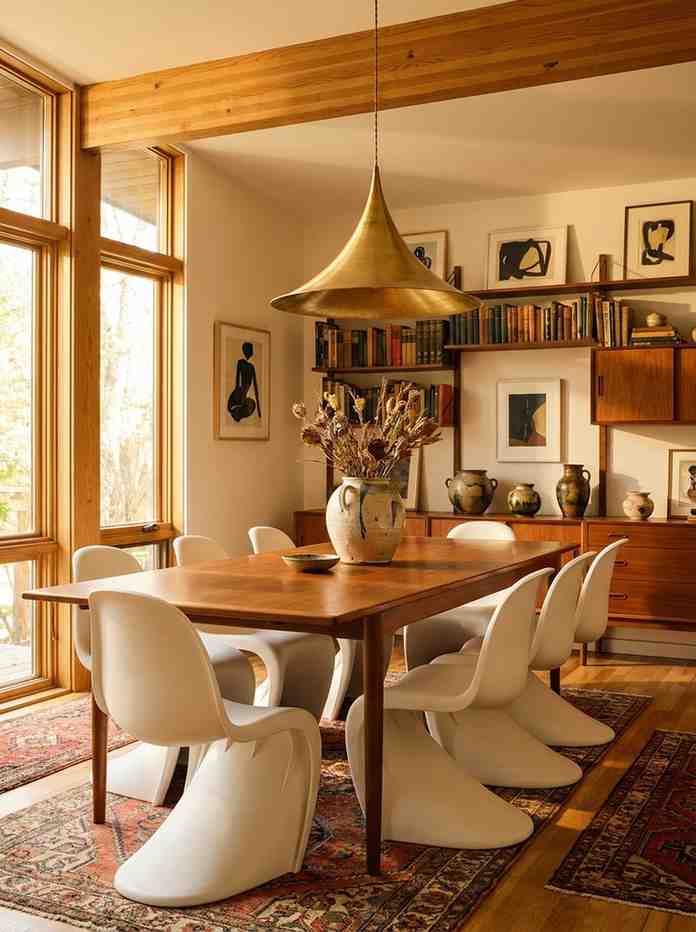
Megan W, a Decorilla designer, describes 2026 dining rooms merging furniture and objects from different periods into one deliberate composition. Think a midcentury walnut table paired with contemporary sculptural chairs, or a vintage brass chandelier over custom built-in cabinetry. This costs nothing extra if you already own mismatched pieces, since it’s really about arrangement, not new purchases. It works because personalization is the leading 2026 trend, replacing matchy-matchy dining sets entirely.
The trick is keeping proportion consistent even when styles clash, so a slim midcentury table doesn’t get overwhelmed by oversized modern chairs. Textiles, ceramics, and artwork should visually converse across the room so the mix reads as intentional. My own dining room mixes a 1960s teak table with modern rattan chairs, and it gets more compliments than my matched furniture ever did. Start with just one contrasting piece if a full mismatch feels risky.
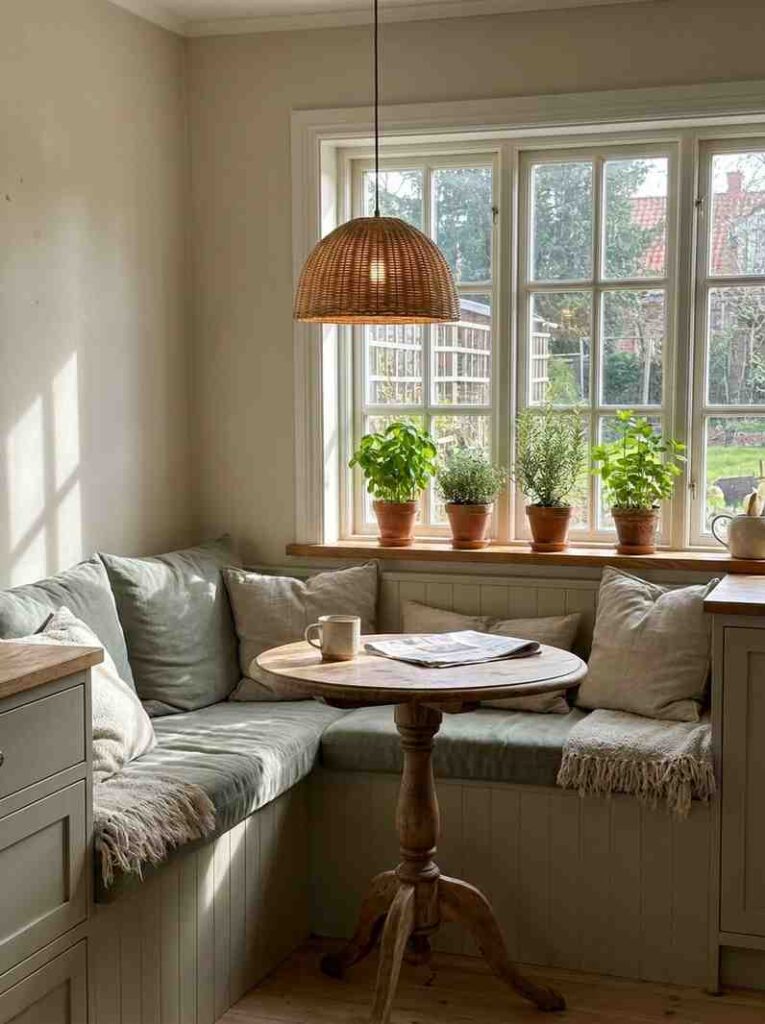
Create a Casual Breakfast Nook
Not every home has room for a formal dining room, and designer Yena Jung of By Yena Designs has been leading the casual dining nook trend for 2026. A built-in bench with a small round or drop-leaf table fits into a kitchen corner as small as 6 by 6 feet. Benches cost 200 to 600 dollars depending on material, while a compact table adds another 150 to 400 dollars. This suits apartments, starter homes, or anyone without a dedicated dining room at all.
Upholstered bench seating in a durable performance fabric handles daily wear better than dining chairs alone. Add a pendant light directly above for definition, since nooks without overhead lighting tend to feel like an afterthought. The downside is limited seating for guests, usually four people at most. If you host occasionally, pair the nook with a slim console table that can slide out for extra seating.
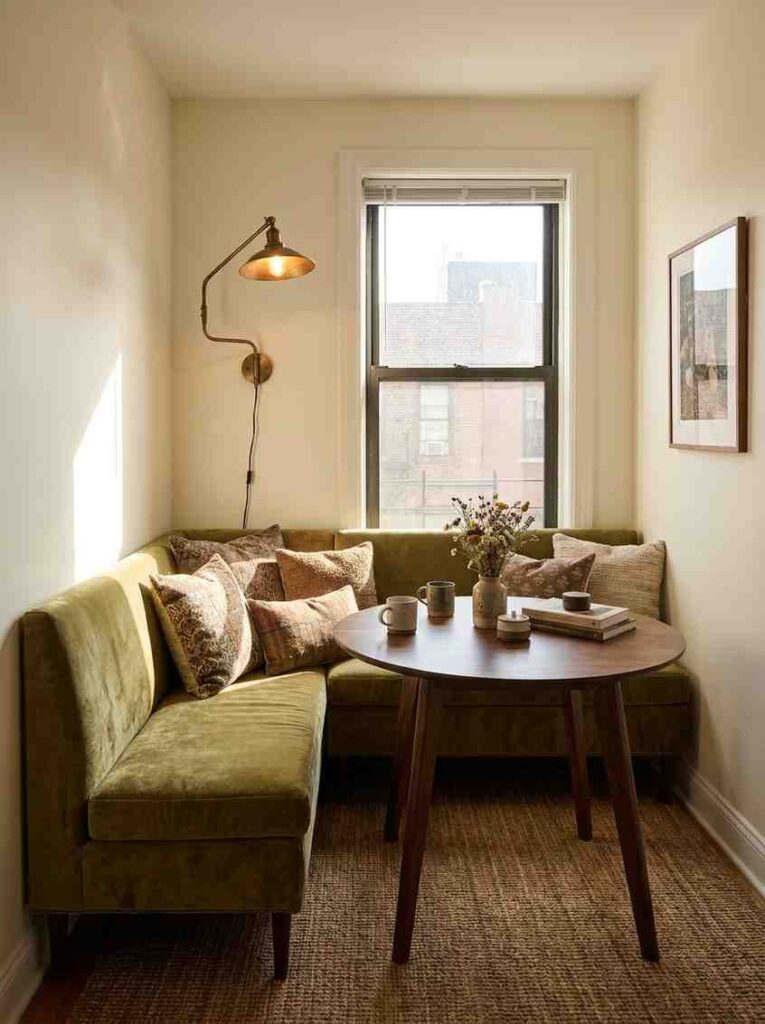
Use a Dining Banquette for Small Spaces
An L-shaped dining banquette, like Crate and Barrel’s Leandro Hazel Green style, maximizes seating in tight square footage. Banquettes seat more people per square foot than individual chairs because they eliminate the space needed for chairs to slide out. Expect to pay 800 to 2,500 dollars for a quality upholstered banquette, depending on size and fabric. This idea suits narrow dining rooms, corner nooks, or open-plan spaces where every foot matters.
Pair the banquette with a few loose chairs on the open side for flexible seating that adjusts to how many guests show up. Choose a performance fabric like Crypton or Sunbrella if you have kids or pets, since spills are inevitable. The main downside is that banquettes are harder to rearrange later compared to individual chairs. If you’re renting, look for a freestanding banquette instead of a built-in version so you can take it with you.
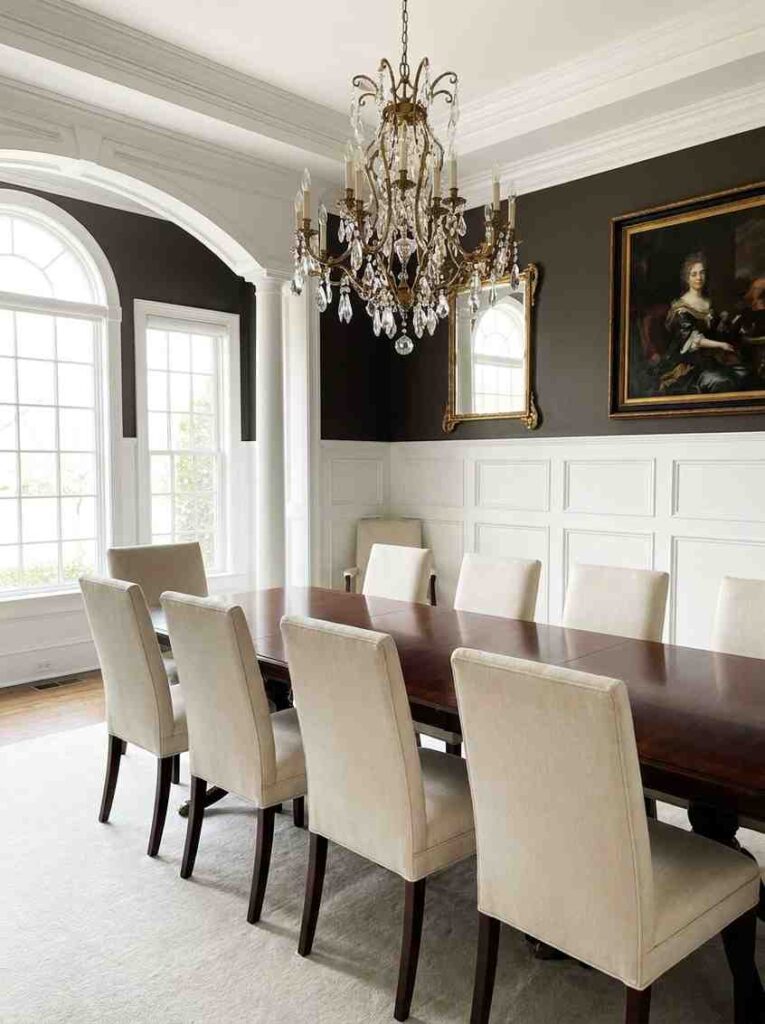
Add Architectural Millwork or Paneling
Interior designer Rebekah Murphy of Murphy and Moore Design says 2026 dining rooms lean toward richer, more architectural environments with paneled walls and statement millwork. Wainscoting with a chair rail costs 8 to 25 dollars per linear foot installed, depending on material and complexity. Paint the lower panel a color like Benjamin Moore Silhouette and the upper wall in a lighter neutral for contrast. This works in both traditional and modern homes, since the paneling style can be simple and linear or ornate and classic.
Millwork adds resale value too, since architectural detail reads as a permanent upgrade rather than a trend. If a full wainscoting install feels like too much, peel-and-stick panel moulding kits run under 100 dollars and install in a weekend. My neighbor did this exact project in her rental with removable panels and got her full deposit back. Just confirm your landlord approves any adhesive-based installation first.
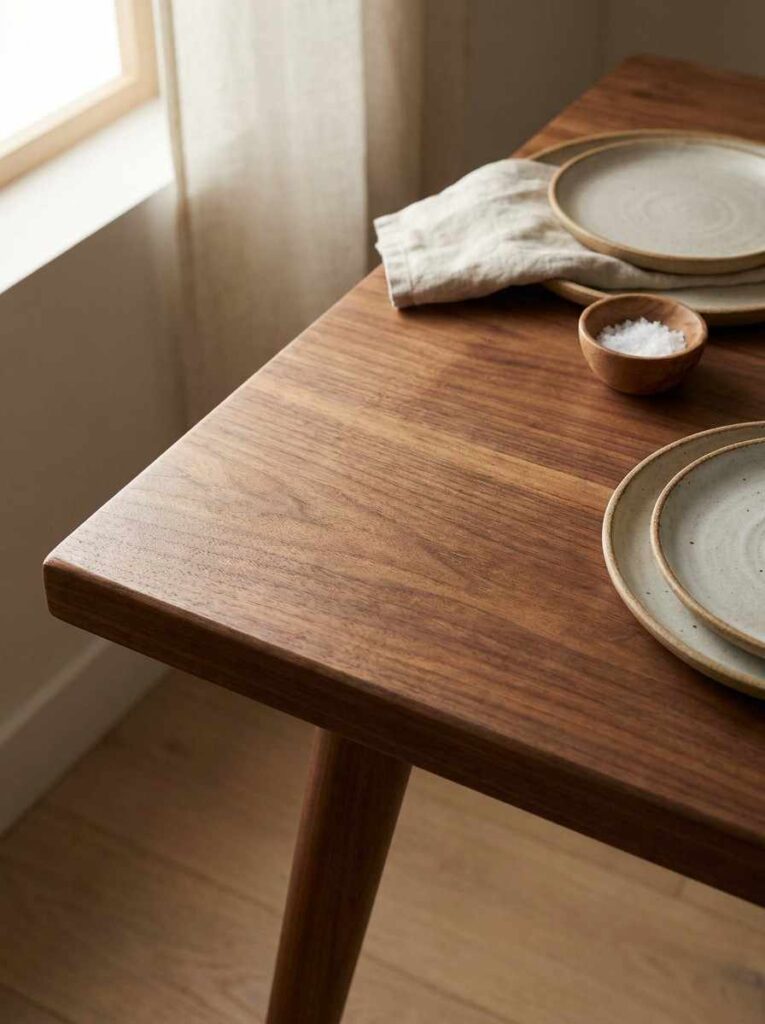
Choose Warm Wood Tones Like Walnut and Teak
Warm woods dominate 2026 dining furniture, especially walnut and teak with satin finishes that show off grain rather than hide it. A solid walnut dining table runs 1,200 to 3,500 dollars depending on size, while teak options often cost slightly less. These woods pair naturally with taper-legged chairs or pedestal bases for a clean, retro-inspired silhouette. This idea suits anyone wanting a table that looks better with age instead of showing every scratch.
Walnut darkens slightly over time with sun exposure, so rotate placemats occasionally to avoid uneven fading. Teak resists moisture better, making it a smart choice if your dining area sits near a kitchen or patio door. Avoid glossy lacquered finishes if you want the 2026 look, since matte and satin sheens are what’s trending now. A simple oil treatment every six months keeps either wood looking rich without refinishing.
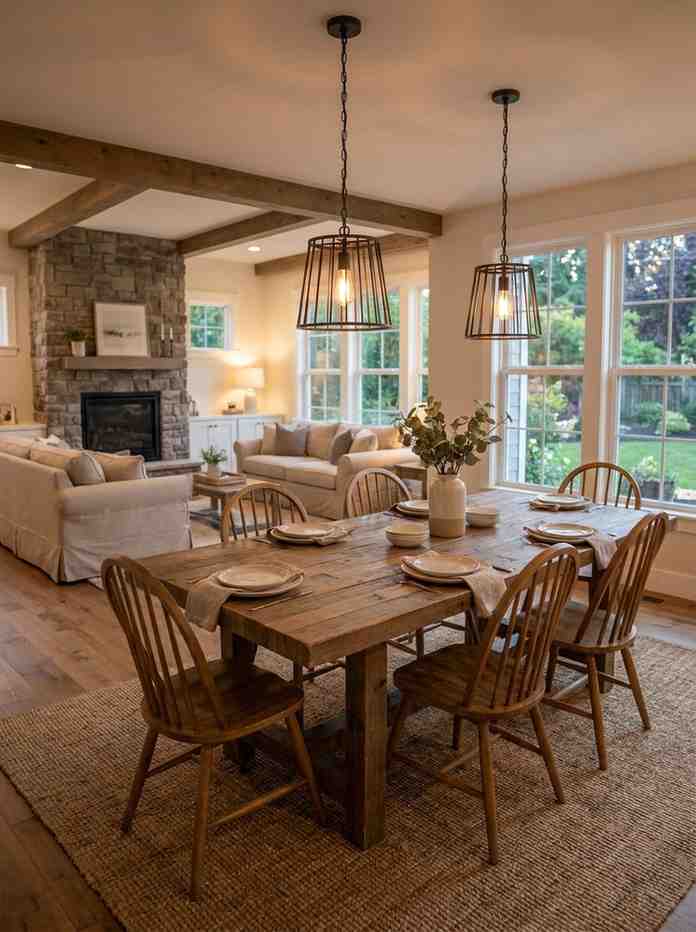
Try a Two-Chandelier Layout
Designer inspiration from Jane at Home shows dining rooms using two matching chandeliers instead of one centered fixture, especially over long rectangular tables. This works best in rooms over 14 feet long where a single fixture would leave the ends of the table dim. Budget for two smaller fixtures rather than one oversized piece, often 200 to 600 dollars each for simple designs. The visual rhythm created by two lights makes a long table feel proportionate instead of stretched.
Space the fixtures evenly, roughly a third of the way in from each end of the table. This layout suits open-concept homes where the dining area shares space with a living room, since it helps visually define the dining zone. The downside is the added electrical cost if your ceiling only has one existing junction box. Budget an extra 200 to 400 dollars for an electrician to add a second box if needed.
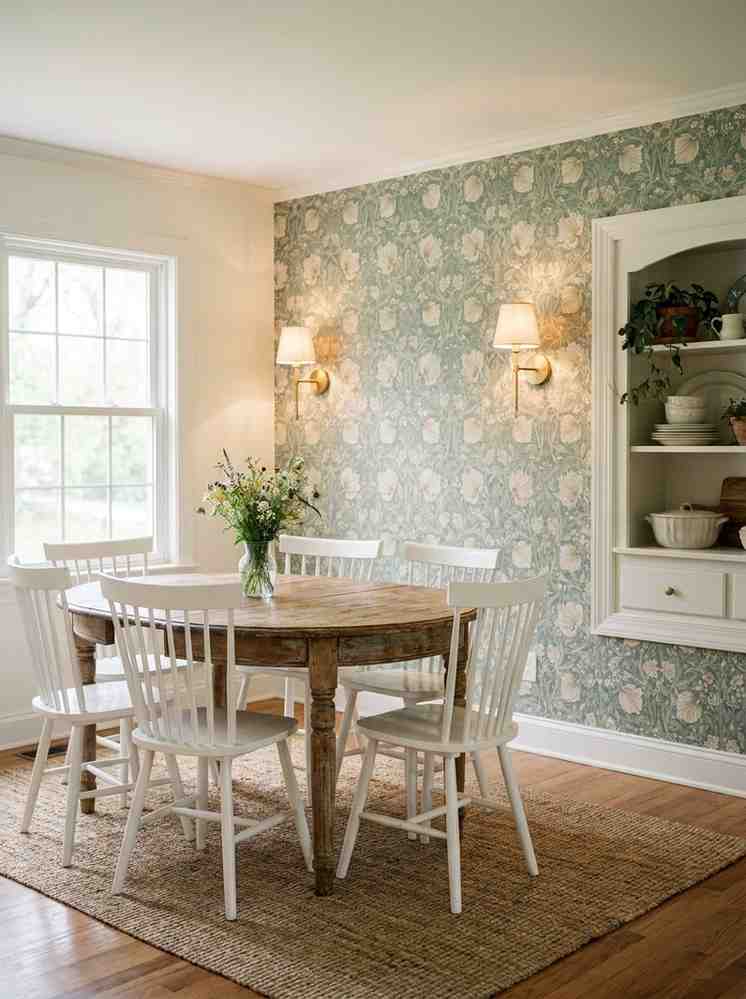
Add Pattern With Wallpaper
Designer Octavia Dickinson has been pushing playful patterns into 2026 dining rooms after years of plain neutral walls. A floral or botanical wallpaper, like the Morris and Co. collaboration with McGee and Co., costs 80 to 200 dollars per roll. This works especially well in smaller dining rooms, since a bold pattern in a contained space feels intentional rather than overwhelming. Wallpaper also hides everyday scuffs better than flat paint in a high-traffic eating area.
Peel-and-stick versions are widely available now and cost less, often 40 to 90 dollars per roll, ideal for renters. My first wallpaper attempt had visible seams because I rushed the smoothing step, so take your time with a plastic smoothing tool. Pair a busy pattern with simple, solid-color chairs so the room doesn’t compete with itself. If the pattern feels risky, wallpaper just one accent wall behind a china cabinet or sideboard instead.
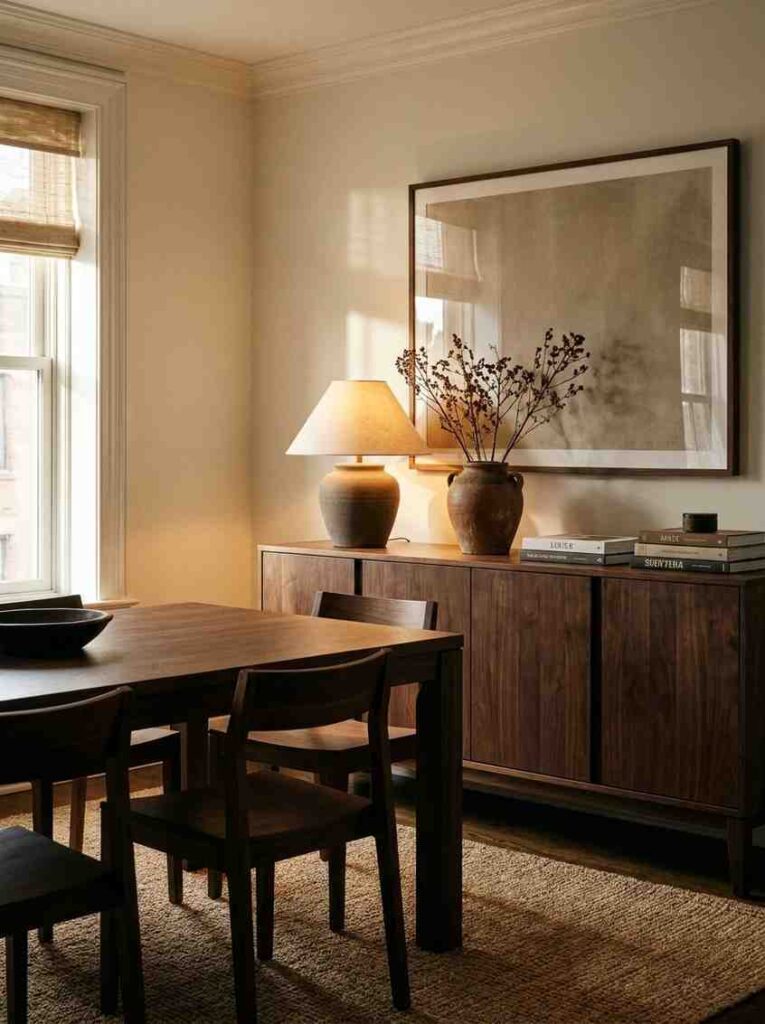
Install a Built-In Buffet or Sideboard
A built-in buffet adds storage and display space without eating into your walking room. Custom built-ins run 1,500 to 5,000 dollars depending on materials, while a freestanding sideboard costs 400 to 1,800 dollars. Decorilla designers note that sideboards showing veneered patterns or lacquered panels are trending for 2026, recalling period detailing without strict replication. This idea suits anyone who entertains often and needs a spot for serving dishes, table linens, or extra glassware.
Choose a sideboard in walnut or a lacquered finish to match your table’s wood tone or contrast with it deliberately. Style the top with a lamp, a stack of books, and one piece of ceramic art for a curated look. Avoid overcrowding the surface, since a cluttered buffet undercuts the clean look you’re going for. If space is tight, a slim console table under 14 inches deep works instead of a full-depth buffet.
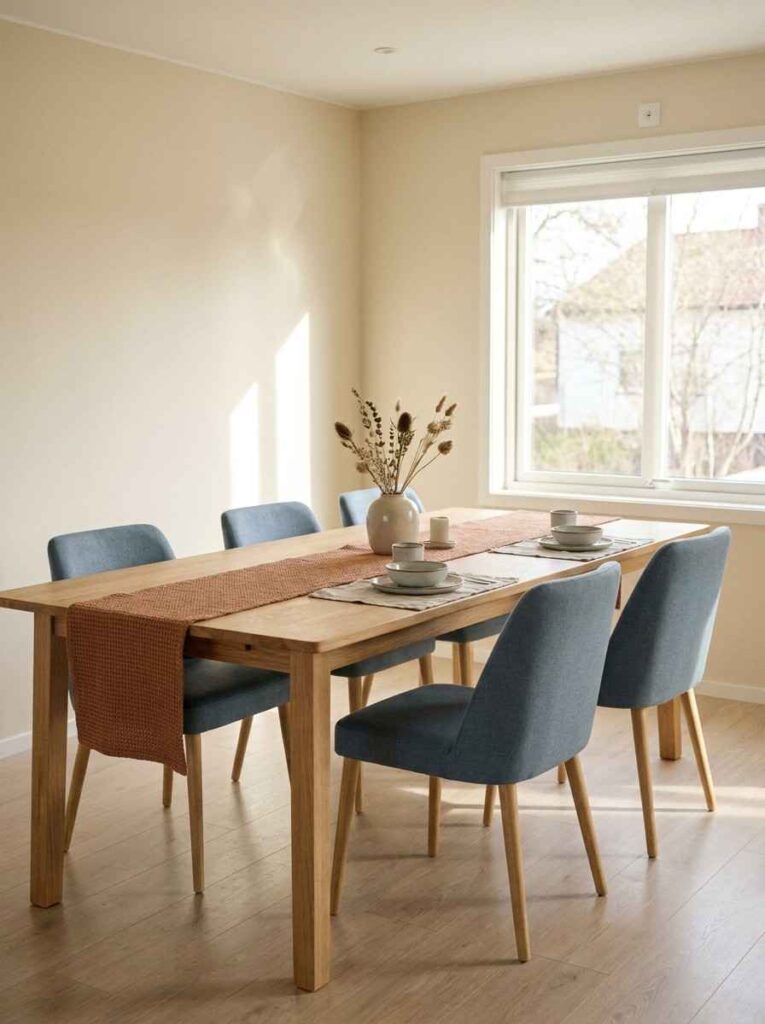
Use a Neutral Palette With Color Pops
Earthy neutrals remain a strong 2026 base, according to Dining Furniture Showcase, with soft browns, warm beiges, and creamy whites forming a calm foundation. Add color through upholstered chairs, artwork, or table linens instead of committing to full colored walls. This costs far less than repainting, often just 100 to 300 dollars for new dining chair cushions or slipcovers. This idea suits anyone who wants flexibility to change accent colors seasonally without repainting.
Muted greens, dusty blues, and clay or terracotta tones are the leading accent choices for 2026. Rotate a few throw pillows or a table runner between seasons to keep the neutral base feeling fresh. The downside is that a fully neutral room can feel flat without at least one bold accent piece. Add one statement item, whether it’s a chandelier, an art piece, or patterned chairs, to anchor the whole room.
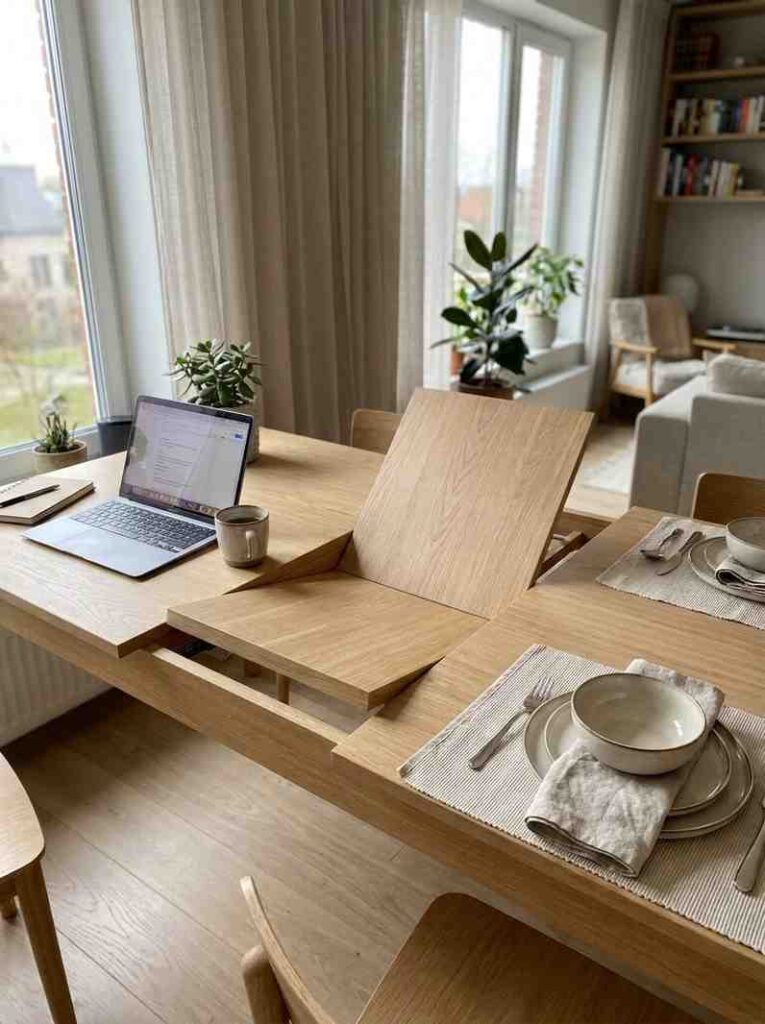
Add a Multi-Functional Dining Table
Designers Natasia Smith and Sandy Baisley of Re-Find point to multi-functional dining rooms as a leading 2026 shift, since apartment square footage runs at a premium. Trending tables now include modular, expandable, and flexible designs that handle both formal dinners and daily laptop work. An extendable table with a butterfly leaf costs 400 to 1,200 dollars, depending on material and size. This idea suits anyone using their dining room as a home office, craft space, or homework station, too.
Choose a table with a durable, easy-to-clean top since it will see more than just dinner plates. Add a drawer or shelf underneath for hiding laptop cords, chargers, or craft supplies between uses. My own extendable table hides a folded laptop stand in its base drawer, which keeps my dinner table looking like a dinner table. Mechanism quality matters most here, so check reviews on the extension slide before buying.
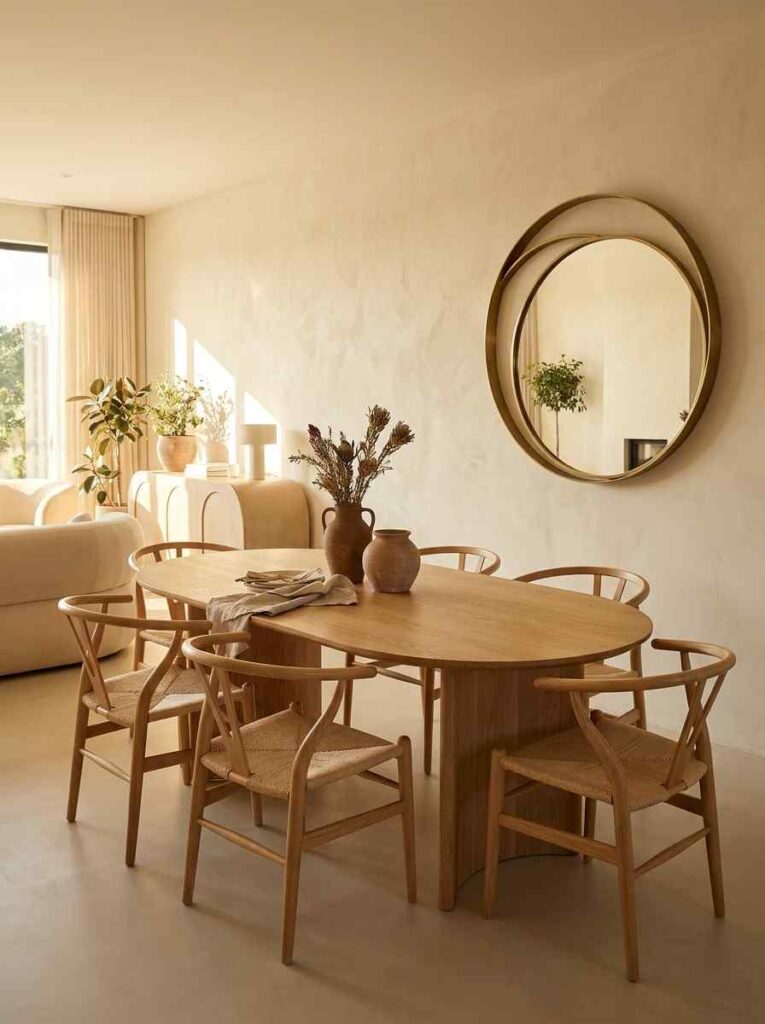
Choose Curved Furniture Silhouettes
Curved lines are a defined 2026 trend, according to Jane at Home, with sculptural mirrors, curved chair backs, and rounded table edges replacing sharp angles. A curved-back dining chair costs 150 to 400 dollars each, slightly more than standard straight-back versions. This works particularly well paired with a round or oval table for a fully cohesive, soft silhouette throughout the room. This idea suits anyone with young kids, since rounded edges reduce sharp corner bumps around a busy table.
Cane and wicker detailing often appears on these curved frames, adding texture without heaviness. Curved silhouettes photograph beautifully for Pinterest since the soft shapes create visual flow across a room. The downside is that curved furniture sometimes costs slightly more due to complex manufacturing. Start with just the chairs if a fully curved table feels out of budget right now.
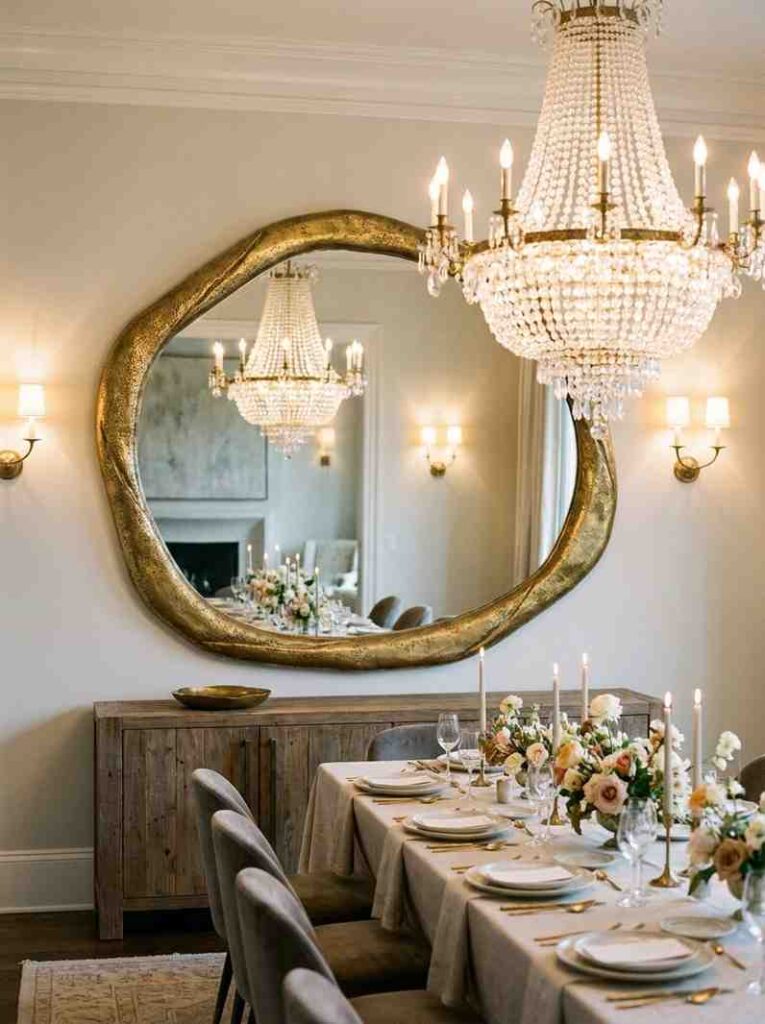
Add a Sculptural Mirror as a Focal Point
A large mirror does double duty in a dining room, bouncing light around while anchoring one wall visually. The general sizing rule is that a mirror should be about two-thirds the width of the furniture it hangs above. For a standalone wall, an oversized mirror at least 40 inches wide makes the strongest impact. Prices range from 100 dollars for simple round mirrors to 600 dollars or more for sculptural, organic-shaped designs.
This idea suits dark or windowless dining rooms especially well, since mirrors reflect existing light sources like chandeliers or sconces. Hang the mirror at a height where it reflects the ceiling fixture, not just a blank wall, to maximize the light-bouncing effect. My dining room has no natural window, and a 44-inch round mirror opposite my chandelier genuinely doubled the room’s brightness. Avoid hanging a mirror directly across from a cluttered view, since it will just reflect the mess back at you.
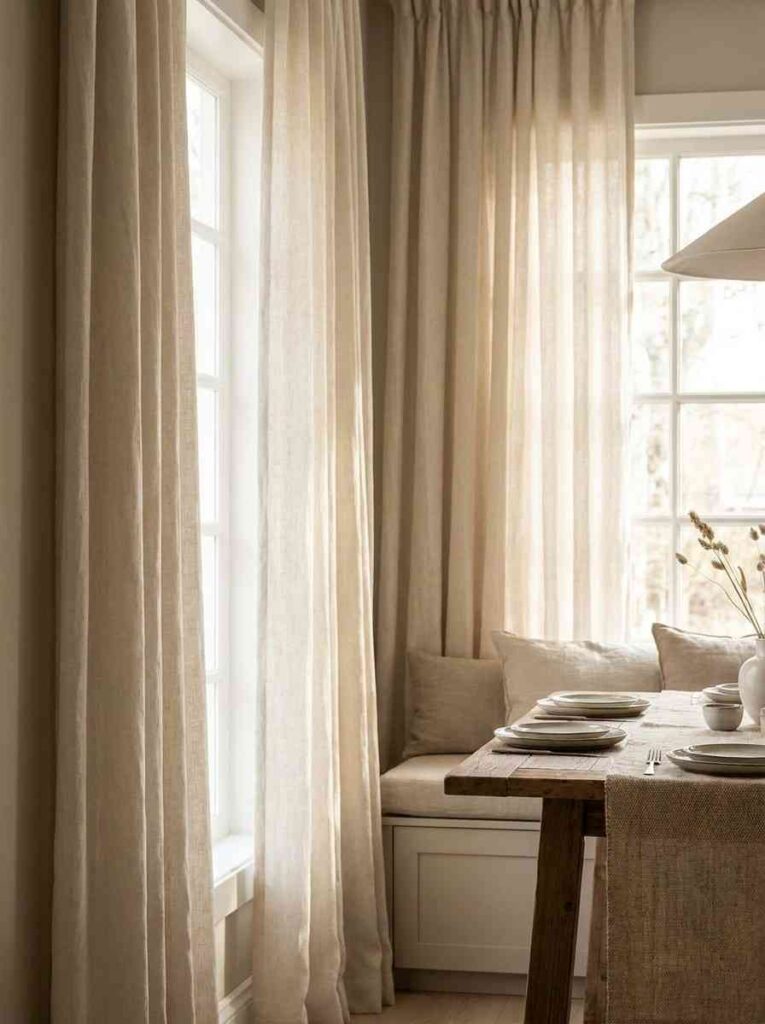
Update Window Treatments With Layered Drapes
Drapes are making a comeback for 2026, according to Homes and Gardens, moving away from bare or minimally dressed dining room windows. Light, airy linen or cotton drapes soften a room with dark walls like Benjamin Moore Silhouette or a jewel-toned accent wall. Ready-made linen drapes cost 60 to 150 dollars per panel, while custom options run 200 dollars and up per panel. This idea suits any dining room with a window, whether formal or casual in style.
Hang drapes close to the ceiling rather than just above the window frame, which makes the whole room feel taller. Choose a color close to your wall’s lighter accent shade, like Swiss Coffee OC-45, to keep the palette cohesive. Avoid heavy blackout fabric in a dining room unless you specifically need privacy, since it can make the space feel closed off. Curtain rings that glide smoothly matter more than the rod style itself for everyday ease of use.
Add Layered Ambient and Accent Lighting
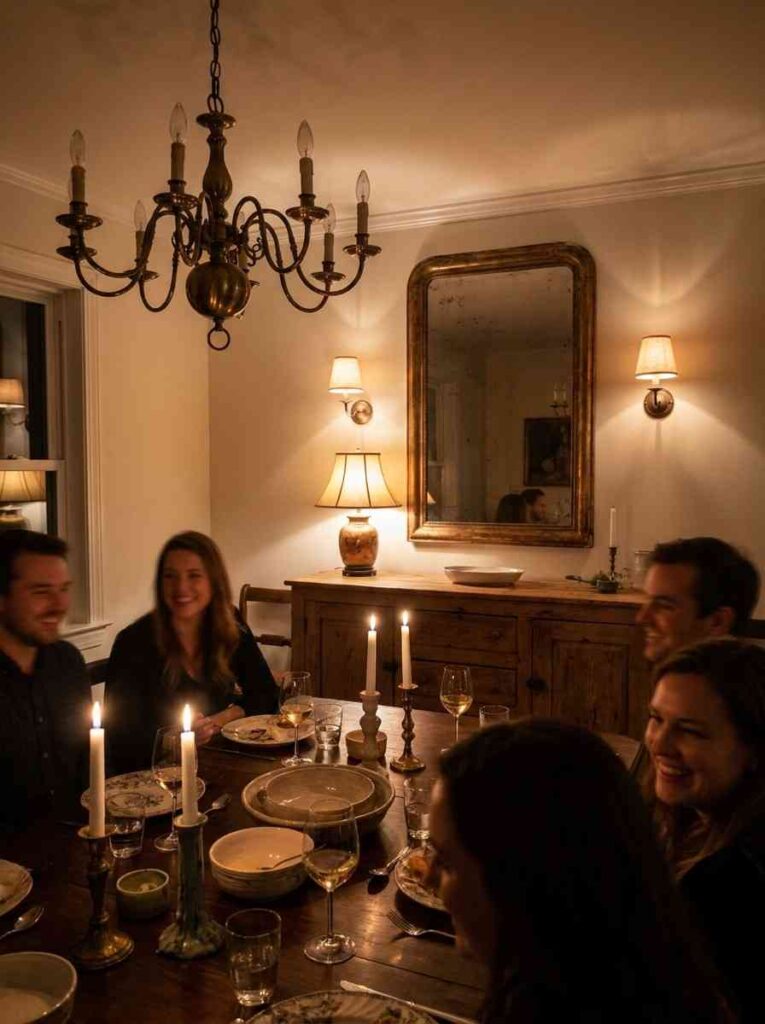
A single overhead chandelier is no longer enough for a well-designed 2026 dining room. Layer in wall sconces, a buffet lamp, or even candles for depth beyond the main ceiling fixture. Wall sconces cost 40 to 150 dollars each, while a simple buffet lamp runs 30 to 100 dollars. This idea suits anyone who entertains at night and wants adjustable mood lighting instead of one harsh overhead source.
Put your chandelier on a dimmer switch, which costs about 20 to 40 dollars for the switch plus installation. Combine warm 2700K bulbs across every fixture so the room feels consistent, not mismatched in tone. I added two sconces flanking my sideboard mirror, and dinner parties instantly felt more intentional without changing a single piece of furniture. Skip cool white bulbs entirely in a dining room, since they read clinical rather than inviting.
Frequently Asked Questions
What size rug should I put under my dining table?
Your rug should extend 24 to 30 inches beyond the table edge on every side. This keeps chairs fully supported even when pulled back for sitting. A standard 6-seat table around 36 by 72 inches typically needs an 8 by 10-foot rug.
How high should a chandelier hang above a dining table?
Hang your chandelier 30 to 36 inches above the tabletop on a standard 8-foot ceiling. Add roughly 3 inches of additional height for every extra foot of ceiling height. Aim for 3,000 to 6,000 lumens using warm 2700K to 3000K bulbs.
What is the best dining table shape for a small room?
Round tables work best in small or square dining rooms since they remove sharp corners. A 48-inch round table comfortably seats four people in a tight footprint. Extendable round-to-oval styles add flexibility for occasional larger gatherings.
Can I have a dining room without a separate room?
Yes, a breakfast nook or corner banquette works well without a dedicated dining room. A built-in bench with a small round table fits spaces as compact as 6 by 6 feet. This setup suits apartments and open-plan kitchens equally well.
Final thoughts
Pick two or three ideas from this list that match your room’s size and your budget, then start there instead of trying to do everything at once. If your dining room feels similar to your kitchen or bathroom right now, check out our kitchen ideas, bathroom ideas, and living room ideas for the same room-by-room approach.