14 Evergreen Planter Ideas to Brighten Your Winter Garden
By mid-November, most gardens have folded up for the season. The summer pots stand empty, the fall mums are spent, and front porches look bare. But the garden does not have to disappear until spring. Evergreens are still green and still growing, and a few well-built containers can carry your entryway from the first frost right through February.
These 14 evergreen planter ideas cover every style, from classic spruce-tip urns to berry-bright mixes and lantern-lit evening displays. Each one is built around plants and cut greens that genuinely hold up in cold weather, with practical notes on what to buy, how to assemble it, and how long it will last.
1. Spruce Tip Evergreen Planter Ideas for a Timeless Entryway
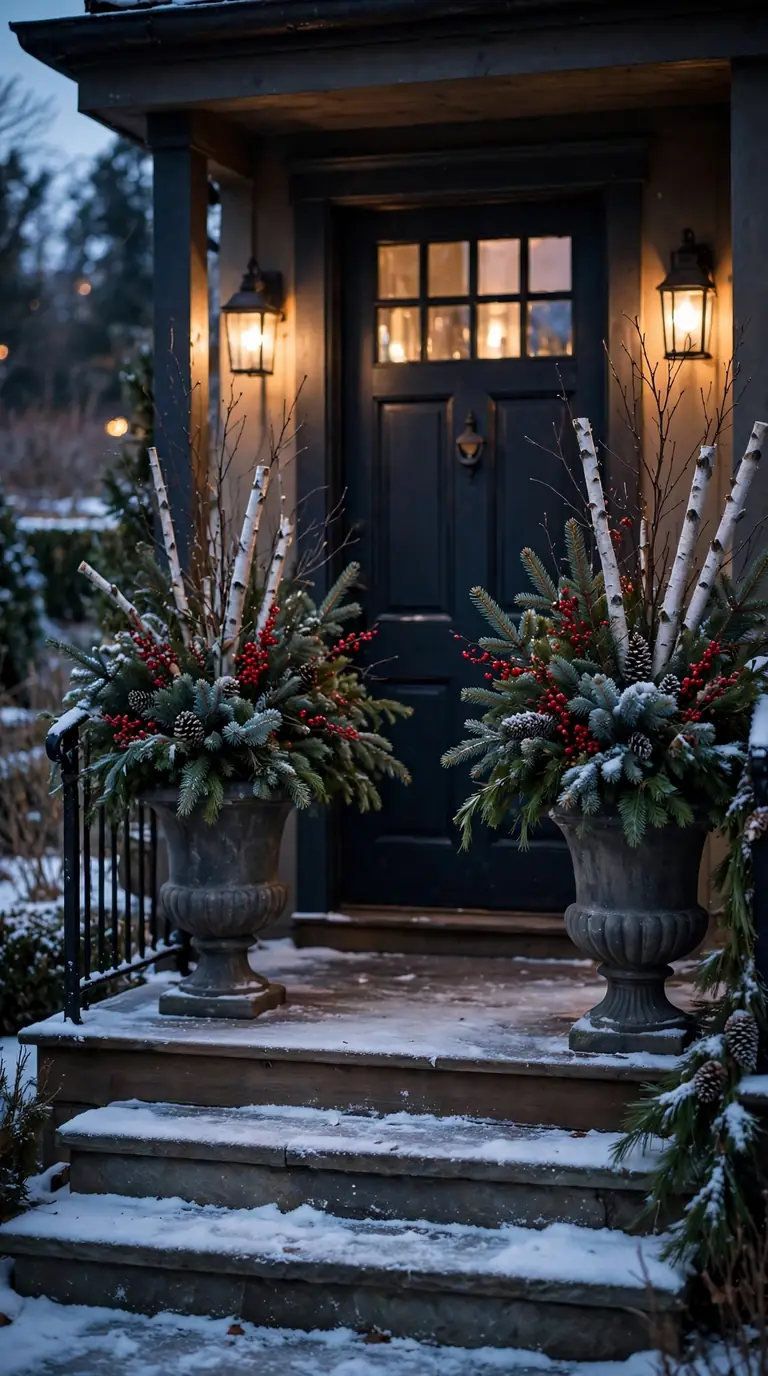
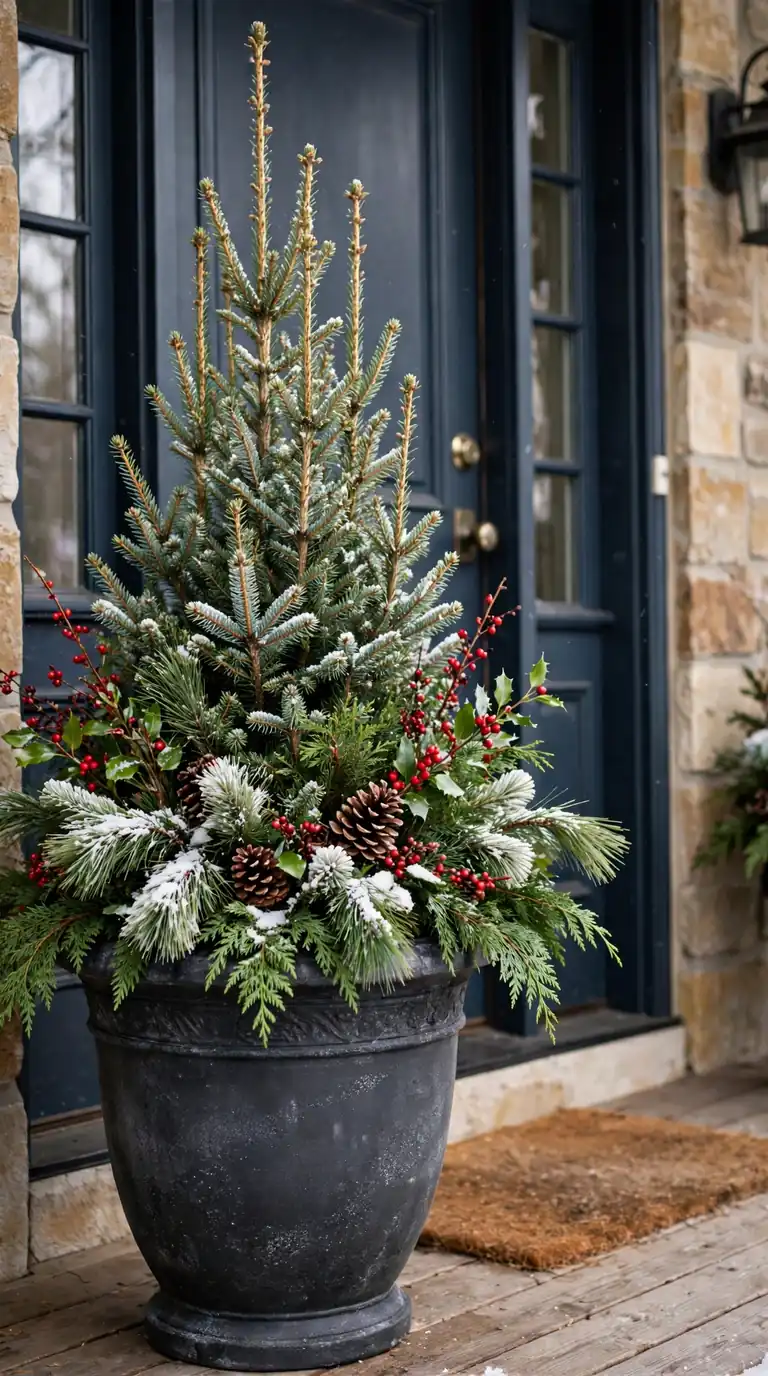
This is the classic winter container you see outside beautiful homes every December. Tall spruce tips stand upright in the center like a miniature forest, surrounded by softer greens that spill over the rim. It looks designed and generous without trying too hard.
Start with a large, frost-proof urn filled two-thirds with potting soil, which gives the stems something solid to grip. Push a bundle of spruce tips into the center, tall in the middle and shorter around it. Work white pine boughs and cedar around the base, tucking in pinecones and red berry stems. Pack the stems tightly. Loose arrangements flop; dense ones hold their shape through wind and snow.
Fresh-cut greens will look good for six to eight weeks, sometimes longer. Give the pot a little afternoon shade to slow drying. One large urn on each side of a front door makes an entryway look finished instantly, which is why this is the most repeated of all evergreen planter ideas.
2. Boxwood Cone Planter for a Polished Winter Look
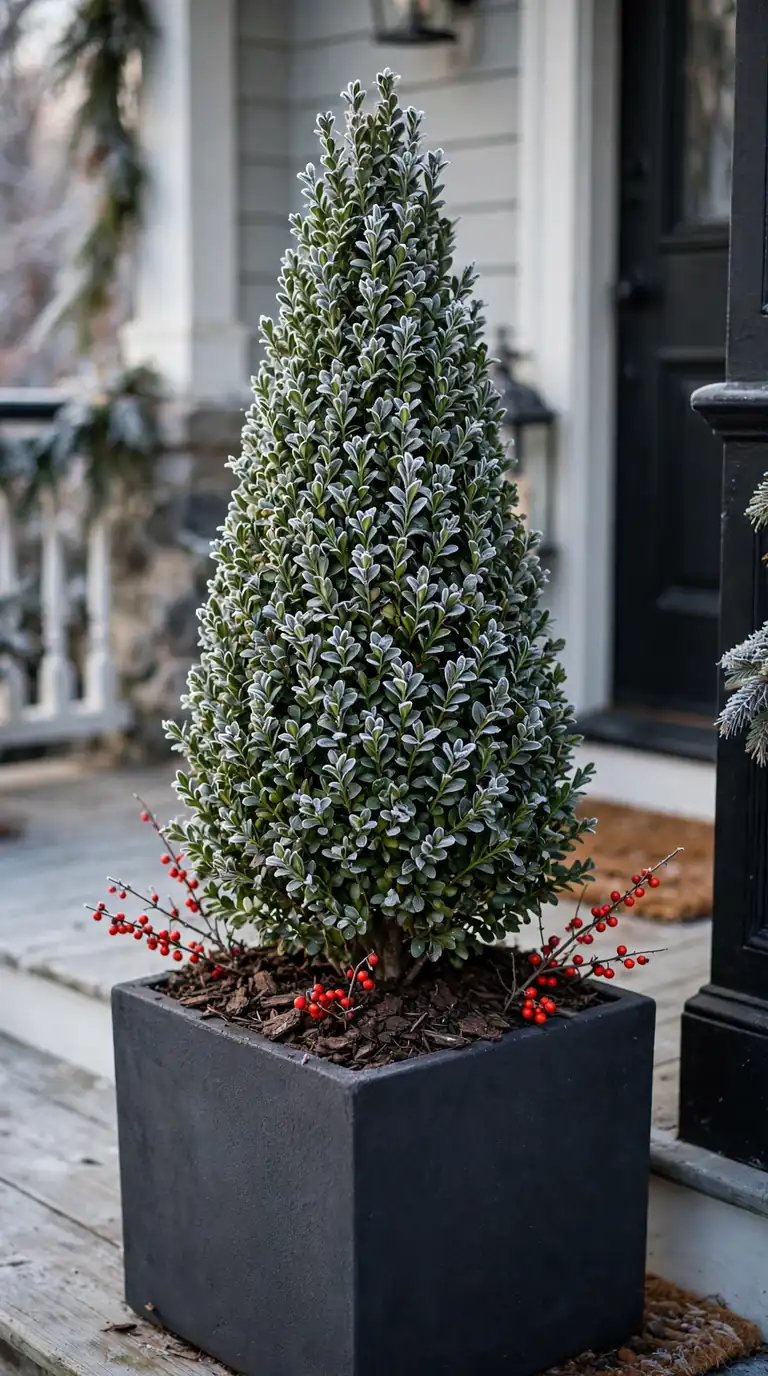
Clipped boxwood brings a tailored structure that cut greens cannot. A cone or ball of boxwood in a simple dark pot reads elegant in December and still looks perfect in February, because it is alive and growing, just slowly. The deep green holds its color through cold that would brown out lesser plants.
Choose a container-friendly variety like dwarf English boxwood and plant it in a pot at least 14 inches wide, so the roots have insulation around them. A plain black or charcoal container makes the green look richer, and mulch on the soil surface protects the roots during hard freezes. Tuck winterberry sprigs around the base in December, then remove them in January for a cleaner look.
Water whenever the soil is thawed and dry, roughly every couple of weeks. The root ball needs to stay slightly moist even in cold months. Come spring, the plant moves into a garden bed or stays in its pot for another year, which makes these living evergreen planter ideas a genuine investment.
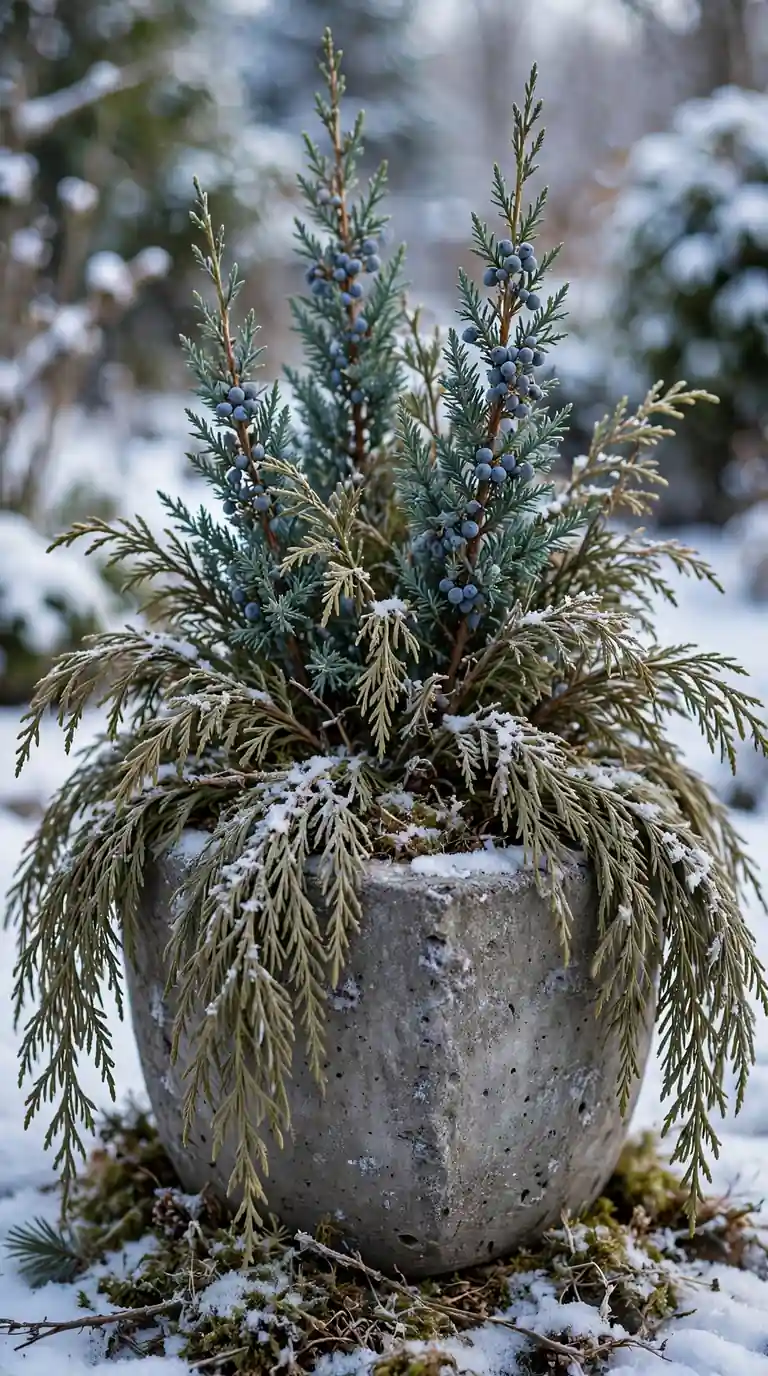
3. Layered Cedar and Juniper Planter
Not every winter planter needs to shout. This one is all about texture: soft, draping incense cedar fronds mixed with firmer, bluer juniper branches. Together they create a woodland feel, like a piece of forest floor lifted into a pot, and they photograph beautifully against snow.
The layering technique matters more than the exact materials. Start with the longest pieces, cedar fronds or white pine, angled outward so they drape over the pot edge. Add shorter juniper branches for body, and finish with juniper sprigs carrying dusty blue berries that catch the light.
Juniper and cedar are among the longest-lasting cut evergreens, often holding needles well past eight weeks. Like the best evergreen planter ideas, this one forgives imperfect assembly; even loosely placed branches settle into something that looks intentional.
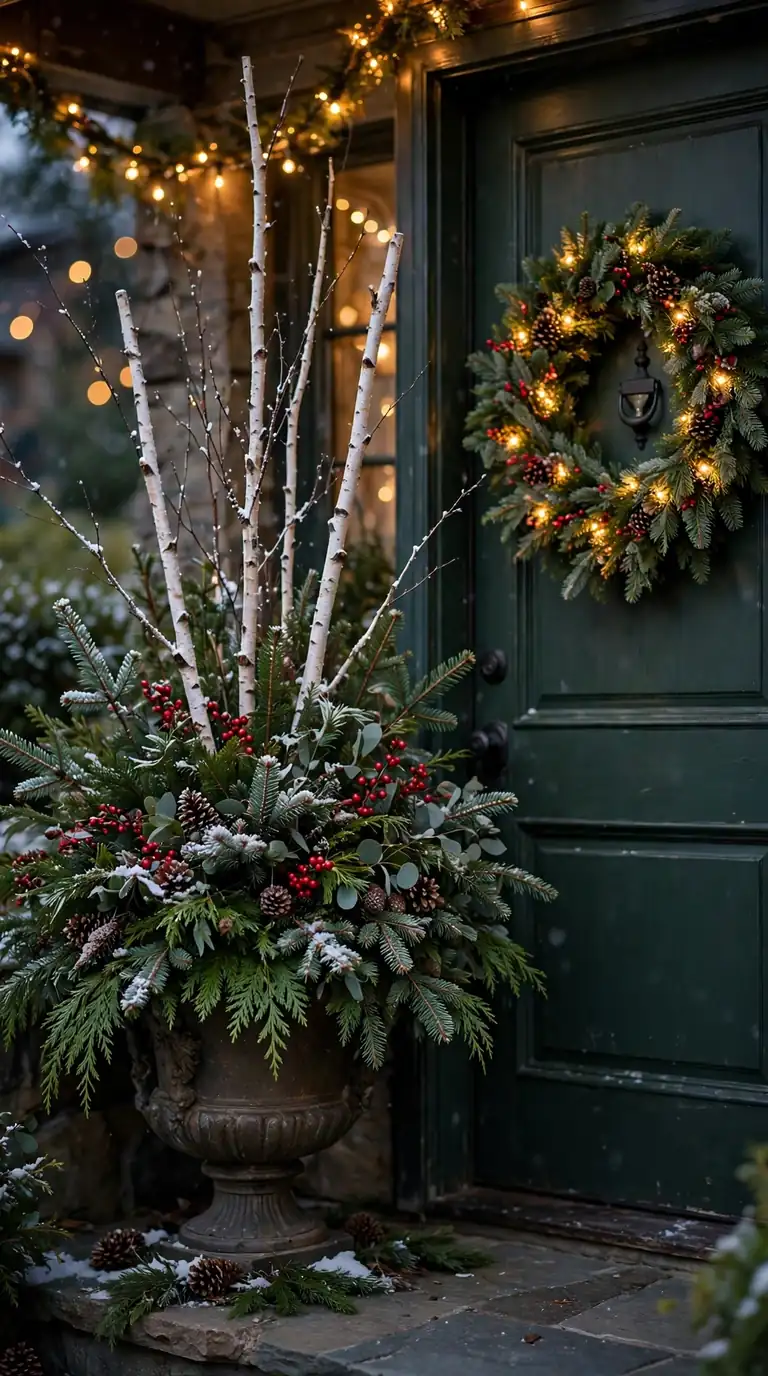
4. Birch Branch and Red-Twig Evergreen Planter Ideas for Winter Color
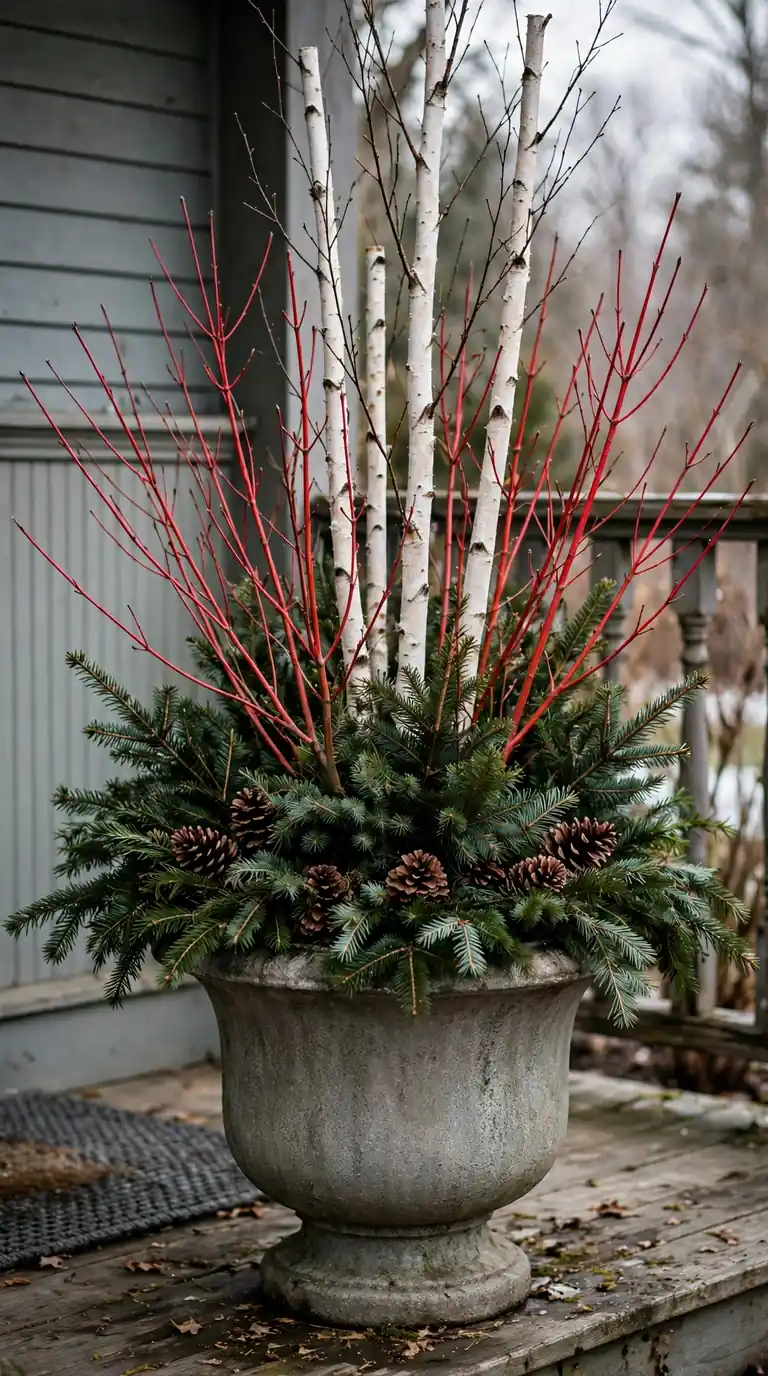
Green alone can feel flat on the grayest winter days. White birch branches and red-twig dogwood stems add height and color contrast that reads from across the street. The pale birch catches winter light, and the coral-red twigs glow against dark evergreen foliage.
Build the base first: a ring of spruce or fir boughs packed into the pot. Push three to five birch poles into the center at varying heights, the tallest around four feet. Fan ten to twelve red-twig dogwood stems around the birch, and finish with a few natural pinecones at the base.
These evergreen planter ideas with strong vertical lines work especially well flanking a front door or at the end of a porch, where height frames the entry. Birch poles can be reused for several seasons if stored dry, and red-twig dogwood stems stay vivid red all winter. Cut a fresh inch off the stem bottoms before inserting them into moist soil to keep them looking fresh longer.
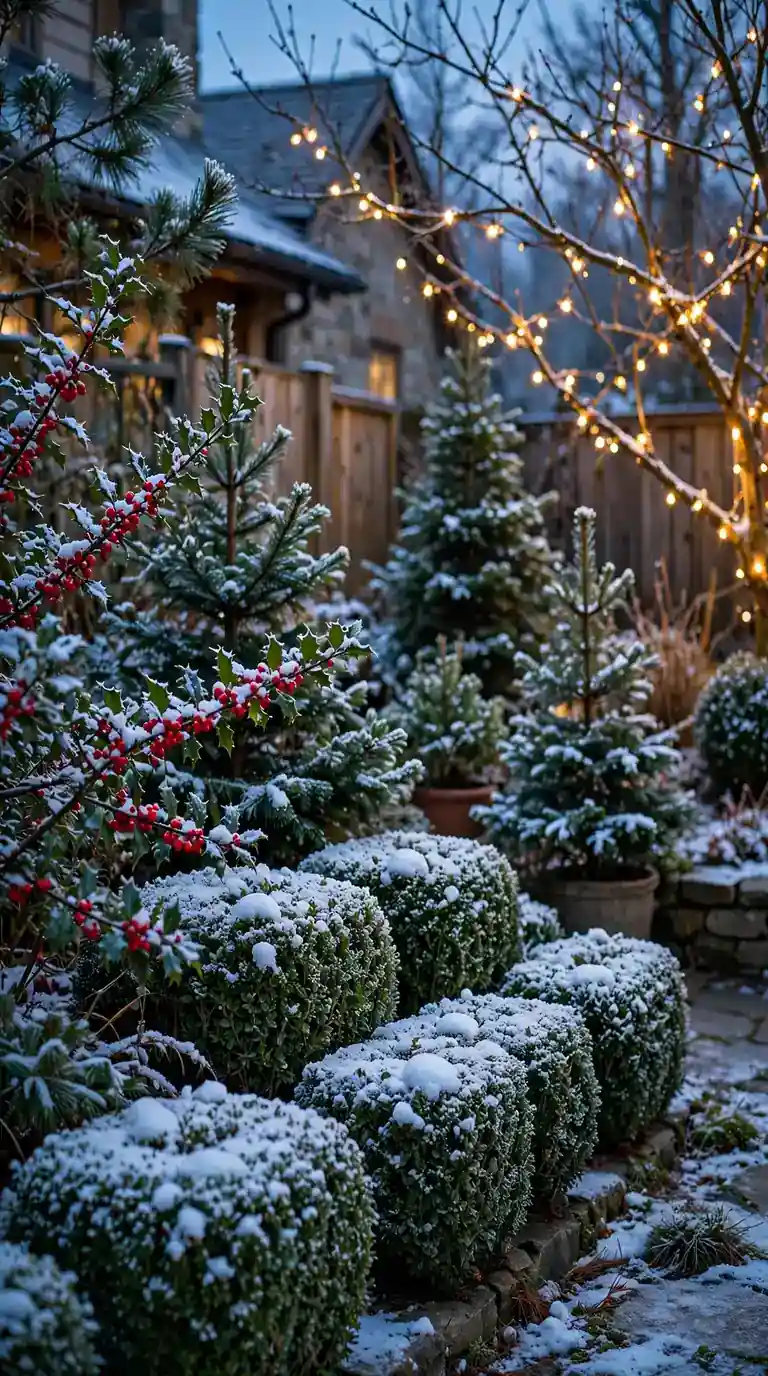
5. Winterberry Holly Planter for Bright Red Berries
Nothing says winter like branches loaded with bright red berries against dark green. Winterberry holly is a deciduous holly: it drops its leaves and leaves dense clusters of berries on bare stems. A few stems can carry an entire container.
Anchor the pot with fir or pine boughs, then push in five to seven winterberry stems at different heights, the tallest in the center. The berries are the star, so keep the surrounding greens low and simple. A few small pinecones around the rim add texture. Among evergreen planter ideas, this is the one that delivers the most color for the least effort.
Winterberry stems keep their berries for weeks in cold weather, though hungry birds may eventually find them. For the longest display, place the planter in a sheltered spot rather than fully exposed. Pair it with a simpler green-only planter nearby so the red does not overwhelm the entryway.

6. Pine Bough and Oversized Pinecone Planter
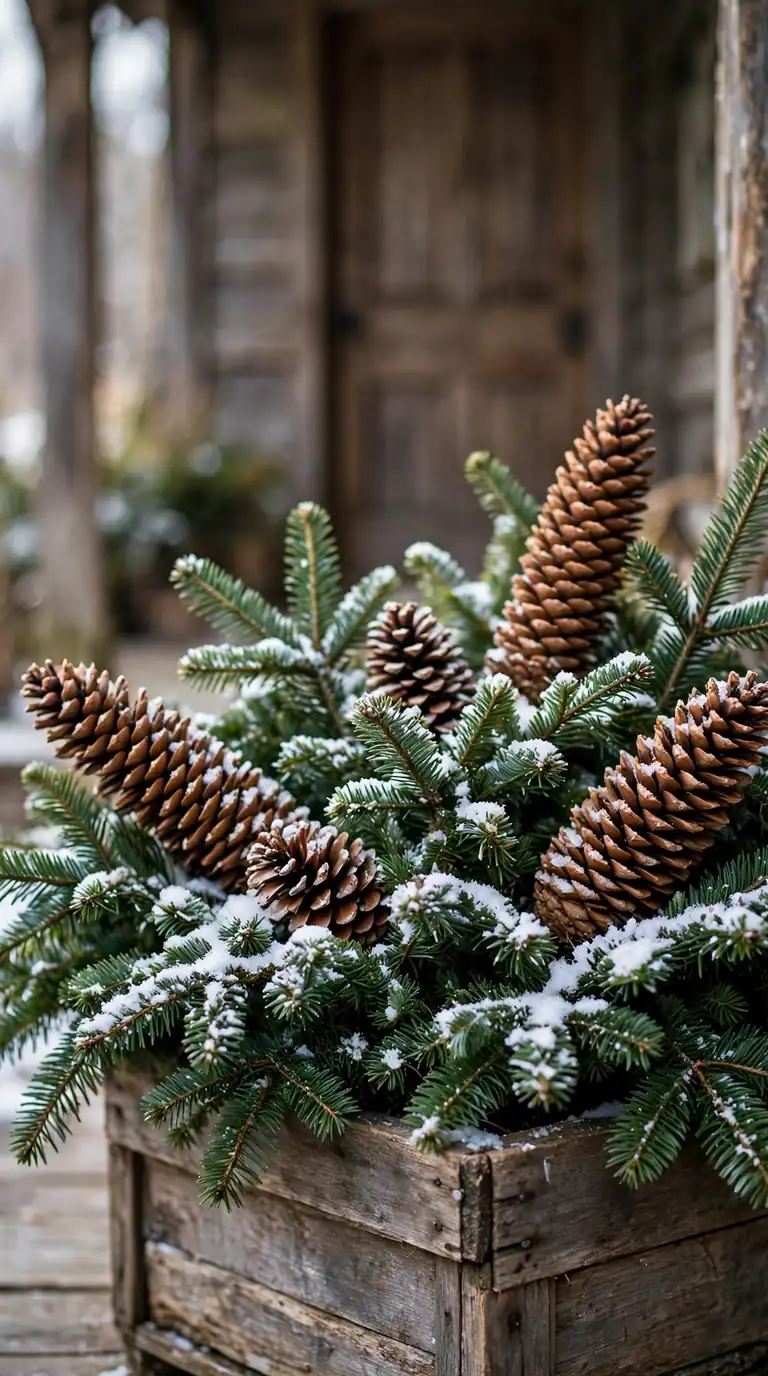
For a rustic, cabin-style look, let the pinecones do the talking. Noble fir boughs form a deep green base, and a handful of oversized cones, sugar pine cones can top a foot long, become the focal point. It is simple, cheap to build, and right at home on a farmhouse porch.
Pack the pot firmly with fir or pine boughs, keeping the arrangement slightly mounded in the center. Then nestle the large cones in at different angles, pushing their stems into the soil so they do not shift in wind. A few smaller cones fill the gaps. Skip berries and bright colors here. Among evergreen planter ideas, this is the one where restraint does all the work.
Large cones are easy to find at garden centers in November, or gather them on walks in pine country. Mist them with water and let them dry before arranging so closed scales open up. This container needs almost no maintenance and looks as good in February as in December.
7. Magnolia Leaf and Holly Planter
When you want winter containers to look a little luxurious, magnolia leaves are the answer. Their glossy green tops and velvety rust-colored undersides bring a richness plain needle evergreens lack, and holly adds classic red berries. Together they read expensive without ornaments.
Use whole magnolia branches as the outer layer, turning some leaves to show the bronze undersides. Fill the center with holly branches, letting the berries cluster where they catch the eye. Because both are broadleaf, this arrangement looks full with less material, which makes it a good choice for smaller pots.
Cut magnolia branches hold up well in cold weather, and holly berries persist for weeks. This design works best in a sheltered spot near the front door, where guests can see the leaf detail up close. Mist the leaves on mild days to keep their shine.

8. Ornamental Grass Evergreen Planter Ideas With Movement
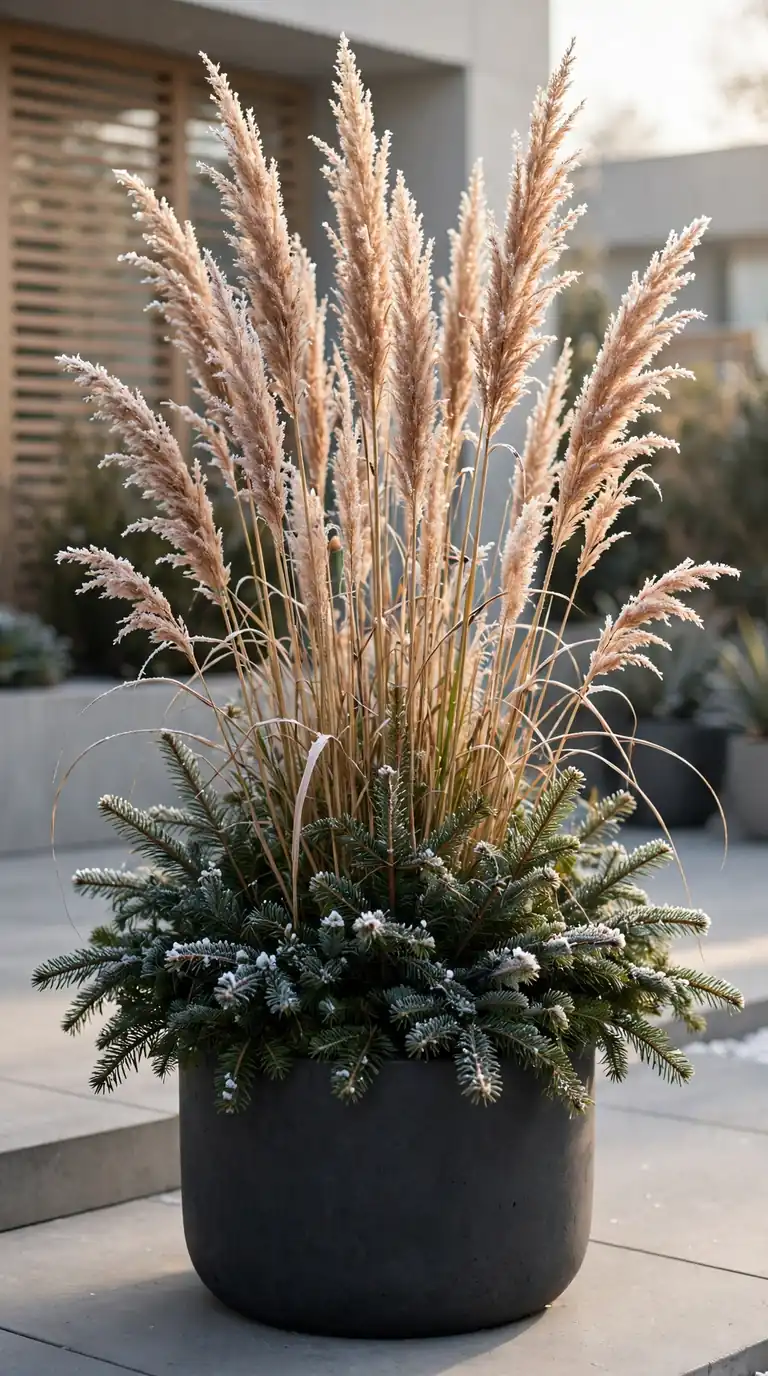
Most winter planters are static, but ornamental grasses add movement. Dried plumes of miscanthus or fountain grass sway in the wind, catching low winter sunlight. Anchored in a base of fir boughs, the grasses stay upright and look intentional rather than leftover.
Cut grass plumes to about two and a half to three feet and push them into the center of the pot in a tight cluster. Surround the base with low evergreen boughs, cedar or pine, to hide the cut stems and give the arrangement weight at the bottom. The contrast between the airy tan plumes and the dense green base is what makes this design work.
Leave the grasses standing all winter; they are at their best when frost coats them in the morning. These evergreen planter ideas with grasses suit modern or minimalist gardens, where the simple vertical lines pair with concrete or matte black pots. In spring, compost the plumes and keep the pot for summer planting.
9. Lantern-Lit Evergreen Planter for Evening Glow
Winter days are short, and the planters you build will spend most of their time in the dark. A simple lantern, the battery kind with a warm LED candle, sits nested among the greens, turning the container into a glowing focal point after sunset.
Build a low, full base of mixed evergreens packed tightly. Set the lantern slightly off-center, pushing it down so it sits stable, then tuck greens around its base. Add a few pinecones and berry stems, keeping them low so they do not block the light. A timer means it glows every evening without you thinking about it.
Use LED candles only, never real flames, among dried greens. Warm white light looks far better than cool white against evergreen foliage. Two of these evergreen planter ideas flanking a front walk create a welcoming path of light, and from the street the whole entryway reads as intentional and cared for.

10. Hellebore and Evergreen Planter for Late-Winter Blooms
Evergreens carry the design through December and January, but hellebores give this planter a second act. These shade-loving perennials push their nodding blooms up in late winter, often while snow is still on the ground. Planted among evergreen boughs, they create a container that actually gets more interesting as winter goes on.
Plant one or two hellebores in the center of a wide, low container in fall, surrounded by small boxwood or low juniper. Mulch well. Through the cold months the evergreens provide structure while the hellebores sit quietly. In February, dusky pink, white, or deep plum flowers begin to open. Of all the evergreen planter ideas here, this is the one that gets better as winter goes on.
Hellebores are hardy and long-lived, so this container is an investment rather than a one-season piece. Keep the soil barely moist through winter and site the pot in morning sun. In spring, move the whole planting into a shady garden bed, where it will bloom for years.

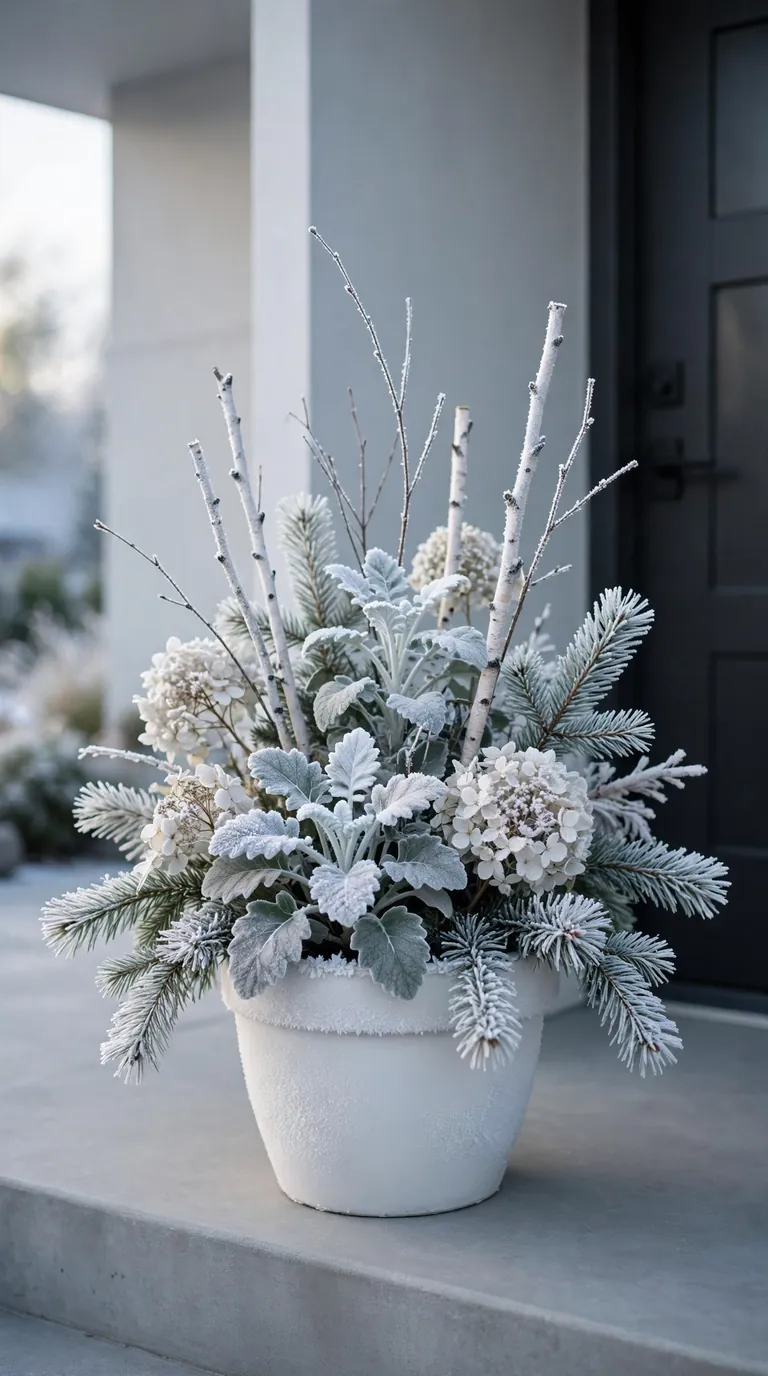
11. Frosted White-and-Green Planter
Not every winter container needs red and gold. A palette of whites, silvers, and greens looks like a frosty morning made permanent, and it suits modern homes far better than traditional holiday colors. For evergreen planter ideas in a modern palette, the trick is combining silvery foliage with pale branches so the whole thing reads cool and calm.
Start with white pine or silvery blue spruce boughs. Add dusty miller, whose felted silver leaves survive light frosts and keep their color in the cold. Push in white birch twigs or curly willow for pale vertical lines, and tuck in white-painted dried hydrangea heads for soft, cloud-like texture. A sparing dusting of artificial snow completes it.
Site it where it gets good morning light so the silvers and whites glow. Skip red berries or gold picks here; they would break the spell. This is the quietest design on the list, and on a snowy day it looks almost sculptural.
12. Single Miniature Evergreen Tree in a Statement Pot
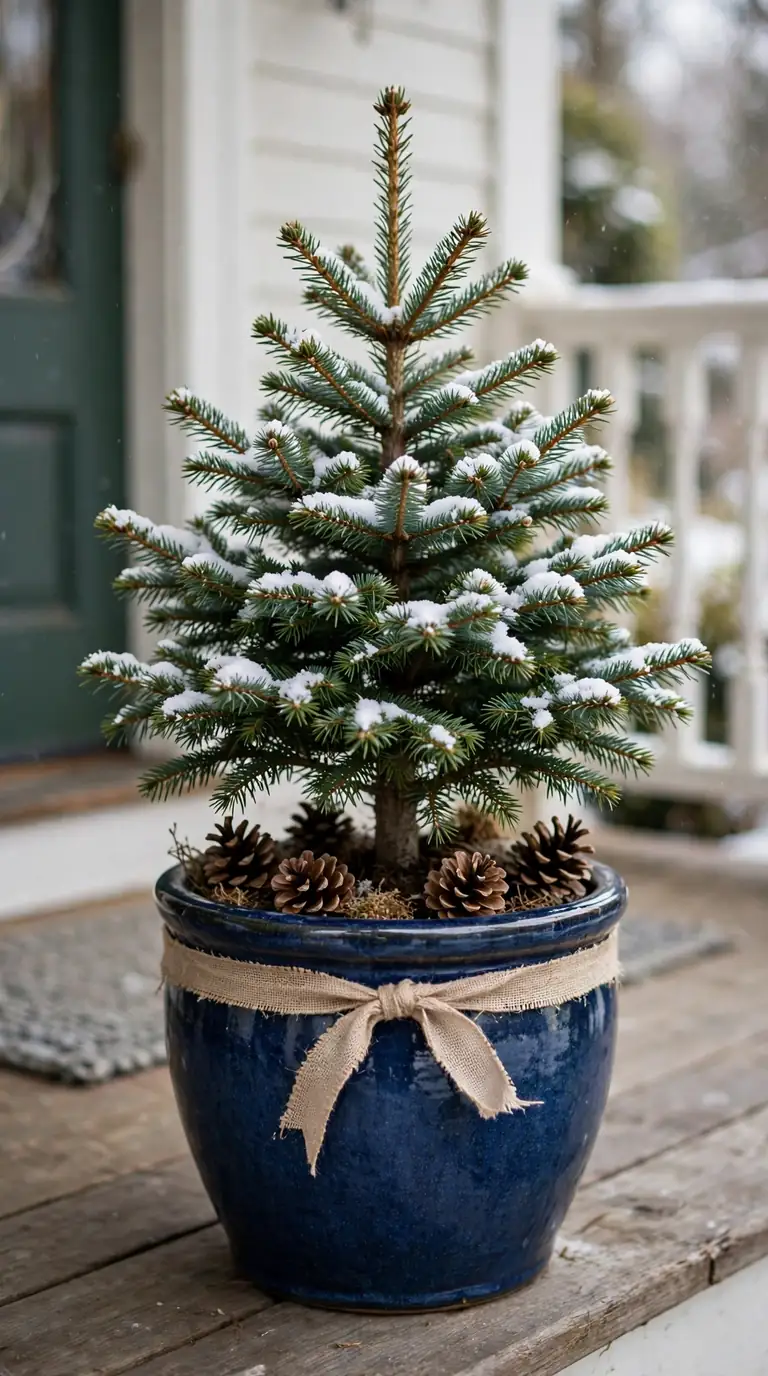
Sometimes one good plant beats a complicated arrangement. A dwarf Alberta spruce or a small potted conifer, centered in a beautiful pot, is the simplest of all evergreen planter ideas, and it has a future. Unlike cut greens, it is alive, and in spring it can go straight into the garden.
Choose a tree roughly one and a half times the pot height. A deep blue glazed ceramic pot or a weathered wooden box both work, as long as the container is frost-proof. Set the root ball slightly below the rim, mulch the surface, and water well before the first hard freeze.
For December, wrap a simple burlap ribbon around the pot or tuck pinecones at the base. After the holidays, remove the extras and let the tree stand on its own. Water on mild winter days when the soil is not frozen. In spring, plant it in a sunny spot, and next winter start the tradition again with another small tree.
13. Evergreen Hanging Basket for the Porch
Porch ceilings and railings offer a spot most people forget: overhead. A hanging basket filled with winter greens draws the eye up and finishes a porch from every angle. Trailing juniper is the secret ingredient, spilling over the basket edge as upright arrangements cannot.
Line a wire basket with coco fiber and fill it with moist potting mix. Plant the center with upright spruce tips or a small boxwood, then tuck trailing juniper and cedar around the edges so they cascade. Add small pinecones and a cluster of red berries near the front. Among hanging evergreen planter ideas, this is the one guests notice first, so hang it where it is sheltered from the worst wind; under a porch roof is ideal.
Hanging baskets dry out faster than ground pots, so check the soil weekly and water when it is thawed and dry. A small string of battery fairy lights woven through the greens turns the basket into a glowing ball of green after dark.

14. Post-Holiday Evergreen Planter Ideas for January and February
Most winter planters are built for Christmas and look tired by mid-January. This one is designed the other way around. The base is pure winter, greens, branches, and pinecones, with all the holiday color added as removable extras. When December ends, you pull the red picks and ribbons out, and the container is still beautiful.
Build the foundation from long-lasting cut greens, spruce, fir, and cedar packed densely. Add white birch poles or curly willow for structure and a generous layer of pinecones at the base. For the holidays, push in red berry picks, a simple bow, or a few gold ornaments. In early January, remove every holiday extra in two minutes. What remains is a clean winter arrangement that looks intentional, not leftover.
These evergreen planter ideas are the most practical on this list for anyone who dreads the post-holiday letdown. The greens hold into February, and by then the hellebores from idea ten will be starting to bloom. Winter does not have to end with an empty porch.

Practical Tips for Winter Evergreen Containers
Choose frost-proof pots. Fiberglass, concrete, metal, and wood all handle freeze-thaw cycles. Unglazed terracotta absorbs water and can crack, so use a plastic liner pot inside terracotta, or move it into a garage during the coldest snaps.
Drainage matters even in winter. Keep drainage holes clear and empty saucers so water never pools and freezes around the roots. For cut-stem arrangements, damp potting mix keeps stems fresh weeks longer than dry soil.
Buy cut greens early. Garden centers stock the cut greens behind most evergreen planter ideas from late November, and the best bundles sell out before mid-December. Tall arrangements catch wind, so in exposed spots, drive a wooden stake into the soil and tie the tallest stems to it.
Making These Ideas Work for Your Home
On porch steps, use pairs. Two matching containers flanking the door or the top step look twice as intentional as a single pot. On a balcony, go smaller: one compact juniper-and-berry pot in a corner brings winter in without crowding the space.
The most budget-friendly evergreen planter ideas put the money into one good frost-proof pot and a bundle of cut greens. A single large, well-packed container makes more impact than three thin ones. And if your entry faces north and gets little winter sun, lean on cut greens rather than living plants; cut arrangements do not care about light. For more cold-season projects, browse these winter garden ideas that stay beautiful all season, and if you are still easing out of autumn, these fall garden ideas carry many of the same container tricks.
FAQ
When should I put together winter evergreen planters?
Late November is ideal in most climates. Fall containers are fading, garden centers are stocked with fresh-cut greens, and the arrangements will look their best through the holidays. Living evergreens like boxwood do better planted in October, so their roots settle before hard freezes.
How long do cut evergreens last in a planter?
Expect six to eight weeks, sometimes longer. Spruce, fir, cedar, and juniper all hold their needles well in cold weather. Push stems into moist potting mix, give the pot a little afternoon shade, and mist the greens on mild days for extra freshness.
Will my pots crack in freezing weather?
It depends on the material. For evergreen planter ideas that must survive the whole winter, fiberglass, concrete, metal, and wood are safe. Unglazed terracotta and thin glazed ceramics are the risky ones, because absorbed water expands when it freezes. Use frost-rated pots, keep drainage holes clear, and empty saucers so water never sits and freezes in them.
Do I need to water evergreen planters in winter?
Living plants do, on mild days when the soil is not frozen. Check every couple of weeks and water if the top few inches are dry. Cut-stem arrangements benefit from damp soil too. Once the soil freezes solid, leave everything alone until a thaw.
Can I reuse anything from my winter planters in spring?
Yes. Boxwood, hellebores, and miniature spruce trees can move into garden beds or larger pots. Compost the cut greens, save birch poles and large pinecones for next year, and keep the frost-proof containers for summer planting.
Final Thoughts
Winter is long, and a bare porch makes it feel longer. One or two of these evergreen planter ideas, built in an afternoon in late November, will greet you with living green every time you come home, straight through to spring. Start with the classic spruce-tip urn if you are unsure; it never disappoints.