15 Winter Garden Ideas That Stay Beautiful All Season
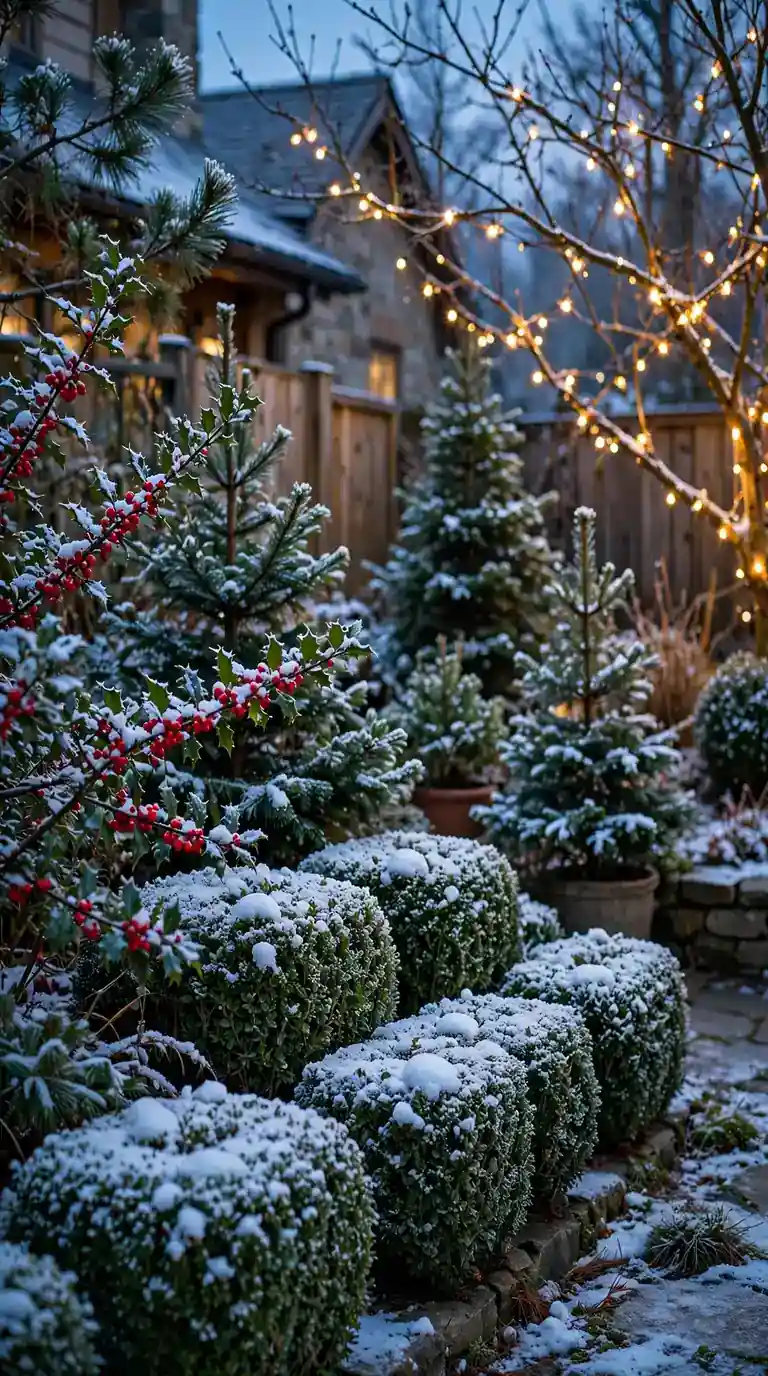
Evergreens, red berries, and warm lights keeping a winter garden beautiful after dark.
Most gardens quietly give up in November. The annuals are finished, the lawn looks tired, and the whole yard seems to hold its breath until spring. A winter garden does not have to be a waiting room, though. With the right plants and a few deliberate choices, the stretch from December to February can hold its own against any other season.
These winter garden ideas focus on what genuinely looks good in cold weather: evergreen structure, colorful stems, bright berries, brave little flowers, frost on grasses, and warm light after dark. Every idea below is a complete look you can picture and build, with the practical details that carry it through frost, snow, and short gray days.
1. Evergreen Backbone: Where Smart Winter Garden Ideas Begin

A layered backbone of spruce, juniper, and clipped boxwood holding its shape under fresh snow.
When every perennial has died back, the garden is only as good as its evergreens. That is why the strongest winter gardens are designed around a backbone of conifers and broadleaf evergreens first, with seasonal color added second. Think of it as the furniture of the garden: everything else gets arranged around it.
Layer three heights for the best effect. Tall anchors like blue spruce, arborvitae, or upright juniper give the back of the border real weight. Mid-level yew, holly, or rhododendron fill the middle ground. Low mounds of boxwood, dwarf mugo pine, or spreading juniper stitch it all together at ground level.
Plant evergreens in early fall so roots settle before the freeze, and water them deeply right up until the ground hardens. Winter wind dries foliage faster than most gardeners expect, especially on broadleaf types. A two-inch mulch of bark keeps roots insulated and moisture steady through the coldest weeks.
2. Fill Tall Winter Planters With Evergreens, Berries, and Birch Branches
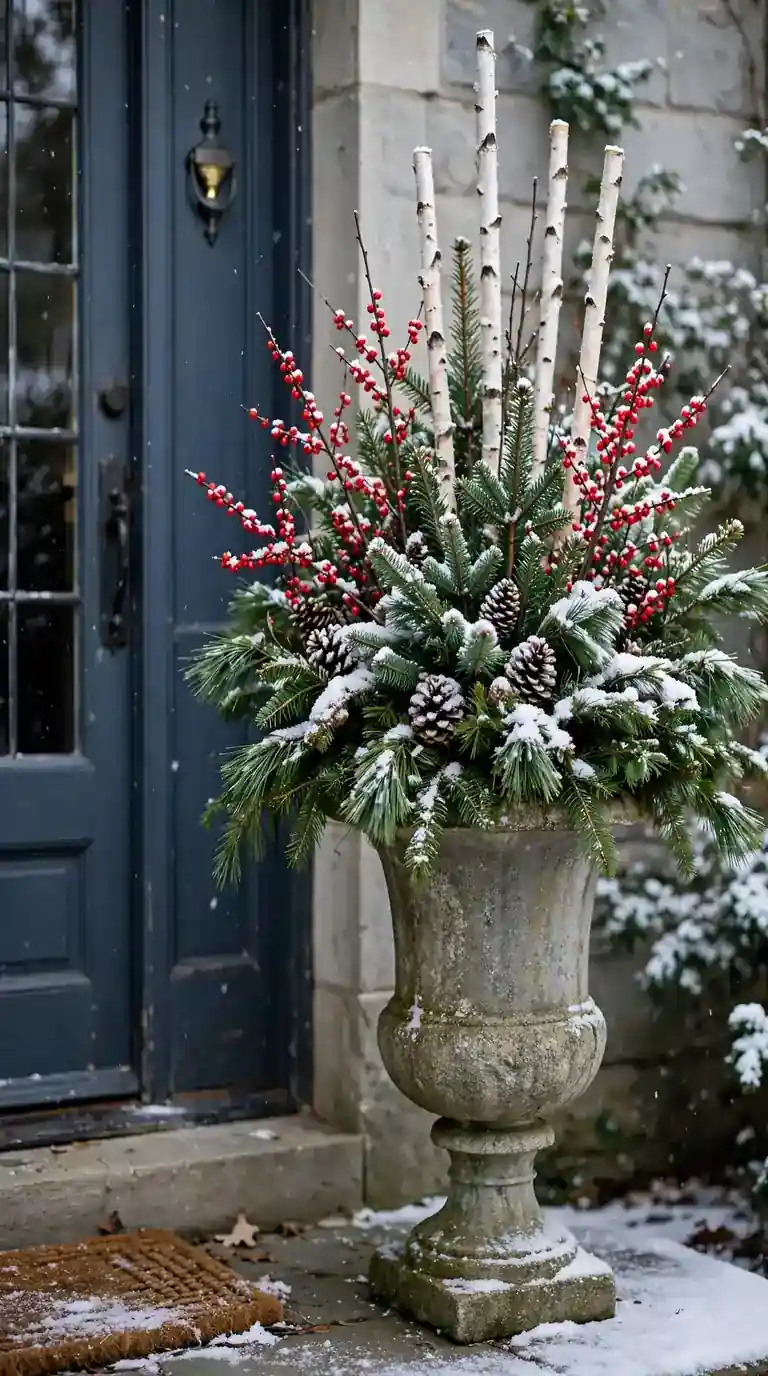
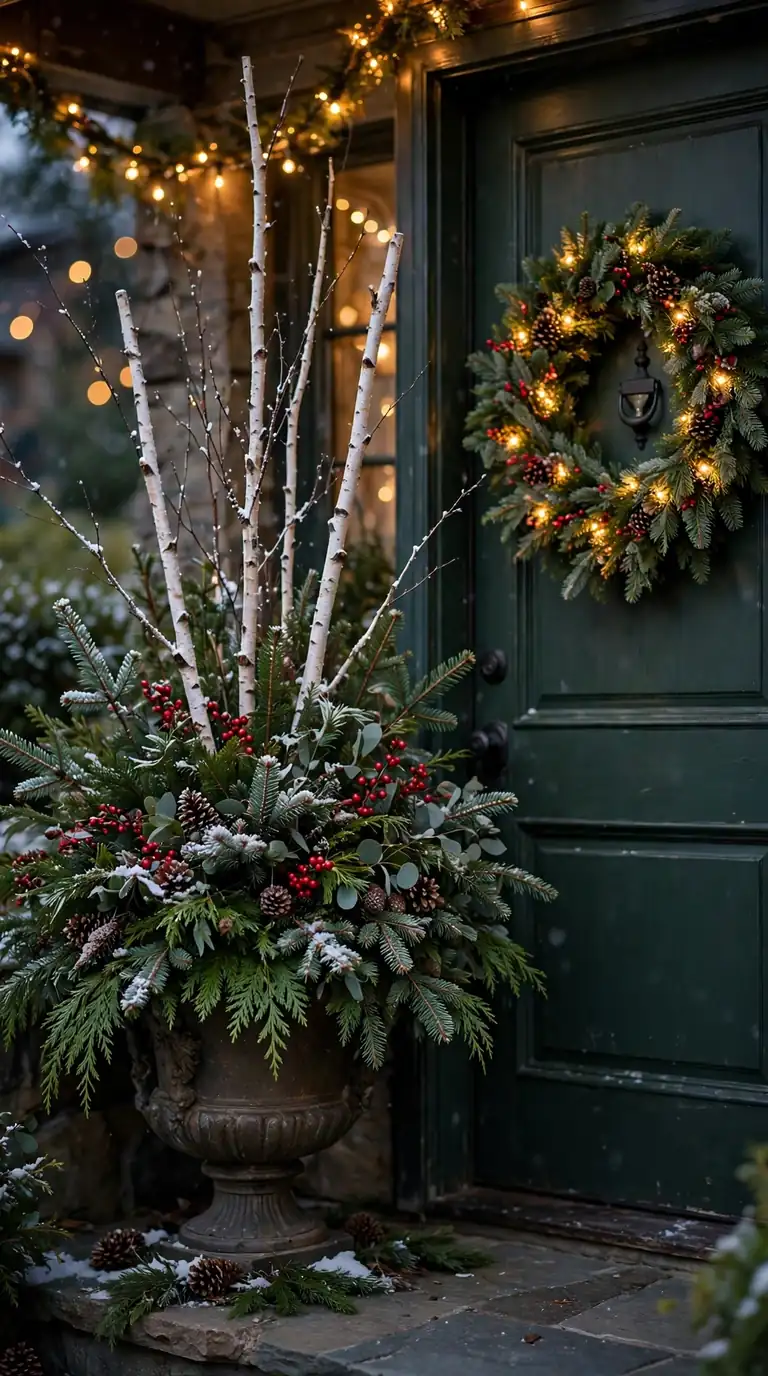
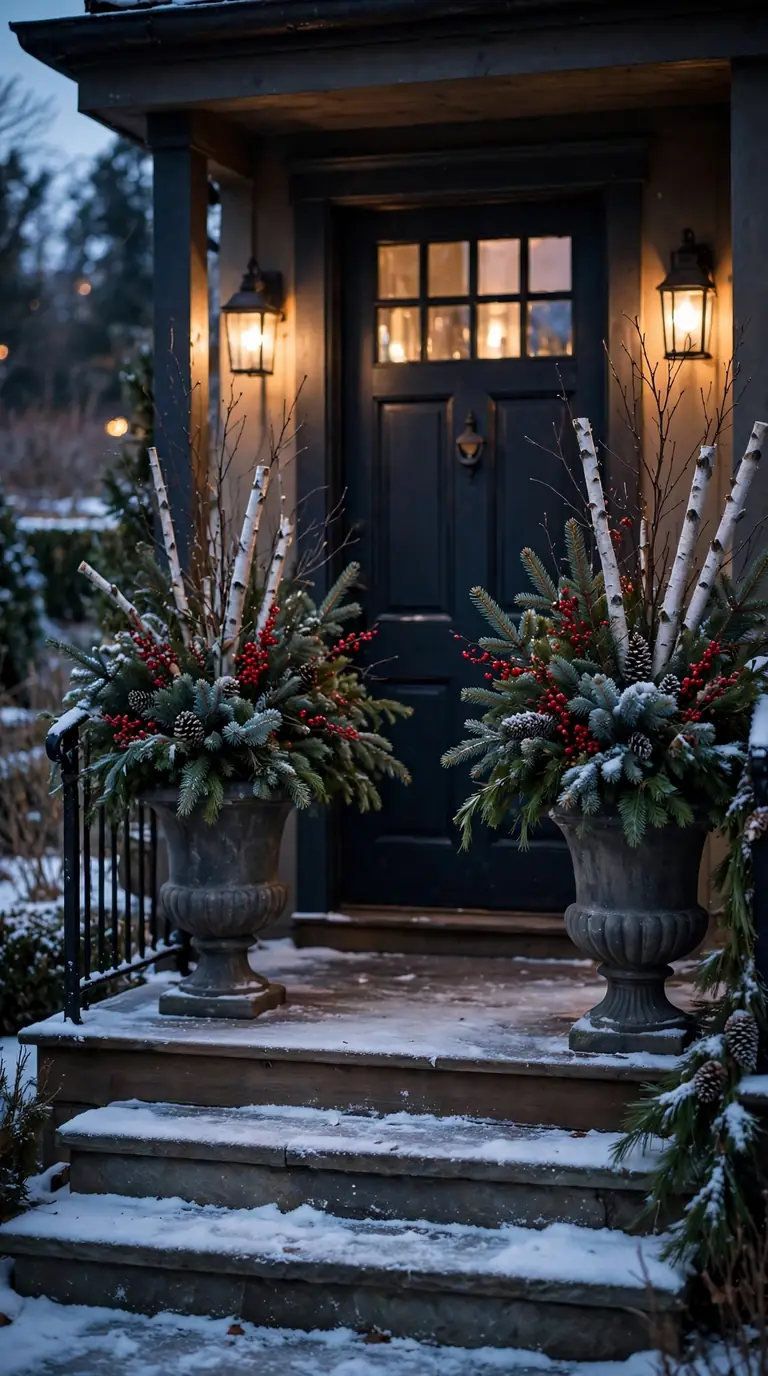
A tall urn by the front door dressed with evergreen boughs, red berries, and birch poles.
The front door is where a winter garden gets judged, and tall planters are the fastest way to dress it. Start with a sturdy urn or tall pot, at least eighteen inches across, and fill it with moist potting soil so stems stay upright through winter wind. Among winter garden ideas, few pay off faster than dressed planters.
Push in a core of cut evergreen boughs. White pine, cedar, and boxwood clippings all last for months in the cold. Then add height with three or four white birch poles and color with red winterberry or holly branches. A few pinecones tucked at the base finish the arrangement.
These planters need almost no care. Frost actually preserves them, and they look better in December than anything you planted in May. When spring arrives, pull the stems for the compost and reuse the pot for summer annuals.
3. Plant Red Twig Dogwood for Stems That Glow Against Snow
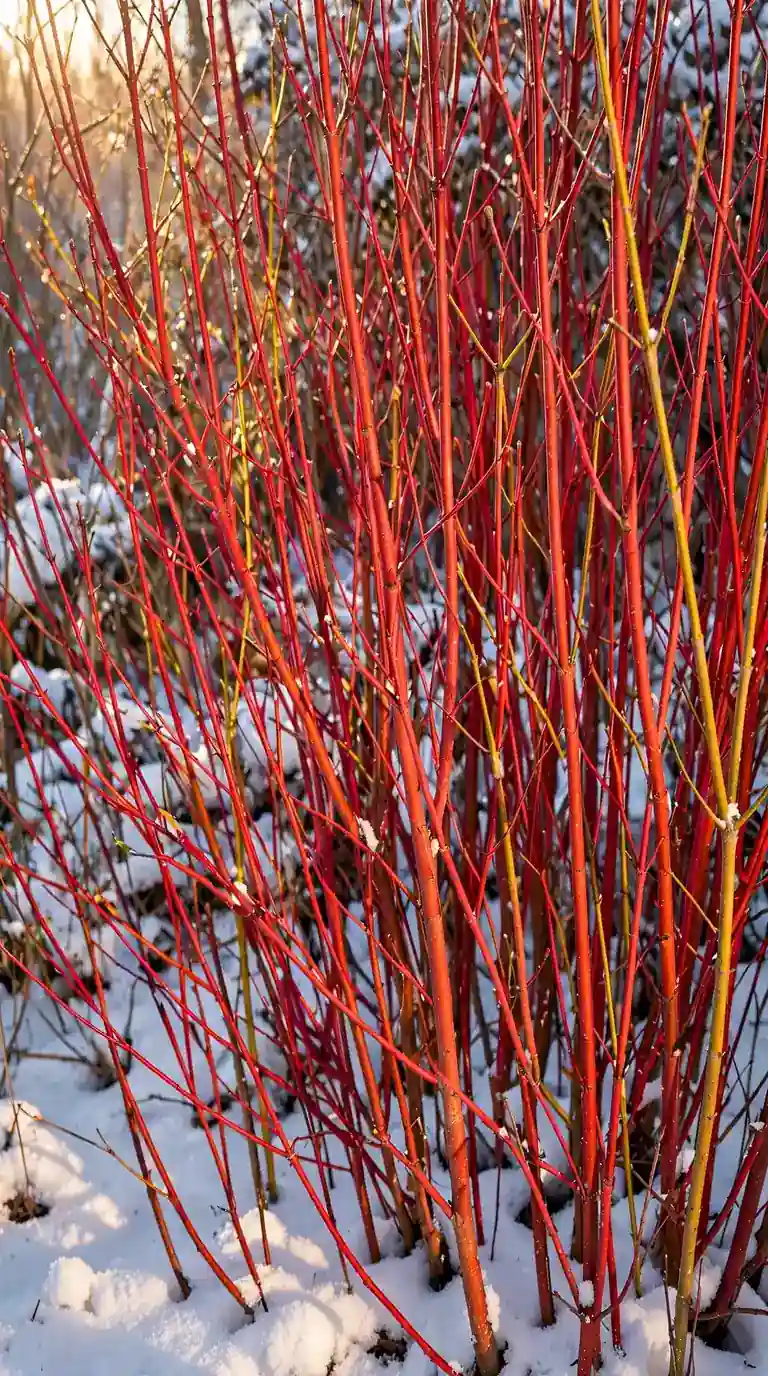
Coral-red dogwood stems glowing like embers against fresh snow.
Few sights beat red twig dogwood against fresh snow. The stems of Cornus sericea turn a brilliant coral-red as temperatures drop, and a mass planting glows like embers from across the yard. Yellow-stemmed varieties like Bud’s Yellow, or the orange-red Midwinter Fire, give you options beyond red. As winter garden ideas go, few are more photogenic than this one.
Color lives in young wood, so this shrub rewards regular pruning. Each March, cut about a third of the oldest stems to the ground. Every three years, coppice the whole shrub hard. New shoots emerge with the brightest bark, and the plant stays vigorous instead of leggy.
Plant dogwoods in groups of five or seven rather than singles. One lone stem gets lost, but a thicket reads as a deliberate design move. They tolerate wet soil that defeats fussier shrubs, which makes them perfect for that soggy corner where nothing else thrives.
4. Tuck Hellebores Into Sheltered Shady Beds
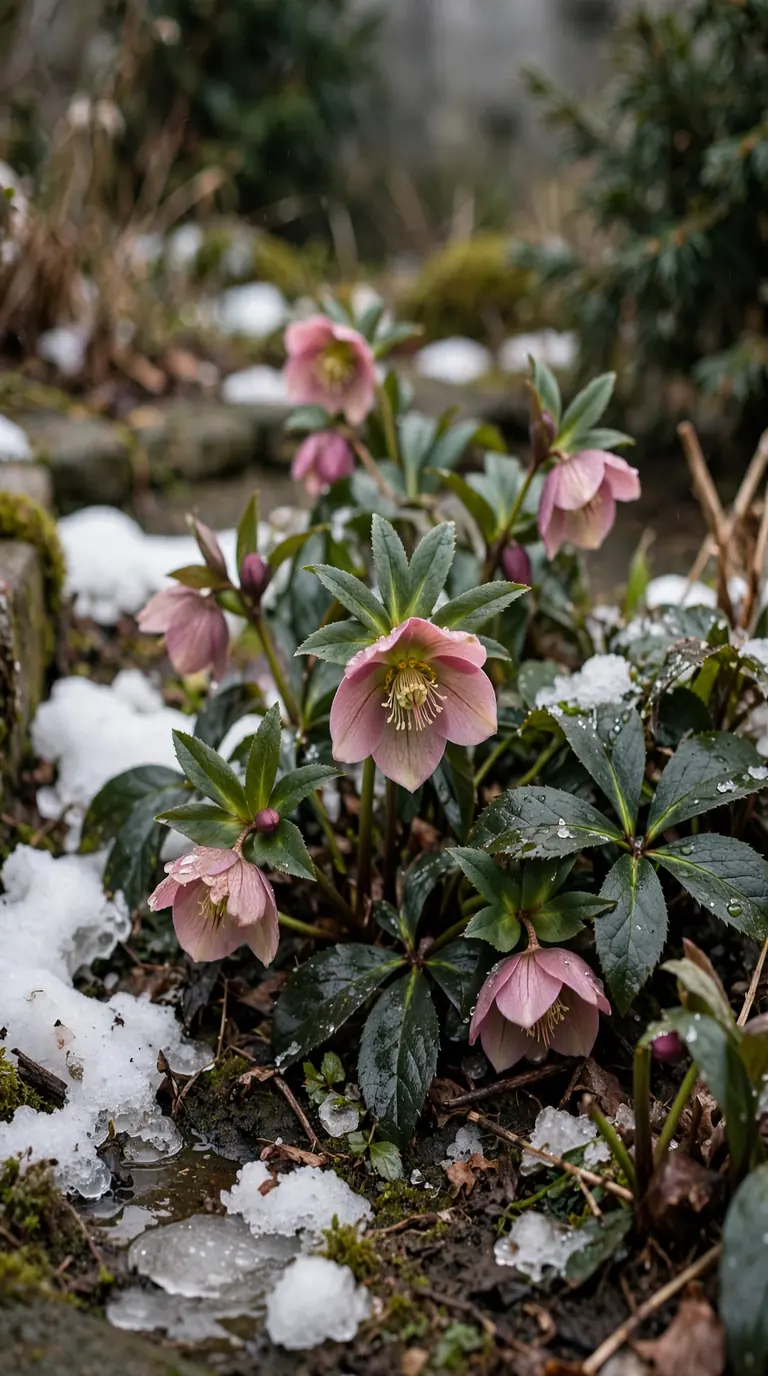
Dusty pink hellebores opening in a sheltered bed while snow still lingers.
Hellebores bloom when almost nothing else dares. From January into March, their cupped flowers open in white, plum, dusty rose, and green, often pushing straight through light snow. The leathery evergreen foliage looks good all year, so the plant earns its place even between blooms. For winter garden ideas with real flowers, this is the classic.
Give them what they want and they will live for decades: rich soil, dappled or full shade, and shelter from harsh winter wind. The north or east side of the house, or beneath deciduous trees, suits them perfectly. Space plants about eighteen inches apart so the clumps knit together over time.
In late winter, snip off last year’s leaves at the base just as the flower buds rise. This one chore makes the blooms far more visible and keeps the plant tidy. Deer leave hellebores alone, which is reason enough to plant them in many regions.
5. Leave Ornamental Grasses Standing for Frosty Plumes

Miscanthus plumes catching frost and low winter sunlight.
The kindest thing you can do for ornamental grasses is nothing at all. As winter garden ideas go, this is the laziest one on the list, and one of the prettiest. Leave miscanthus, switchgrass, and feather reed grass standing through winter, and their seed heads catch frost, rain, and low sunlight in ways no flower can match. On a still January morning, a grass border looks like it was spun from glass.
The dried foliage also shelters overwintering insects and gives birds cover and seed through the lean months. If you planted your grasses during last autumn’s planting push, this is their payoff season. For more seasonal planting inspiration, these fall garden ideas pair beautifully with a grass-forward winter border.
Wait until late February or early March to cut the clumps back to about six inches. Cutting earlier robs the garden of its best winter texture. New growth emerges fast once spring warmth arrives, so the brief stubble stage barely registers.
6. Plant Winterberry Holly for Fire-Red Berries

Winterberry holly holding clusters of red fruit on bare branches.
Winterberry holly drops its leaves and keeps its berries, which is exactly the trade a winter garden wants. From November onward, bare gray branches carry clusters of brilliant red fruit that read clearly from the street. Winter Red and Sparkleberry are reliable, heavy-fruiting choices for most regions.
One detail matters more than any other: winterberry is dioecious, so you need one male plant, such as Southern Gentleman, within about fifty feet of your females for berries to set. Nurseries usually label this clearly, but a missing pollinator is the most common reason a winterberry fails to fruit.
Birds will strip the branches by late winter, which is part of the charm of these winter garden ideas. Before they do, cut a few stems for indoor arrangements. They last for weeks in water.
7. Drape Warm String Lights Over Bare Branches

Warm white lights tracing every branch of a leafless tree at dusk.
Bare branches are a gift most gardeners waste. Draped with warm white LED string lights, a leafless maple or birch becomes the most photographed part of the yard after dark. The light traces every limb and makes the whole garden feel larger than it is.
Use only outdoor-rated lights, and keep connections off the ground where meltwater collects. Two or three strands are usually enough for a small tree. A simple outdoor timer set for dusk to eleven means you never have to think about it. Simple winter garden ideas like this one stretch your enjoyment of the yard by hours each day.
Stick to warm white, around 2700K. Cool white reads icy and clinical against snow, while warm light feels like candlelight. Solar strings work in sunny spots, but plug-in sets burn brighter and more reliably through the darkest weeks of the year.
8. Keep a Cold Frame of Winter Salads and Herbs
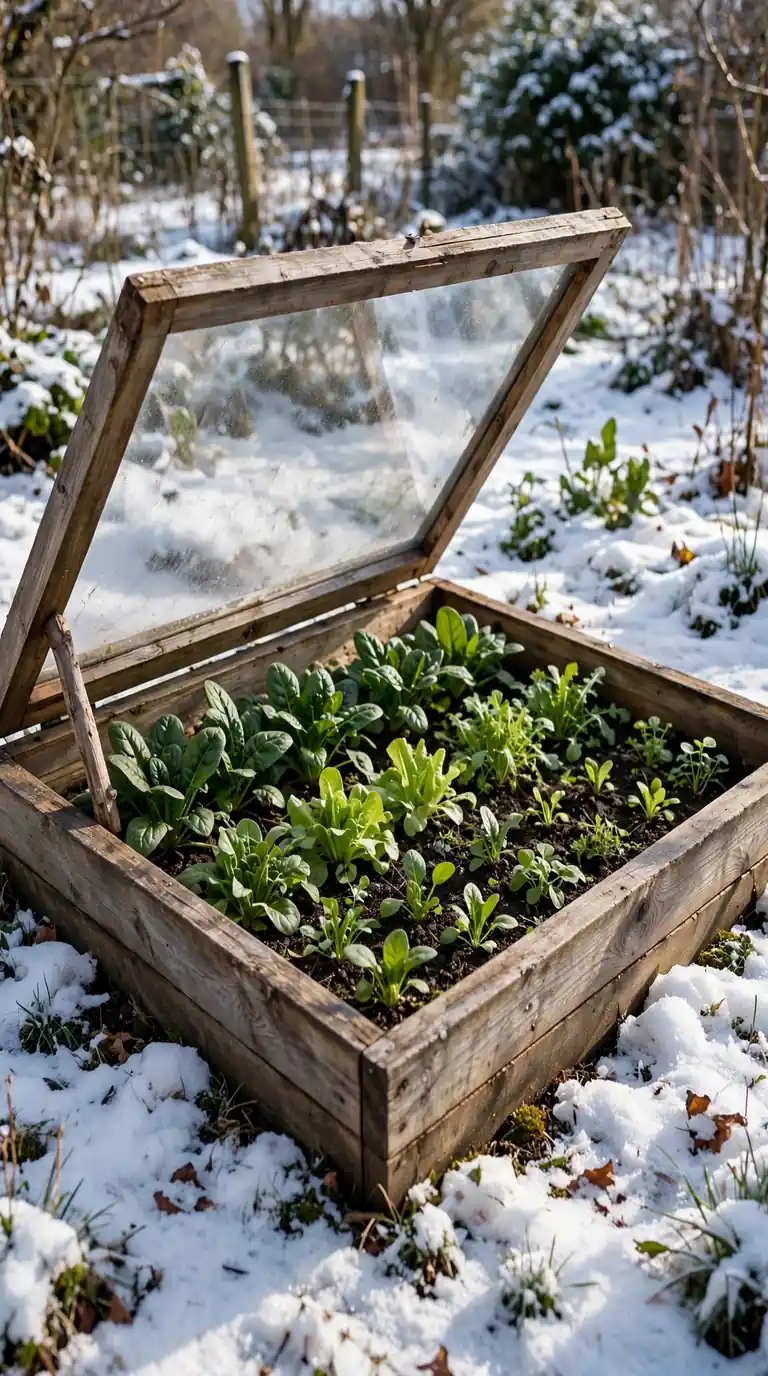
A cold frame keeping spinach and mache alive through the snow.
A cold frame keeps the vegetable gardener in business long after the first frost. This simple bottomless box with a sloped glass or polycarbonate lid traps daytime heat and can keep hardy greens alive through most winters. Spinach, mache, kale, claytonia, and parsley all tolerate the chill inside one.
Set the frame facing south in the sunniest spot you have, and bank soil or straw bales around the outside for insulation. On sunny days above freezing, prop the lid open an inch so the plants do not cook. Close it before sunset to hold the warmth overnight.
Harvest outer leaves rather than whole plants, and the same plants will keep producing for months. Few winter garden ideas are this delicious. In deep cold snaps, throw an old blanket over the lid at night. Fresh salad in January, cut steps from the kitchen, is one of winter’s quiet luxuries.
9. Style a Winter Path With Lanterns, Pine Boughs, and Snow
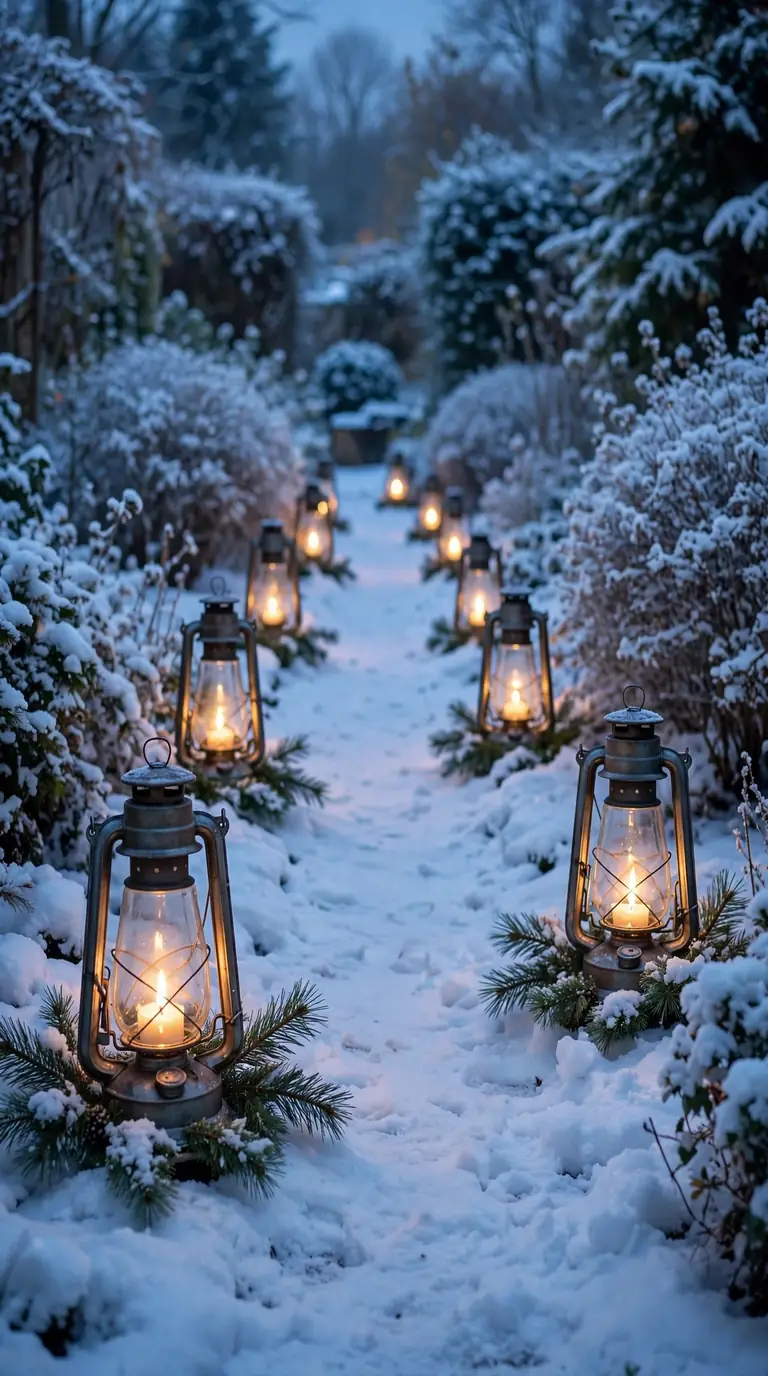
Hurricane lanterns and pine boughs turning a snowy path into an evening walk.
A snowy path lined with lanterns needs no other decoration. Set hurricane lanterns or sturdy outdoor candle holders along your main walk, spacing them six to eight feet apart on alternating sides. Real candles flicker beautifully, while flameless LED pillars on timers are the practical choice in wind.
Tuck fresh pine or fir boughs around the base of each lantern where they meet the snow. The green against white looks deliberate and festive without any hint of a holiday theme, so the display works from December straight through February. These are winter garden ideas that cost almost nothing.
Group lanterns in odd numbers and vary their heights for a natural look. Bring glass hurricanes inside during the worst storms, or choose metal and stone holders that shrug off weather entirely.
10. Build a Fire Pit Corner for Frosty Evenings

A stone fire pit ringed with chairs and wool throws on a frosty night.
A fire pit turns the winter garden from something you look at into somewhere you go. On a clear frosty evening, few things beat the pull of real flames, and the cold air makes the warmth feel twice as earned. A simple steel bowl on a gravel pad works well, or dry-stack stone for a permanent ring.
Place it at least ten feet from the house, fences, and low branches. Ring it with four weatherproof chairs and keep a basket of wool throws by the back door so guests actually stay outside. Burn only dry, seasoned hardwood for less smoke and easier lighting.
If you love this gather-round energy, these Mexican backyard ideas carry the same spirit in a bolder, sun-soaked direction, with adobe fire pits and string-lit courtyards. And never leave the fire unattended: keep a bucket of sand or water within reach every single time.
11. Plant Early Bulbs Now for Late Winter Color

Snowdrops nosing through late snow along a garden edge.
The bravest flowers of the year are planted months before they bloom. Snowdrops, winter aconite, crocus, and dwarf iris all go into the ground in fall and open as early as February, sometimes pushing straight through snow. Plant them this autumn and the end of winter will surprise you, which makes this one of the easiest winter garden ideas to start this fall.
Set bulbs about three times as deep as they are tall, in drifts rather than straight lines. Ten or twelve bulbs make a visible patch; fifty make a statement. Under deciduous trees or along path edges, they naturalize and multiply with almost no care.
Mark the spots with small stakes so you do not dig them up by accident in spring. Pair early bulbs with hellebores and you will have flowers from January through April without lifting a finger in the cold.
12. Set Up a Winter Bird Garden With a Heated Birdbath

Chickadees visiting a heated birdbath on a snowy morning.
Birds are the liveliest decoration a winter garden can have. A feeding station with sunflower seed, suet, and nyjer draws chickadees, finches, cardinals, and woodpeckers through the leanest months. Their movement keeps the garden feeling alive on the grayest days, which earns this idea a place among the most joyful winter garden ideas.
Water matters more than most people realize. A heated birdbath with a built-in thermostat keeps a small patch of water open all winter, and birds will visit it as faithfully as the feeders. Set it near evergreen cover so birds can dart to safety, and brush snow off the rim after storms.
Clean feeders every couple of weeks with a mild bleach solution to prevent disease. It is a small chore with a real payoff. Position the whole station where you can see it from your favorite indoor chair, because half the pleasure is watching.
13. Create a Weatherproof Reading Nook With Wool Throws
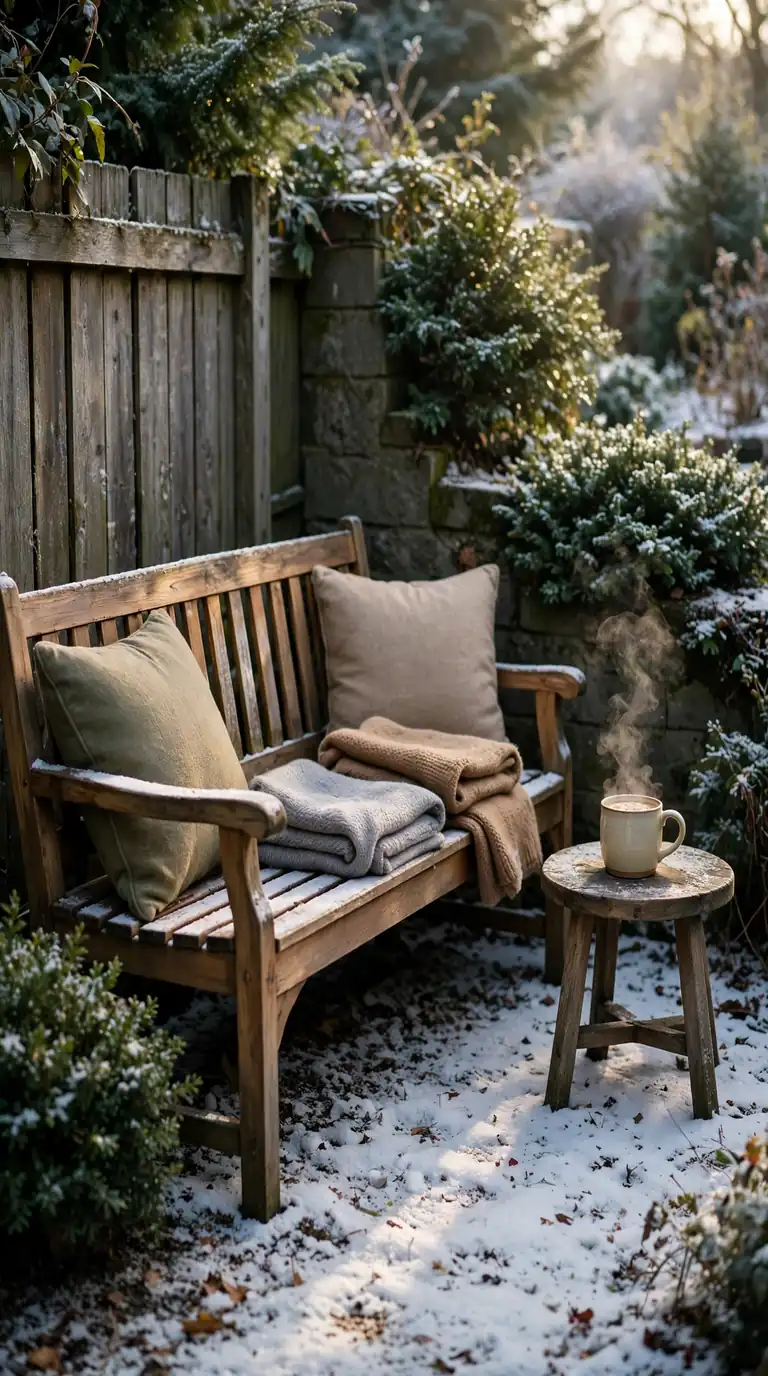
A cedar bench dressed with cushions and wool throws in weak winter sun.
A winter garden you never sit in is only half a garden. Tuck a weatherproof bench or a pair of chairs into the sunniest sheltered corner, ideally under an eave or pergola where snow slides off. Teak, cedar, and powder-coated metal all handle winter without complaint.
Comfort is what makes the seat get used. Keep outdoor cushions in a storage box by the door and bring them out with a thick wool throw when you head outside. A small side table holds tea.
Face the seat toward the low winter sun rather than away from it. Ten minutes in weak February sunshine, wrapped in wool with something warm in your hands, will change how you feel about the whole season. The best winter garden ideas are the ones you actually live in.
14. Grow Winter-Flowering Shrubs: Witch Hazel, Winter Jasmine, Sweet Box

Fragrant witch hazel flowers opening on bare branches in January.
Some shrubs save their flowers for the coldest months, and planting them feels like keeping a secret. Witch hazel opens spidery, fragrant yellow blooms on bare branches in January and February. Winter jasmine spills bright yellow flowers down walls and slopes from December on. Sweet box, or sarcococca, hides tiny intensely perfumed white flowers among glossy evergreen leaves.
Scent is the point with these plants, so site them where you will actually notice: beside the front path, under a window you open, or near the door you use daily. That is why fragrant shrubs rank high among winter garden ideas for small yards, where every plant sits close to the house. Witch hazel wants sun, while sweet box and winter jasmine tolerate shade without complaint.
None of them demand much. Prune witch hazel lightly after flowering if it outgrows its space, and cut winter jasmine’s flowered stems back in spring to keep it tidy. These are plant-and-forget shrubs that pay you back every single winter.
15. Add Sculpture and Stone That Shines Under Snow: Quiet Winter Garden Ideas

A simple stone form turned sculptural by a dusting of snow.
When flowers are gone, form carries the garden, and this is where sculpture earns its keep. A stone urn, a simple obelisk, a carved sphere, or a weathered birdbath reads as a focal point all year, but snow transforms it. Clean lines and bold shapes look their best dusted white.
Choose materials that laugh at frost. Natural stone, concrete, and corten steel all age gracefully outdoors. Avoid glazed ceramics and thin terracotta, which can crack in freeze-thaw cycles. One strong piece per view is plenty; restraint is what makes it look designed rather than cluttered.
Place sculpture where the winter sun hits it, or where you see it from the windows you look out of most. A garden you admire from indoors all winter is a garden that works twice as hard for you.
Frequently Asked Questions
What plants give the fastest color to a winter garden?
Cut evergreen boughs, berry branches, and birch poles in containers give instant results the same day. For planted color, hellebores and winter-flowering shrubs like witch hazel bloom from January, while red twig dogwood and winterberry holly provide stem and berry color all season. Early bulbs planted in fall open by February.
Which plants look best with snow on them?
Conifers like blue spruce and arborvitae, clipped boxwood, red twig dogwood, ornamental grasses, and winterberry holly all look spectacular under snow. Plants with strong shapes and bold colors contrast best against white, which is why evergreens and red stems are winter garden staples.
How do I protect garden plants from hard frost?
Water evergreens deeply before the ground freezes, since winter wind dries foliage faster than most gardeners expect. Mulch beds with two to three inches of bark or straw to insulate roots. Wrap tender shrubs in burlap only in exposed spots, and avoid fertilizing late in the season, which encourages soft growth that frost damages.
Can I have a winter garden on a small patio or balcony?
Absolutely. Winter containers with evergreens, berry branches, and birch poles thrive in pots, and dwarf conifers, hellebores, and ornamental kale all grow well in containers. Choose frost-proof pots in stone, concrete, or thick wood, since thin terracotta can crack in freeze-thaw cycles.
Do I need to water the garden in winter?
Yes, when the ground is not frozen. Evergreens keep losing moisture through their foliage all winter, so water deeply during dry spells whenever temperatures are above freezing. Newly planted trees and shrubs are especially thirsty in their first winter. Skip watering when the soil is frozen solid.
Conclusion
A beautiful winter garden is not an accident. It comes from planting for structure first, choosing plants that earn their place in the coldest months, and adding light and places to sit so the garden gets used, not just viewed. Start with one of these winter garden ideas, perhaps the evergreen backbone or a pair of dressed planters, and build from there. By next December, the so-called dead season may well be your favorite one.