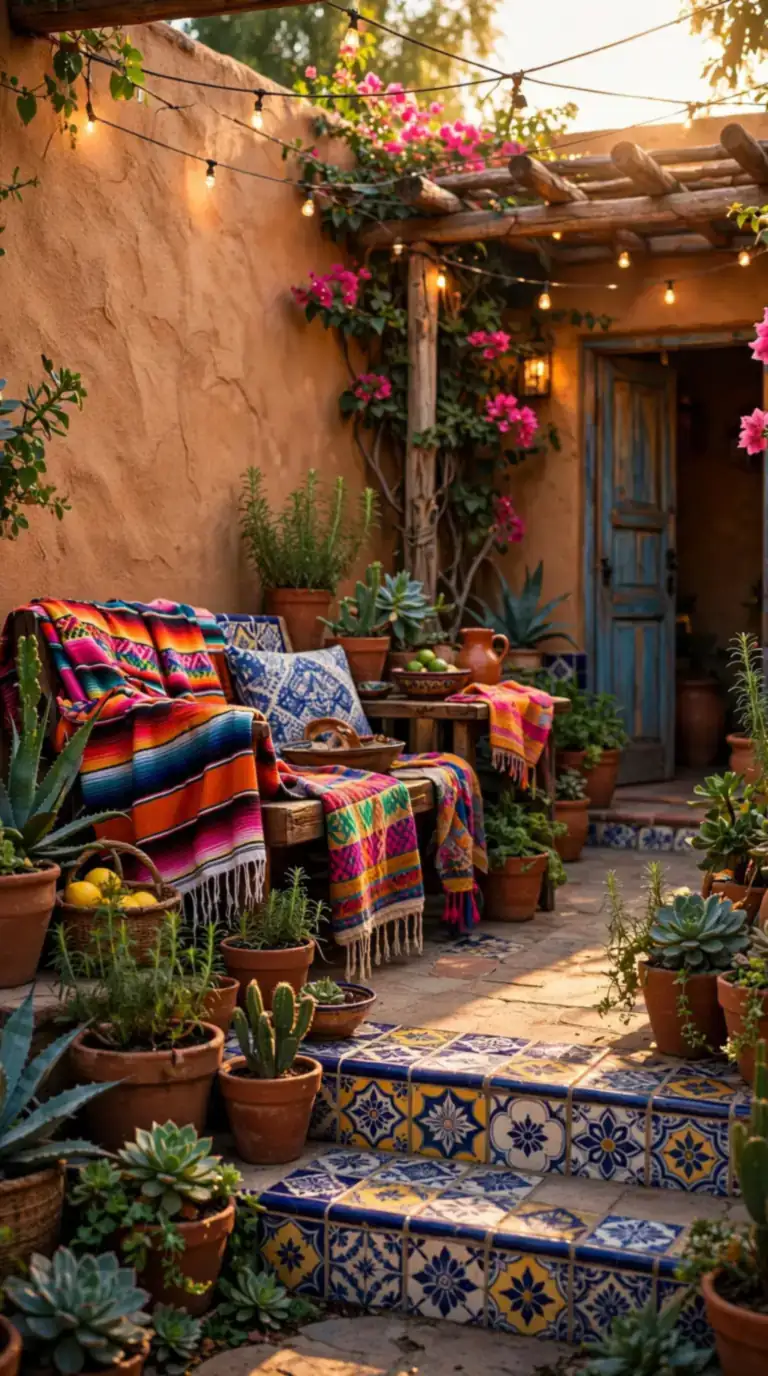
Step into a Mexican backyard and color hits you first. A cobalt wall behind the grill, clay pots spilling over with agave, a hammock swaying under strings of warm lights. Nothing about the space feels precious or off limits. It feels built for people, for long dinners and louder laughter, and that is the spirit these mexican backyard ideas borrow.
You will find 19 complete ideas below, each one a distinct look you can actually picture and build. Talavera tile floors, adobe fire pits, bougainvillea pergolas, outdoor kitchens, and quiet hammock corners all get the full treatment: what the idea looks like, why it works, and how to adapt it to your yard, your climate, and your budget.
Mexican Backyard Ideas That Start From the Ground Up: Talavera Tile Patio Flooring
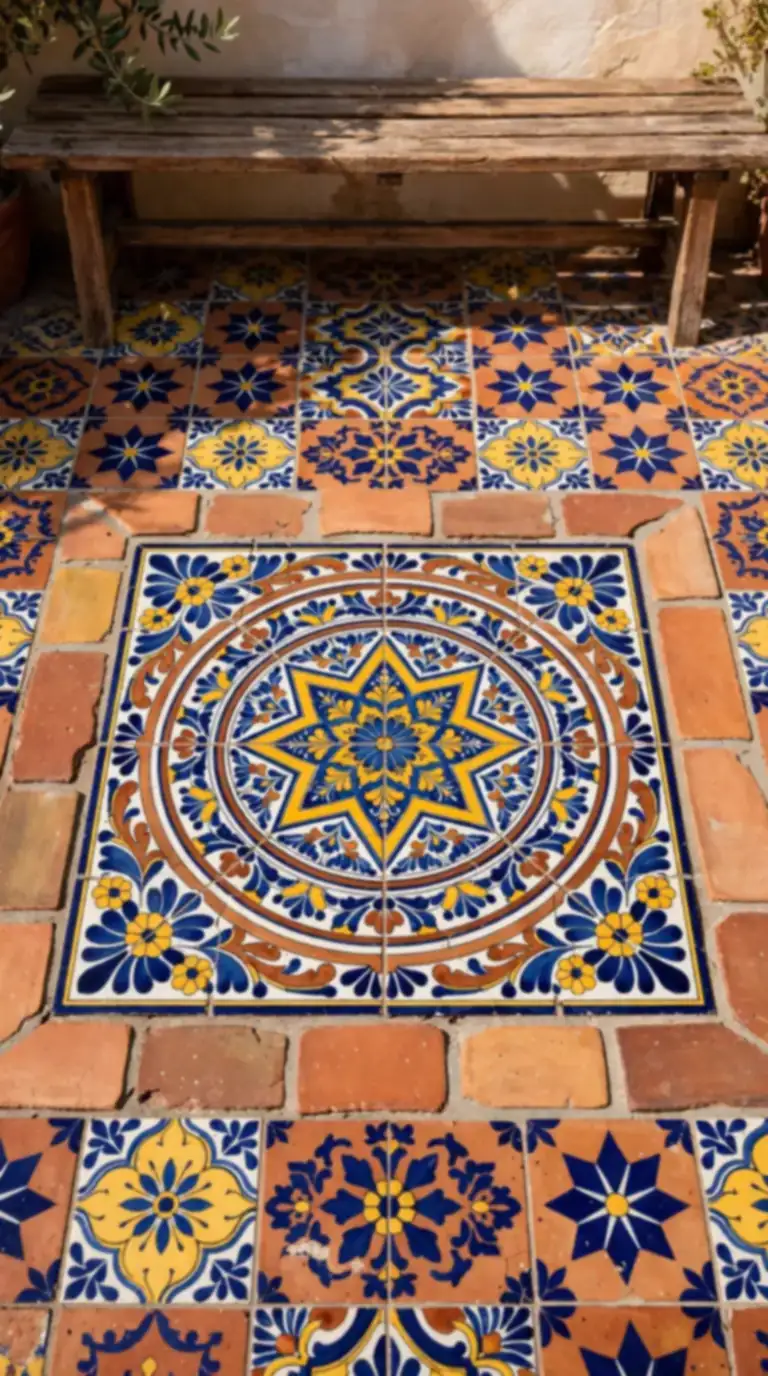
Talavera tile is the hand-painted ceramic that comes out of Puebla, and a patio floor laid in it changes everything. The classic patterns mix cobalt blue, sunny yellow, and terracotta in stars, flowers, and geometric borders, so even plain furniture looks intentional on top of it. You can tile the whole patio or lay a central medallion and border it with simpler Saltillo tiles to control cost.
Outdoor Talavera needs respect for weather. In regions with hard freezes, choose tiles rated for frost or keep the tiling to covered areas, and seal the surface once a year so the glaze keeps its shine. Sweep rather than pressure wash. Done right, the floor becomes the artwork and the rest of the yard just frames it.
Hand-Painted Courtyard Fountain With a Tiled Basin
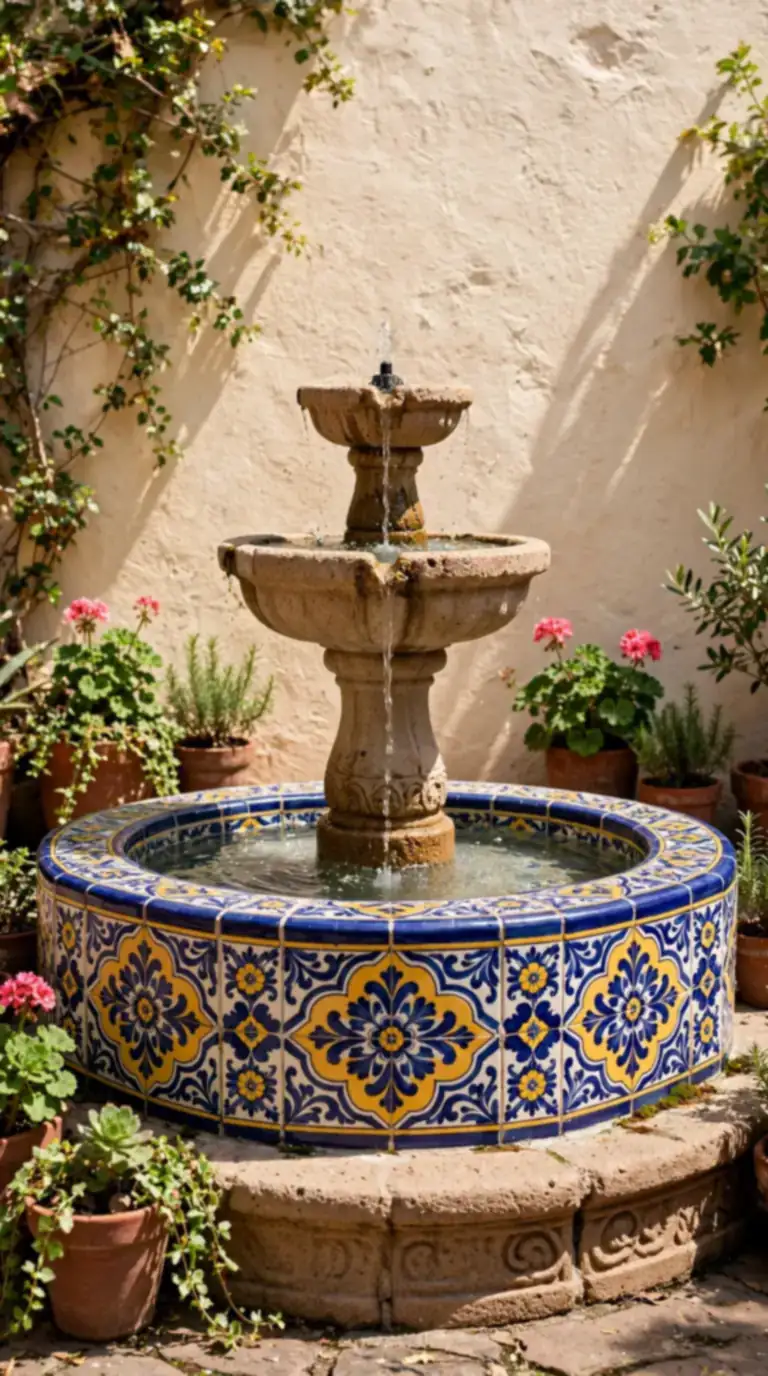
A fountain sits at the center of the classic Mexican courtyard for good reason. Moving water cools the air on hot afternoons, softens street noise, and gives birds a reason to visit. A cantera stone or cast concrete fountain clad in Talavera tile around its basin delivers the look in one piece: earthy stone below, painted color above.
Place it where you will see and hear it, near seating rather than tucked in a corner. A small solar pump keeps installation simple if you have no outdoor outlet nearby, and a shallow basin is the safer choice around small children. Top up the water in summer heat, since evaporation runs fast. The sound alone makes the whole yard feel calmer.
Terracotta Pot Cluster With Cacti and Succulents
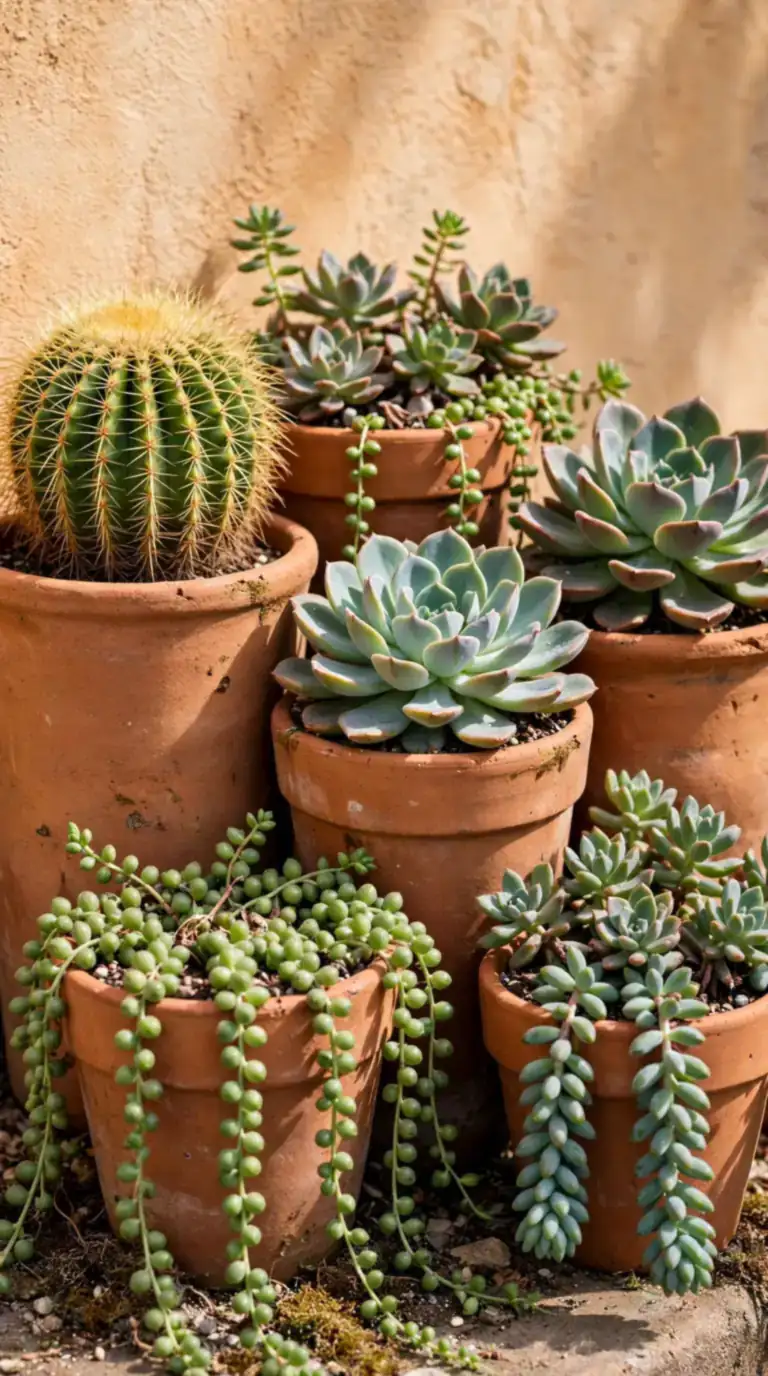
Unglazed terracotta is Mexico's default planter, and a cluster of them solves the empty corner problem fast. The clay breathes, which cacti and succulents appreciate, and the orange earthen tone flatters every shade of green. Mix heights and widths, group in odd numbers, and put the tallest pot at the back so the arrangement reads as one composition.
Fill them with golden barrel cactus, echeveria rosettes, and a trailing burro's tail or two for contrast. Use a gritty cactus mix and pots with drainage holes, because wet feet kill desert plants faster than drought. Over a season or two the pots develop a pale patina that only improves the look.
Sculptural Agave and Cactus Planting Bed
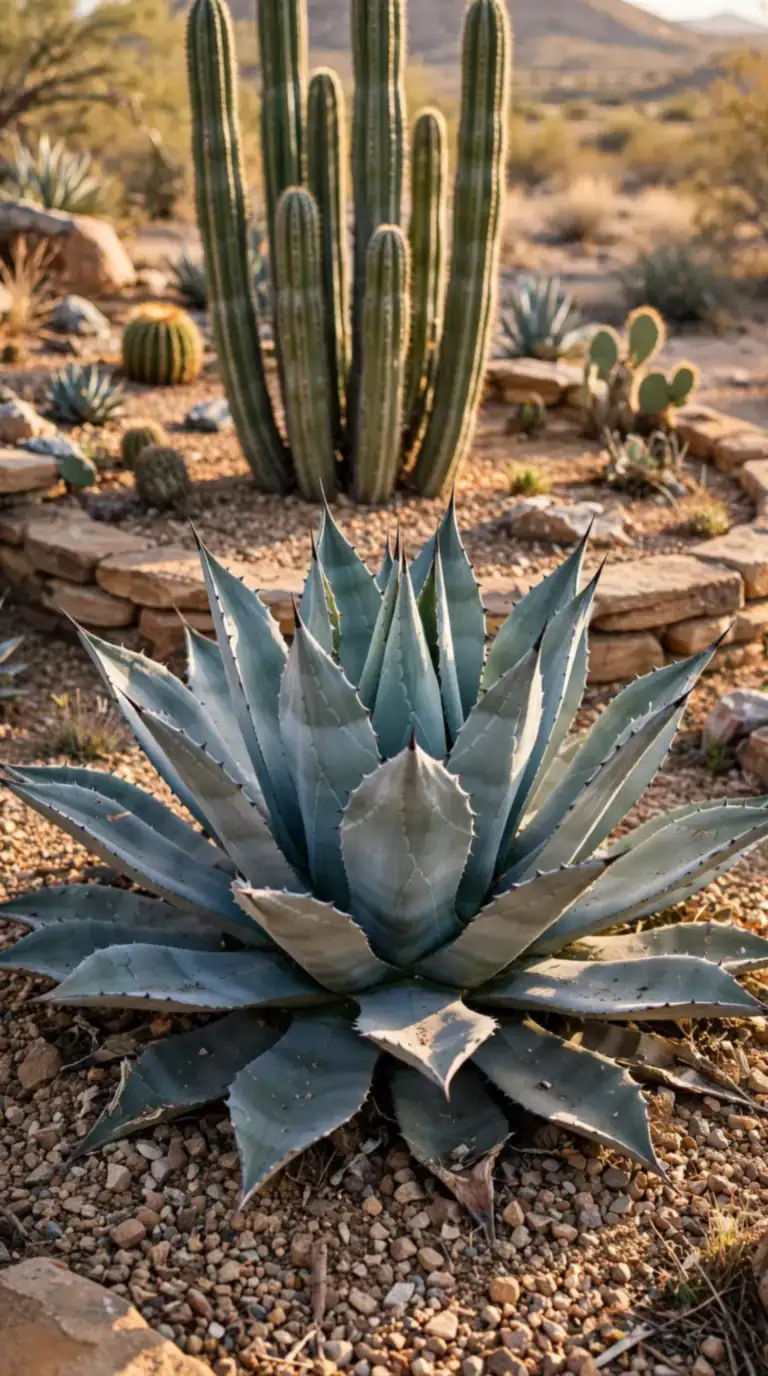
For a bed with real architecture, plant big. A century plant or blue agave becomes a living sculpture, its stiff leaves radiating like a star, while organ pipe cactus adds vertical rhythm behind it. Set them in decomposed granite or gravel mulch, which suits their roots and keeps the bed nearly weed free.
Give each specimen room to reach mature size, since agaves resent being moved. Keep spiny varieties away from paths, play areas, and anywhere dogs run, and wear thick gloves at planting time. The payoff is a bed that looks striking in every season and asks for almost no water once established.
Bougainvillea-Draped Wooden Pergola
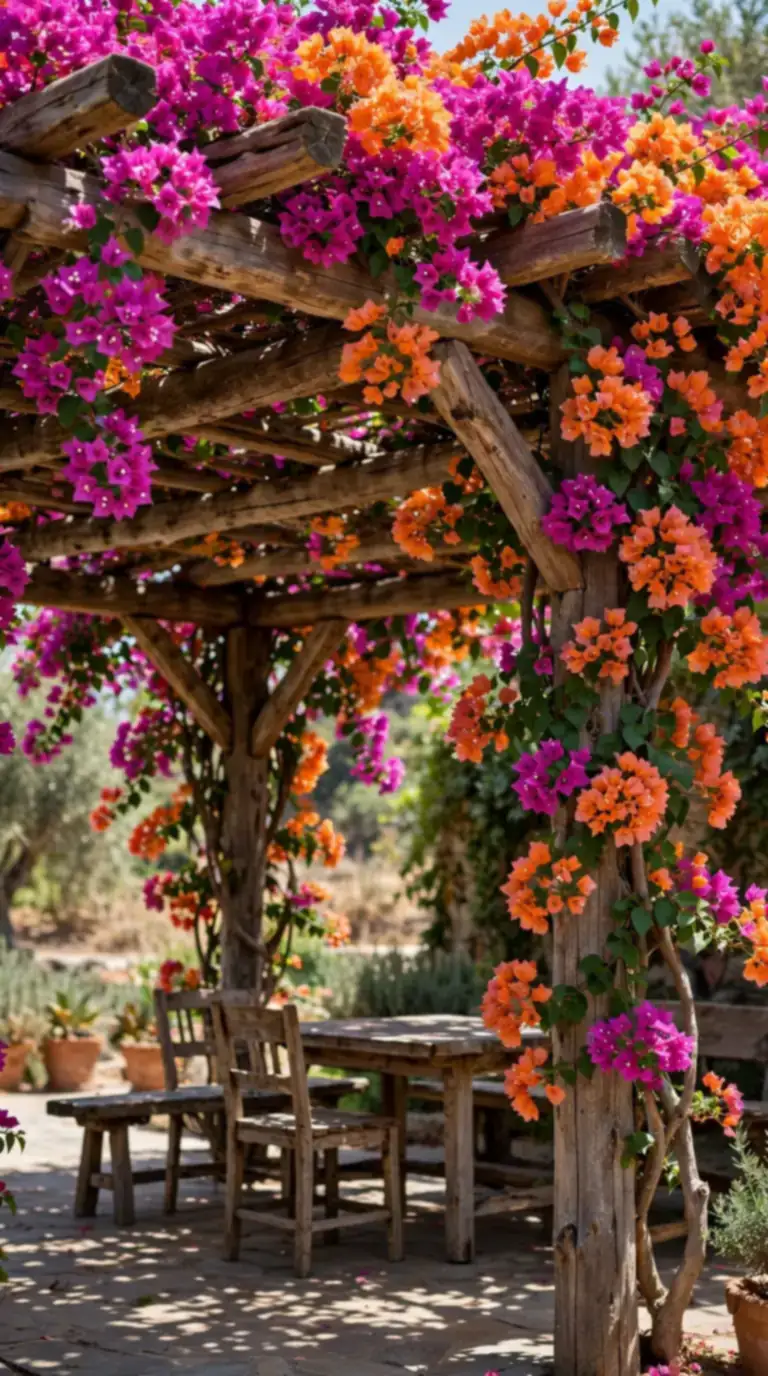
A simple pergola of cedar or pine posts turns spectacular once bougainvillea takes over the beams. The papery bracts come in magenta, tangerine, purple, and white, and a mature vine can bury the whole structure in color from spring to fall. Underneath you get dappled shade that stays cooler than a solid roof.
Train young vines onto the posts with soft ties and prune hard in late winter to keep growth where you want it. The thorns are serious, so gloves are non negotiable. In cold climates, grow bougainvillea in a large pot, enjoy it outdoors all summer, and overwinter it in a bright garage or sunroom.
Papel Picado Banner Canopy Overhead
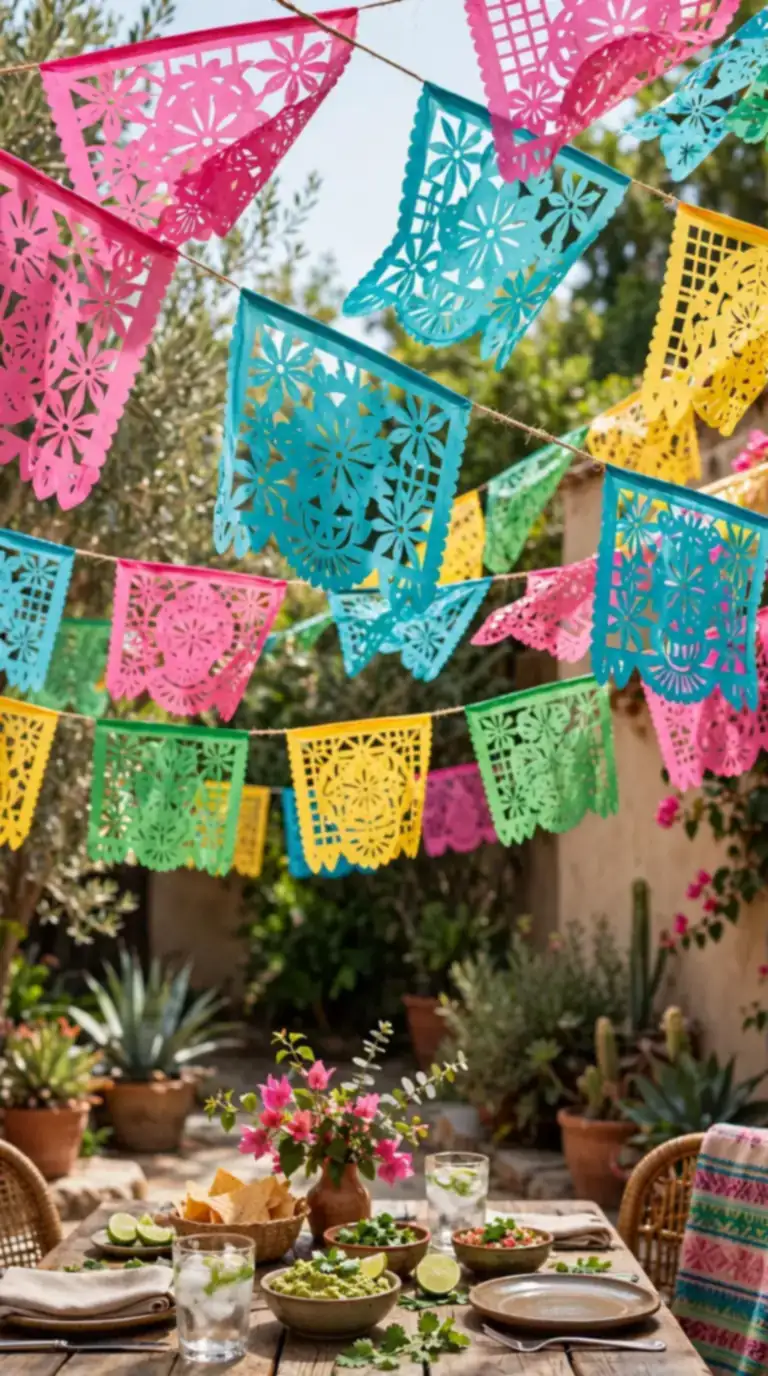
Papel picado, the cut tissue paper banners of Mexican fiestas, makes the cheapest ceiling in decorating. Strung in crisscross lines above a dining table, the bright panels flutter in the breeze and turn an ordinary patio into a party, even on a Tuesday. Buy from Mexican artisans when you can; the cutting work is remarkable up close.
Tissue versions hate rain, so treat them as seasonal or event decor, or choose the sturdier plastic kind for a full summer outdoors. Hang the lines high enough to walk under comfortably and anchor the ends well, since a gusty afternoon will test your knots. Few decorations deliver this much joy per dollar.
Warm String Lights and Farolito Luminarias
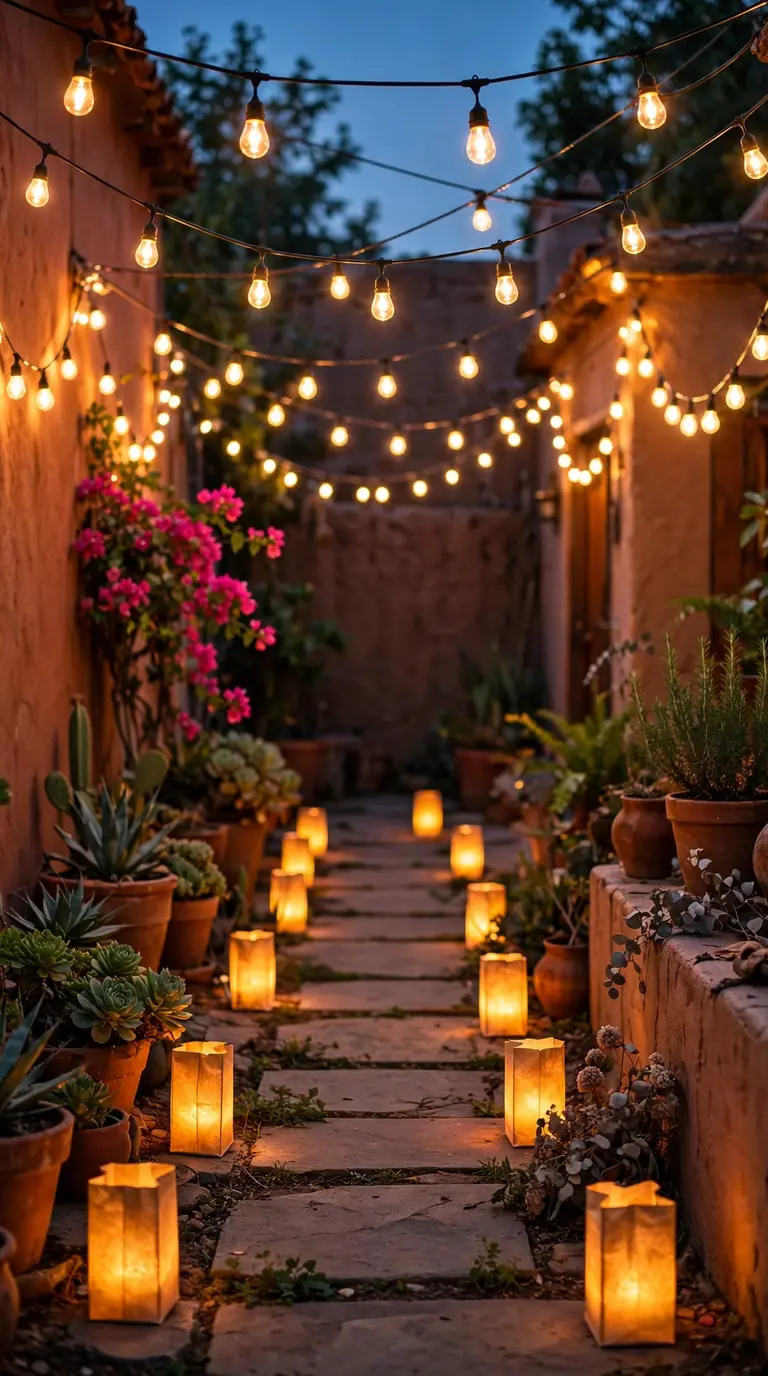
Mexican nights outdoors run on warm light. Swag Edison style string lights between posts or across the pergola, keeping the lines slightly loose so they drape naturally. Then line the paths with farolitos: paper bags folded at the top, weighted with sand, each holding a candle or LED tea light.
Stick to warm white bulbs around 2700K for that golden glow; cool white kills the mood instantly. Solar string lights skip the extension cords entirely, though hardwired sets shine brighter on big nights. The combination of overhead sparkle and low path light makes the yard feel safe, festive, and ready for guests after dark.
An Adobe Fire Pit: The Gathering Heart of These Mexican Backyard Ideas
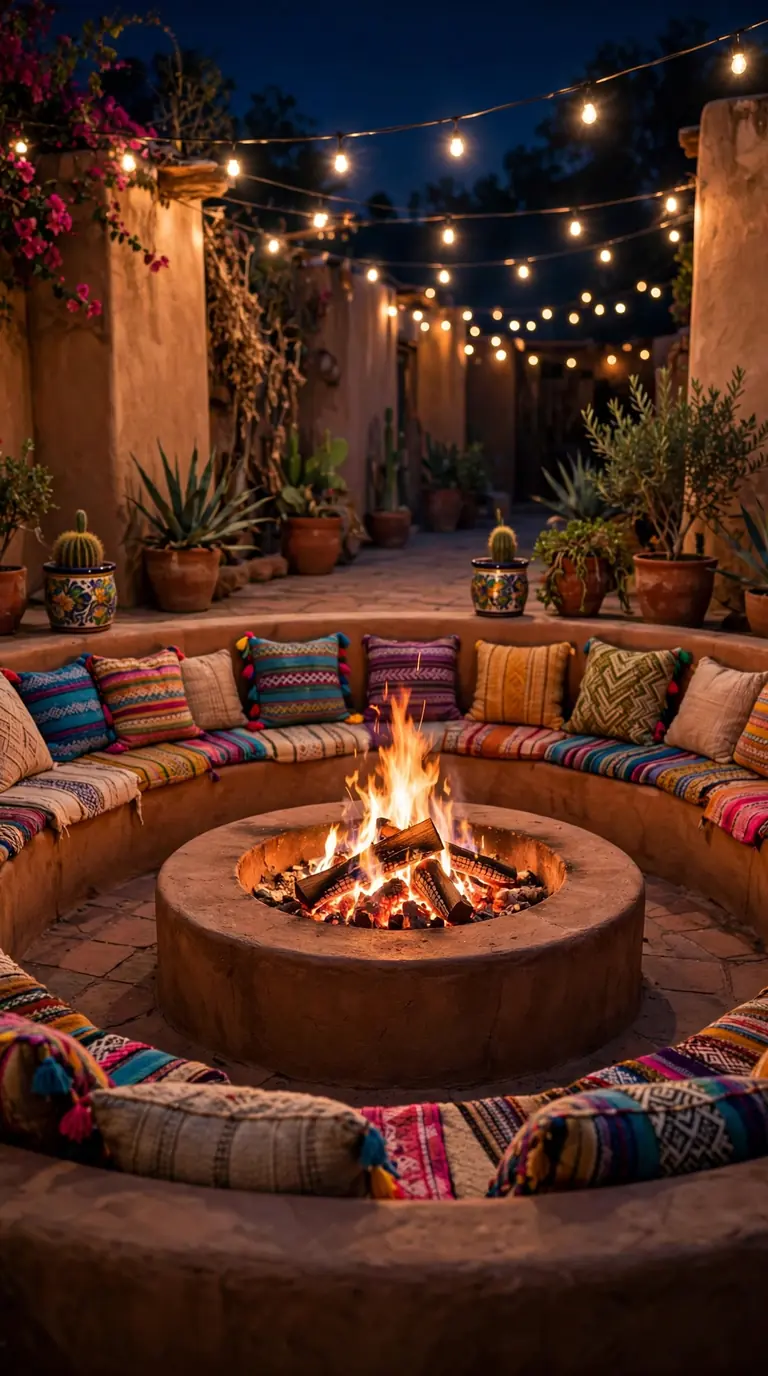
A round adobe or stucco fire pit with curved built in benches copies the old hacienda courtyard, and it works because everyone faces the flames. The earthen walls hold warmth, the circle keeps conversation close, and the whole thing reads as architecture rather than equipment. Toss colorful cushions on the benches and it doubles as daytime seating.
Check local fire codes before you build, since burn rules vary widely, and keep the pit clear of overhanging branches and structures. A metal spark screen is cheap insurance on windy nights. Burn seasoned hardwood for less smoke, and let the ashes cool fully before scooping them into the garden beds, where wood ash can benefit alkaline soils.
Clay Chiminea as a Compact Corner Fireplace
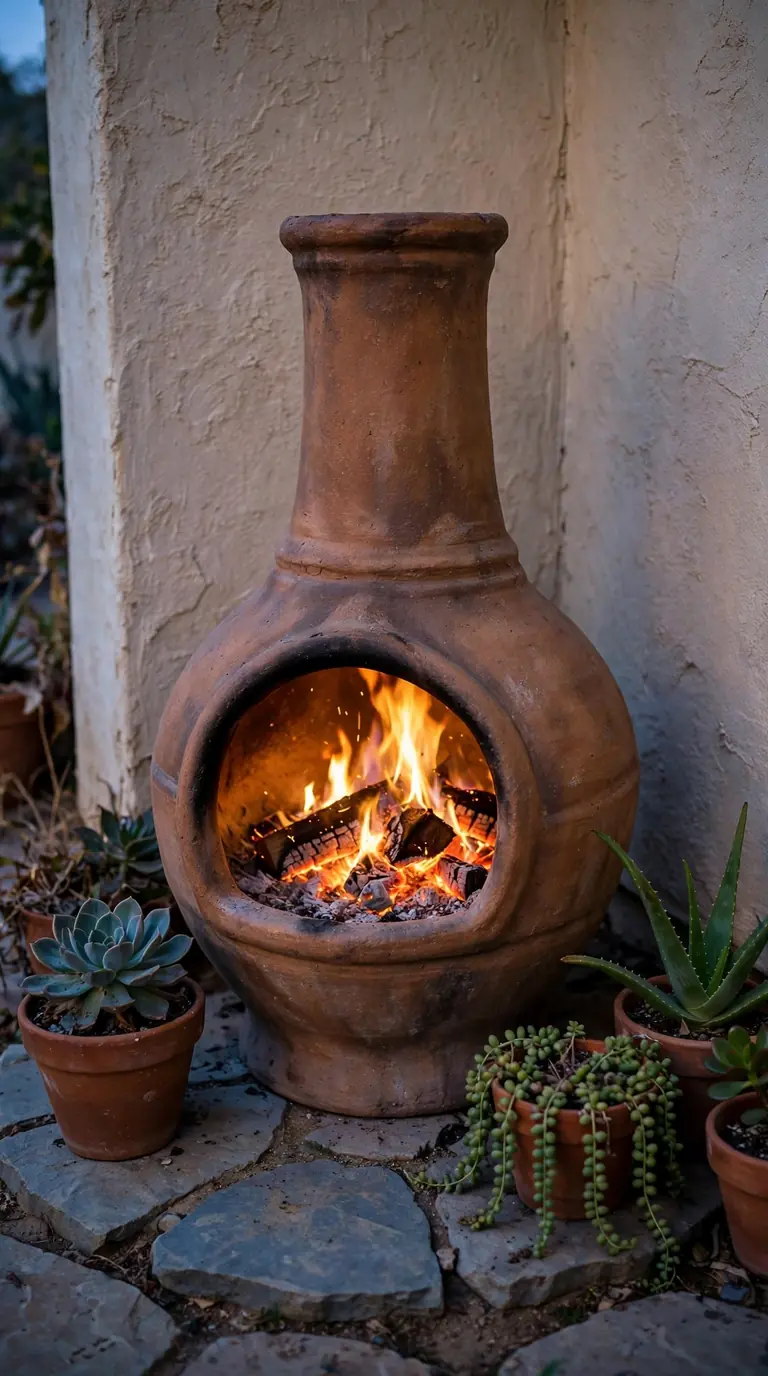
Short on space for a full fire pit? A clay chiminea gives you real fire in a footprint barely wider than a large pot. The bulbous body holds the flames while the tall chimney sends smoke up and away from seated guests, which makes it far friendlier than an open bowl on a small patio.
Cure a new chiminea with several small fires before going big, since thermal shock cracks clay. Always set it on a fireproof base like pavers or a stone pad, never directly on a wood deck, and cover it in rain. In freezing climates, store it under cover for winter, because trapped moisture can split the clay when it freezes.
Outdoor Kitchen With a Tiled Prep Counter
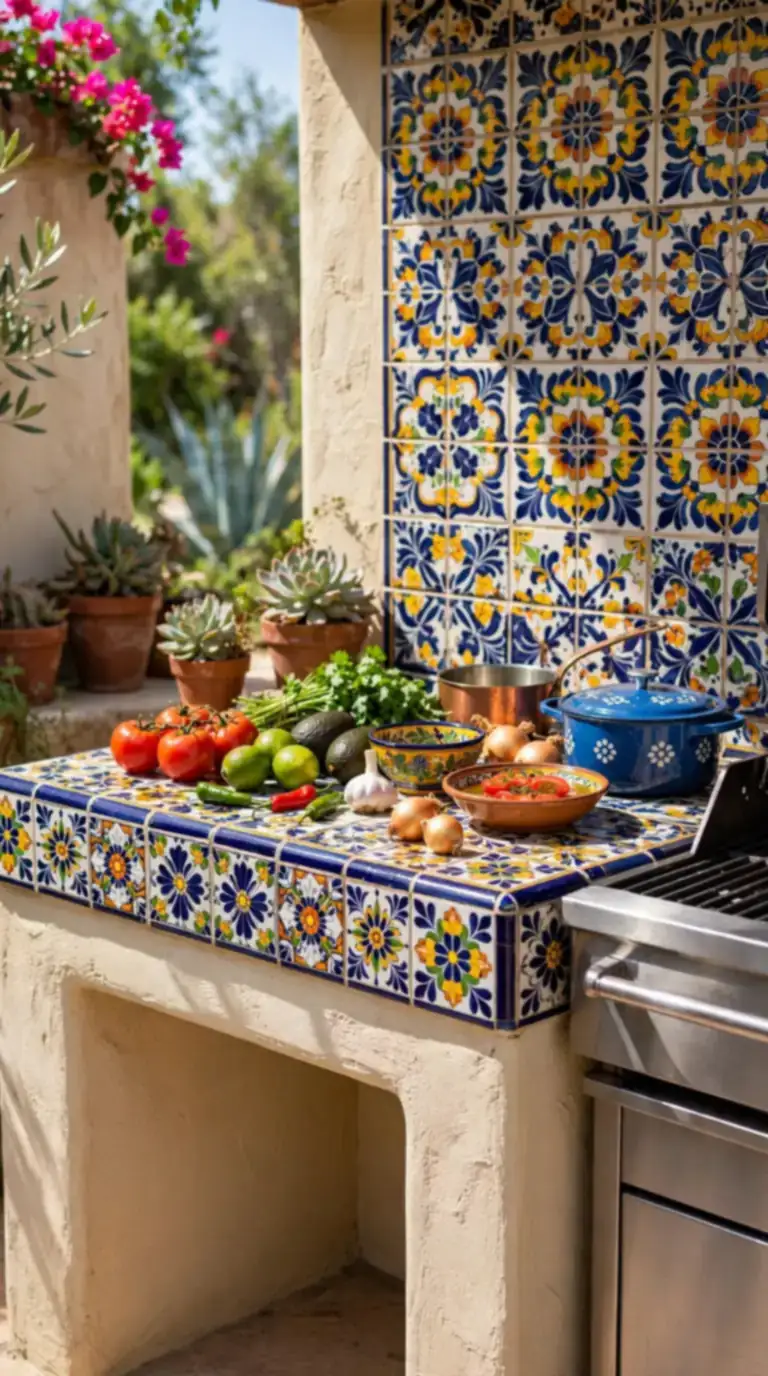
Cooking outside is central to Mexican backyard life, and a simple outdoor kitchen earns its keep fast. A stucco base cabinet topped with a Talavera tiled counter gives you prep space that wipes clean and looks beautiful doing it. Add a grill or a flat top plancha for tacos, and tile the backsplash to tie it to the rest of the yard.
Keep the layout tight: grill, prep counter, and serving spot within a few steps, and put the cook under shade. If a full build is too much, start with a rolling cart and a tiled top; you can expand later. Run a hose bib nearby for easy cleanup, and the whole setup turns weeknight dinners into small events.
Mosaic Tile Dining Table for Long Gatherings
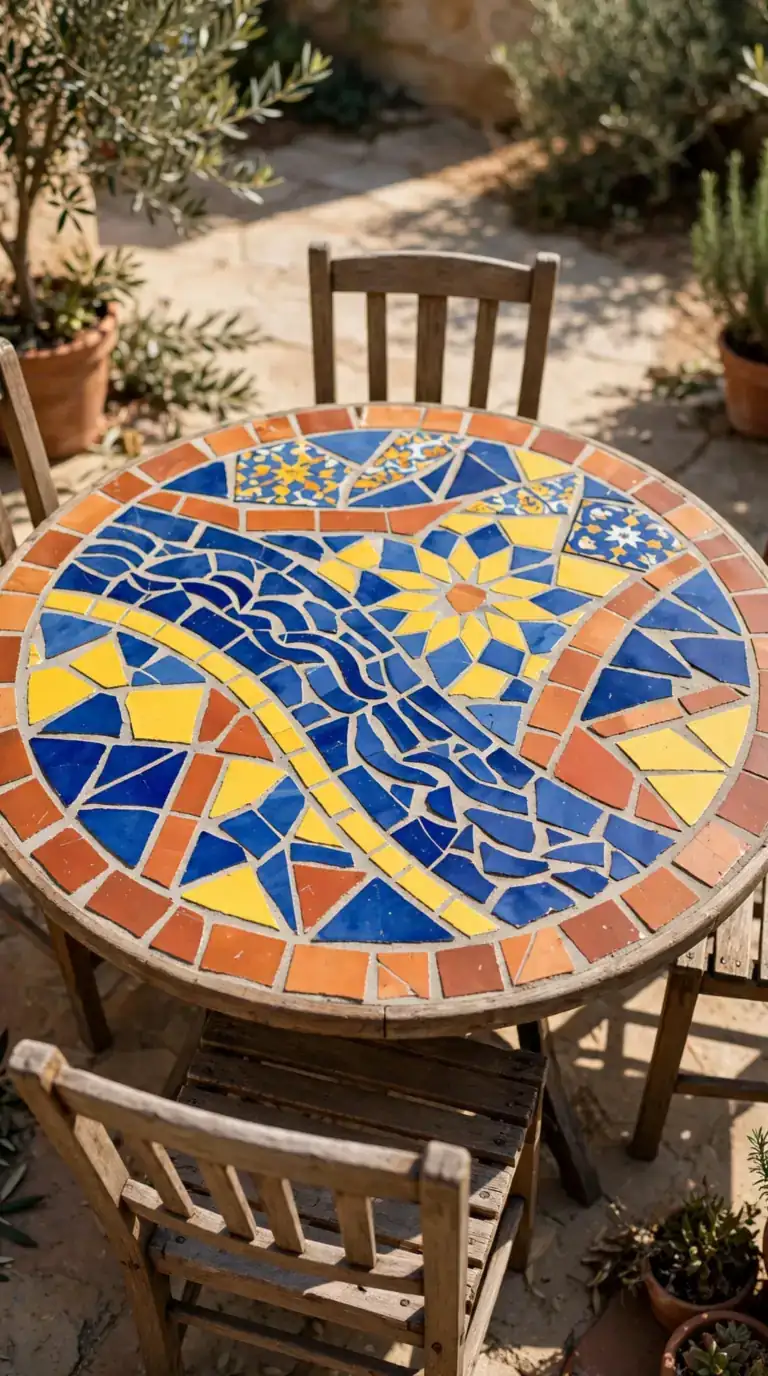
A round dining table surfaced in broken tile mosaic becomes the yard's social headquarters. No two are alike, the colors hide every spill, and the hard surface shrugs off hot dishes straight from the grill. Build it on a sturdy concrete or wood base, since tile and mortar add serious weight.
Seal the grout with an outdoor rated sealer so rain and salsa alike wipe away. Place the table where it will live permanently, because moving it later is a two person job at best. Surround it with simple wood or iron chairs and let the tabletop carry the color story; everything else can stay quiet.
Equipal Leather Barrel Chair Lounge
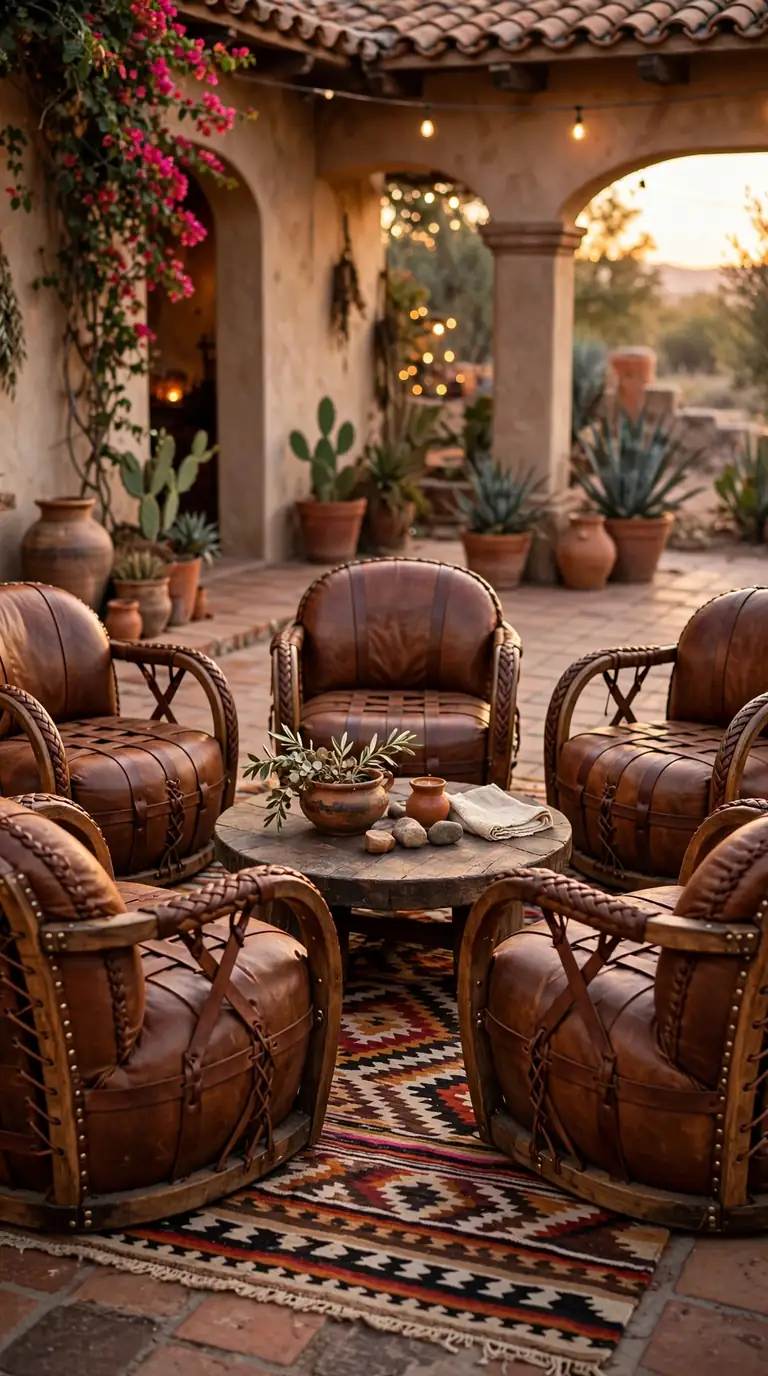
Equipales are the traditional barrel chairs of Jalisco: pigskin leather slung over a cedar frame, low and deep and built for lingering. A circle of them around a fire pit or under the pergola creates a lounge that feels collected over years rather than bought in a weekend.
The leather develops a rich patina with sun and use, which is the whole point, but it appreciates care. Bring the cushions inside during heavy rain and condition the leather once a season if your climate is very dry. Pair equipales with a low wood or iron coffee table and a woven rug, and the corner is done.
Serape Textile Layering on Benches and Seating
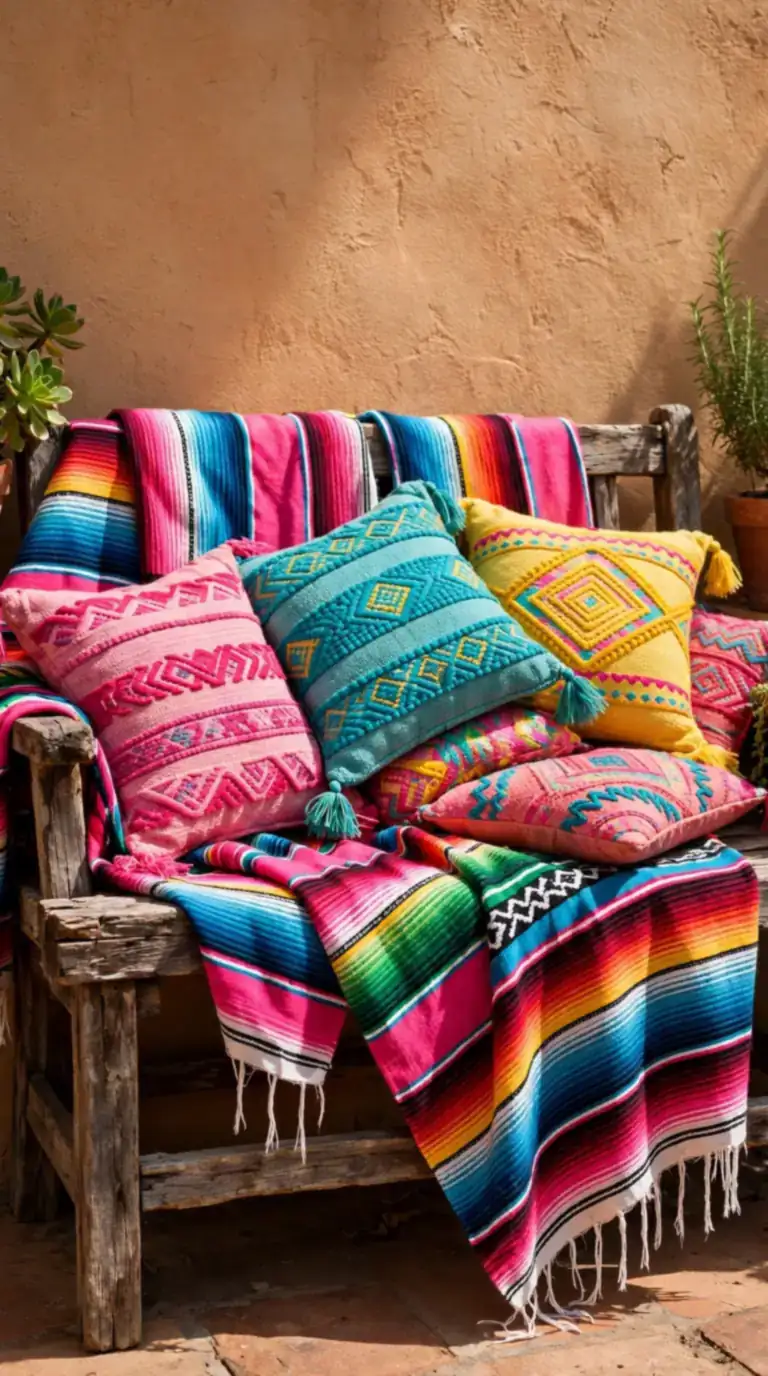
When the bones of the yard are plain wood and stucco, serape blankets and woven cushions do the decorating. Drape a bright striped serape over a bench back, pile cushions in clashing happy patterns on the seats, and the whole space warms up without a single construction project.
Sun fades natural dyes over time, so rotate pieces through the season and store them indoors during storms. Handwoven textiles vary in size, so measure your furniture before ordering. The beauty of this idea is its flexibility: swap textiles with the seasons or for a party, and the yard gets a new personality in ten minutes.
Yucatan Hammock Corner for Slow Afternoons
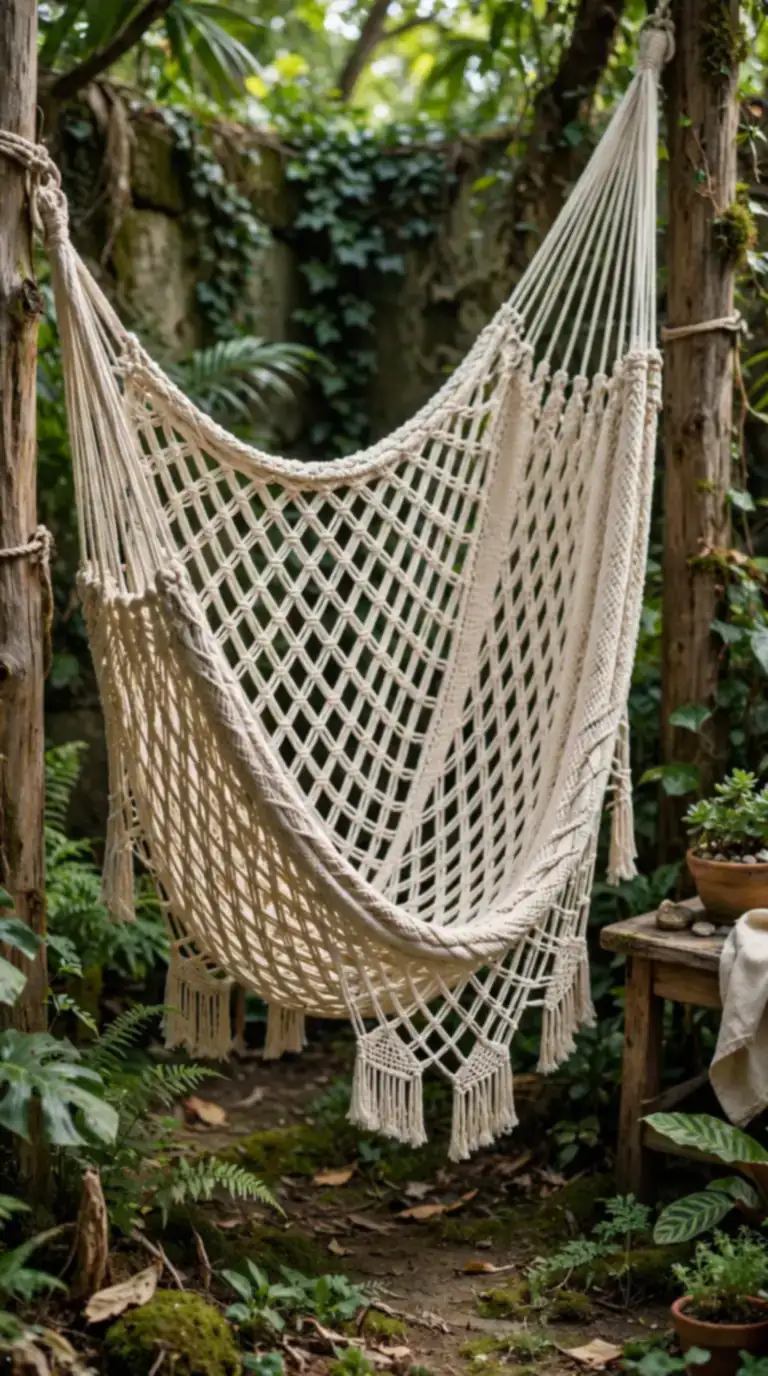
The Yucatan hammock, handwoven from cotton in a diamond net, cradles the body completely differently from a flat fabric hammock. Strung between two sturdy posts or trees in a shady corner, it becomes the yard's official nap station. The open weave breathes, which matters on hot afternoons.
Hang it with a deep sag, roughly a smile shape, and check that your posts or tree straps are rated well above body weight. A small side table within arm's reach holds the book and the agua fresca. Give the hammock a spot with moving air and filtered shade, and it will get more use than any chair you own.
Cobalt Blue Accent Wall With Wrought Iron Art
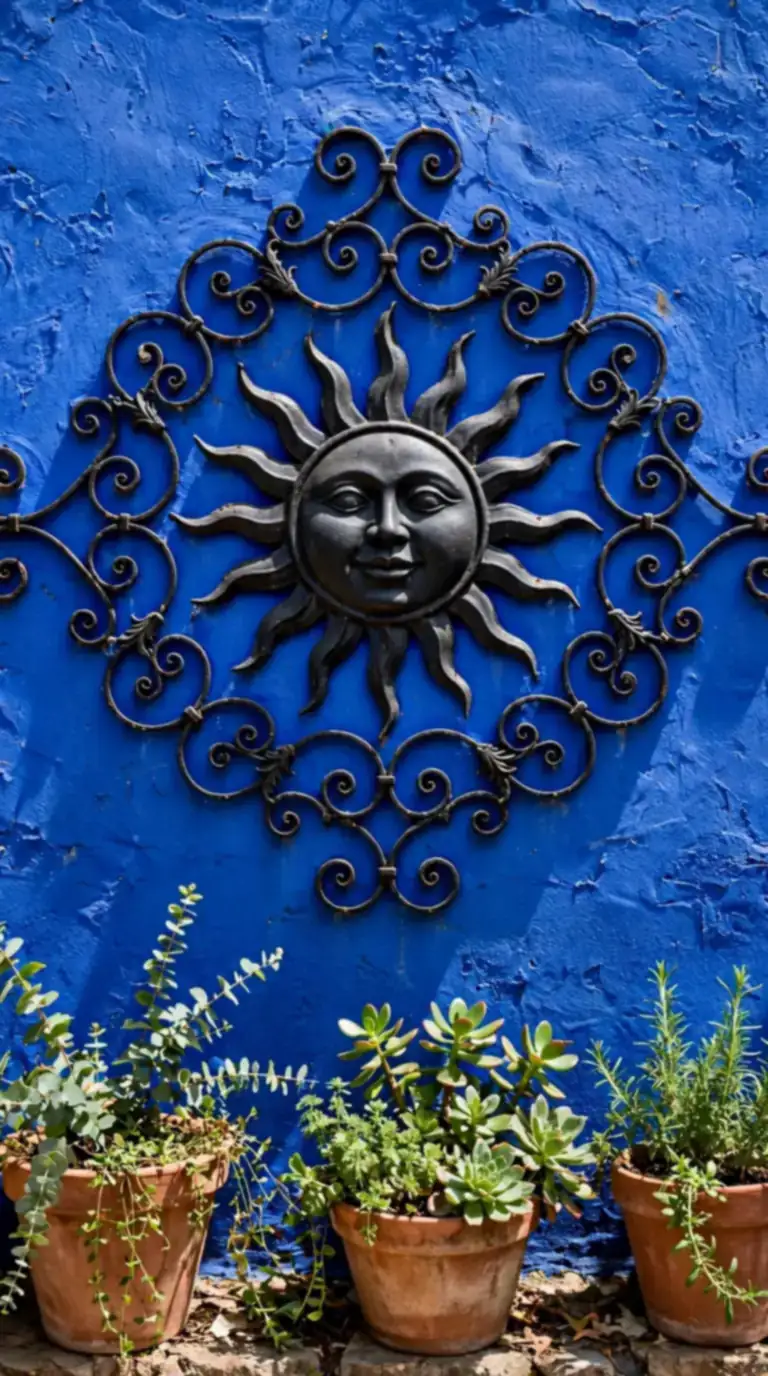
One saturated wall changes a whole yard. Paint a single stucco or fence wall cobalt blue or turquoise, then hang wrought iron pieces against it: a sun face, scrollwork panels, or simple crosses. The dark metal reads crisply against the bright paint, and green plants in front of it look electric.
Use exterior masonry paint and two coats for real saturation, and seal the iron with a rust inhibiting clear coat, touching up chips each spring. Keep everything else around it calm so the wall stays the star. This is the fastest way to get that unmistakable Mexican courtyard feeling on a modest budget.
Wrought Iron Bistro Set for Morning Coffee
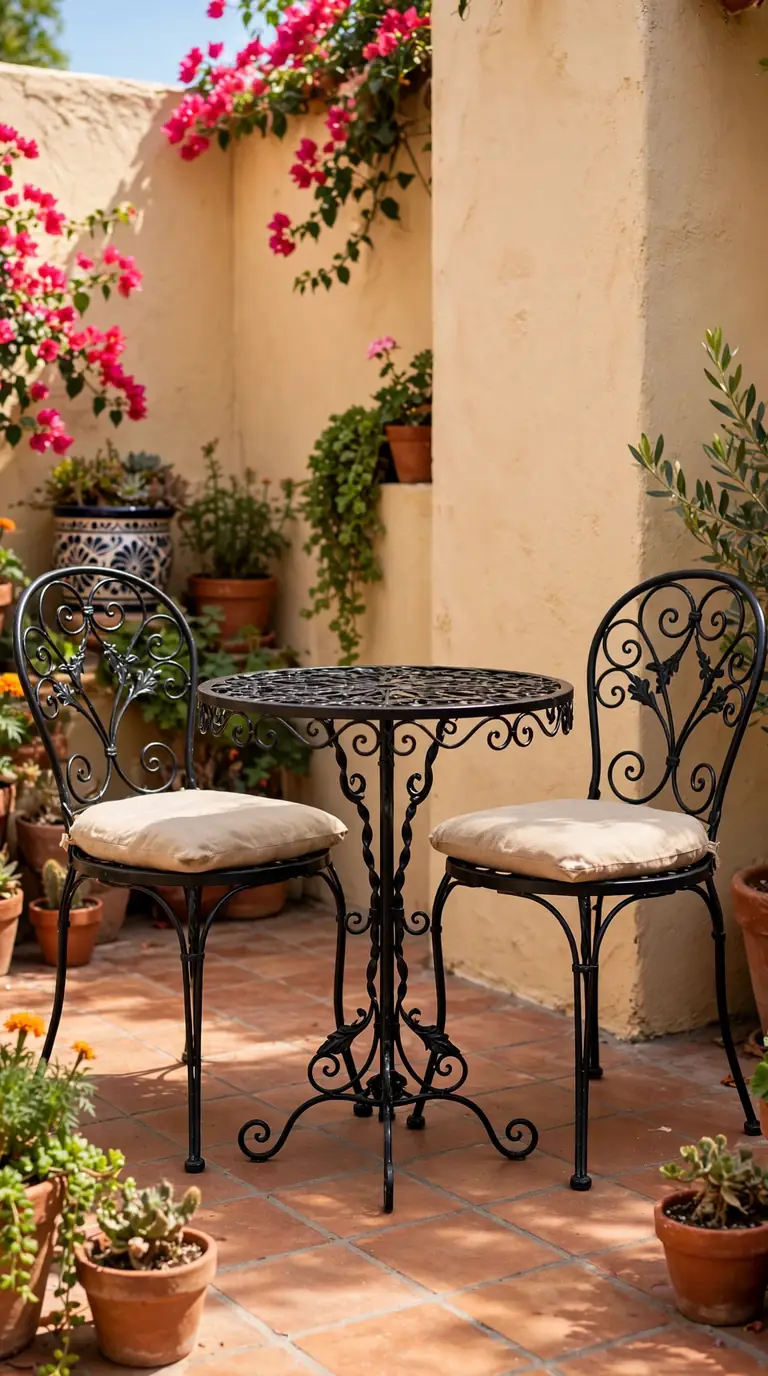
Curved wrought iron chairs and a small round table have anchored Mexican patios for generations. The set takes up almost no room, which makes it perfect for a sunny corner by the kitchen door, and the open scrollwork keeps it visually light. Paint it black for classic contrast or a bright color to join the party.
Add flat cushions for real comfort, since bare iron is honest but hard. Check for rust each spring, wire brush any spots, and touch up with exterior metal paint. A bistro set will not host a dinner party, but for two people and two coffees, nothing beats it.
Punched-Tin Star Lanterns Along the Path
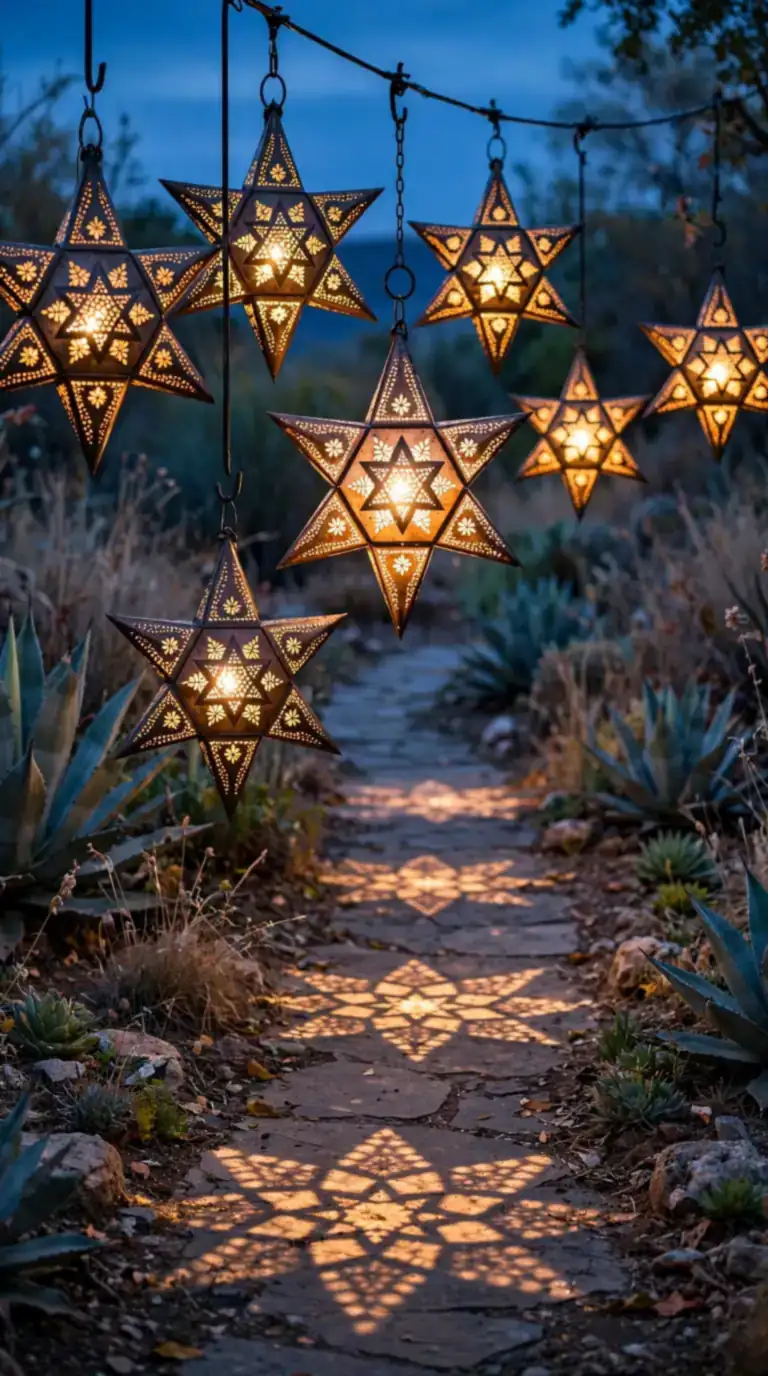
Hojalata, Mexico's punched tin craft, turns a simple lantern into a light show. Artisans punch stars and floral patterns into tin, and a candle or LED inside throws those shapes across the patio in dancing dots. Line a garden path with them or hang a cluster from the pergola beams.
They read beautifully at dusk, which is exactly when you want the yard to shine. Use LED candles if wind or kids make real flames impractical, and bring the tin pieces under cover in long rainy stretches to slow corrosion. A few lanterns cost little and make the whole garden feel considered after dark.
Chile and Herb Garden in Raised Beds
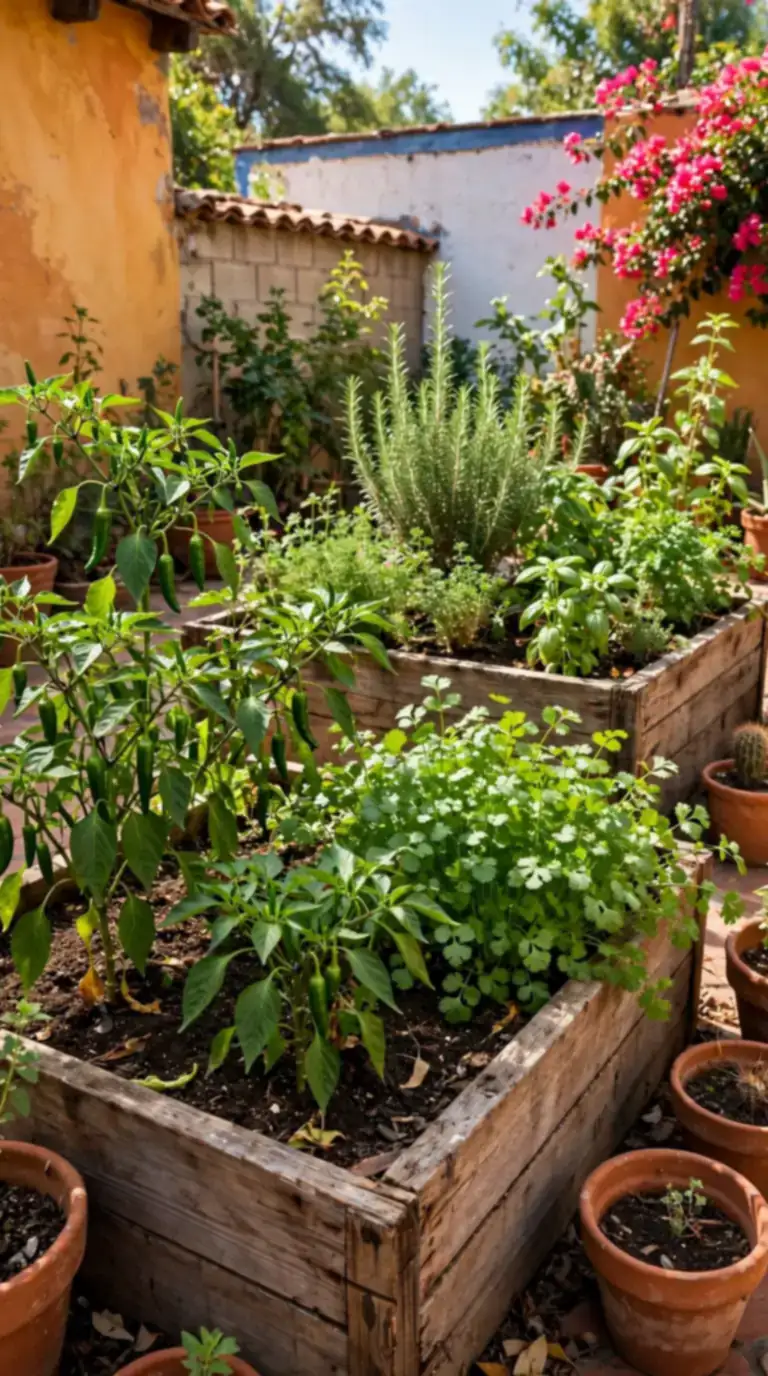
A Mexican backyard earns bonus points for growing its own salsa ingredients. Raised beds or big terracotta pots planted with poblanos, serranos, cilantro, epazote, and Mexican oregano put dinner within arm's reach. The plants themselves are handsome: glossy peppers, feathery cilantro, and oregano's soft mounds.
Give them full sun and consistent water, and harvest often, since picking keeps peppers producing. In short season climates, start seedlings indoors or buy nursery starts after the last frost. Even two pots by the kitchen door count. Fresh chiles and herbs will change your cooking more than any single decor purchase.
Painted Arched Gate as a Colorful Entry
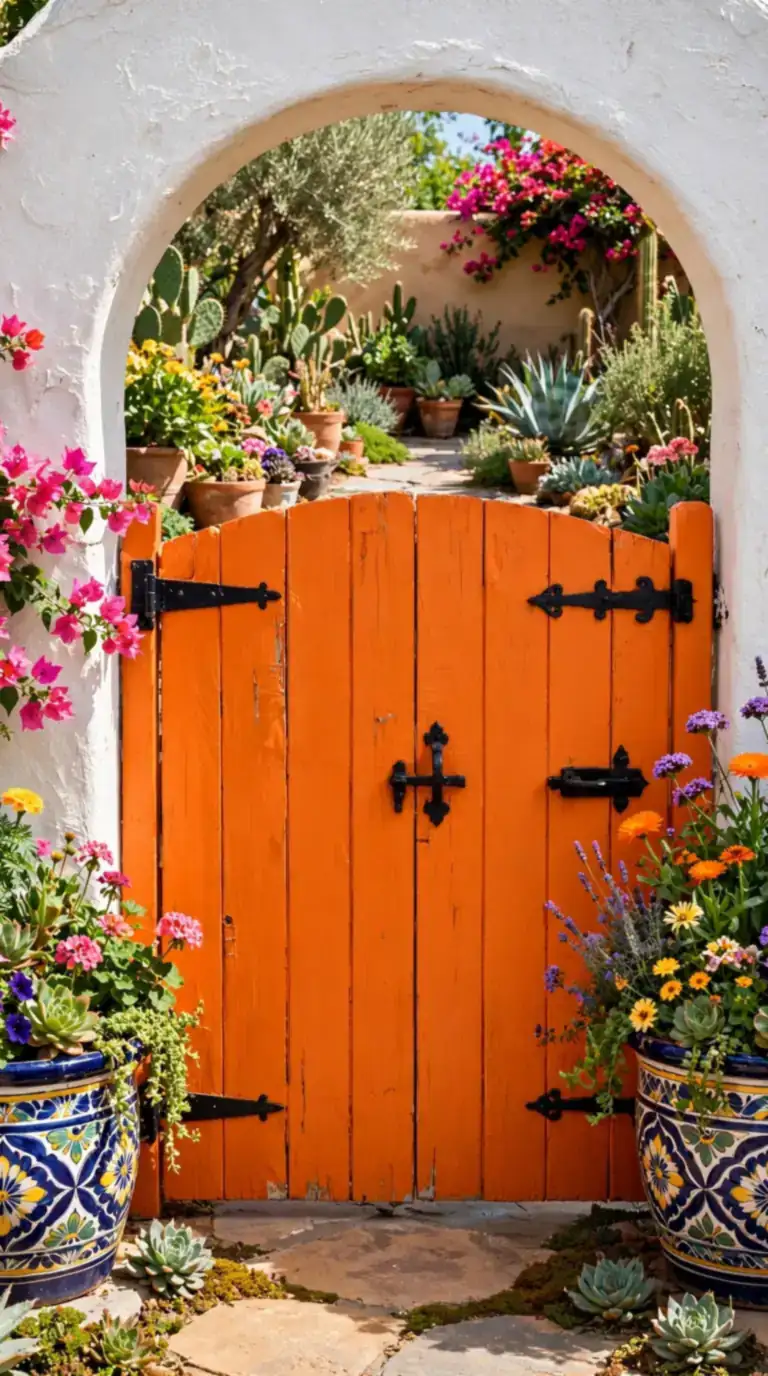
First impressions start at the gate. A wooden gate painted tangerine, fuchsia, or sunny yellow, set under a simple stucco arch, tells visitors exactly what kind of yard waits inside. The arch shape echoes hacienda architecture and softens the transition from street to garden.
Use exterior grade paint and sturdy hinges, since a gate takes daily abuse. If a full arch is beyond your project list, paint the existing gate and flank it with two large Talavera planters for a similar welcome. It is a small project with an outsized payoff every time you come home.
Smart Tips Before You Start
Start with the cheap wins. Paint, textiles, and potted plants can remake a yard in a single weekend, while tile work, fountains, and fire pits deserve proper planning and a realistic budget. Build in that order and the yard improves at every stage instead of sitting half finished.
Respect your climate. Talavera, clay chimineas, and terracotta all suffer in hard freezes, so in cold regions keep tilework to covered spots, store the chiminea under cover, and grow tender plants in pots you can move. Heat is rarely the problem; winter is.
Buy the real thing where it counts. Artisan made Talavera, equipales, and papel picado support the craftspeople behind the style and simply look better than mass produced copies. For the big pieces, authenticity shows.
Planning a gathering in your new space? These fall backyard party ideas for cozy gatherings work in any outdoor setting.
If the tiled prep counter sparked something, explore these outdoor kitchen and bar ideas for your own setup.
Frequently Asked Questions
What colors define a Mexican style backyard?
The classic palette mixes cobalt blue, turquoise, terracotta, sunny yellow, and warm white, with accents of fuchsia or chili red. Pick two or three as your main colors and repeat them across walls, textiles, and pots so the yard feels designed rather than random.
Will Talavera tile survive winter outdoors?
It depends on the tile and the winter. Frost rated Talavera with a proper sealer handles mild freezes, but repeated hard freeze and thaw cycles can crack standard tiles. In cold climates, limit tile to covered areas or choose concrete tiles with a Mexican pattern instead.
What plants suit a Mexican backyard in a cold climate?
Grow agave, cacti, and bougainvillea in pots and move them to a bright garage or sunroom for winter. Hardy alternatives like prickly pear varieties rated for your zone, ornamental grasses, and salvias give a similar look in the ground year round.
How do I keep the look authentic instead of kitschy?
Restraint is the difference. Limit your color palette, choose artisan made pieces over novelty items, and balance bold color with natural materials like wood, stone, and clay. One papel picado canopy reads festive; ten plastic sombreros read like a theme restaurant.
Is a Mexican style backyard expensive to create?
It does not have to be. Paint, secondhand terracotta pots, serape textiles, and string lights deliver most of the look for very little money. Save the bigger budget for one or two anchor pieces, like a tiled fountain or a fire pit, that give the yard its identity.
A Yard Made for Gathering
Mexican backyard style works because it puts people first: fire to gather around, food close at hand, shade for the afternoon, and color everywhere you look. Pick the two or three ideas that fit your space and start there. A yard with a fire pit, a hammock, and a string of warm lights already has everything a good evening needs.