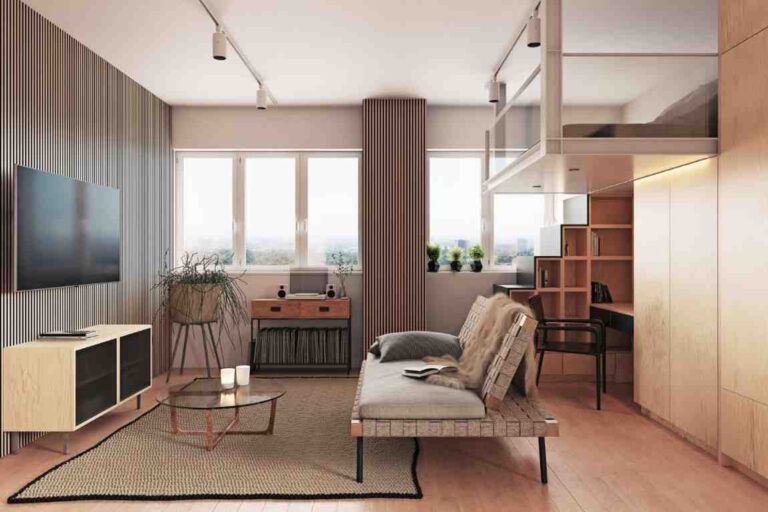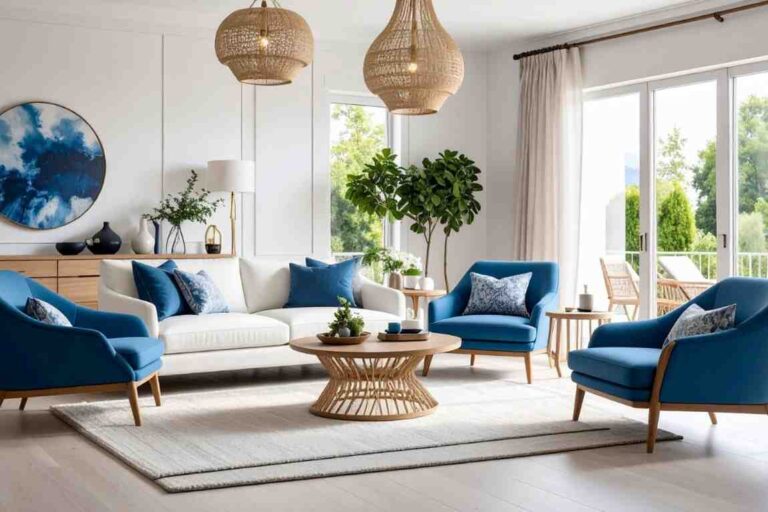
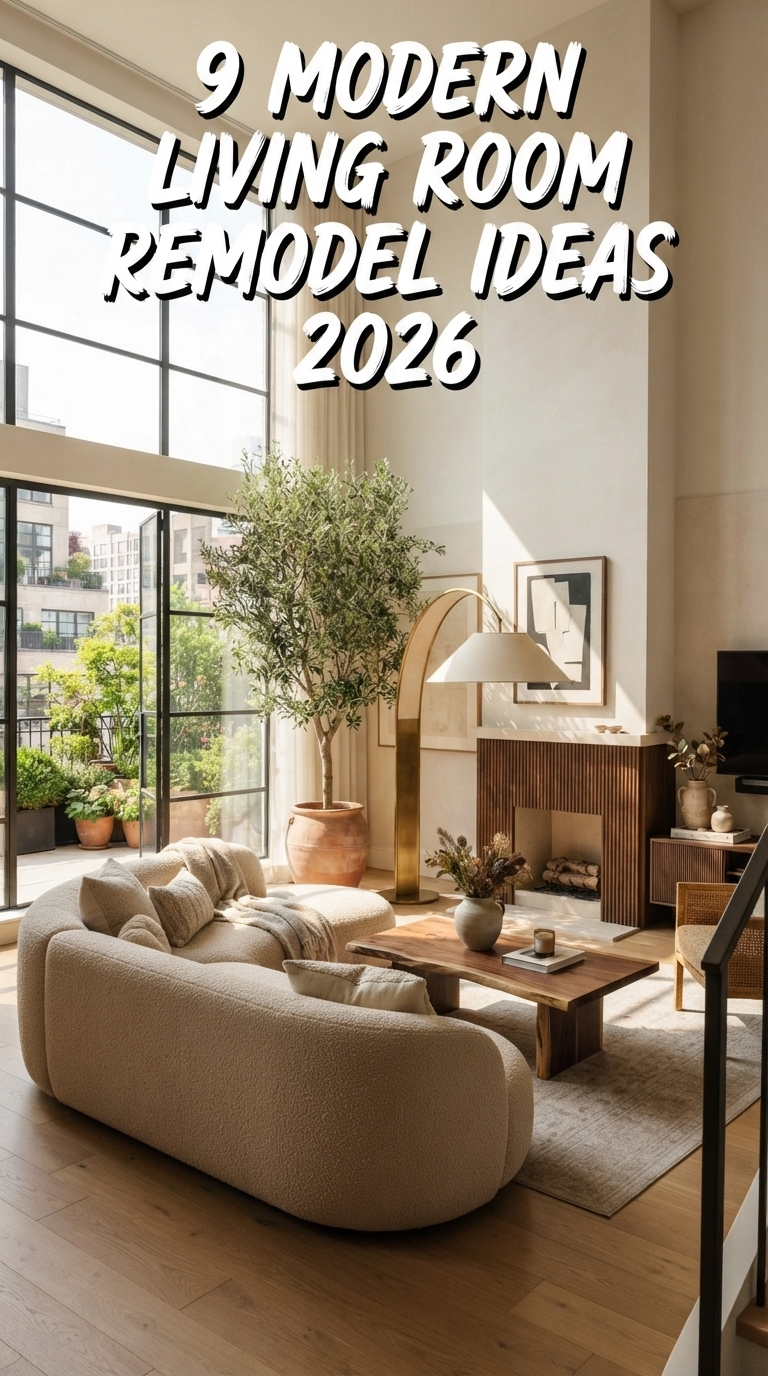
Refreshing your living room for 2026 requires a shift toward tactile comfort and intentional, soulful design. We are moving away from stark minimalism and embracing spaces that prioritize organic shapes, rich natural textures, and a lived-in warmth that feels personal. Whether you are planning a full renovation or a curated update, these nine design concepts offer a roadmap to creating a sanctuary that balances modern functionality with timeless aesthetic appeal. From integrating raw architectural elements to mastering the art of low-profile seating, this guide provides the inspiration you need to build a room that feels both current and enduring. Let’s explore the trends shaping the heart of the home.
1. Sculptural Organic Minimalism
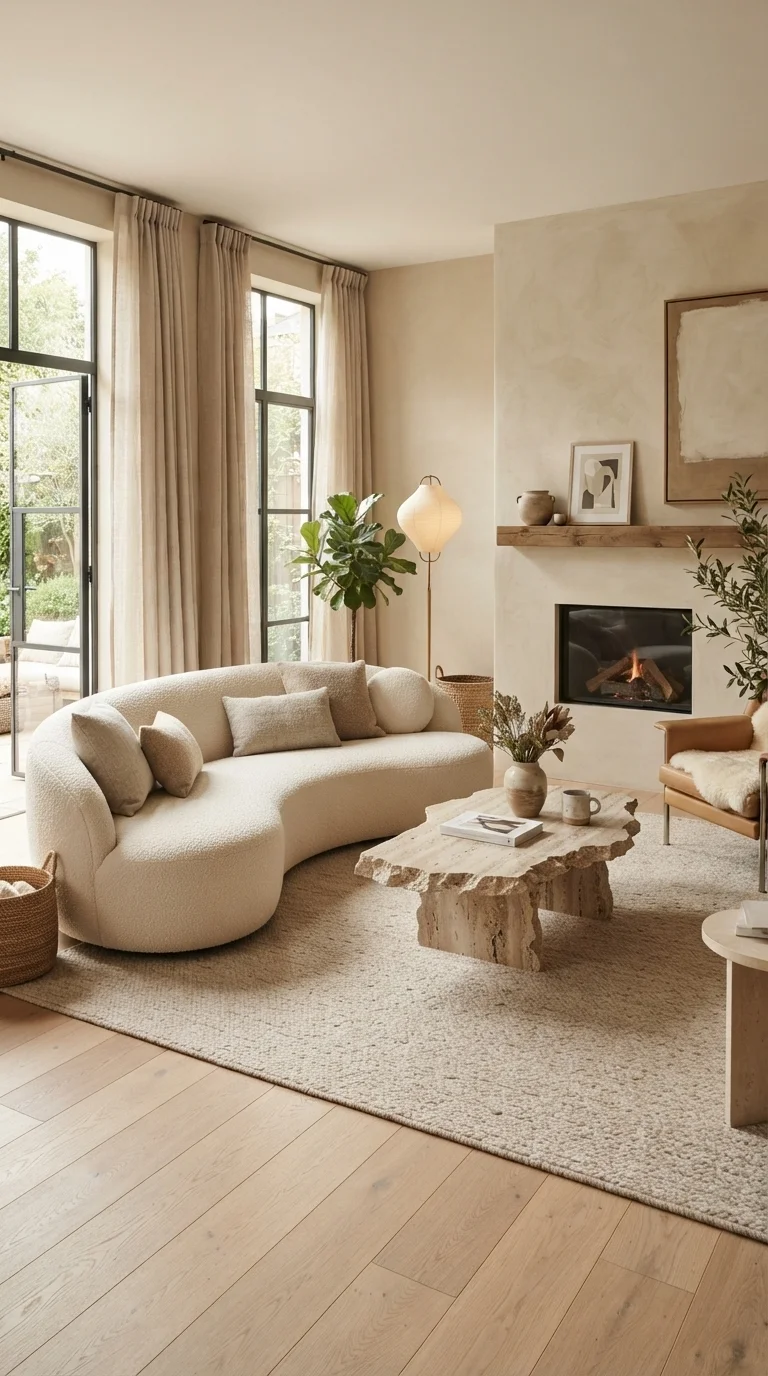
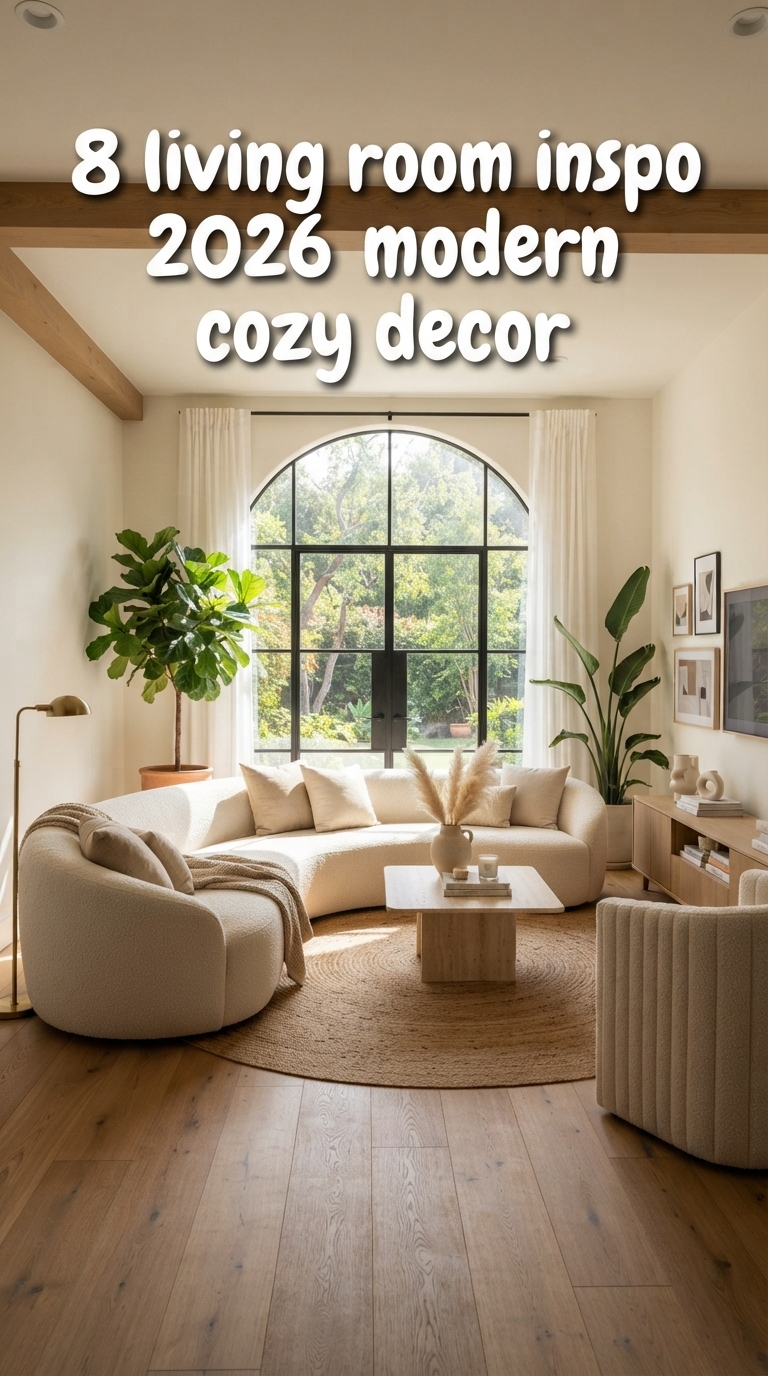
Organic minimalism centers on soft edges and natural forms. By replacing sharp-cornered furniture with curved sofas and rounded accent chairs, you instantly soften the room’s energy. A plaster-finished fireplace serves as a grounding focal point, adding texture without overwhelming the space with color. This look works best in rooms with high ceilings where the sculptural furniture can act as a statement piece. It is ideal for homeowners who want a tranquil, gallery-like atmosphere that remains cozy enough for daily lounging.
2. The Earthy Terracotta Palette
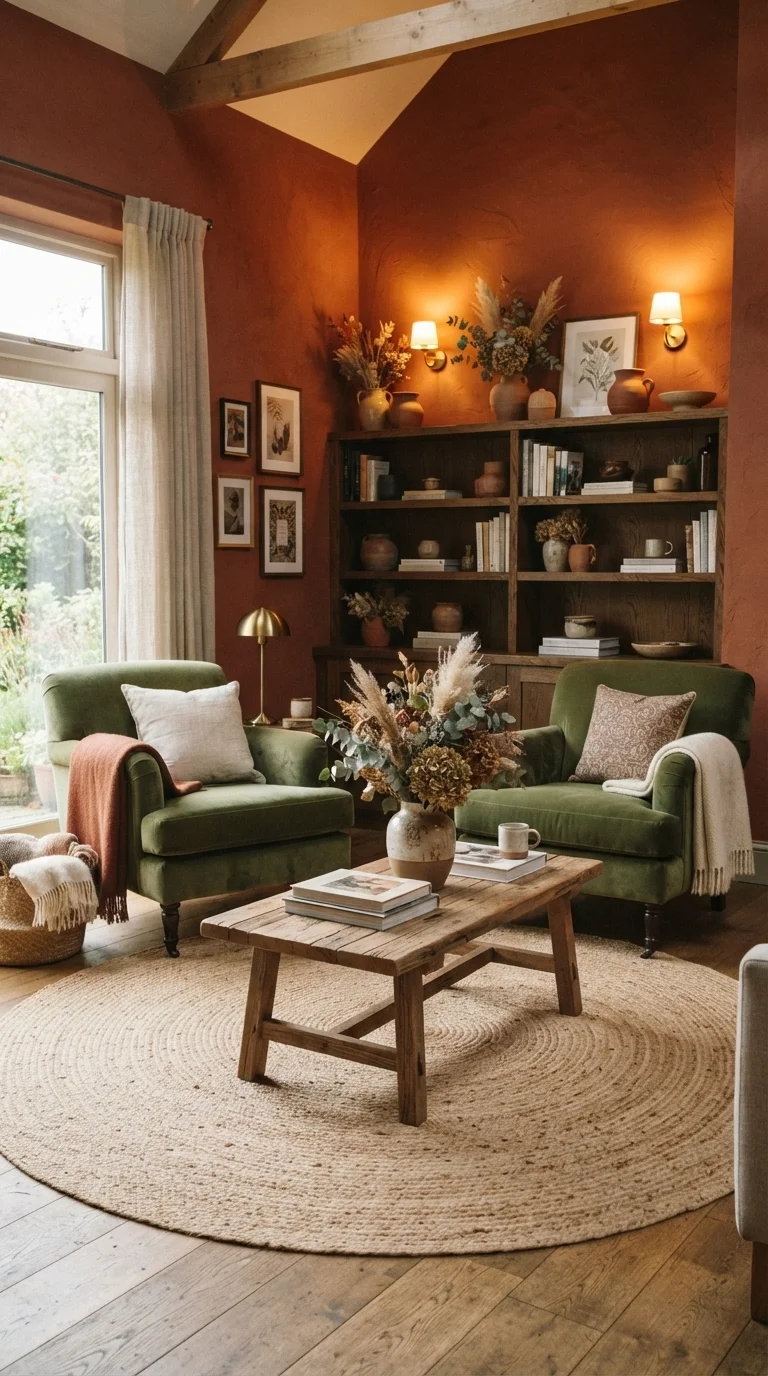
Moving beyond the classic all-white aesthetic, deep terracotta tones introduce a grounded, sophisticated warmth to the living area. Pair these rich, sun-baked hues with contrasting textures like velvet green seating or raw jute rugs to prevent the room from feeling flat. This palette creates a cocooning effect, perfect for evening relaxation. It is a bold choice for those who want to move away from neutrals while maintaining a nature-inspired, cohesive flow throughout their home.
3. Integrated Hidden Technology
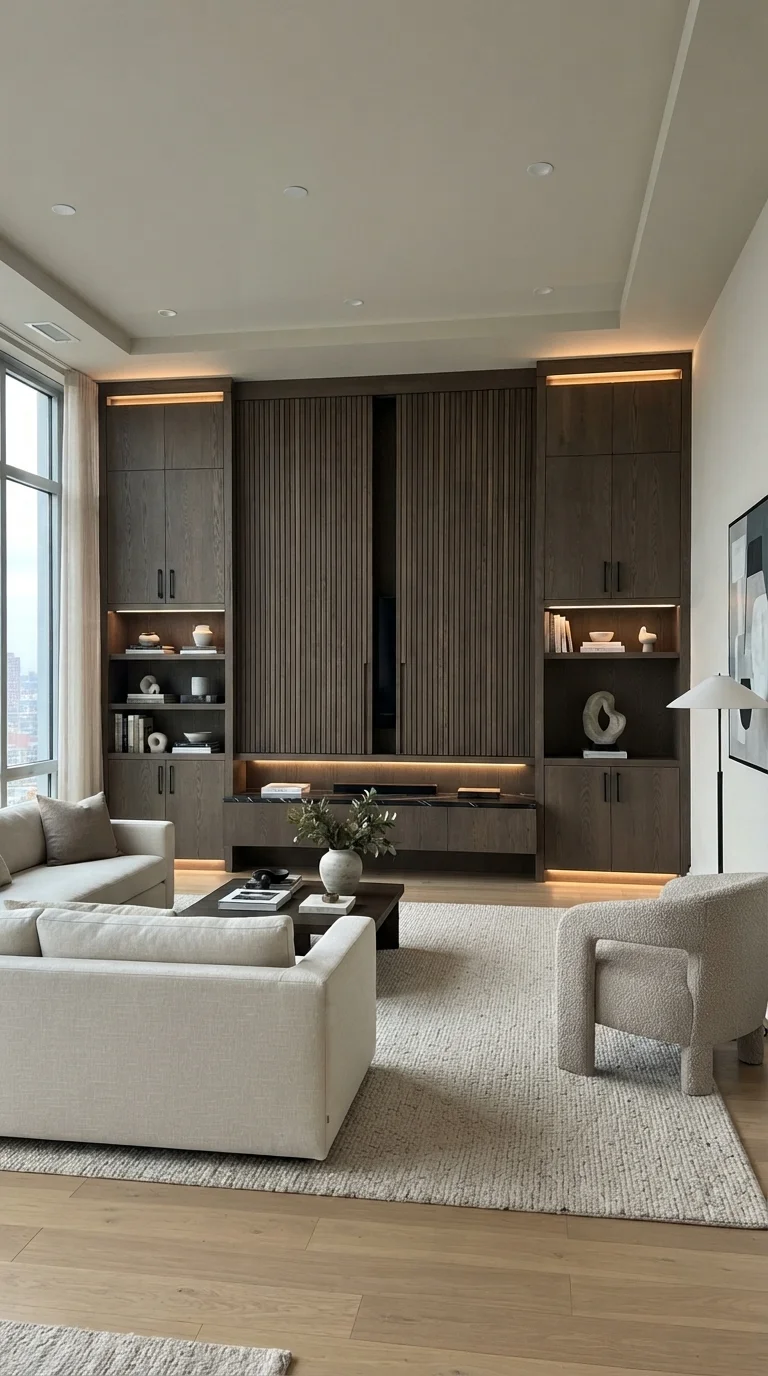
Modern living demands technology, but your media setup does not need to dominate the room’s visual landscape. Custom floor-to-ceiling cabinetry with integrated sliding panels hides the television when not in use. This keeps the focus on your curated art, books, and decor rather than a black screen. It is a functional solution that maximizes storage while maintaining a clean, clutter-free aesthetic. This approach is perfect for small apartments or open-concept homes where visual harmony is essential.
4. Multi-Layered Natural Lighting
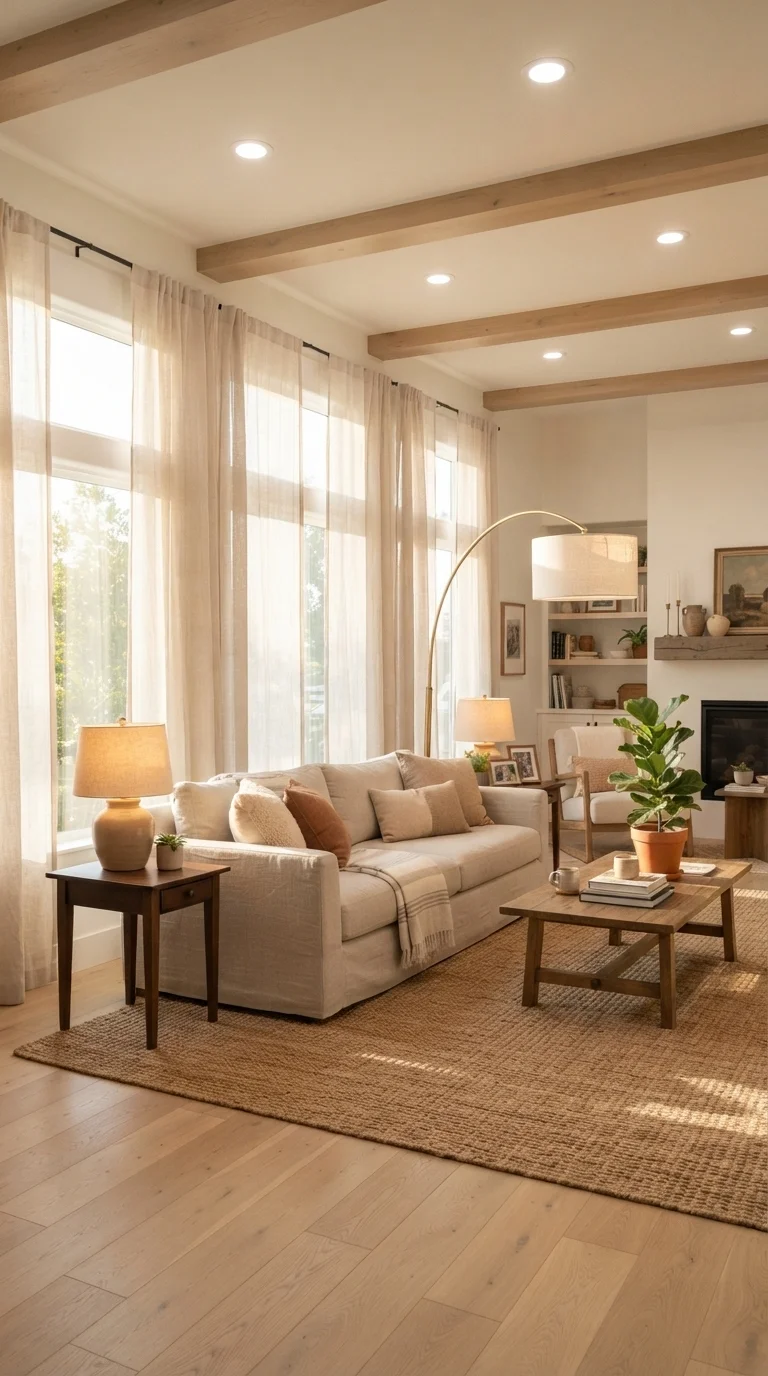
Effective lighting design requires layering different sources to accommodate various moods throughout the day. Start with sheer, floor-to-ceiling linen curtains to diffuse harsh sunlight, then add sculptural floor lamps for task lighting. Incorporating dimmable recessed lighting ensures the room remains functional after dark. Think of light as an architectural material that defines the space’s character. You might even consider coastal-inspired lighting fixtures to add a soft, breezy texture to your ceiling design.
5. Statement Stone Flooring
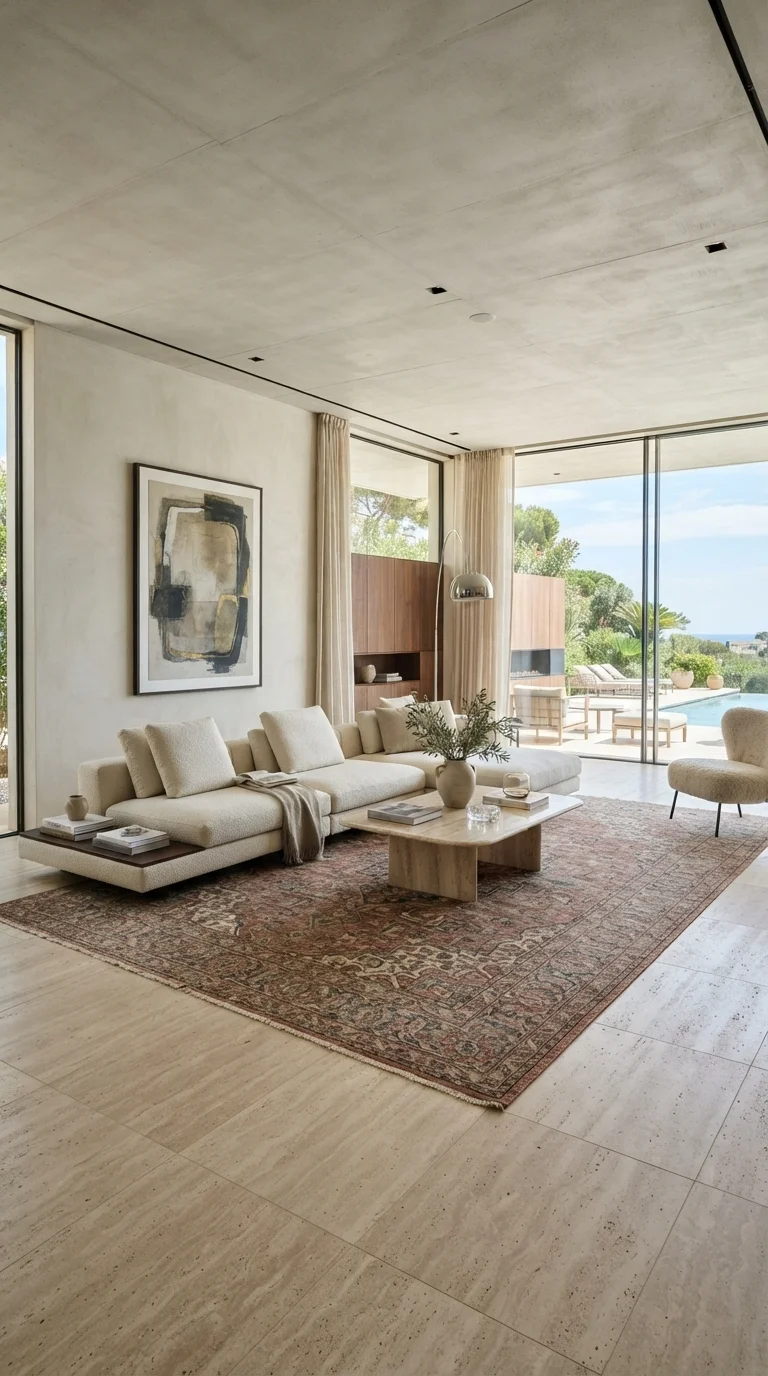
Travertine and honed limestone are reclaiming their place in modern living rooms, offering a cool, durable base that feels inherently premium. To balance the hardness of the stone, layer in a large, high-pile vintage Persian rug. This combination creates a beautiful contrast between the rigid floor and the soft textiles. It is an excellent choice for homeowners living in warmer climates or those looking for a timeless, low-maintenance foundation that improves with age.
6. Biophilic Wall Installations
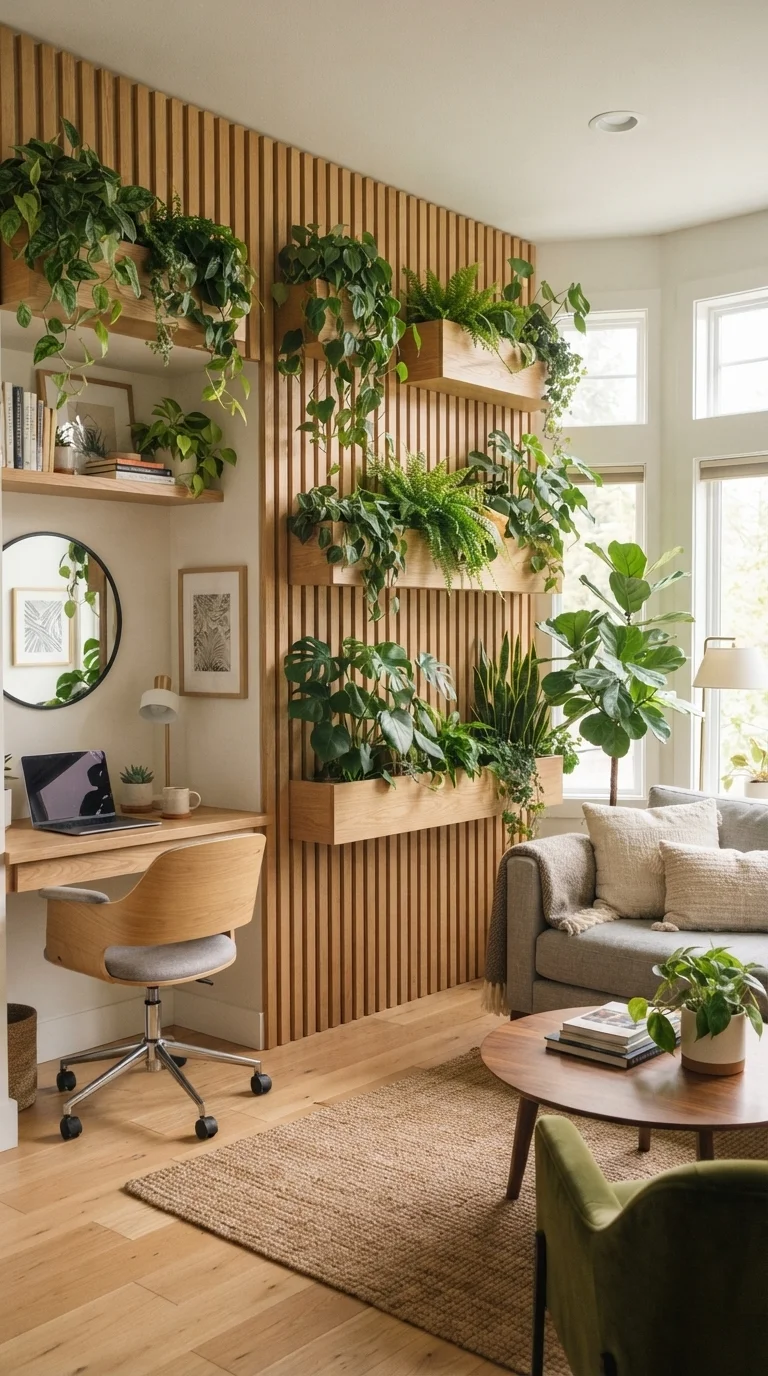
Bringing the outdoors in is a hallmark of 2026 design. A biophilic wall installation uses vertical wood slats combined with integrated planters to create a living focal point. This adds a sense of life and vitality to the room, helping to purify the air and improve overall mood. It works beautifully in spaces that lack large windows or direct garden views. Keep the maintenance manageable by choosing low-light plants like pothos or snake plants.
7. Modular Low-Profile Seating
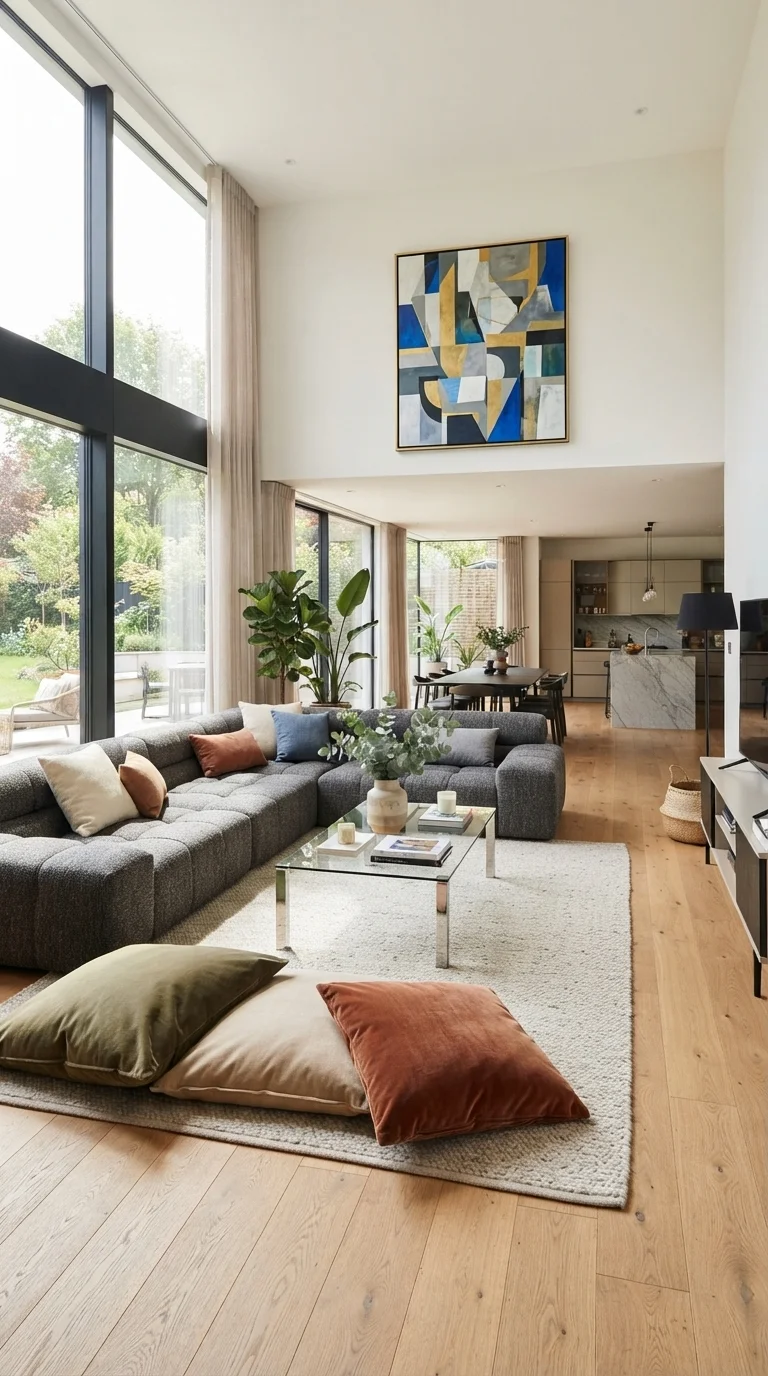
Low-profile, modular seating encourages a relaxed, informal way of living. Because the furniture sits closer to the ground, it makes the ceiling feel higher and the overall room more expansive. Modular pieces offer the flexibility to reconfigure the layout for large gatherings or quiet nights in. It is a smart investment for families or those who frequently entertain, as the pieces can be moved to suit different occasions throughout the year.
8. Texture-Rich Accent Walls
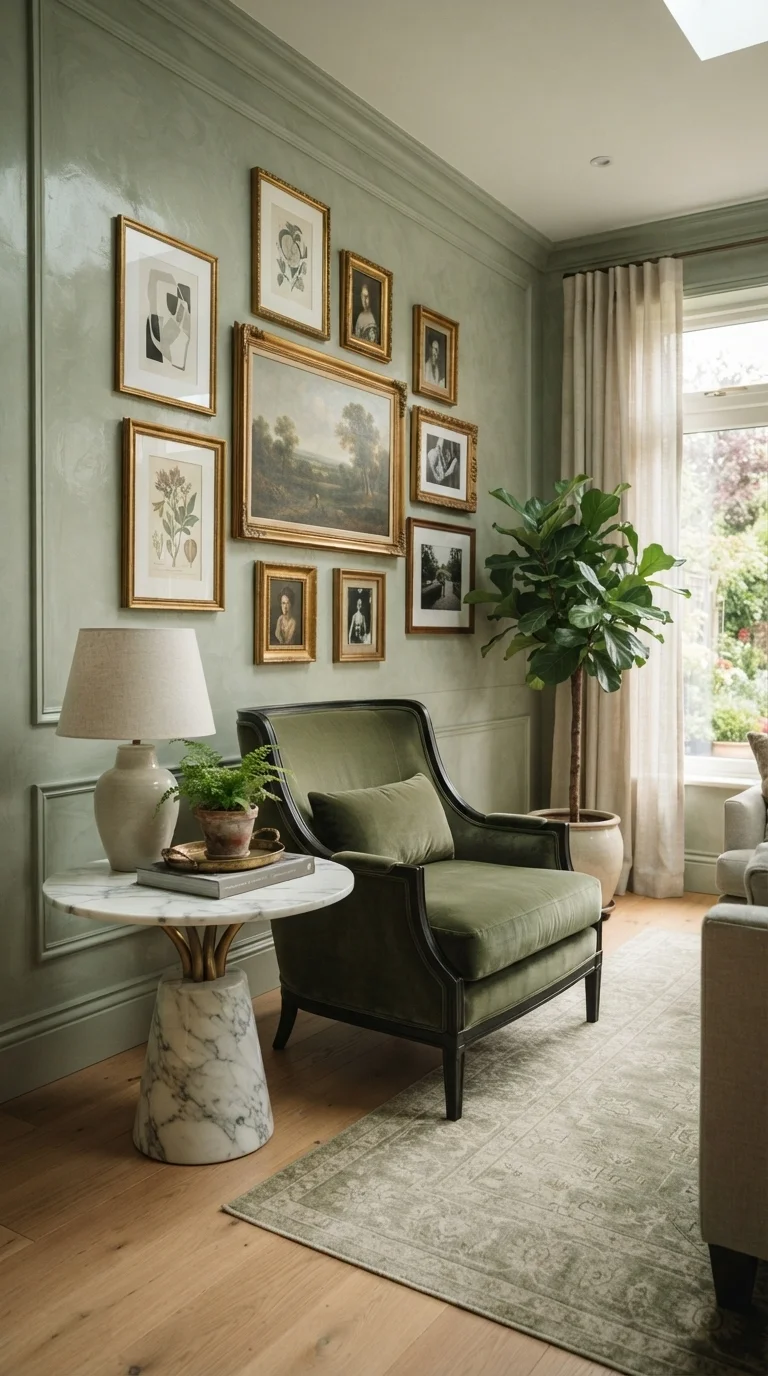
Instead of relying on paint color alone, introduce depth through physical texture on your walls. Venetian plaster or lime wash finishes provide a subtle, cloudy variation that changes as the light shifts throughout the day. This creates a tactile, sophisticated backdrop for your artwork and furniture. It is a relatively simple way to elevate a standard room into a bespoke, designer-style space without needing major structural changes or expensive renovations.
9. Curated Vintage Collectibles
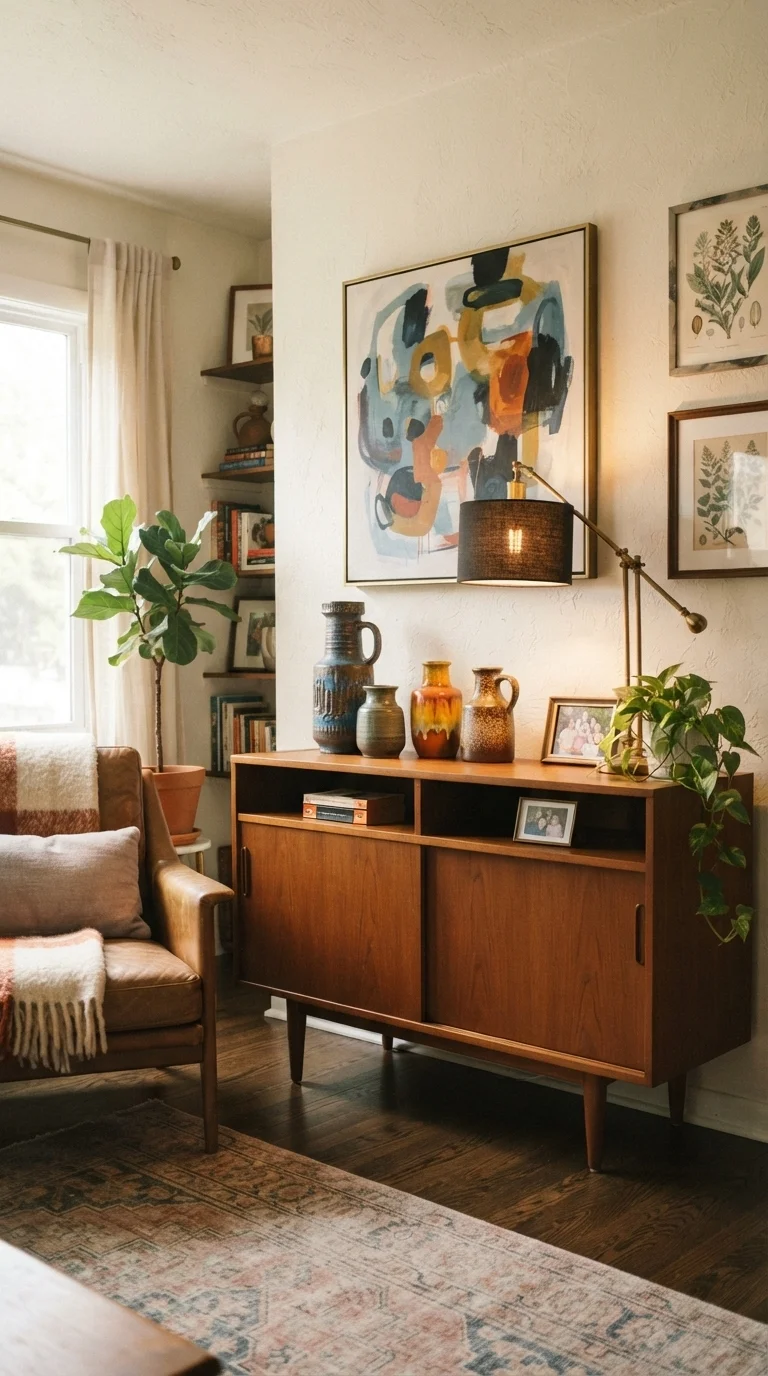
The most interesting rooms feel like they have been collected over time. Incorporate vintage pieces, such as a mid-century credenza or unique ceramic pottery, to add personality and history to your modern home. These items act as conversation starters and prevent the space from looking like a catalog showroom. By mixing these older, character-rich objects with new, clean-lined furniture, you create a balanced, soulful environment that feels authentic to your own story.