Every January, pavements fill with sagging bins stuffed full of snapped tinsel, glitter-shedding baubles and cheap plastic wreaths. Most of it was bought in November, enjoyed for six weeks and binned without a second thought. Decorating beautifully does not have to work that way. Sustainable Christmas decor proves that a home can look festive, smell wonderful and feel properly Christmassy without filling the bin come January.
The fifteen ideas below lean on living plants, foraged greenery, dried fruit, fabric you keep for years and lights that sip electricity rather than gulp it. Each one is practical, easy to visualise and gentle on the planet. Pick two or three that suit your home, or go all in and give your whole festive season a greener look.
1. Plant It After Christmas: A Living Potted Tree for Sustainable Christmas Decor

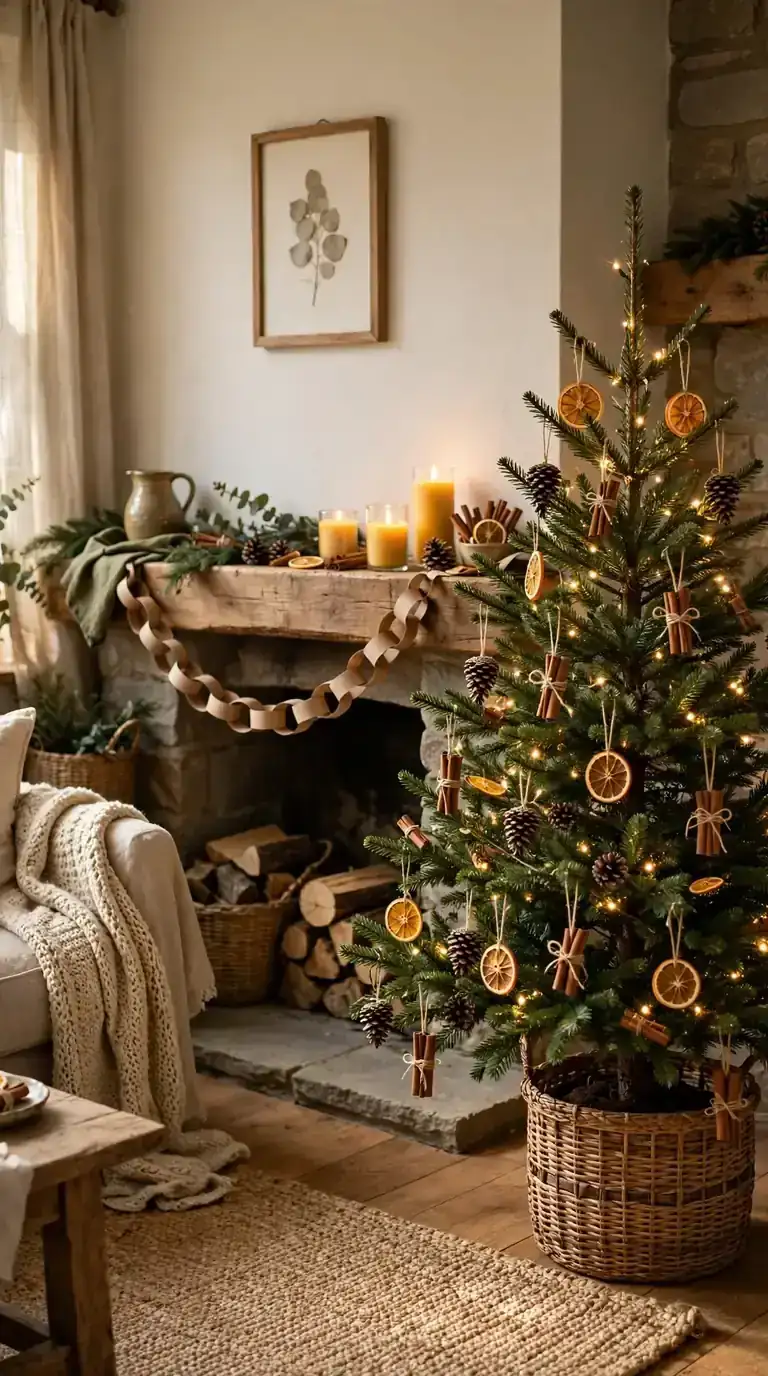
A living tree with its roots intact is the kindest choice you can make. Look for a small Norway spruce or blue spruce sold in a pot rather than a cut trunk, and check that the root ball feels firm and heavy when you lift it. Sit the pot inside a woven basket or a simple terracotta planter to keep the look natural.
Keep the tree away from radiators and direct heat, and water it lightly every couple of days. Indoors, a potted evergreen stays happy for around three to four weeks before it wants cool air again. Move it to a sheltered spot outside once the festivities wind down, then plant it in the garden in spring. Within a few years it becomes a small tree with a story.
Decorate lightly so the branches stay healthy. Strings of warm fairy lights, a few dried orange slices on twine and maybe a handful of pinecones are plenty. The whole point of sustainable Christmas decor is restraint, and a living tree looks best when its shape can still be seen.
2. Turn a Wooden Ladder Into a Space-Saving Christmas Tree

If a full tree feels too much, or your living room is on the small side, an old step ladder makes a surprisingly charming alternative. Set it against the wall, lean a couple of reclaimed planks across the rungs to form shelves, and decorate the tiers as if they were branches.
Drape a string of warm white fairy lights in loose loops, tuck pinecones and dried orange slices along the rungs, and tie a few fabric bows to the uprights. The lower shelves are perfect for wrapped presents in brown paper, which keeps the whole arrangement looking intentional rather than improvised.
When the season ends, strip the decorations, fold the ladder flat and slide it into the back of a cupboard. It costs nothing to store, nothing to grow, and it can be reused for a decade or more. For renters and flat dwellers, this is one of the most practical sustainable Christmas decor ideas for small homes.
3. String Dried Orange Slice Garlands Along the Tree

Few decorations earn their place like dried orange slices. Slice oranges about 5mm thick, pat them dry and lay them on a baking tray at around 100 degrees for three to four hours, turning once. They shrink into translucent amber wheels that glow when tree lights shine through them.
Thread the slices onto natural jute twine with a darning needle, alternating with cinnamon sticks and the occasional star anise. The result smells faintly of Christmas all on its own, with no candle required. Hang the finished garland on the tree, across a window frame or along a bookshelf. Few forms of sustainable Christmas decor smell this good while they work.
This is decoration that leaves no trace. After the season, the garland can go straight onto the compost heap or the bird table. Make a few extra strands while the oven is on and you will have enough for gifts and the mantel too.
4. Make Cinnamon, Pinecone and Clove Ornaments That Scent the Room

Natural ornaments beat plastic baubles on two counts: they cost almost nothing and they make the house smell incredible. Bundle three or four cinnamon sticks together, tie them with twine and add a sprig of dried rosemary for a simple hanging decoration. A dab of wax at the back keeps the bundle solid.
Pinecones need barely any work at all. Twist a small loop of twine around the top scales and they are ready to hang. If you want them to look frosted, brush the tips with a little white water-based paint. Orange pomanders take a touch more patience: push whole cloves into the skin of firm oranges in a simple pattern and let them dry for a week. They last for years and smell better with age.
Group these ornaments together on the tree rather than scattering them. A cluster of spice and wood in one corner reads as a deliberate styling choice, while one lone pinecone can look accidental.
5. Popcorn and Cranberry Garlands, a Vintage Take on Sustainable Christmas Decor

Stringing popcorn was a Victorian parlour tradition long before plastic tinsel existed, and it still looks lovely. Pop a large bowl of plain popcorn and let it sit overnight so it firms up. Thread it onto cotton string with a needle, alternating with fresh or dried cranberries for colour.
Work in sections of about a metre so the garland is easy to handle, and leave a little slack when hanging it so it drapes rather than stretches taut. The staircase banister, the front window and the tree itself all suit this kind of garland. For more inspiration on where to hang them, these Christmas garland ideas show garlands styled across mantels, doorways and staircases.
In January, carry the garland outside and hang it on a tree or fence. Birds pick it clean within days, which is a far nicer ending than landfill. If cranberries are pricey where you live, dried apple rings or rosehips work just as well.
6. Bake Salt Dough Ornaments With the Kids

Salt dough is two parts flour, one part salt and enough water to bring it together. Roll it out, cut shapes with biscuit cutters and poke a hole near the top of each one for hanging. Bake at a low temperature until completely hard, then let them cool overnight before decorating.
Leave them plain for a rustic look, or paint them with water-based paints and finish with a coat of natural beeswax polish. Pressing a sprig of pine or a lace doily into the dough before baking leaves a beautiful relief pattern with no painting required.
These ornaments weigh almost nothing, so they suit even delicate branches. Store them in tissue paper and they last for years, which is why they earn their place in any sustainable Christmas decor collection. And if one breaks, it goes in the compost rather than the bin, which is exactly the mindset behind sustainable Christmas decor.
7. Light the Room With Beeswax Candles in Reused Jars

Before you buy candle holders, look through your recycling. Jam jars, small bottles and even sturdy yoghurt pots make lovely lanterns. Pop a beeswax or soy tealight inside, tie a sprig of evergreen around the neck with twine, and set them along the windowsill or mantel.
Beeswax candles burn with a warm, honeyed glow and release very little soot compared to paraffin. They cost more upfront, but a small pillar or a set of dinner candles will see you through several Christmases. Soy wax is a good budget alternative with a similarly clean burn.
Cluster jars in odd numbers and vary the heights. Three jars on a stack of books beside the sofa can look just as considered as a shop-bought lantern, and every element returns to useful life in January. That closed loop is the quiet logic of sustainable Christmas decor.
8. Swap Tinsel for Paper Chains and Snowflakes
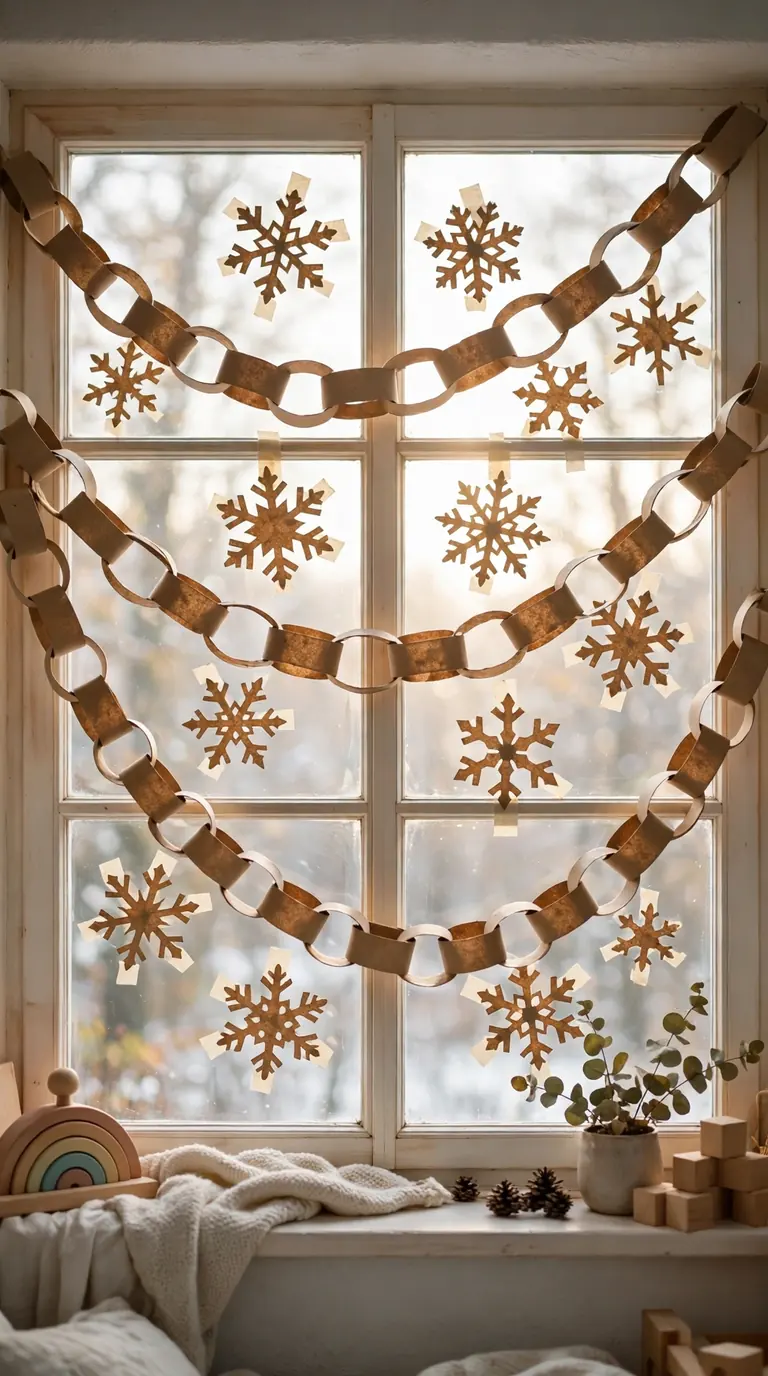
Conventional tinsel is made from PVC and aluminium, which means it cannot be recycled and sheds microplastics every year it hangs. Paper chains take that job with charm, and they are a classic of sustainable Christmas decor. Cut strips of recycled kraft paper, old wrapping paper or newspaper, loop them and fix with a dab of flour-and-water paste.
Paper snowflakes cost even less. Fold a square of paper into triangles and snip simple shapes, then open it out and tape it to the window. Children can spend a whole rainy afternoon on these, and the results look genuinely pretty against dark winter glass.
The best part is storage. Paper chains collapse flat, slip into a paper bag and come out next year looking just as good. Two or three seasons of reuse, and they have outlasted any tinsel.
9. Dress the Tree With Fabric Bunting and Cloth Bows
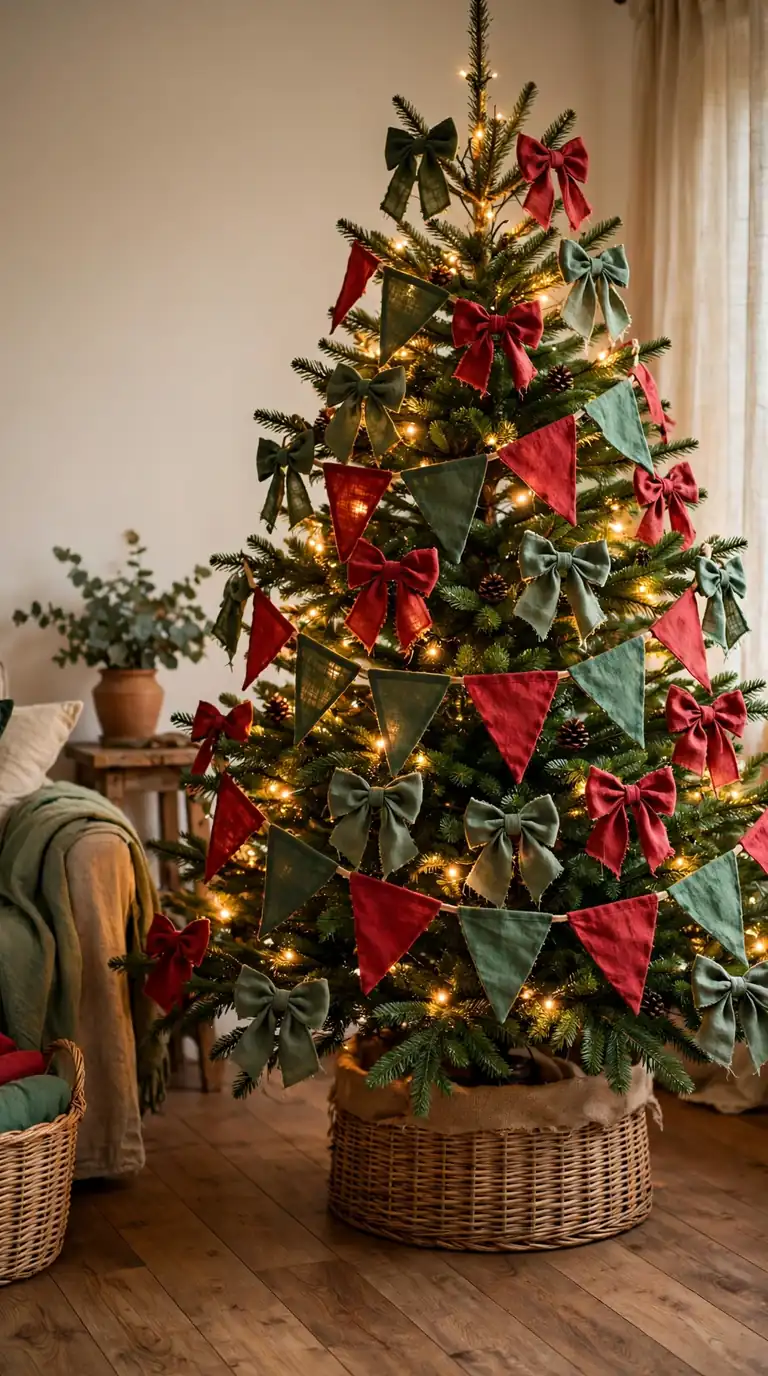
Fabric decorations look richer than plastic and last far longer. Cut triangles from linen, cotton or even old shirts and sew or glue them onto a length of twill tape for bunting. Drape it around the tree or across a wall in a shallow swag.
Cloth bows are simpler still. Cut wide strips of fabric, tie them into bows and wire them to the branches. Linen, velvet ribbon and gingham all photograph beautifully and none of them shed glitter onto your carpet. When the season ends, fold everything flat and store it in a labelled box.
Choose a palette of two or three colours and stick with it for several years. Consistency is what makes sustainable Christmas decor look expensive, and it stops the annual urge to buy a whole new scheme.
10. Build a Foraged Evergreen Swag for the Mantel

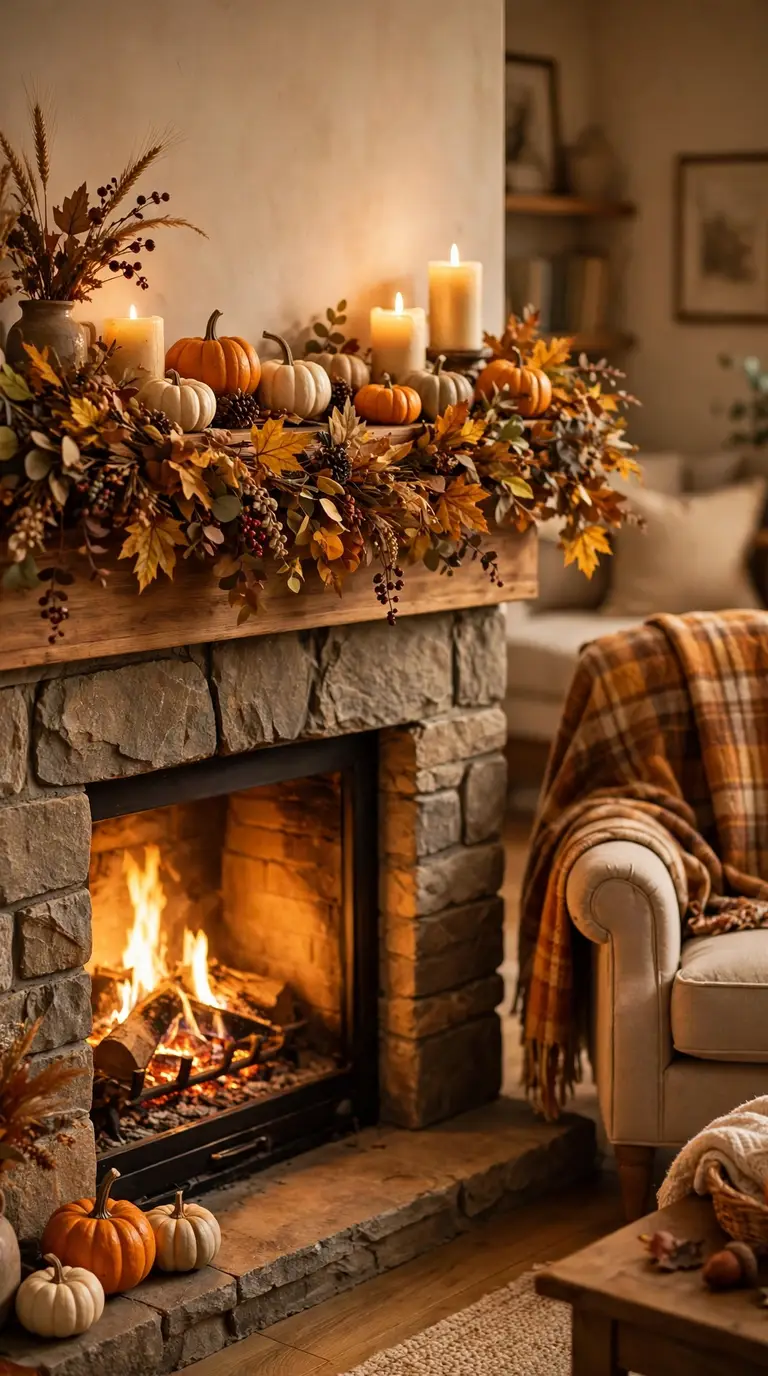
A mantel dressed with fresh greenery is the centrepiece of a sustainable Christmas living room. Ask local Christmas tree sellers for their offcuts, trim a few branches from your own garden, or gather fallen boughs after a windy day. Pine, fir, cedar and spruce all work, and a mix looks more natural than a single variety.
Lay an undyed linen runner along the mantel as a base, then layer the branches so they overlap, securing them with floral wire or twine. Tuck pinecones, dried berry sprigs and a few wooden stars into the greenery. Two or three beeswax candles behind the swag add warmth without competing with it.
Mist the branches lightly every few days to keep them fresh through the season. Afterwards, strip the wire and ribbon and compost the whole thing. For more ways to style the fireplace, these Christmas mantel decor ideas cover garlands, stockings and candle arrangements for every taste.
11. Fill Centrepiece Bowls With Pinecones, Nuts and Winter Fruit

A wide, shallow bowl is one of the most versatile Christmas decorations you can own. Fill it with pinecones, chestnuts, walnuts in their shells, dried orange slices and a scattering of fresh cranberries. Nestle two or three beeswax pillar candles of different heights into the middle.
The trick is layering. Put the largest pinecones at the back, fill the gaps with nuts and tuck the cranberries where they catch the light. A wooden or stoneware bowl suits the natural palette best; avoid anything too polished, which fights the rustic feel.
This centrepiece lives on the coffee table or sideboard all season. Refresh the cranberries if they shrivel, and eat the nuts over the holidays. Nothing is wasted, the arrangement changes subtly as December goes on, and the whole thing is sustainable Christmas decor at its most practical.
12. Choose Warm LED Lights on Timers for Low-Energy Sustainable Christmas Decor

Lighting is the one part of Christmas decorating where technology genuinely helps. Modern LED fairy lights use around 90 percent less energy than old incandescent strings and stay cool to the touch, which matters when they sit near dried greenery and paper.
Pick warm white, around 2700K, for a glow that flatters skin tones and wood rather than washing the room in blue. Plug the lights into a simple timer set for the evening hours you actually enjoy them, say 4pm to 10pm, and you will never wake up to a tree blazing at 3am again.
Solar-powered strings are worth considering for the garden or balcony, since they charge by day and switch on at dusk with no wiring at all. One well-placed strand of lights in a dark corner often creates more atmosphere than a houseful of them.
13. Set a Natural Christmas Table With Cloth and Foraged Touches
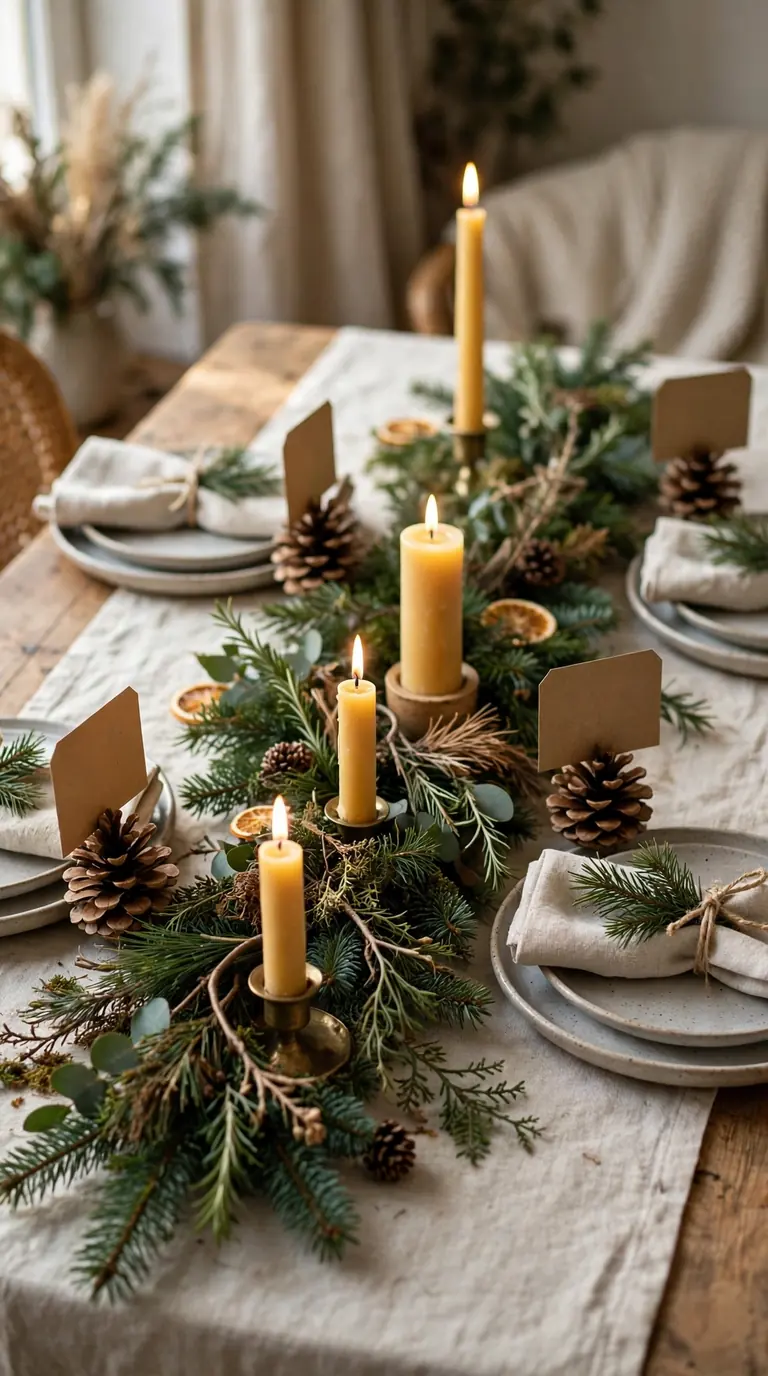
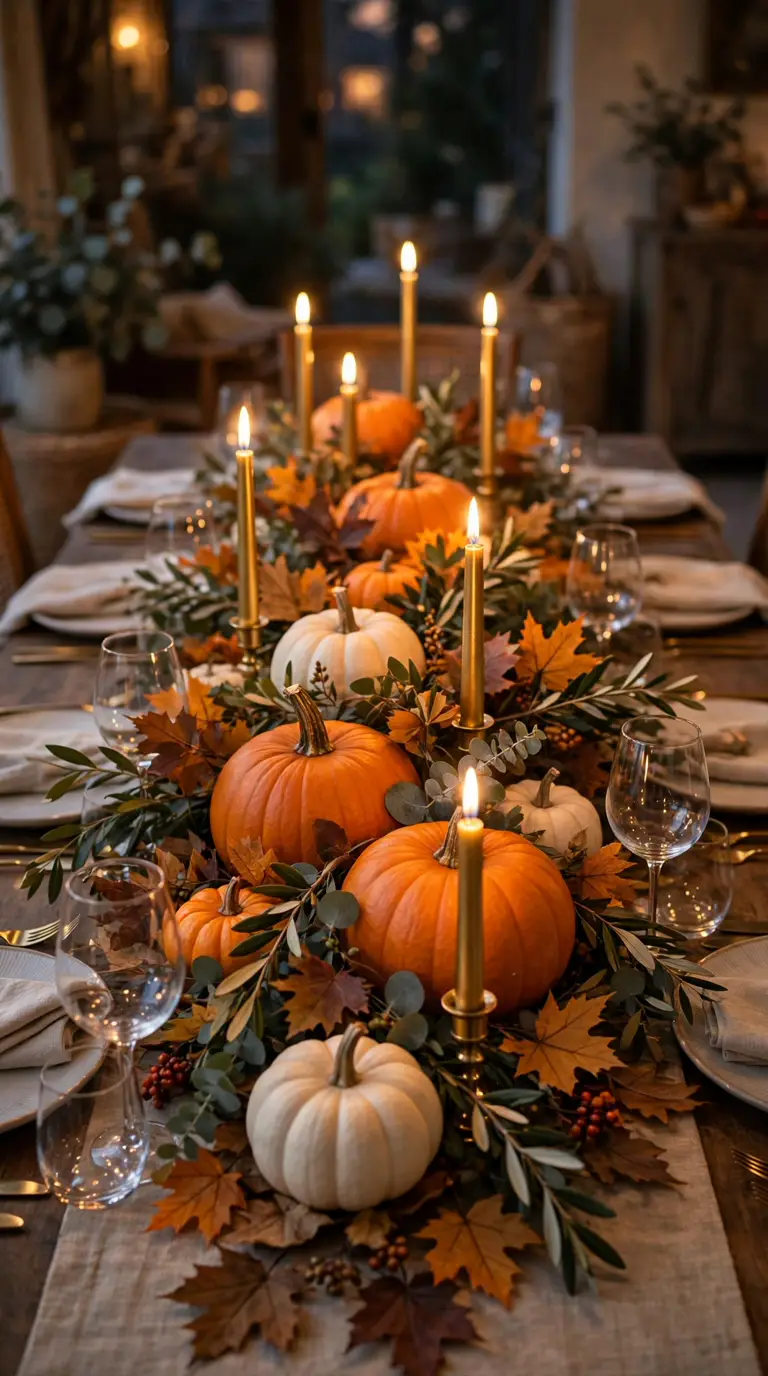
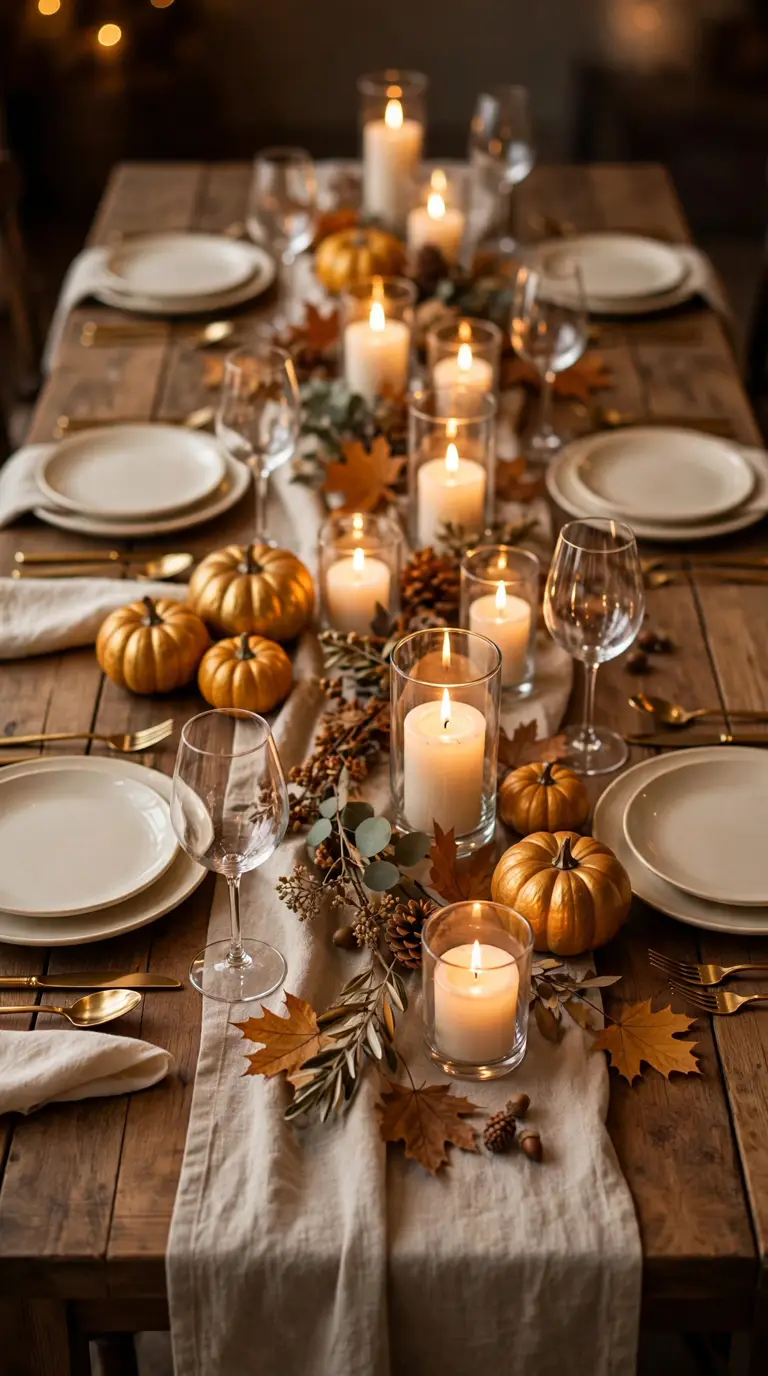
The Christmas table sets the tone for the whole meal, and it needs no plastic to look special. Start with a linen or cotton tablecloth you already own. Fold cloth napkins and tie each with twine and a sprig of pine or rosemary.
Run a loose line of evergreen branches down the centre of the table, weaving in a few beeswax candles and dried orange slices. For place cards, write names on small pieces of recycled kraft card and slot them into pinecone scales. The pinecones become tree ornaments after lunch.
Keep the palette to green, cream and candlelight and let the food provide the colour. A table set this way photographs beautifully, and every element either returns to the cupboard or the compost. This is sustainable Christmas decor at its most sociable.
14. Switch to Reusable Fabric Christmas Crackers

Shop-bought crackers are one of the worst single-use offenders of the season: foil, plastic toys and paper hats, used for ten seconds and binned. Fabric crackers solve the problem neatly. They are simple tubes of cotton or linen gathered at each end with ribbon.
Refill them every year with something worth keeping: a handwritten note, a chocolate, a small packet of seeds. The ritual of filling them becomes part of Christmas Eve, and children quickly prefer choosing their own fillings to whatever falls out of a shop cracker.
You can sew a set in an afternoon from fabric scraps, or buy handmade ones that last for decades. Either way, one purchase replaces a lifetime of disposable crackers, which is exactly the kind of swap sustainable Christmas decor is built on.
15. Decorate With Potted Herbs and Winter Plants Instead of Cut Flowers

Cut flowers travel thousands of miles and last a week. Potted plants last for years. A row of rosemary topiaries on the windowsill, each tied with a scrap of red twine, looks festive from December through February and flavours your cooking all year.
Amaryllis bulbs in terracotta pots are another strong choice. They throw up dramatic trumpet flowers just in time for Christmas with almost no care, and the bulb can be kept for another season. Paperwhite narcissi fill a room with scent for the price of a bag of bulbs.
Group plants in odd numbers and vary the heights with upturned pots or wooden boxes. This corner of the house stays green long after the tree has gone, which is the quiet reward of choosing living decoration. It is sustainable Christmas decor that keeps giving.
Simple Habits That Make Your Decorating Greener
A few habits matter as much as the ideas themselves. Shop your own home first: most of us own enough jars, bowls, fabric and ribbon for a fully decorated Christmas without buying anything new. Pick one colour palette and keep it for five years rather than chasing a new trend each December.
Store everything carefully in labelled boxes so it survives to next year, put lights on timers, and compost every natural decoration in January. Small, repeated choices are what turn a festive season into genuinely sustainable Christmas decor.
Frequently Asked Questions
Is a real Christmas tree more sustainable than an artificial one?
A living potted tree that you plant or keep afterwards is the greenest option of all. A cut real tree from a responsibly managed local farm comes next, provided it is composted or chipped rather than landfilled. An artificial tree only becomes the better choice if you already own one and use it for at least ten years, since its plastic and manufacturing footprint is high upfront.
How can I make my Christmas decorations completely plastic-free?
Start with the biggest plastic items: tinsel, plastic baubles and shop-bought crackers. Replace tinsel with paper chains or popcorn garlands, baubles with salt dough, pinecone and dried fruit ornaments, and crackers with reusable fabric ones. Buy LED lights with fabric-covered cables where possible, and store everything so it lasts for years.
Do LED Christmas lights really save energy?
Yes. LED fairy lights use roughly a tenth of the electricity of old incandescent strings, which means a whole tree can cost pennies per evening to run. Pairing them with a timer so they only burn during the hours you enjoy them cuts use further. Warm white LEDs also last far longer, so you replace strings less often.
What should I do with natural decorations after Christmas?
Strip off any wire, ribbon or twine you want to reuse, then compost greenery, dried fruit, popcorn garlands and salt dough ornaments. Hang popcorn and cranberry strands outside for the birds. Pinecones, nutshells and orange slices can go in the green bin or the compost heap. Fabric items fold flat for next year. That closed loop is what sets sustainable Christmas decor apart from the buy-and-bin habit.
Where can I buy sustainable Christmas decorations?
Local craft markets, charity shops and small independent makers are the best sources for handmade, plastic-free decorations. Look for natural materials like wood, glass, paper, linen and beeswax, and avoid anything with loose glitter, which is a microplastic. Second-hand decorations are always the greenest purchase of all.
Final Thoughts
Sustainable Christmas decor is not about giving anything up. It is about choosing decorations with a past and a future: a tree that keeps growing, ornaments you made yourself, candles in jars that held jam. The result feels warmer and more personal than anything bought in a rush, and that is what sustainable Christmas decor looks like in practice.
Start with one or two ideas this year and add more each season. Your home, your wallet and the bin lorry in January will all notice the difference.